1/6In May 1959, the United States' Able and Miss Baker were the first monkeys to successfully return to Earth after being in space.
Animals -- in particular monkeys -- have a long history of space travel.
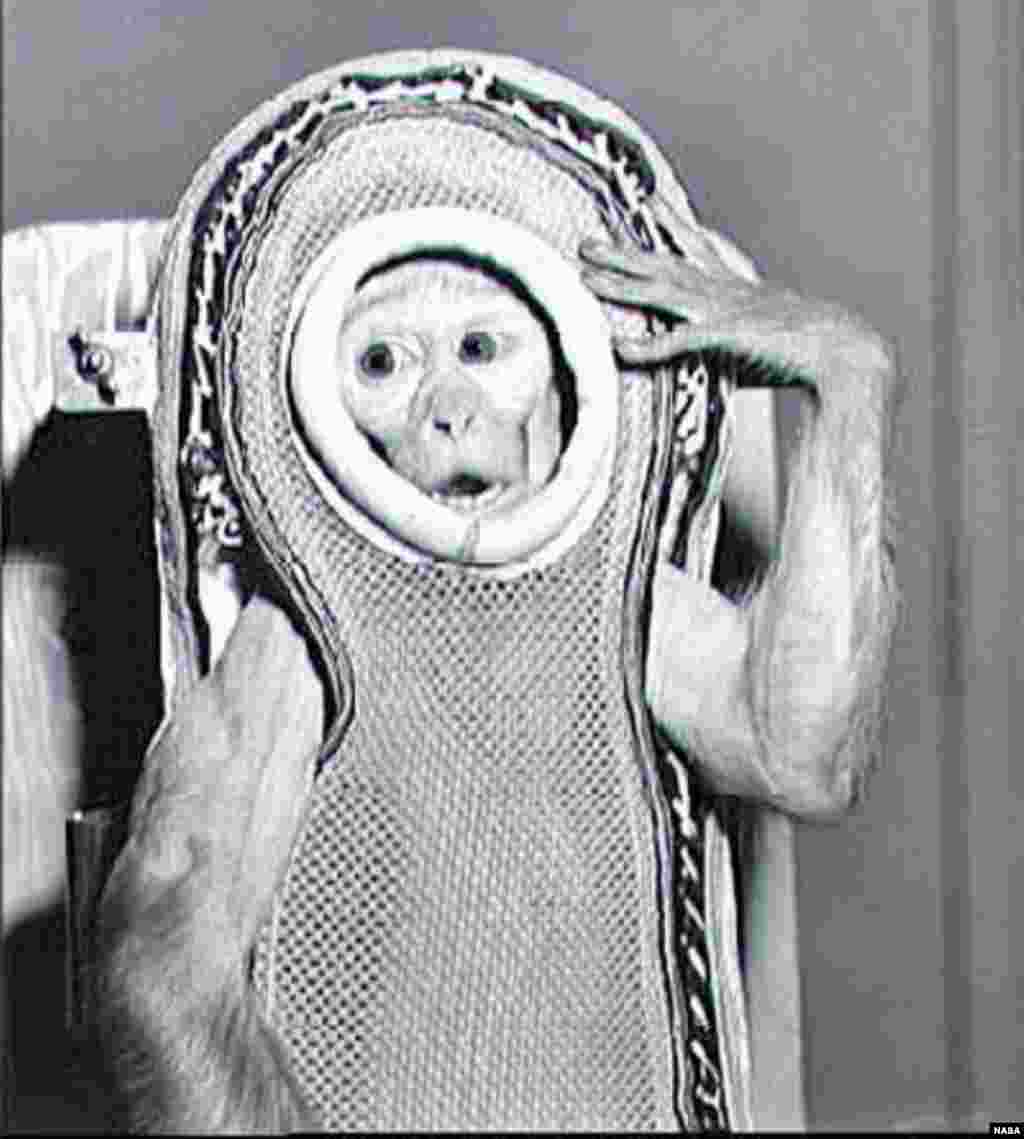
2/6A rhesus monkey Sam preparing for his flight on the United States' "Little Joe 2" in December 1959. The flight reached close to the edge of space and Sam survived the mission.
Animals -- in particular monkeys -- have a long history of space travel.
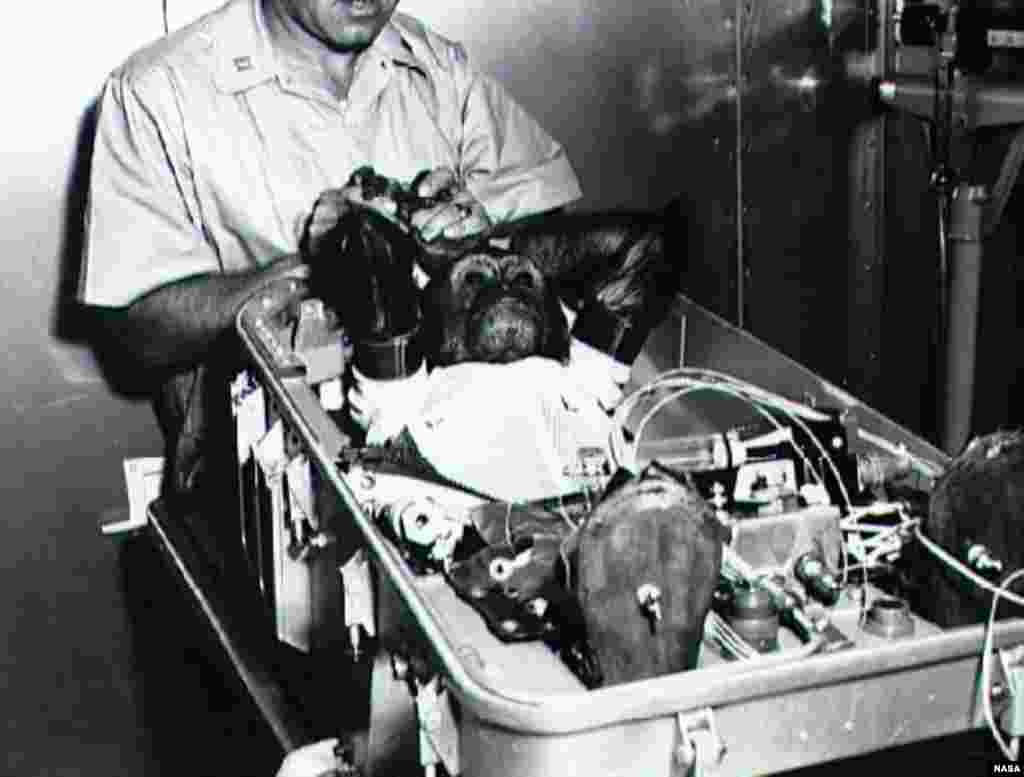
3/6Enos, a chimpanzee, wears a space suit in his flight couch while being prepared for insertion in the United States's "Mercury-Atlas 5" capsule in 1961. Enos survived the mission.
Animals -- in particular monkeys -- have a long history of space travel.
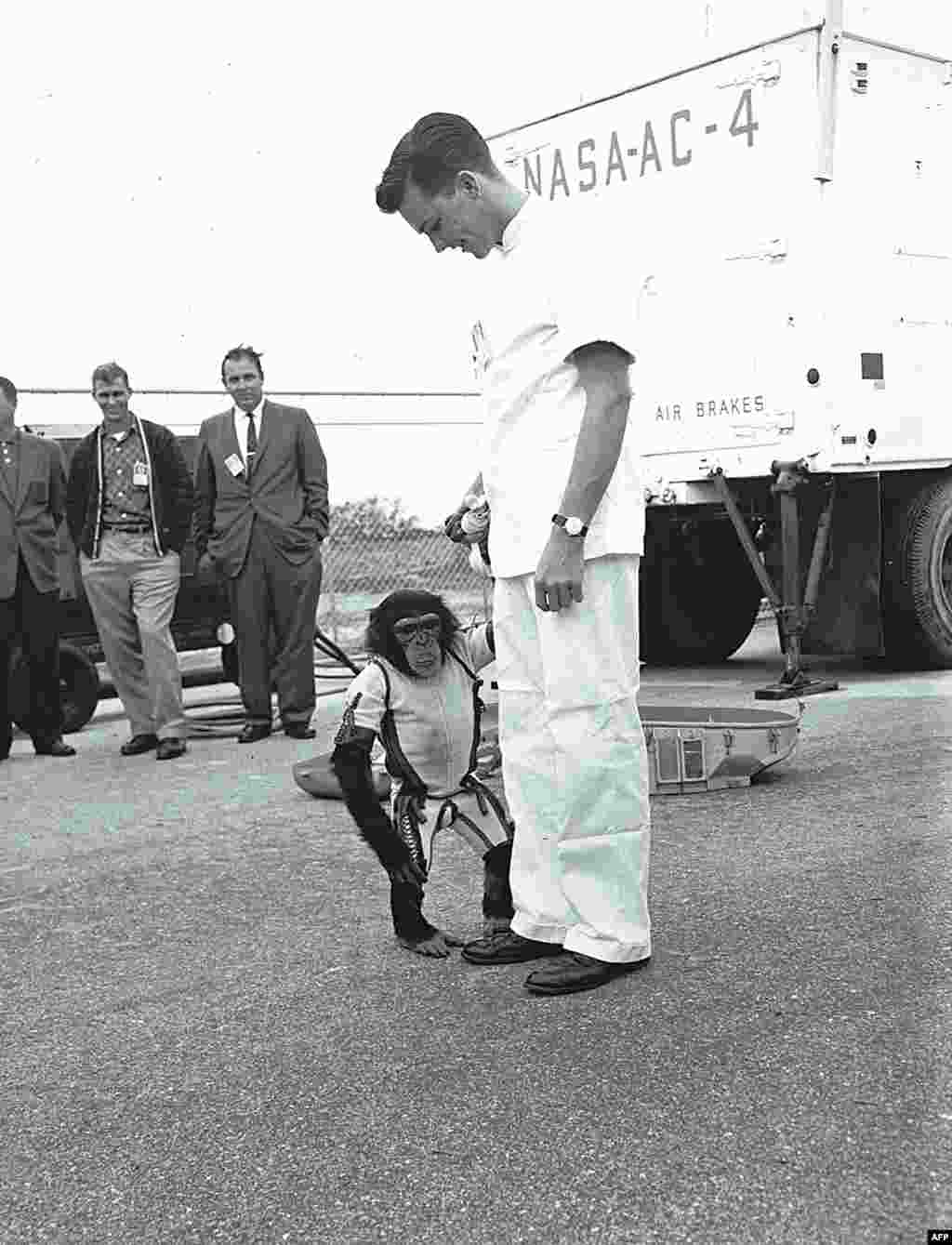
4/6U.S. astronaut Alan Shepard is photographed with Ham, a chimpanzee who preceded him in space, with a 16 minute sub-orbital flight aboard the "Mercury Redstone" rocket in 1961.
Animals -- in particular monkeys -- have a long history of space travel.
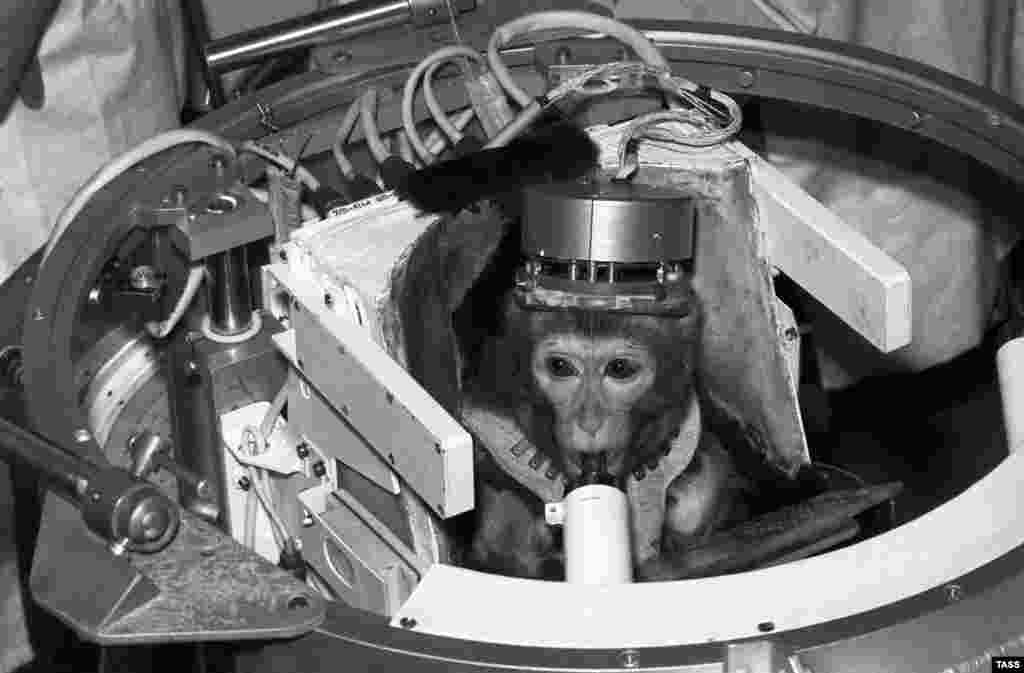
5/6Soviet monkey Dryoma pictured in October 1989 during a pre-flight examination. After making it back safely to Earth, Dryoma was given to Cuban leader Fidel Castro.
Animals -- in particular monkeys -- have a long history of space travel.
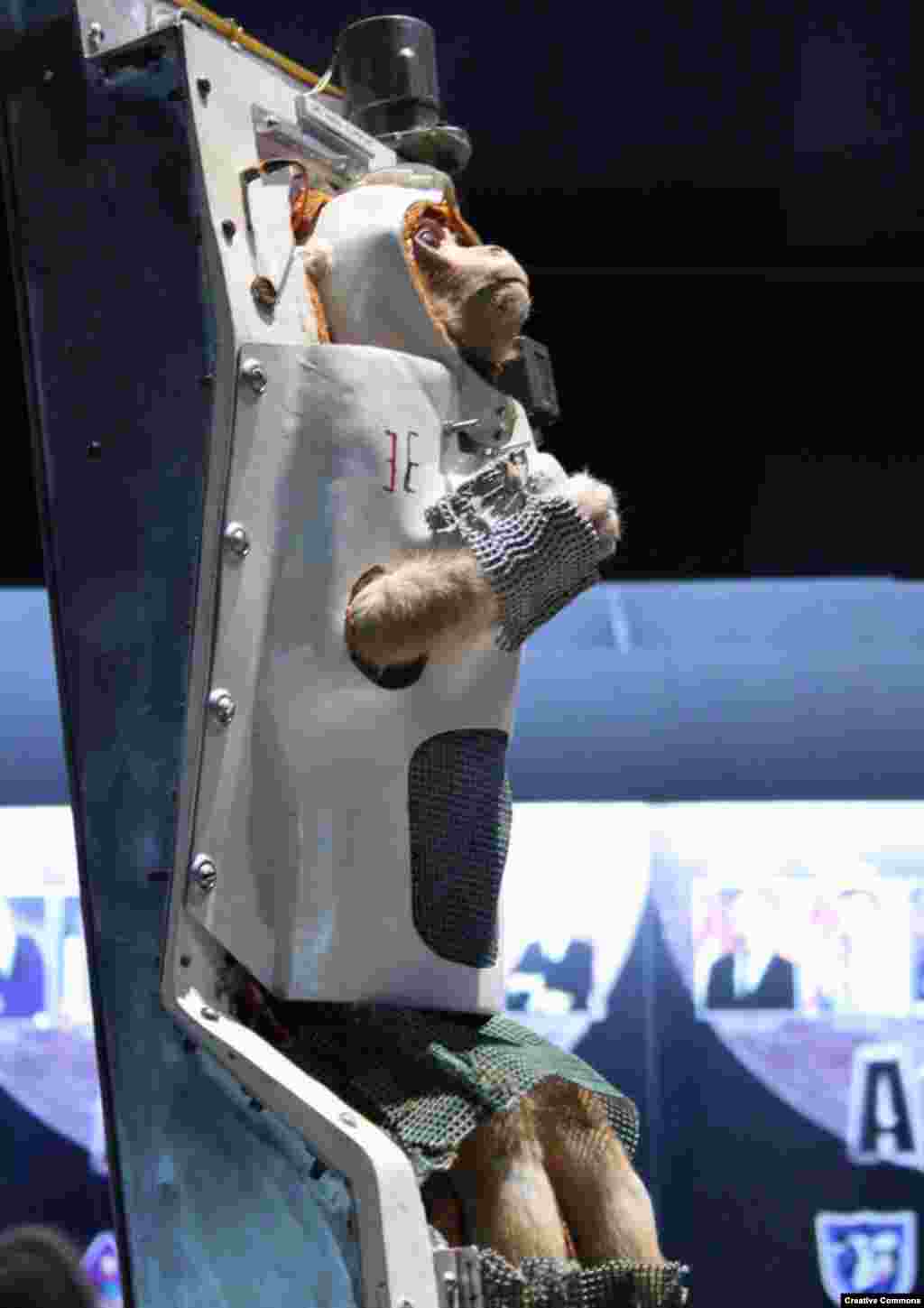
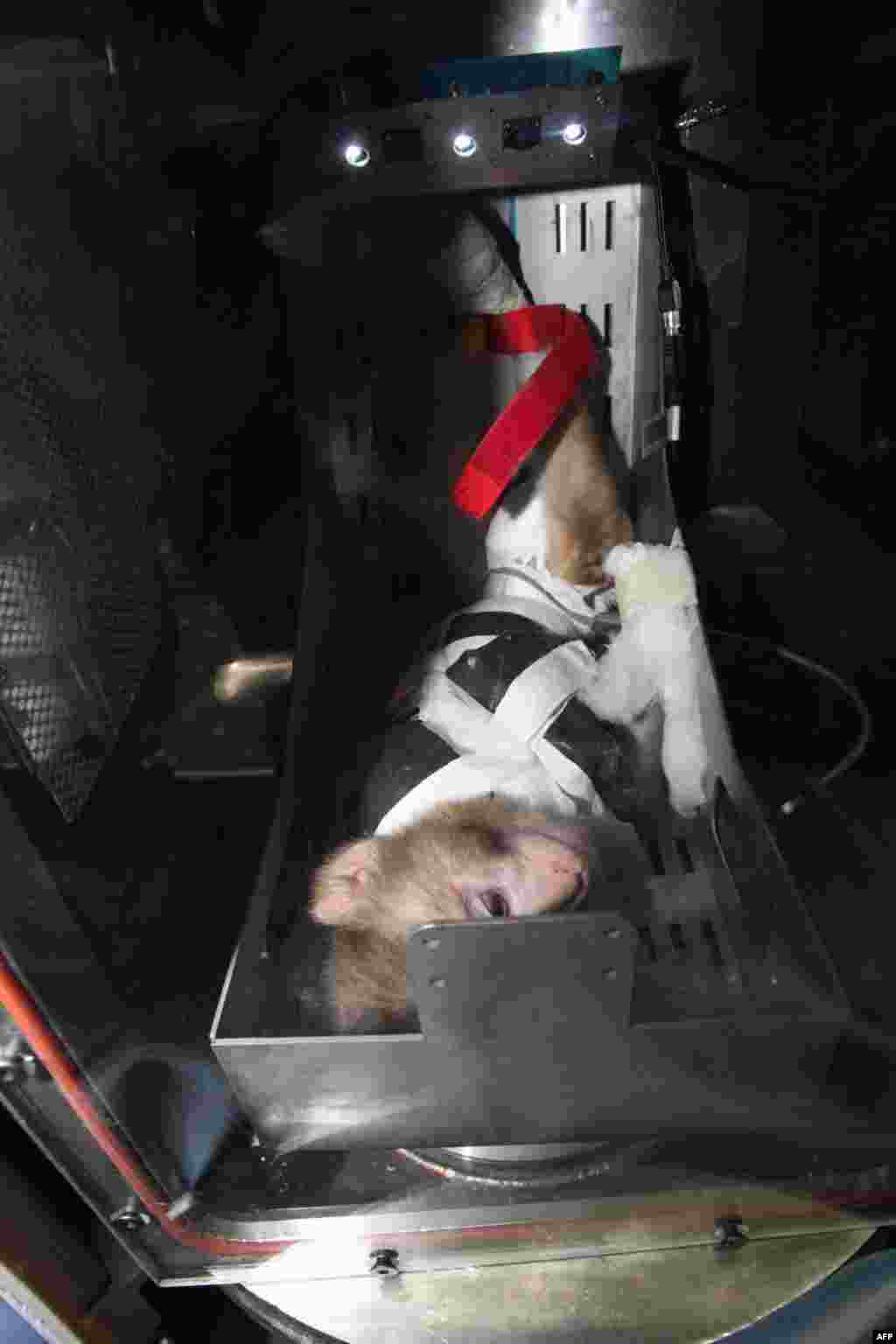
6/6A monkey is tied inside the replica capsule of the Iranian-made "Kavoshgar-4" rocket during the unveiling ceremony of four new home-built prototype satellites in Tehran in February 2011.
Animals -- in particular monkeys -- have a long history of space travel.
Previous slide
Next slide
Iranian media report that the country's space agency plans to send a second monkey into space within a month in its ongoing pursuit of a manned space program.
The conservative "Jomhuri Eslami" on October 13 quoted Hamid Fazeli, the deputy head of Iran's space agency, as saying the planned launch is part of a program to send a human into space in 2018.
Fazeli refused to set a definite date for the launch.
Iran's state-backed English-language broadcaster Press TV also quoted Fazeli on the hopes for a fresh simian launch, adding that Iranian scientists also expect to send "other species" into space in later stages of the program.
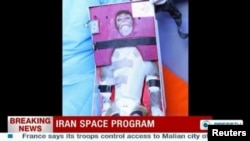
A TV grab of Iranian state footage shows a monkey that was said to have been launched into space in January 2013.
Iran in January claimed to have successfully launched a live monkey into space and to have brought it safely back to Earth. The experiment's success was disputed, however, when photos of a different monkey were presented to the media after the landing.