

Protests Erupt In Northern Iran Amid Attempts To Enforce Hijab Rules
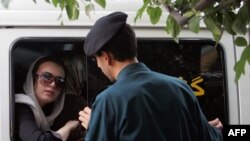
An Iranian morality policeman (right) speaks with a woman siting in a police car after she was arrested because of her "inappropriate" dress in Tehran. (file photo)
Protests have erupted in the northern Iranian city of Rasht following an attempt by government officials to arrest three women over violations of mandatory hijab rules amid reports that the country's leadership has ordered the resumption of so-called “morality police” patrols.
Reports suggest that the situation escalated late on July 16 when some sections of the crowd began chanting "Death to [Iranian Supreme leader Ayatollah Ali] Khamenei" after the officials tried to apprehend the women for dress code infractions. Plainclothes individuals attempted to disperse the crowd using tear gas, leading to clashes between the group and the officials.
The same evening, a spokesperson for the Islamic Republic's law enforcement announced the deployment of vehicle and foot patrols to combat what he referred to as "improper" hijab usage. He warned that those who continue to defy norms with the dress would be confronted.
The morality police patrols were suspended following months of unrest sparked by the September 2022 death of Mahsa Amini while she was in police custody for an alleged head-scarf violation. Amini's family has said she had no history of health problems and was beaten during her detention.
The return of the patrols has been met with anger, especially in light of recent citizens' reports on social media of an increase in vans carrying morality patrol officers in the streets, particularly in large cities. The morality patrols have been sharply criticized by the European Union, the United States, the United Kingdom, and some Western allies for their role in suppressing women and violating human rights.
Iranian Women Continue To Defy Head-Scarf Law As 'Morality' Patrols Return
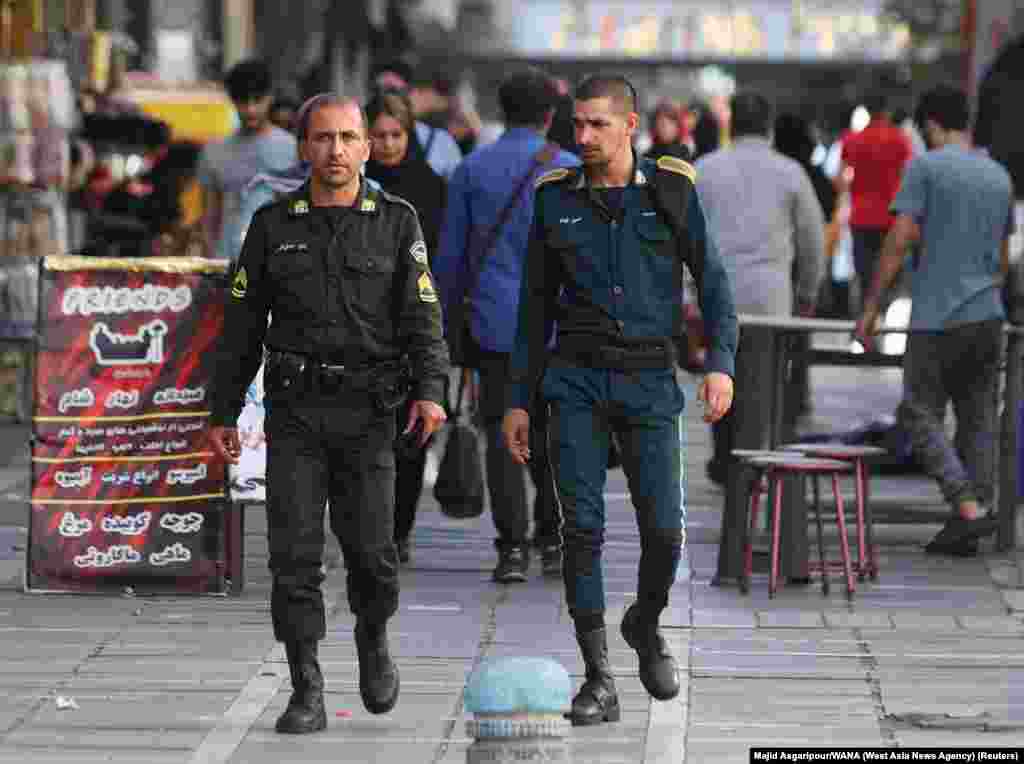
1/7Two policemen walk through Tehran on July 16. The officer on the left is wearing the standard green uniform that is worn by units of the morality police.
After protests that shook Iran and led to countless women opting to remove their head scarves, patrols of morality police have been seen on the streets once more following months of relative inactivity.
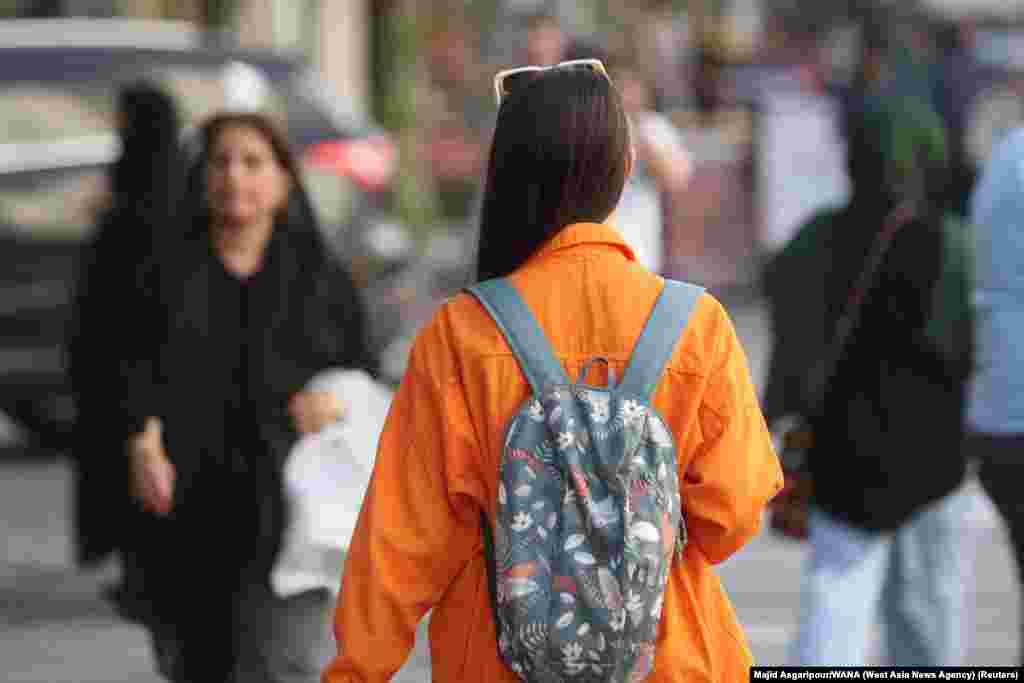
2/7A woman goes without the mandatory hijab in Tehran on July 16.
An Iranian official on July 16 confirmed that patrols of the notorious morality police, known officially as Guidance Patrols, have returned to Iran’s streets after months of keeping a low profile. The patrols enforce laws around clothing and behavior between the sexes.
After protests that shook Iran and led to countless women opting to remove their head scarves, patrols of morality police have been seen on the streets once more following months of relative inactivity.
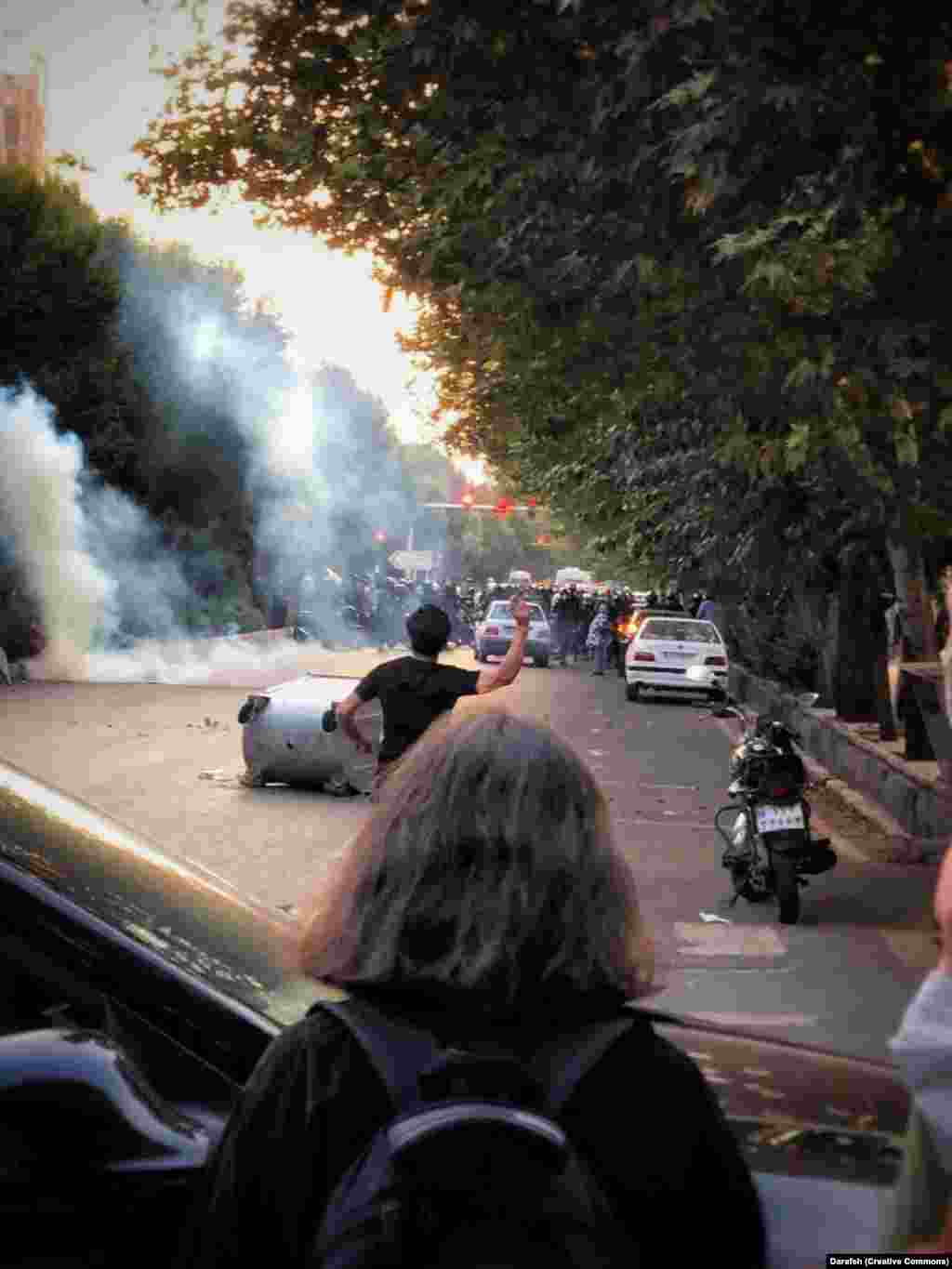
3/7A September 2022 photo shows a young woman watching violent protests in Tehran following the death of Mahsa Amini.
Throughout the widespread unrest that followed the September 2022 death of Amini while in the custody of the morality police, increasing numbers of women opted not to wear their hijabs. The head scarves have been mandatory in Iran since shortly after the 1979 Islamic Revolution.
After protests that shook Iran and led to countless women opting to remove their head scarves, patrols of morality police have been seen on the streets once more following months of relative inactivity.
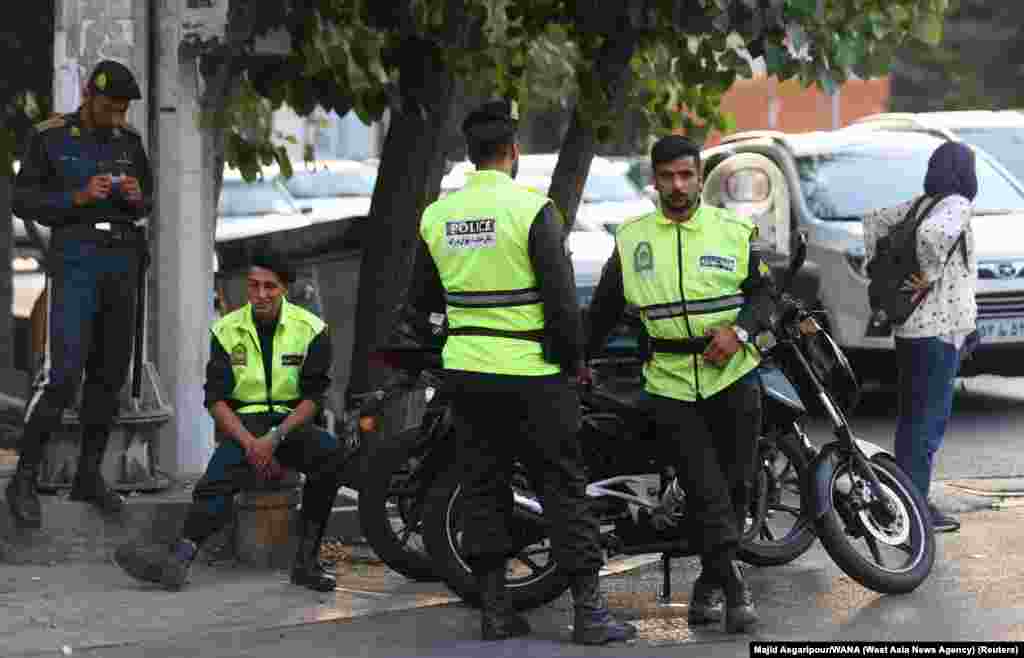
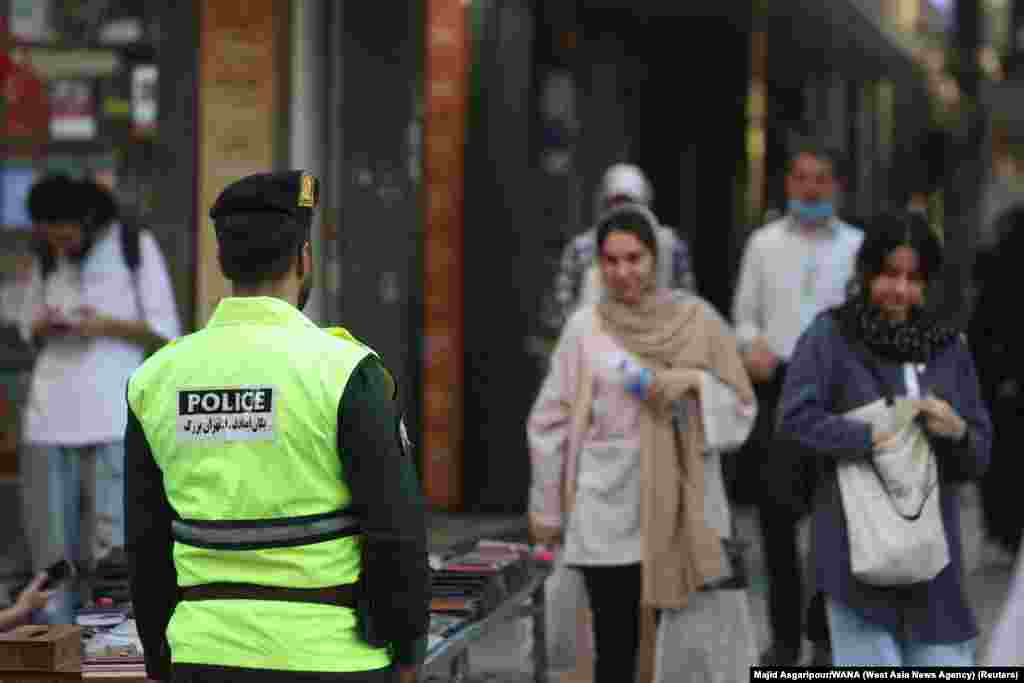
4/7Unidentified policemen on a street corner in Tehran on July 16.
The absence of morality police on the streets during and after the massive protests, and a vague statement from an Iranian official, led to false reports in Western media that the unit had been disbanded.
After protests that shook Iran and led to countless women opting to remove their head scarves, patrols of morality police have been seen on the streets once more following months of relative inactivity.
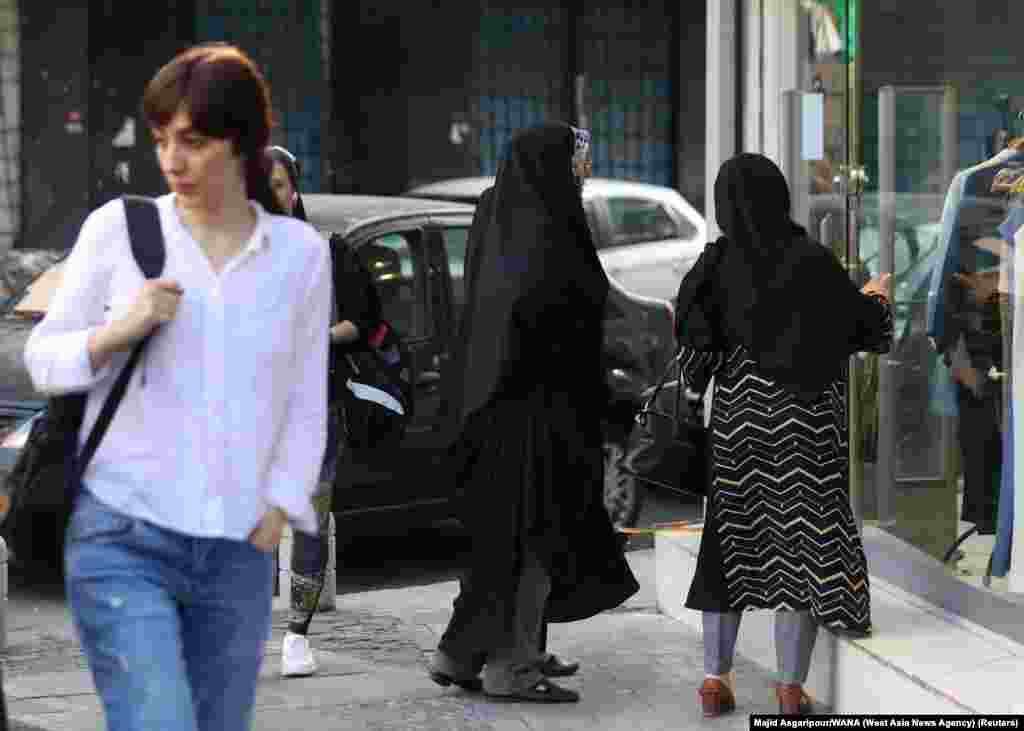
5/7Women walking without head coverings in Tehran on July 16.
After protests that shook Iran and led to countless women opting to remove their head scarves, patrols of morality police have been seen on the streets once more following months of relative inactivity.
6/7A policeman in Tehran as a woman (right) walks with her hair uncovered.
Earlier this month, dozens of cafes and other businesses throughout Iran were shut down for purportedly allowing women to go uncovered.
After protests that shook Iran and led to countless women opting to remove their head scarves, patrols of morality police have been seen on the streets once more following months of relative inactivity.
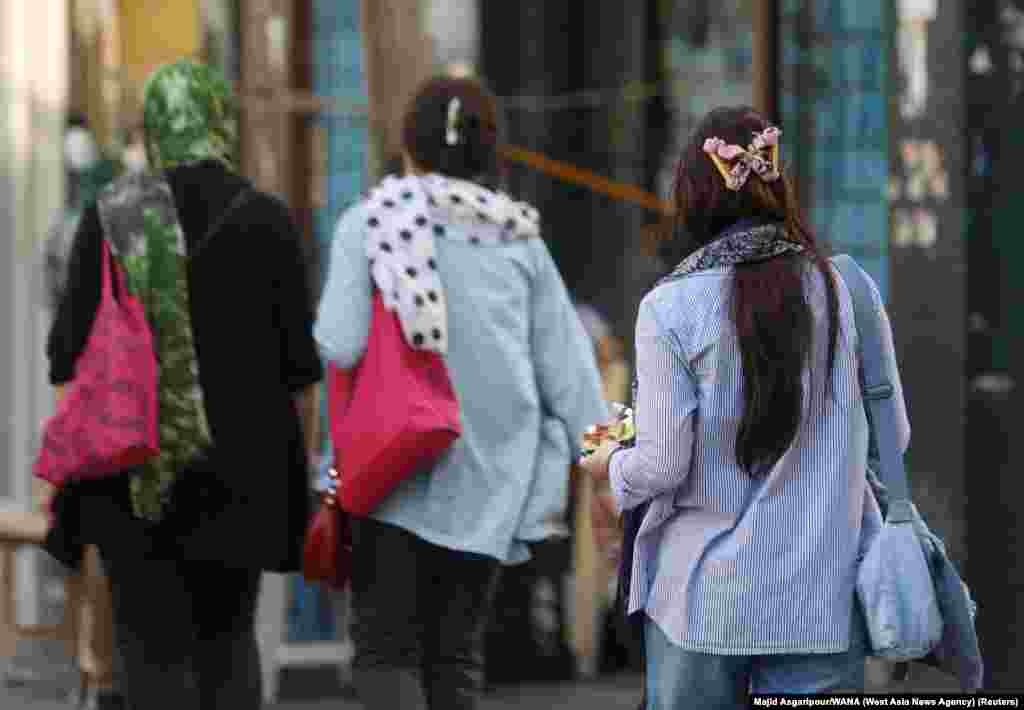
7/7Contrasting clothing styles seen in Tehran on July 16.
Shortly after the July 16 announcement that the morality police would return to on-the-spot enforcement, clashes broke outin the northern city of Rasht after they attempted to arrest three women.
After protests that shook Iran and led to countless women opting to remove their head scarves, patrols of morality police have been seen on the streets once more following months of relative inactivity.
Previous slide
Next slide
Unrest has rattled Iran since last summer in response to declining living standards, wage arrears, and a lack of insurance support. Labor law in Iran does not recognize the right of workers to form independent unions.
Amini's death breathed new life into demonstrations, which officials across the country have since tried to quell with harsh measures.
Many women across the country have openly challenged the mandatory head scarf law, with many appearing in public without their hijab, or defiantly taking it off in protest.
The activist HRANA news agency said that more than 500 people have been killed during the unrest, including 71 minors, as security forces try to stifle widespread dissent.
Thousands have been arrested in the clampdown, with the judiciary handing down harsh sentences -- including the death penalty -- to protesters.

Written by Ardeshir Tayebi based on an original story in Persian by RFE/RL's Radio Farda
RFE/RL's Radio Farda breaks through government censorship to deliver accurate news and provide a platform for informed discussion and debate to audiences in Iran.