




Trump Says He Will Send Iran Deal To US Congress
US President Donald Trump announced on June 16 that he would send the peace agreement with Iran to the US Congress for review.
Speaking to reporters during a meeting with UAE President Mohammed bin Zayed Al Nahyan on the sidelines of the G7 summit in France, Trump said: "I never thought of it, but I would.... I will send it to Congress. I like the idea. I mean, who wouldn't approve it?"
Some Republican lawmakers had previously called for lawmakers to review the text of the agreement.
Trump also promised to make the text of the Iran deal public "within the next day or two" and suggested he might even read the entire document publicly once a formal framework for its release is in place. According to Reuters, he said he was waiting for an official process before publishing the text but added that he had no objection to making it public.
"I would like to have a formal framework for this first, but I have no problem with publishing it; it is a great document," Trump said. He added that the agreement's central provision is straightforward: "Iran will never have a nuclear weapon."
Regarding the next phase of negotiations with Iran, for which a 60-day timeline has been set, Trump expressed optimism that progress would be rapid.
"I think it's going to go very quickly," he said, adding that Iran wants to finalize the process and return to normal economic and diplomatic activity. "Iran wants to finalize this. They need to get back to their normal activities and relations are now normalized, so I think this process will move very quickly."
Trump cautioned that the timeline could vary but reiterated his expectation of a swift outcome: "It might go faster, it might take longer, but it could be done very quickly."
Iran and the United States signed a memorandum of understanding to end the conflict electronically on June 15. According to US Vice President J.D. Vance, the document is approximately a page and a half long. A formal signing ceremony is scheduled to take place in Geneva, Switzerland, on June 19, with senior officials from both countries expected to attend.
Pre-Revolutionary Flags Fly At Iran's World Cup Opener, Defying FIFA Ban
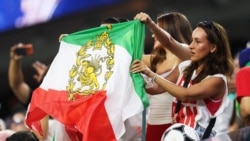
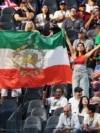
Dozens of soccer fans displayed Iran’s pre-revolutionary Lion and Sun flag during the country’s World Cup opener against New Zealand in defiance of FIFA, which won a court hearing allowing it to prohibit the symbol inside venues. The Lion and Sun flag, flown over Iran before the Islamic Revolution in 1979, has become a symbol of resistance to decades of repressive theocratic rule in the country. It is also widely displayed by Iranian monarchist exiles.

Pahlavi Calls US-Iran Deal 'Morally Wrong'
The former crown prince of Iran has criticized the new framework agreement between Iran and the United States, describing it as "morally wrong" and "strategically misguided" and said that any agreement with the Islamic republic would ultimately fail.
In an interview with The Times magazine, Pahlavi emphasized that Iran cannot be trusted, saying that the current government will continue to suppress dissent, blackmail the international community, and spread instability in the region.
He also said that the Iranian people should be at the center of any international negotiations and policymaking regarding Iran.
Pahlavi is the last son of the shah of Iran who was deposed during the country’s 1979 Islamic revolution. He is one of many figures vying for prominence among the fractured Iranian opposition in exile.
Pahlavi also told The Times that"regime change" was the only possible solution for Iran as the country was "incompatible with the free world."
He also claimed that "the American and Israeli attacks have been seen by many Iranians as an act of liberation."
The former crown prince of Iran emphasized that determining the future leader of Iran is solely the responsibility of the Iranian people and that this issue should be determined through the ballot box.
Iranian Foreign Minister: New Round Of Talks To Begin On June 19
Iranian Foreign Minister Abbas Araqchi has said that, as of the morning of June 15, the war has officially ended on all fronts and that a new round of talks between Iran and the United States will begin in Switzerland on June 19.
The United States and Iran have electronically signed a framework deal to end the three-month-long war and reopen the Strait of Hormuz. The agreement is expected to be formally signed during a ceremony in Geneva, Switzerland, on June 19.
Speaking to a group of foreign ambassadors and diplomats in Tehran, Araqchi also warned Israel that any attack on Lebanon would constitute a "violation of the understanding" between Tehran and Washington.
He said that "one side of this memorandum is Iran and Hezbollah, and the other side is America and Israel."
Hezbollah is both a militant group and political party that controls much of southern Lebanon. It is considered a terrorist organization by the United States, while the European Union has only blacklisted its armed wing.
Despite the declared cease-fire, there has been sporadic Israel-Hezbollah fighting in southern Lebanon, with Israeli air strikes and Hezbollah rocket attacks.
"The end of the war includes the end of the occupation, and the end of the war is not complete without the withdrawal of Israeli forces from the territories they occupied in this war," Araqchi said.
Protests Mark Iran’s 2026 World Cup Opener Against New Zealand
Opponents of the Iranian regime staged protests outside Iran’s first match of the 2026 FIFA World Cup against New Zealand, which ended in a 2-2 tie.
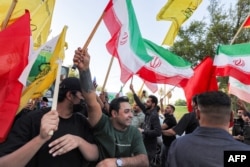
AFP and Reuters reported that between 300 and 500 anti-government protesters gathered outside SoFi Stadium in Inglewood, California, before the match. Many carried Lion-and-Sun flags and chanted slogans against the Iranian government.
The Lion-and-Sun flag is Iran’s pre-1979 national flag and a powerful symbol of Persian/Iranian identity. It has become a major emblem of opposition to the Islamic republic, widely used by protesters inside Iran, the Iranian diaspora, and anti-regime movements.
Speaking to the media, protesters outside the stadium said the national team did not represent the Iranian people and that its participation indicated support for the regime. However, other Iranian-Americans attending the match called for political differences to be set aside during Iran’s World Cup campaign.
Despite FIFA’s explicit warnings and ban on political symbols, a number of spectators managed to bring Lion-and-Sun flags or clothing featuring the emblem into the stadium. Video footage on X showed fans booing -- but also cheering -- the Iranian national anthem inside the venue.
Before the match, Iranian national team captain Mehdi Taremi criticized the impact of the recent war and logistical disruptions on the team’s preparation. He highlighted visa problems faced by the team and delegation, what he said were cancelled fan tickets, and the last-minute relocation of Iran’s base camp from Arizona to Tijuana, Mexico.
Trump May Release US-Iran Agreement Before Signing, Vance Says
US Vice President JD Vance says President Donald Trump may decide to release a preliminary deal to end the war with Iran before June 19, after Trump stated that the agreement had been digitally signed.
The deal is expected to be formally signed during a ceremony in Geneva, Switzerland, on June 19.
Speaking to Fox News, Vance stressed that the agreement is strictly performance-based, making clear that Iran will only gain access to any reconstruction funds if it fully complies with the deal’s conditions.
"The Iranians don't get a dime unless they behave and change their behavior," Vance told Sean Hannity.
Vance earlier told CNN that the memorandum of understanding (MOU) between the US and Iran was"about a page and a half" and a "very general" document.
The framework deal gives Washington and Tehran 60 days to negotiate a permanent settlement, including disputes over Iran's enriched uranium stockpile.
US officials said on June 15 that the deal could be released publicly within 24 to 48 hours.
We are now closing the live blog for the day. We'll be back at 7:30 a.m. Central European time to cover the latest events across the Middle East.
US, Iran Sign Framework Deal Electronically Ahead Of Official Ceremony
WASHINGTON -- The United States and Iran have electronically signed a framework deal to end the three-month-long war and reopen the Strait of Hormuz, senior US administration officials said on June 15.
Speaking on background to reporters, the officials said US President Donald Trump and Vice President JD Vance signed the agreement virtually, while Iran's parliament speaker and chief negotiator, Mohammad Baqer Qalibaf, signed on behalf of Tehran.
The deal is expected to be formally signed during a ceremony in Geneva, Switzerland, on June 19.
The full text of the memorandum is set to be released publicly within 24 to 48 hours, the officials said, insisting there would be "full transparency" and "no side deals."
The framework deal gives Washington and Tehran 60 days to negotiate a permanent settlement, including disputes over Iran's enriched uranium stockpile.
To read the full report, click here.
Ambiguity Persists Regarding Fees For Passage Through Strait Of Hormuz
As part of a deal to be signed this week, the United States expects Iran not to charge fees for shipping through the Strait of Hormuz, US Vice President JD Vance said in an interview on June 15.
Vance's interview with CNBC coincided with a new message from US President Donald Trump, who wrote on June 15: "Ships are starting to move, many loaded up with Oil, out of the Strait of Hormuz. They are going along the Southern 'Highway,' which is totally safe, secure, and pristine."
Trump's claim could not be immediately verified.

In response to a CNBC question about whether an understanding had been reached with Iran to reopen the Strait of Hormuz for free for an initial 60 days or longer, Vance said: "Our expectation is that the strait is going to be opened in a toll-free way for the long-term. That's the sort of thing that we're going to figure out in these technical negotiations."
However, Esmail Baqaei, spokesman for Iran's Foreign Ministry, said at a press conference that "for a specific period of time, we are going to arrange safe traffic in the Strait of Hormuz in accordance with the actions of the other side."
"We have always said that we are not looking to collect tolls, but we will design and collect the necessary fees for the services we will provide, navigation services, environmental protection, possibly ship insurance, and other services that will be provided by Iran and Oman," he said.
Prices Of Foreign Currencies, Gold Drop On News Of US-Iran Deal
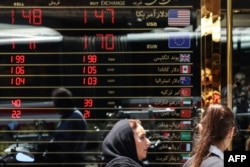
The prices of foreign currencies and gold dropped significantly following the announcement of a US-Iran framework agreement to sign a memorandum of understanding (MoU) aimed at ending the conflict.
"The deal with the Islamic Republic of Iran is now complete," President Donald Trump said in a social media post on June 15. Earlier, Pakistani Prime Minister Shehbaz Sharif -- a key mediator in the US-Iran deal along with the country's army chief -- announced that his country will host the signing ceremony between Iran and the United States in Geneva on June 19.
RFE/RL's Radio Farda, citing websites that track open-market exchange rates and gold prices, reported that the value of the US dollar remained below 162,000 tomans on June 15.
This represents a decline of roughly 10,000 tomans in a single day. Earlier, the US dollar had been trading at around 171,000 tomans. The values of other currencies have also declined on the open market, Radio Farda reported.