




Iran's Top Negotiator Warns Washington Against Threats
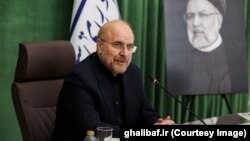
Iranian parliament speaker and top negotiator Mohammad Baqer Qalibaf warned Washington against making threats toward Tehran after US President Donald Trump said he would hit Iran "very hard again" over its "proxies" in Lebanon.
"Don't they think that if their threats had any effect, they would not have reached today's state of desperation? We do not take American threats into account," Qalibaf, who is leading Iranian diplomats in Tehran's talks with the United States, said.
"They would do better to be careful with their statements; our armed forces are ready to respond to them in a different manner. No matter what they say, we are the ones who act," he added.
The exchange between Trump and Qalibaf came as US-Iran implementation talks resumed, with senior US and Iranian delegations converging in Switzerland for what could prove to be a decisive phase in transforming a fragile wartime memorandum into a broader political settlement.
While there were no immediate details on the outcome of the June 21 round of negotiations following Qalibaf's comments, the Israeli-Lebanese conflict and the Strait of Hormuz appeared to remain major fault lines.
On the eve of the talks in Switzerland, Iran's military announced that it was again closing the Strait of Hormuz to all shipping in response to the cease-fire violations in Lebanon.
Trump Threatens To Hit Iran 'Very Hard Again' Over Hezbollah
US President Donald Trump threatened to hit Iran "very hard again" over its "proxies" in Lebanon, as high-level talks are now under way between US Vice President JD Vance and Iranian representatives at the Burgenstock resort in Switzerland on June 21.
"Iran must immediately stop their highly paid PROXIES in Lebanon from causing trouble," Trump posted on social media, referring to Iran-backed Hezbollah, which has been exchanging fire with Israel.
"If they don't, we'll hit Iran very hard again, just like we did last week, only harder!!!” the US president wrote.
Israel Says Troops Free To Act In Lebanon As Cease-Fire Tested

Israeli troops operating in southern Lebanon are free to take action to remove threats, Israeli Defense Minister Israel Katz said, as tensions persist despite a cease-fire, casting a shadow over talks between US and Iranian negotiators in Switzerland.
Katz said on June 21 that troops remained in position in what Israel calls a security zone extending about 10 kilometers into southern Lebanon. He said the protection of Israeli soldiers and civilians “is the highest and unrestricted priority.” Lebanon considers the zone an illegal occupation under international law.
"All of the IDF's [Israel Defense Forces] achievements in the campaign in Lebanon are being preserved, with our forces deployed in the security zone along the Yellow Line in Lebanon and operating from there inward against terrorists and terrorist infrastructures," Katz said in a statement.
A cease-fire took effect on June 19 between Israel and Iran-backed Hezbollah, a militant group and political party that controls much of southern Lebanon. The group is considered a terrorist organization by the United States, while the European Union has blacklisted its armed wing but not its political branch.
The cease-fire followed months of escalating cross-border violence.
However, Israeli air strikes have killed dozens of people in Lebanon since it took effect, according to Lebanese officials.
Israel said the strikes were in response to projectiles fired at its troops in the south, targeting what an Israeli official described as Hezbollah positions.
A Hezbollah official told Reuters the group remains committed to the truce as long as Israel does the same, saying Israeli forces do not have freedom of movement in southern Lebanon.
The official said Hezbollah had not fired on Israeli troops since 6:30 p.m. local time on June 20. Security sources told Reuters that Israel had also launched no major strikes since that time, marking the longest lull since fighting erupted on March 2.
Iranian officials say Lebanon will be a focal point of peace talks in Switzerland, following a framework agreement aimed at halting the broader conflict that began in late February.
US-Iran Talks Begin At Swiss Resort Amid Fragile Regional Truce

LUCERNE, Switzerland -- High-level talks have begun between US Vice President JD Vance and Iranian representatives at the Burgenstock resort in Switzerland, launching what could become the most consequential diplomatic effort yet to stabilize the Middle East after near fourly months of war.
Iranian state media as well as the Foreign Ministry of Qatar, which is acting as mediator, announced the start of negotiations on June 21.
The formal talks are centered on implementing the US-Iran memorandum of understanding (MOU) that established a 60-day cease-fire.
While the core focus remains Iran's nuclear program and mechanisms for deescalation, the talks are expected to unfold across multiple tracks, with side sessions addressing regional flashpoints including Lebanon and maritime security in the Strait of Hormuz. Neither Israel nor Lebanon is directly represented, but both conflicts loom heavily over the discussions.
To read the full report, click here.
Over 4,000 Cases Opened In Isfahan Over January Protests
A senior judiciary official in Iran's central Isfahan Province said 4,044 cases were opened over anti-government protests in January, Iranian media reported on June 21, underscoring the scale of legal proceedings following the unrest.
Abbas Jafari Dolatabadi, the head of the judiciary of the province said 2,899 indictments were issued and 1,975 cases had reached final rulings.
He added that around 890 cases were registered in the provincial capital, Isfahan city alone, with trials continuing across multiple judicial levels.

The rulings include acquittals, fines, and prison sentences up to 30 years. Courts also issued death sentences to those found guilty of "waging war against God," a security-related charge used in Iran for the most serious allegations arising from unrest.
Some verdicts remain under review by the Supreme Court.
Iranian media reported that the figures reflect the extensive judicial follow-up to the January protests, which marked one of several episodes of unrest that Iranian authorities have described as security disturbances.
The January protests formed part of a broader pattern of periodic unrest in Iran, with demonstrations erupting over political and socio-economic grievances and spreading across multiple provinces.
The authorities have since pursued large-scale legal proceedings against those accused of involvement in violence or property damage.
Human rights groups have repeatedly criticized Iran's handling of protest-related prosecutions, raising concerns over due process and the use of broad security charges.
Thousands of people were killed by security forces during the government's violent crackdown on protesters across the country. Some human rights groups estimate the number to be in the tens of thousands.
IAEA's Grossi Hails 'Critical Moment' For US-Iran Talks
Rafael Gross, the director-general of the UN's International Atomic Energy Agency (IAEA) is in Burgenstock, Switzerland, the luxury mountain resort where the US-Iran talks are being held.
Grossi shared a post on X where he hailed the talks as a "critical moment," saying, "It's important to give diplomacy every opportunity to succeed."
The IAEA head posed with Ignazio Cassis, vice president of the Swiss Federal Council.
"Thanks to Switzerland for its longstanding support of the Agency and its commitment to multilateral diplomacy," Grossi added.
US, Iran Delegations To Meet In Afternoon With Mediators Present
Members of the Iranian and US delegations will meet this afternoon in the presence of mediators, the official Islamic Republic News Agency, IRNA, reported on June 21, quoting a spokesman for the Iranian Foreign Ministry.
"Today we have two meetings in the morning and afternoon. We are going to have a one-day meeting. In the morning, bilateral meetings will be held with Pakistani and Qatari delegations as mediators, and in the afternoon, quadrilateral meetings will be held between Iranian and American delegations, with the presence of representatives from Qatar and Pakistan," said ministry spokesman Esmail Baqaei.
Baqaei said the main agenda for today's talks will be the conflict in Lebanon. It was previously announced that this issue had been added to the agenda.
"The start of negotiations for a final agreement is conditional on five specific clauses, including clause one of the memorandum of understanding, which oversees the cessation of war on all fronts, including Lebanon," Baqaei emphasized. "We know that this clause has not been implemented and that America has been unable or unwilling to do so. The Zionist regime continues to violate its commitment."
Iran Claims Foreign Currency Reserves Rose By $4.5 Billion
Iran’s central bank governor, Abdolnasser Hemmati, said the country has added about $4.5 billion to its foreign exchange reserves since the start of the war, Iranian media reported on June 21.
He said the increase was intended to support essential imports and stabilize financial operations amid heightened regional tensions.
Hemmati said the combination of war and sanctions had posed serious challenges to the economy, adding that people's livelihoods had been hit hard by the impact of sanctions across multiple economic sectors.
Iran has been under sustained economic pressure, including from sanctions, conflict-related disruptions and longstanding structural challenges.
Delegations Gather For US-Iran Summit Amid Fragile Regional Truce
LUCERNE, Switzerland -- Delegations from the United States, Iran, Qatar and Pakistan began gathering on June 21 at the Lake Lucerne Summit, launching what could become the most consequential diplomatic effort yet to stabilize the Middle East after weeks of war.
The formal talks, centered on implementing the US-Iran memorandum of understanding that established a 60-day cease-fire, are set to begin within hours, according to RFE/RL reporting from the summit venue.
But officials on all sides acknowledge the process could stretch into the next day, underscoring the complexity of the agenda and the fragility of the truce itself.
To read the full report, click here.
White House Defends Iran Team's Travel Restrictions At World Cup

Andrew Giuliani, executive director of the White House World Cup Task Force, defended the travel restrictions placed on the Iranian national soccer team for the 2026 World Cup, saying the arrangements were still under review but no changes had been made to the plans at this time.
The Iranian team is reportedly unhappy that they are only allowed to enter the host city 24 hours ahead of the tournament and must return to their base in Tijuana, Mexico, immediately after each match. Iranian coach Amir Qalehnoui had previously described his team as "the most oppressed team of the World Cup."
Giuliani said that after Iran's June 21 match against Belgium in Los Angeles, the team would return to Tijuana on a 27-minute flight, after which American officials would discuss arrangements for Iran's third match against Egypt in Seattle.
He also confirmed that all of Iran's players and coaching staff had received visas, but some team officials had not been issued visas. Giuliani cited the existence of "negative information" about some of these individuals as the reason for the decision, saying the US goal was to protect the security of its citizens and international visitors to the World Cup.
The US official added that no credible threats to the tournament have been identified so far, but US intelligence agencies are continuously monitoring the security situation at the World Cup.