

Accessibility links

Breaking News

Water Shortage Fans Discontent In Iranian City Of Tabriz

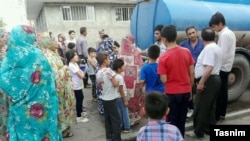
People wait to draw water from a truck in Tabriz on August 4.

A sustained shortage of drinking water in the Iranian city of Tabriz has led to widespread public discontent as the country suffers through a major heat wave that forced the government to declare two days of holiday earlier this week.

The water shortage has severely impacted many areas in Tabriz through the week, with supplies of drinking water has been virtually absent or only accessible for limited periods with reduced pressure in some neighborhoods in the Tabriz metropolis.

Growing dissent over the situation was reflected in a rare opinion article criticizing the authorities by the local news outlet Nasr, which voiced concerns over the "long-term" disruption of water supplies, pointing out that residents are already dealing with a number of issues, including the heat wave, drought, deteriorating living conditions, and inflation.

Iran Orders Nationwide Shutdown Amid Soaring Temperatures, Protests
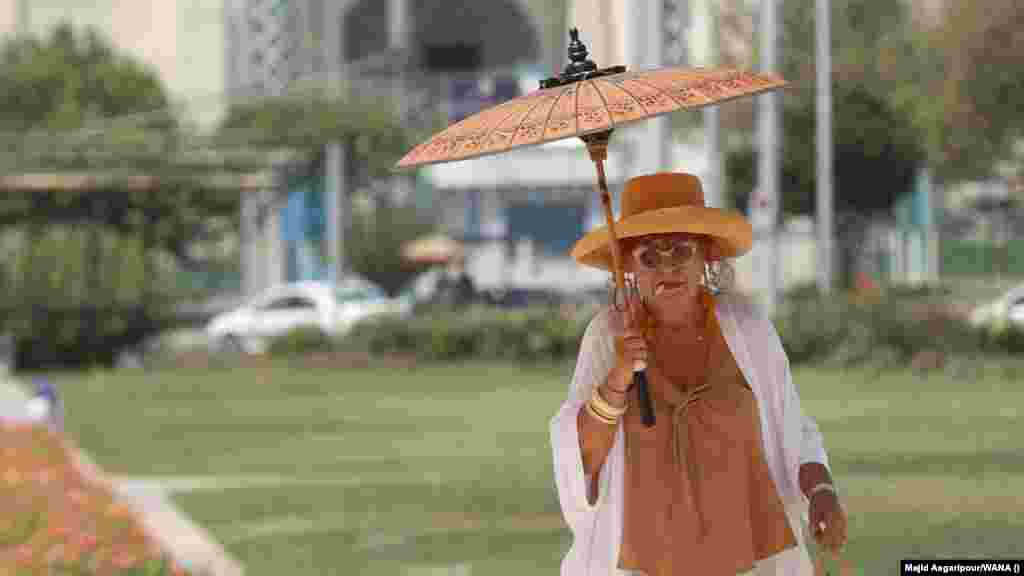
A woman carries a parasol as she tries to stay cool amid an &quot;unprecedented&quot; heat wave in Tehran on August 2. The capital hit 37 degrees Celsius, while other parts of the country saw temperatures hit 40 degrees.<br />
<br />
The extreme heat comes as rising anger over a range of economic issues as well as water outages has led to&nbsp;<strong><a href="https://www.rferl.org/a/iran-water-protests-sistan-baluchistan/32529908.html">protests</a></strong> against the government&#39;s mismanagement of resources.<br />
<br />
&nbsp;
1/7 A woman carries a parasol as she tries to stay cool amid an "unprecedented" heat wave in Tehran on August 2. The capital hit 37 degrees Celsius, while other parts of the country saw temperatures hit 40 degrees.

The extreme heat comes as rising anger over a range of economic issues as well as water outages has led to protests against the government's mismanagement of resources.

 
The Iranian government has ordered government offices, banks, and schools to close for two days, citing "unprecedented heat." It comes at a time of rising anger over water outages that have led to protests against mismanagement of resources.
A man drinks during the heat wave in Tehran.<br />
<br />
The nationwide shutdown of offices, banks, and schools is aimed at conserving energy as the country&#39;s poorly maintained power grid struggles with the higher-than-usual demand.
2/7 A man drinks during the heat wave in Tehran.

The nationwide shutdown of offices, banks, and schools is aimed at conserving energy as the country's poorly maintained power grid struggles with the higher-than-usual demand.
The Iranian government has ordered government offices, banks, and schools to close for two days, citing "unprecedented heat." It comes at a time of rising anger over water outages that have led to protests against mismanagement of resources.
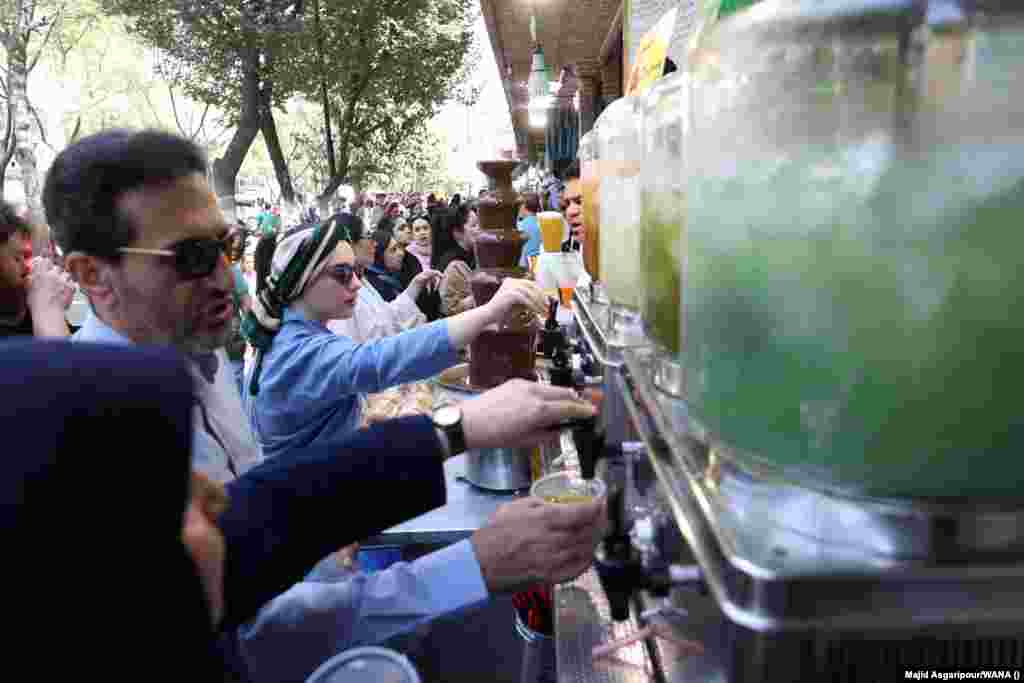
People in Tehran try to cool off with cold drinks.<br />
<br />
With its rivers and lakes drying up and prolonged droughts becoming the norm, the heat wave is highlighting a water crisis in Iran that is turning much of the country&rsquo;s territory to <strong><a href="https://www.rferl.org/a/iran-desertification-mismanagement-dust-crisis-global-warming/32523060.html" target="_self">dust</a></strong>.
3/7 People in Tehran try to cool off with cold drinks.

With its rivers and lakes drying up and prolonged droughts becoming the norm, the heat wave is highlighting a water crisis in Iran that is turning much of the country’s territory to dust.
The Iranian government has ordered government offices, banks, and schools to close for two days, citing "unprecedented heat." It comes at a time of rising anger over water outages that have led to protests against mismanagement of resources.
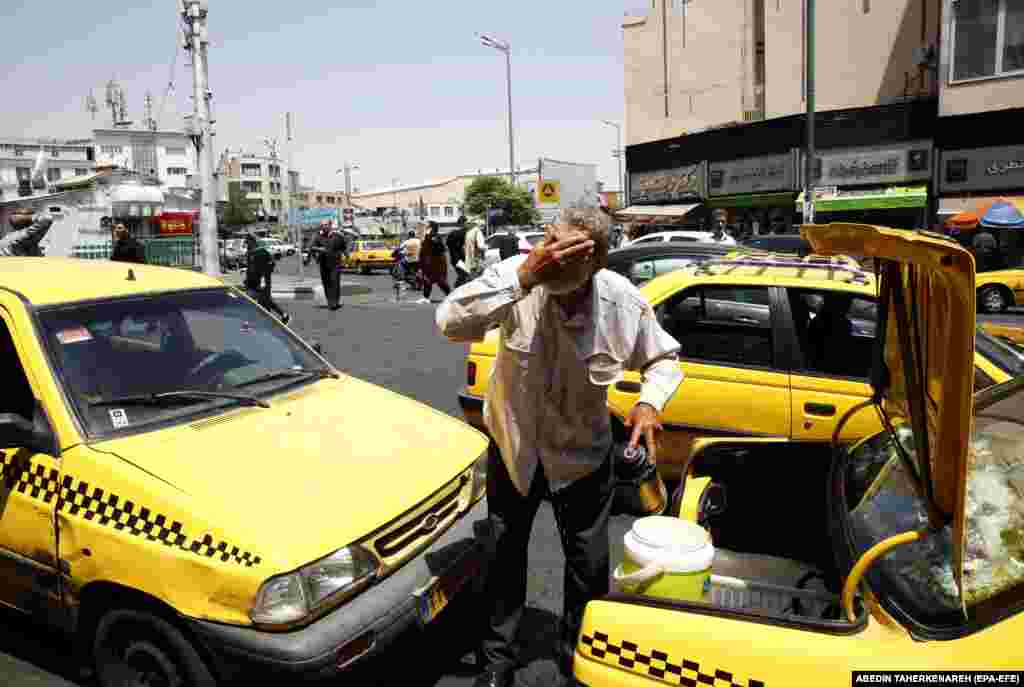
A man in Tehran splashes his face with water from the back of his taxi.<br />
<br />
&nbsp;
4/7 A man in Tehran splashes his face with water from the back of his taxi.

 
The Iranian government has ordered government offices, banks, and schools to close for two days, citing "unprecedented heat." It comes at a time of rising anger over water outages that have led to protests against mismanagement of resources.
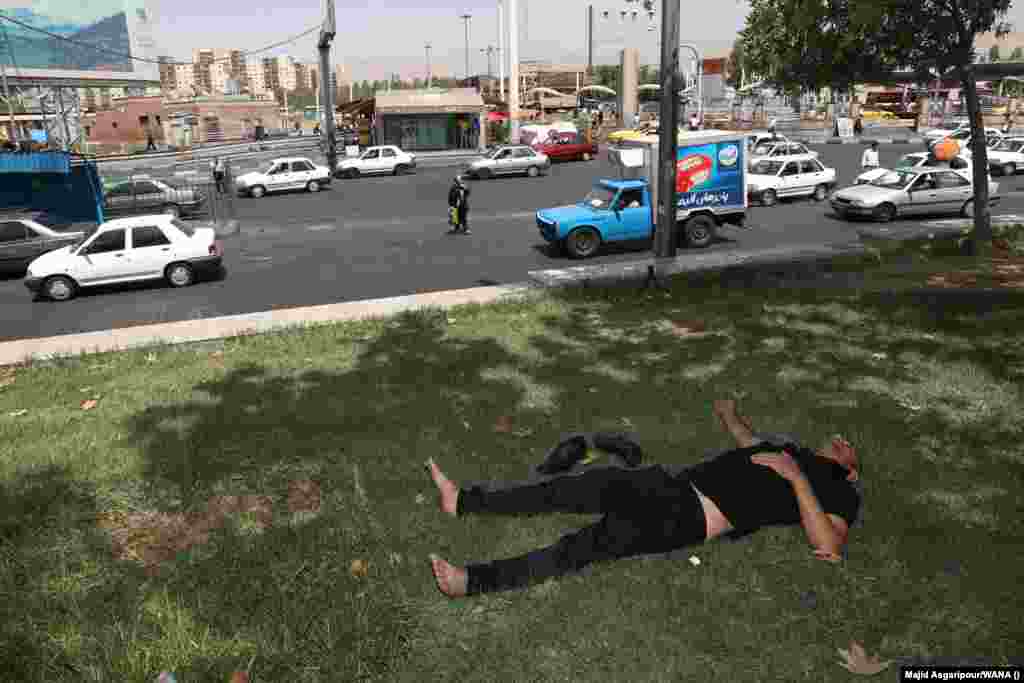
A man rests in the shade near a busy road in Tehran.<br />
<br />
The Health Ministry also warned that the two-day shutdown may need to be extended to protect people&rsquo;s health.
5/7 A man rests in the shade near a busy road in Tehran.

The Health Ministry also warned that the two-day shutdown may need to be extended to protect people’s health.
The Iranian government has ordered government offices, banks, and schools to close for two days, citing "unprecedented heat." It comes at a time of rising anger over water outages that have led to protests against mismanagement of resources.
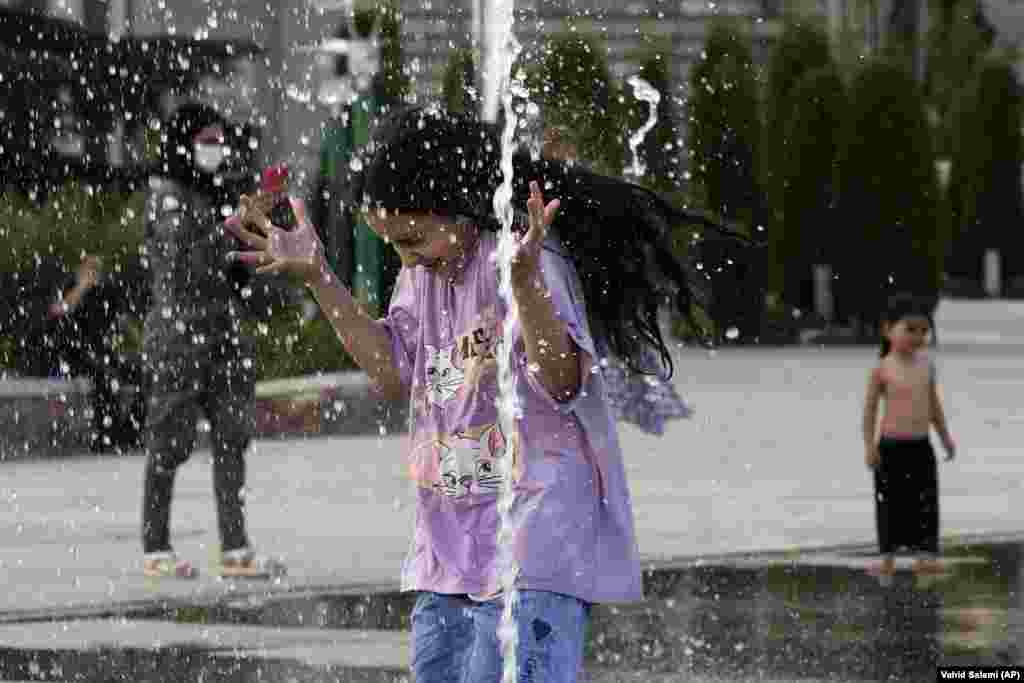
A young girl cools off in a water fountain at Tehran&#39;s Ebrahim Park as temperatures reached 38 degrees Celsius on August 1.<br />
<br />
State media reported temperatures had this week exceeded 51 degrees Celsius in the southern city of Ahvaz.&nbsp;
6/7 A young girl cools off in a water fountain at Tehran's Ebrahim Park as temperatures reached 38 degrees Celsius on August 1.

State media reported temperatures had this week exceeded 51 degrees Celsius in the southern city of Ahvaz. 
The Iranian government has ordered government offices, banks, and schools to close for two days, citing "unprecedented heat." It comes at a time of rising anger over water outages that have led to protests against mismanagement of resources.
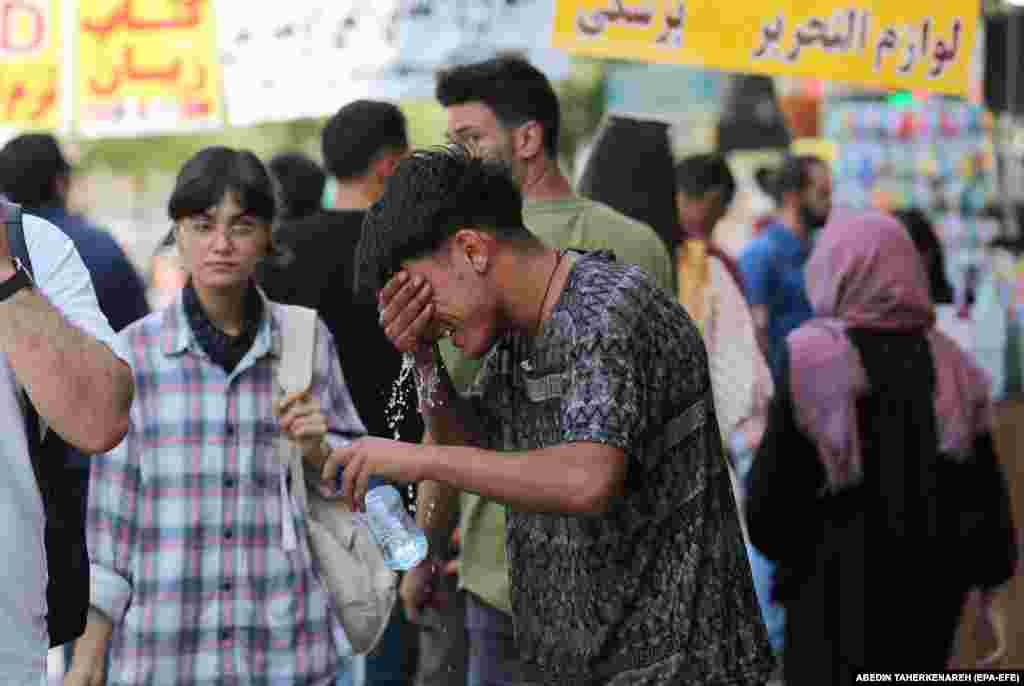
A boy tries to cool off with a bottle of water in Tehran.<br />
<br />
Ahvaz holds the record for Asia&rsquo;s hottest official temperature of 54 degrees Celsius, which it recorded in 2017.<br />
&nbsp;
7/7 A boy tries to cool off with a bottle of water in Tehran.

Ahvaz holds the record for Asia’s hottest official temperature of 54 degrees Celsius, which it recorded in 2017.
 
The Iranian government has ordered government offices, banks, and schools to close for two days, citing "unprecedented heat." It comes at a time of rising anger over water outages that have led to protests against mismanagement of resources.
Previous slide
Next slide

Meanwhile, the Shams Tabriz news site called the situation a "parade on the nerves of Tabriz citizens."

The head of the East Azerbaijan Water and Wastewater Company, Mohammad Khani, attributed the water shortage in Tabriz to "excessive consumption" sparked by the heat wave, which led to a 20 percent surge in water usage, resulting in lower water pressure and consequent water cuts.

Khani said the company was moving quickly and that the drinking water situation will be restored to normal by tapping into new water sources. He also warned residents to exercise "water-consumption control" to prevent future cuts.

Khani didn't give details on where new supplies might come from, an issue given the drying of the Nahand reservoir, a crucial water source for Tabriz.

The reservoir, usually full this time of year, has dried up to the point where local media have dubbed it the "Nahand Desert."

In response to the crisis, the East Azerbaijan Regional Water Company said it plans to implement a project that would channel water upstream from the Nahand dam to optimize the use of groundwater.

The situation mirrors that in many cities across the country, where water shortages -- and protests over the water crisis -- are becoming more commonplace.
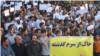
In recent weeks, several cities in Iran have faced similar water shortages, including Zahedan and Ahvaz. Even smaller cities, like Divandareh in Kurdistan Province, have been affected, with citizens launching protests due to continuous water cuts.

Experts say climate change has amplified droughts and floods plaguing Iran, and that their intensity and frequency threaten food security.

The Iranian Meteorological Organization has estimated that 97 percent of the country is experiencing drought to some degree.

Written by Ardeshir Tayebi based on an original story in Persian by RFE/RL's Radio Farda
  • 16x9 Image

    RFE/RL's Radio Farda

    RFE/RL's Radio Farda breaks through government censorship to deliver accurate news and provide a platform for informed discussion and debate to audiences in Iran.

This item is part of
XS
SM
MD
LG