


Accessibility links

Breaking News

'This Revolution Is Still Alive': A Growing Number Of Iranian Women Defy The Hijab Law After Months Of Protests

A woman walks without a hijab in Azadi Square in Tehran in January.

Assal appeared in public for months without a hijab, or Islamic head scarf, in solidarity with the antiestablishment protests that rocked Iran.

Even as the demonstrations that erupted in September have waned in recent weeks following a deadly state crackdown, the Tehran resident has continued to flout the country’s hijab law, in a direct challenge to Iran’s clerical regime.

“I want to demonstrate to [the authorities] that this revolution is still alive, and our people will [fight] them with any means they can,” the 32-year-old obstetrician, who requested that her full name not be used for fear of retribution, told RFE/RL’s Radio Farda.

“When I walk past [security officers in the street] without a hijab, it’s not easy. My whole body shakes. But I will never back down. I will keep protesting,” she added.

Tanya, another Tehran resident, said women are removing their head scarves to take a stand against the clerical establishment that has deprived them of their most basic rights, including the right to choose how they appear in public.

“Women see it as their absolute right, a right they have been denied for years,” said the psychologist, who also requested that her full name not be used. “I’m protesting the status quo.”

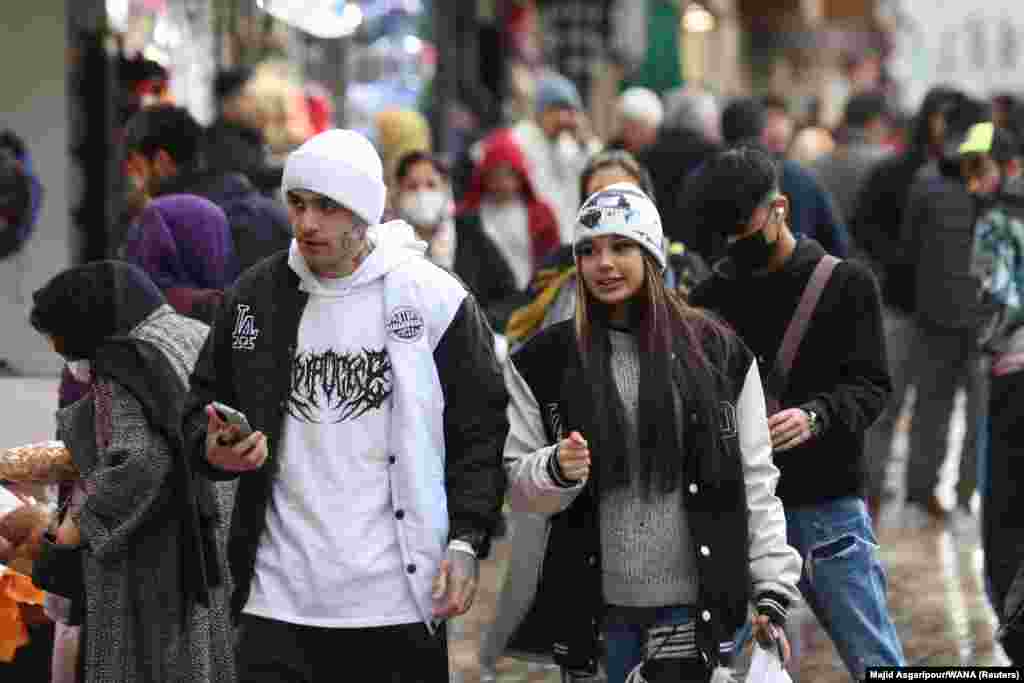
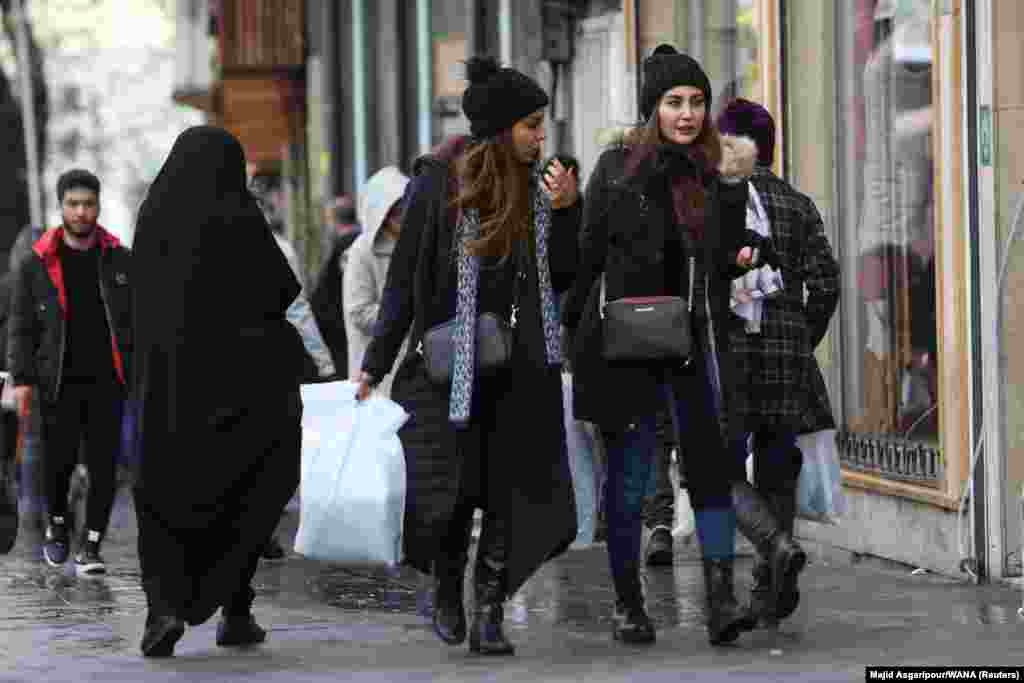
Assal and Tanya are among a growing number of Iranian women who are appearing in public with their hair uncovered, including in the streets of major cities as well in restaurants, cafes, and shopping malls. They have been emboldened by the anti-regime protests in which women played a major role.

The demonstrations erupted following the September 16 death of 22-year-old Mahsa Amini soon after she was arrested by Iran’s morality police for allegedly violating the hijab law.

In Iran, More And More Photos Show Women Ditching The Hijab

This December 24 photo, of a young couple playing with snow on a hilltop above Tehran, is one of several recent images showing Iranian women in public without the hijab, the Islamic head covering that has been mandatory for women in Iran since 1983. 
1/10 This December 24 photo, of a young couple playing with snow on a hilltop above Tehran, is one of several recent images showing Iranian women in public without the hijab, the Islamic head covering that has been mandatory for women in Iran since 1983. 
Amid ongoing unrest, some Iranian women are now going about their lives without Islamic mandatory head coverings.
A woman in a market in Tehran on December 5.&nbsp;<br />
<br />
Iran has been rocked by months of protests that erupted in September following the death of Kurdish-Iranian woman Mahsa Amini, who was detained by Tehran&#39;s morality police. Amini was flagged for tight trousers and for wearing her hijab &quot;improperly.&quot;&nbsp;
2/10 A woman in a market in Tehran on December 5. 

Iran has been rocked by months of protests that erupted in September following the death of Kurdish-Iranian woman Mahsa Amini, who was detained by Tehran's morality police. Amini was flagged for tight trousers and for wearing her hijab "improperly." 
Amid ongoing unrest, some Iranian women are now going about their lives without Islamic mandatory head coverings.
Two women, one of whom has removed her head scarf, walk in Tehran on December 6.&nbsp;<br />
<br />
In 1983, Iran&#39;s Islamist government decreed that &quot;women who appear in public without religious hijab will be sentenced to a whipping of up to 74 lashes,&quot; though short terms of imprisonment were a more common punishment.&nbsp;
3/10 Two women, one of whom has removed her head scarf, walk in Tehran on December 6. 

In 1983, Iran's Islamist government decreed that "women who appear in public without religious hijab will be sentenced to a whipping of up to 74 lashes," though short terms of imprisonment were a more common punishment. 
Amid ongoing unrest, some Iranian women are now going about their lives without Islamic mandatory head coverings.
A young Iranian woman takes a selfie in front of Christmas trees in Tehran on December 25.&nbsp;<br />
<br />
In recent years, women deemed by the country&#39;s morality police to be flouting head-covering laws were made to attend a lecture on &quot;Islamic values.&quot; A family member was then permitted to collect them for release.
4/10 A young Iranian woman takes a selfie in front of Christmas trees in Tehran on December 25. 

In recent years, women deemed by the country's morality police to be flouting head-covering laws were made to attend a lecture on "Islamic values." A family member was then permitted to collect them for release.
Amid ongoing unrest, some Iranian women are now going about their lives without Islamic mandatory head coverings.
A woman walks through Tehran on December 4.&nbsp;<br />
<br />
Amid massive unrest following Amini&#39;s death, Iran apparently cut back patrols of the morality police in early December. A small but growing number of women have since taken to the streets in defiance of the Islamic government&#39;s law on head scarves by wearing only hats -- or no head covering at all.
5/10 A woman walks through Tehran on December 4. 

Amid massive unrest following Amini's death, Iran apparently cut back patrols of the morality police in early December. A small but growing number of women have since taken to the streets in defiance of the Islamic government's law on head scarves by wearing only hats -- or no head covering at all.
Amid ongoing unrest, some Iranian women are now going about their lives without Islamic mandatory head coverings.
A couple in Tehran on December 6.&nbsp;<br />
<br />
A video published in early December shows two women <strong><a href="https://twitter.com/IranIntl/status/1601936741958619136?ref_src=twsrc%5Etfw%7Ctwcamp%5Etweetembed%7Ctwterm%5E1601936741958619136%7Ctwgr%5Ee075b6a097bae22f654b6fdd704524e7dab95d32%7Ctwcon%5Es1_&amp;ref_url=https%3A%2F%2Fwww.voanews.com%2Fa%2Firan-curbs-morality-police-amid-protests-uses-other-oppressive-tools%2F6890389.html">walking down one of Tehran&#39;s central streets</a></strong> with their hair uncovered, a scene that was widely shared at the time but which now appears to be relatively common.&nbsp;<br />
&nbsp;
6/10 A couple in Tehran on December 6. 

A video published in early December shows two women walking down one of Tehran's central streets with their hair uncovered, a scene that was widely shared at the time but which now appears to be relatively common. 
 
Amid ongoing unrest, some Iranian women are now going about their lives without Islamic mandatory head coverings.
Women chatting in a park after a snowfall in Tehran on December 24.&nbsp;<br />
<br />
A <a href="https://www.voanews.com/a/iran-curbs-morality-police-amid-protests-uses-other-oppressive-tools/6890389.html"><strong>Voice of America report</strong> </a>cites a Washington-based rights group as claiming patrols by the morality police disappeared from Tehran&#39;s wealthier neighborhoods in recent weeks.&nbsp;
7/10 Women chatting in a park after a snowfall in Tehran on December 24. 

A Voice of America report cites a Washington-based rights group as claiming patrols by the morality police disappeared from Tehran's wealthier neighborhoods in recent weeks. 
Amid ongoing unrest, some Iranian women are now going about their lives without Islamic mandatory head coverings.
Women in Tehran on December 6.&nbsp;<br />
<br />
In some cities outside of Tehran however, restrictions on clothing apparently remain in full force.&nbsp;
8/10 Women in Tehran on December 6. 

In some cities outside of Tehran however, restrictions on clothing apparently remain in full force. 
Amid ongoing unrest, some Iranian women are now going about their lives without Islamic mandatory head coverings.
A woman wearing a woollen hat watches two dogs playing in a park in Tehran on December 24.&nbsp;<br />
<br />
A recent <a href="https://www.irna.ir/news/84974553/%D9%BE%D9%86%D8%AC-%D9%88%D8%A7%D8%AD%D8%AF-%D8%B5%D9%86%D9%81%DB%8C-%D8%AF%D8%B1-%D9%82%D8%B2%D9%88%DB%8C%D9%86-%D8%A8%D8%AF%D9%84%DB%8C%D9%84-%D8%B9%D8%AF%D9%85-%D8%B1%D8%B9%D8%A7%DB%8C%D8%AA-%D8%B4%D8%A6%D9%88%D9%86%D8%A7%D8%AA-%D8%A7%D8%B3%D9%84%D8%A7%D9%85%DB%8C-%D9%BE%D9%84%D9%85%D8%A8-%D8%B4%D8%AF">report from IRNA</a>, an official Iranian news agency describes five businesses in Iran&#39;s northwestern Qazvin province&nbsp;being temporarily shut down in punishment for serving women who were not wearing hijabs.&nbsp;
9/10 A woman wearing a woollen hat watches two dogs playing in a park in Tehran on December 24. 

A recent report from IRNA, an official Iranian news agency describes five businesses in Iran's northwestern Qazvin province being temporarily shut down in punishment for serving women who were not wearing hijabs. 
Amid ongoing unrest, some Iranian women are now going about their lives without Islamic mandatory head coverings.
A woman looking at Christmas decorations in Tehran on December 25.&nbsp;<br />
<br />
As of December 26, <a href="https://www.rferl.org/a/iran-protests-continue-amini-/32195702.html?fbclid=IwAR2TbYwHXRNdP4Cpmh9Xra-Aj0Y-qZoDN6ZLRW_l2IKuv6tayx4MEserpqo">protests were ongoing</a> in some parts of Iran over the deadly crackdowns on demonstrations sparked by Amini&#39;s death in September.&nbsp;<br />
<br />
&nbsp;
10/10 A woman looking at Christmas decorations in Tehran on December 25. 

As of December 26, protests were ongoing in some parts of Iran over the deadly crackdowns on demonstrations sparked by Amini's death in September. 

 
Amid ongoing unrest, some Iranian women are now going about their lives without Islamic mandatory head coverings.
Previous slide
Next slide

The protests began as a rebuke against the brutal enforcement of the hijab law but soon snowballed into one of the most sustained anti-regime demonstrations against Iran’s theocracy, with protesters calling for an end to clerical rule and demanding their social and political freedoms.

During the demonstrations, women and girls removed and burned their head scarves. With the protests subsiding after a state crackdown that left over 500 dead, women are venting their anger through acts of civil disobedience.

Tehran-based women’s rights activist Leyla Mirghafari said the antiestablishment protests have intensified women’s opposition to the hijab, a key pillar of the Islamic republic.

Many Iranians have had enough of the “unjust, repressive, and anti-women law,” Mirghafari, who was arrested in 2018 for removing her head scarf in public, told RFE/RL.

'The Youth Are Fearless'

The hijab became compulsory two years after the 1979 Islamic Revolution. The law requires women and girls over the age of 9 to wear a head scarf in public.

Many women have flouted the rule over the years and pushed the boundaries of what officials say is acceptable, including exposing more of their hair and wearing smaller and more colorful head scarves.

In 2018, dozens of women protested the hijab law by standing on utility boxes in major cities and waving their head scarves, in unprecedented acts of defiance.

Under President Hassan Rohani, a relative moderate who was in office from 2013 to 2021, the enforcement of the hijab law was relaxed. But under ultraconservative Ebrahim Raisi, Iran’s morality police have become increasingly active and violent in enforcing what the authorities have called the “complete hijab.”
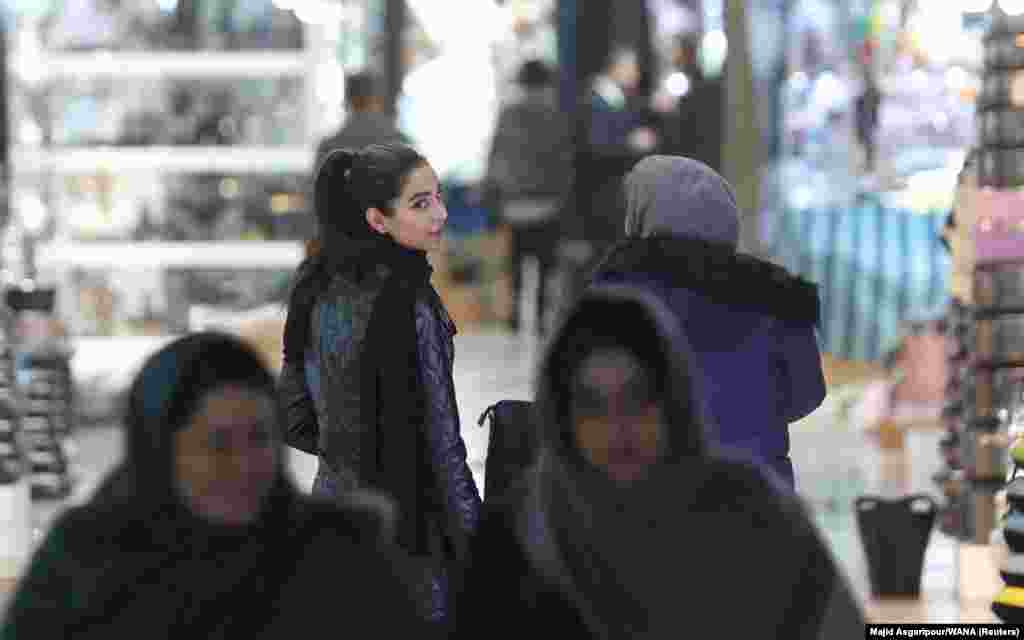
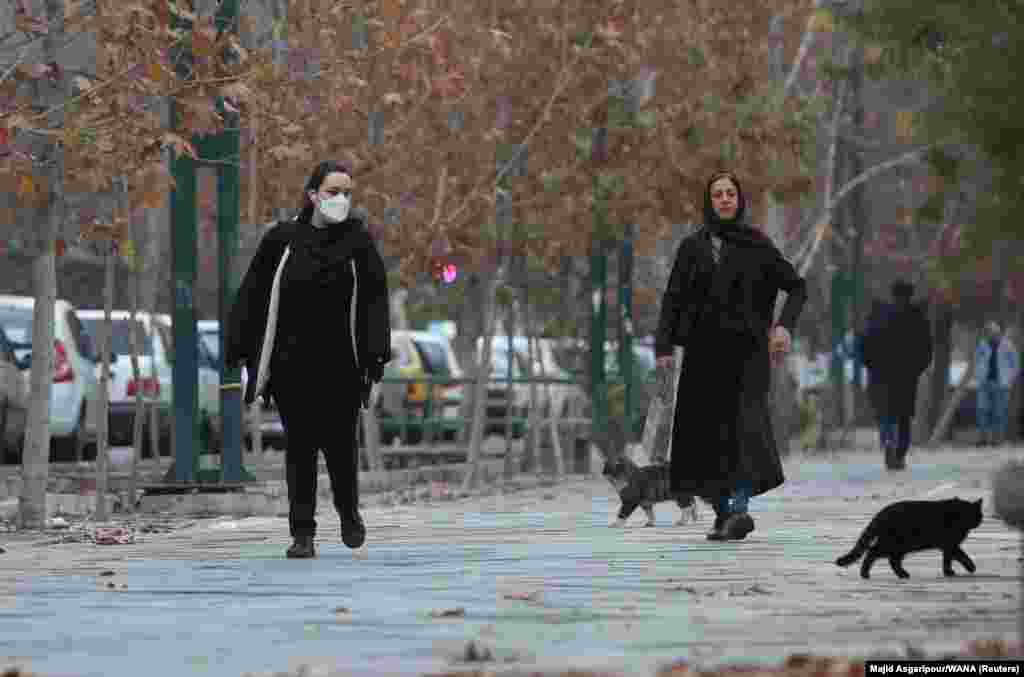
A woman walks with her hair uncovered through Tehran in December.

That has fueled growing opposition to the hijab, which has long been a symbol of the state’s repression of women.

Mahsa, a mother of two, said that even in the holy city of Mashhad an increasing number of women are appearing in public without a hijab.

“I go shopping without my head scarf. I keep it around my neck. But the youth are fearless. Some don’t even have a head scarf,” Mahsa, who requested that her full name not be used for fear of retribution, told RFE/RL.

Authorities announced in December that the morality police, which enforced the hijab rule, had been abolished. But they warned that the judiciary would continue to regulate women’s public appearances and behavior.
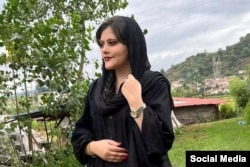
Twenty-two-year-old Mahsa Amini died on September 16 soon after she was arrested by Iran’s morality police for allegedly violating the hijab law.

In recent weeks, officials have warned women to respect the hijab law and threatened to punish violators. The authorities have also shut down businesses, restaurants, cafes, and in some cases pharmacies, due to the owners' or managers' alleged failure to observe Islamic laws and hijab rules.

Judiciary chief Gholamhossein Mohseni Ejei warned on March 6 that women who violate the hijab rule will be punished, saying that removing the head scarf shows “enmity towards the establishment and its values.”

Assal is aware that she could be arrested or fined for flouting the law. But she remains defiant.

“Even if they arrest me, they can’t do [much]. My protest is more important,” she said.

In recent weeks, even women newly released from prison have appeared in public without their head scarves.

They include filmmaker Mojgan Ilanlou, who was sentenced to 10 years in prison and 74 lashes after appearing in public without a hijab in October.

After being released in February as part of an amnesty ordered by Supreme Leader Ayatollah Ali Khamenei, Ilanlou stood outside Tehran’s notorious Evin prison without a head scarf and flashed the victory sign.

Some commentators inside Iran have suggested that the authorities are fighting a losing battle.

“The number of women who appear in the streets without a head scarf is impressive,” conservative commentator Mohammad Mohajeri wrote in an opinion piece published in November.

“It is possible that what we’re seeing will become the norm,” he said, comparing the hijab rule to laws banning satellites dishes and receivers that Iranians widely ignore.

Canada-based rights activist Azam Jangravi said the hijab is the symbol of "the problems women face in Iran.”

“The [mandatory] hijab is the naked face of all the injustice and oppression women have faced,” Jangravi, who was among women arrested in 2018 for protesting the hijab, told RFE/RL.

  • 16x9 Image

    Golnaz Esfandiari

    Golnaz Esfandiari is managing editor of RFE/RL's Radio Farda, which breaks through government censorship to deliver accurate news and provide a platform for informed discussion and debate to audiences in Iran. She has reported from Afghanistan and Haiti and is one of the authors of The Farda Briefing newsletter. Her work has been cited by The New Yorker, The New York Times, The Washington Post, and other major publications. Born and raised in Tehran, she is fluent in Persian, French, English, and Czech.

  • 16x9 Image

    Mohammad Zarghami

    Mohammad Zarghami is a senior journalist and anchor at RFE/RL's Radio Farda who reported from Tehran before moving to Prague. He focuses on Iran's politics and social issues. Zarghami has conducted dozens of interviews with prominent Iranian and international public figures.

This item is part of
XS
SM
MD
LG