Children displaying photos of war victims stand in front of the damaged Darul Aman Palace just outside of Kabul, which was one of the area's many casualties, before its reconstruction.
Nineteenth-century Lahori poet Mohammed Iqbal once wrote in a poem that “Kabul’s splendor cannot fall into the grasp of words,” praising its climate “resembling paradise” and its water “so glittering and earth radiant.”
He was writing of Kabul’s glory in the 1930s, when the 3,500-year-old city was famous for its mosques, gardens, and temperate year-round weather.
Once a role model for the rest of the world, the Afghan capital was a hub of innovation, modernity, progressive ideas, and urban living, representing tolerant times for both the country and Southwest Asia in the 1960s and ’70s.
But today’s Kabul is a shadow of its former self. The charm immortalized by Iqbal and others has lost its shine from decades of violence and oppression and seems a distant memory for residents.
Before the Soviet invasion of 1979 and the rise of radical Islam, Kabul natives and urbanites -- known as Kabulis -- basked in their safe and modern city. As Afghanistan developed from the 1930s through the 1970s, Kabul showcased the nation’s progress and earned the nickname “the Paris of Central Asia.”
A minority elite and upper-class group, Kabulis relished their advanced city, which was starkly different from the Afghan countryside neglected by the government. Residents of the capital held powerful sway over the rest of the country as Kabul’s ideologies, lifestyles, and power dynamics carried considerable influence.
The 1960s and 1970s in particular are known as Kabul’s golden era, when the city was a blend of both modern and traditional. These were times when women paired miniskirts and headscarves, people enjoyed personal freedoms, and hippies and travelers flocked to the capital from around the world. The city of gardens ringed by snowcapped mountains became a quirky and off-the-grid tourist destination.
“I’ve always thought it was one of the most beautiful places in the world,” Thomas Gouttierre, a former academic at the University of Nebraska, recalled of his decade in Afghanistan to the New York Times. He lived in Kabul from 1964 to 1974.
Afghanistan As It Once Was
1/26An Afghan military band assembles for an unknown event.
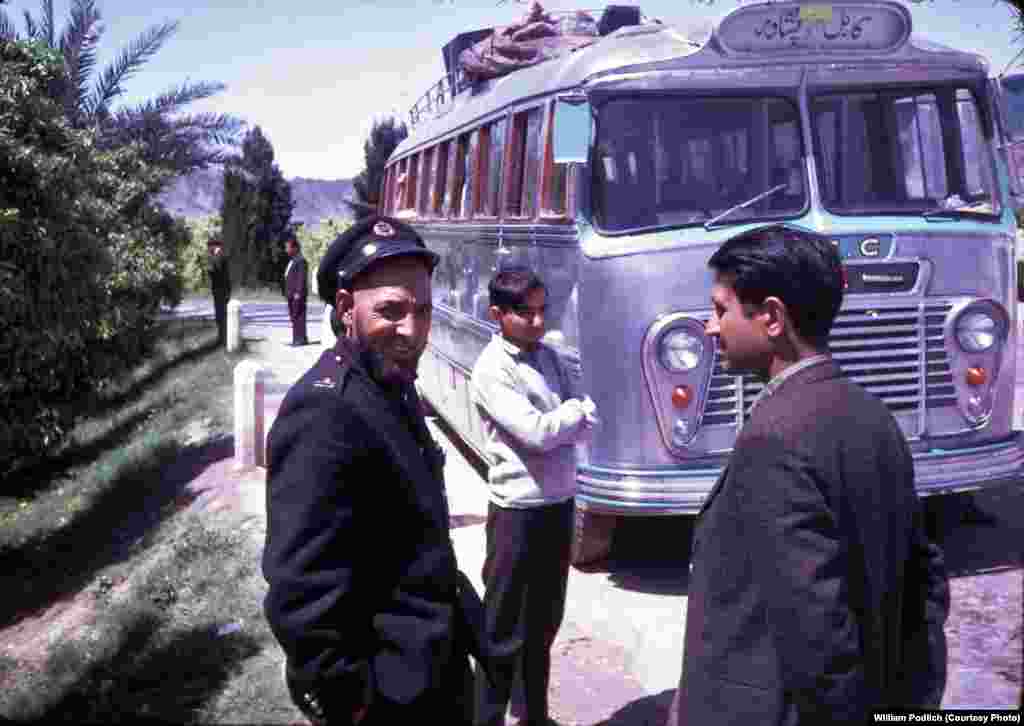
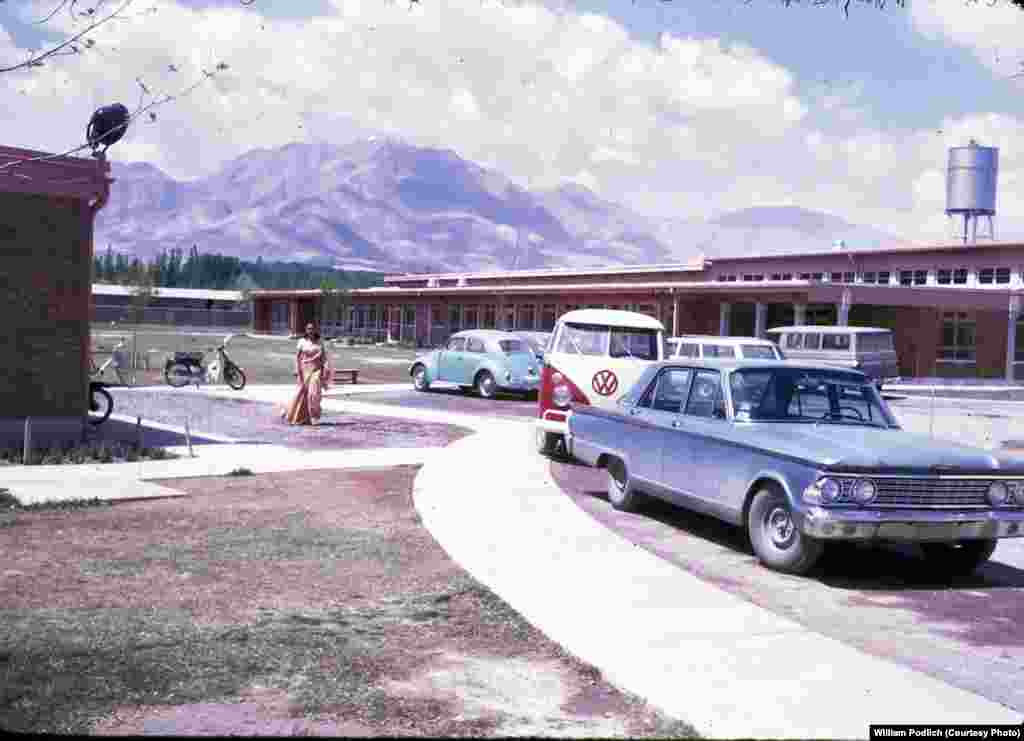
The Kabul in William Podlich's photographs is an almost unrecognizable place -- a bustling capital of nattily attired men and women, many wearing Western dress; modern cars; and green parks. A place where women -- Afghans and foreigners -- could freely walk the streets. A peaceful place where tourists, unconcerned for their safety, could take buses to the major historic sites in the country or across the border to Pakistan.
In 1967, Podlich, a professor at Arizona State University, began a two-year stint in Afghanistan with UNESCO, teaching at the Higher Teachers College in Kabul. He brought along his wife, Margaret, and Peg and Jan, his two teenaged daughters.
Podlich, an amateur photographer, recorded his adventures in hundreds of photographs that his family is now sharing with the world. Podlich retired from Arizona State in 1981 and died in 2008 at the age of 92.
“When I look at my dad’s photos, I remember Afghanistan as a country with thousands of years of history and culture,” Peg Podlich told "The Denver Post," which worked with the family to first publish the photos. “It has been a gut-wrenching experience to watch and hear about the profound suffering which has occurred in Afghanistan during the battles of war for nearly 40 years. Fierce and proud yet fun-loving people have been beaten down by terrible forces."
Clayton Esterson, Peg Podlich's husband, who has assumed the role of archivist for the photographs, told "The Denver Post": "Many Afghans have written comments showing their appreciation for the photographs that show what their country was like before 33 years of war. This makes the effort to digitize and restore these photographs worthwhile." (26 PHOTOS)
Show moreShow less
2/26Of her father, Dr. William Podlich (second from left), Peg Podlich said: "He had always said that since he had served in WWII...he wanted to serve in the cause of peace. In 1967, he was hired by UNESCO as an expert on principles of education for a two-year stint in Kabul.... Throughout his adult life, because he was interested in social studies, whenever he traveled around [in Arizona, to Mexico, and other places] he continued to take pictures. In Afghanistan he took half-frame color slides [on Kodachrome] and I believe he used a small Olympus camera."
The Kabul in William Podlich's photographs is an almost unrecognizable place -- a bustling capital of nattily attired men and women, many wearing Western dress; modern cars; and green parks. A place where women -- Afghans and foreigners -- could freely walk the streets. A peaceful place where tourists, unconcerned for their safety, could take buses to the major historic sites in the country or across the border to Pakistan.
In 1967, Podlich, a professor at Arizona State University, began a two-year stint in Afghanistan with UNESCO, teaching at the Higher Teachers College in Kabul. He brought along his wife, Margaret, and Peg and Jan, his two teenaged daughters.
Podlich, an amateur photographer, recorded his adventures in hundreds of photographs that his family is now sharing with the world. Podlich retired from Arizona State in 1981 and died in 2008 at the age of 92.
“When I look at my dad’s photos, I remember Afghanistan as a country with thousands of years of history and culture,” Peg Podlich told "The Denver Post," which worked with the family to first publish the photos. “It has been a gut-wrenching experience to watch and hear about the profound suffering which has occurred in Afghanistan during the battles of war for nearly 40 years. Fierce and proud yet fun-loving people have been beaten down by terrible forces."
Clayton Esterson, Peg Podlich's husband, who has assumed the role of archivist for the photographs, told "The Denver Post": "Many Afghans have written comments showing their appreciation for the photographs that show what their country was like before 33 years of war. This makes the effort to digitize and restore these photographs worthwhile." (26 PHOTOS)
Show moreShow less
3/26"I grew up in Tempe, Arizona, and when my dad offered my younger sister, Jan, and me the chance to go with him and our mother to Afghanistan, I was excited about the opportunity," says Peg Podlich (right). "I would spend my senior year in high school in some exotic country, not in ordinary Tempe.... Of course, there were loads of cultural differences between Arizona and Afghanistan, but I had very interesting and entertaining experiences. People always seemed friendly and helpful. I never got into any real difficulties or scrapes, even though I was a fairly clueless teenager! Times were more gentle back then."
The Kabul in William Podlich's photographs is an almost unrecognizable place -- a bustling capital of nattily attired men and women, many wearing Western dress; modern cars; and green parks. A place where women -- Afghans and foreigners -- could freely walk the streets. A peaceful place where tourists, unconcerned for their safety, could take buses to the major historic sites in the country or across the border to Pakistan.
In 1967, Podlich, a professor at Arizona State University, began a two-year stint in Afghanistan with UNESCO, teaching at the Higher Teachers College in Kabul. He brought along his wife, Margaret, and Peg and Jan, his two teenaged daughters.
Podlich, an amateur photographer, recorded his adventures in hundreds of photographs that his family is now sharing with the world. Podlich retired from Arizona State in 1981 and died in 2008 at the age of 92.
“When I look at my dad’s photos, I remember Afghanistan as a country with thousands of years of history and culture,” Peg Podlich told "The Denver Post," which worked with the family to first publish the photos. “It has been a gut-wrenching experience to watch and hear about the profound suffering which has occurred in Afghanistan during the battles of war for nearly 40 years. Fierce and proud yet fun-loving people have been beaten down by terrible forces."
Clayton Esterson, Peg Podlich's husband, who has assumed the role of archivist for the photographs, told "The Denver Post": "Many Afghans have written comments showing their appreciation for the photographs that show what their country was like before 33 years of war. This makes the effort to digitize and restore these photographs worthwhile." (26 PHOTOS)
Show moreShow less
4/26Peg Podlich (in sunglasses) during a family trip by bus from Kabul to Peshawar, Pakistan.
The Kabul in William Podlich's photographs is an almost unrecognizable place -- a bustling capital of nattily attired men and women, many wearing Western dress; modern cars; and green parks. A place where women -- Afghans and foreigners -- could freely walk the streets. A peaceful place where tourists, unconcerned for their safety, could take buses to the major historic sites in the country or across the border to Pakistan.
In 1967, Podlich, a professor at Arizona State University, began a two-year stint in Afghanistan with UNESCO, teaching at the Higher Teachers College in Kabul. He brought along his wife, Margaret, and Peg and Jan, his two teenaged daughters.
Podlich, an amateur photographer, recorded his adventures in hundreds of photographs that his family is now sharing with the world. Podlich retired from Arizona State in 1981 and died in 2008 at the age of 92.
“When I look at my dad’s photos, I remember Afghanistan as a country with thousands of years of history and culture,” Peg Podlich told "The Denver Post," which worked with the family to first publish the photos. “It has been a gut-wrenching experience to watch and hear about the profound suffering which has occurred in Afghanistan during the battles of war for nearly 40 years. Fierce and proud yet fun-loving people have been beaten down by terrible forces."
Clayton Esterson, Peg Podlich's husband, who has assumed the role of archivist for the photographs, told "The Denver Post": "Many Afghans have written comments showing their appreciation for the photographs that show what their country was like before 33 years of war. This makes the effort to digitize and restore these photographs worthwhile." (26 PHOTOS)
Show moreShow less
5/26Jan Podlich is pictured during a shopping trip to Istalif, a village about 30 kilometers northwest of Kabul. "We arrived in Kabul one sunshiny morning in June.... My dad met us and was able to whisk us through the customs. We proceeded into Kabul in a UN 'kombi' (kind of an old-school SUV). I was tired, but I can remember being amazed at the sight of colorful (dark blue, green, and maroon) ghosts that were wafting along the side of the road. My dad explained there were women underneath those chadris and that some women had to wear them out in public. We never called the garments burqas."
The Kabul in William Podlich's photographs is an almost unrecognizable place -- a bustling capital of nattily attired men and women, many wearing Western dress; modern cars; and green parks. A place where women -- Afghans and foreigners -- could freely walk the streets. A peaceful place where tourists, unconcerned for their safety, could take buses to the major historic sites in the country or across the border to Pakistan.
In 1967, Podlich, a professor at Arizona State University, began a two-year stint in Afghanistan with UNESCO, teaching at the Higher Teachers College in Kabul. He brought along his wife, Margaret, and Peg and Jan, his two teenaged daughters.
Podlich, an amateur photographer, recorded his adventures in hundreds of photographs that his family is now sharing with the world. Podlich retired from Arizona State in 1981 and died in 2008 at the age of 92.
“When I look at my dad’s photos, I remember Afghanistan as a country with thousands of years of history and culture,” Peg Podlich told "The Denver Post," which worked with the family to first publish the photos. “It has been a gut-wrenching experience to watch and hear about the profound suffering which has occurred in Afghanistan during the battles of war for nearly 40 years. Fierce and proud yet fun-loving people have been beaten down by terrible forces."
Clayton Esterson, Peg Podlich's husband, who has assumed the role of archivist for the photographs, told "The Denver Post": "Many Afghans have written comments showing their appreciation for the photographs that show what their country was like before 33 years of war. This makes the effort to digitize and restore these photographs worthwhile." (26 PHOTOS)
Show moreShow less
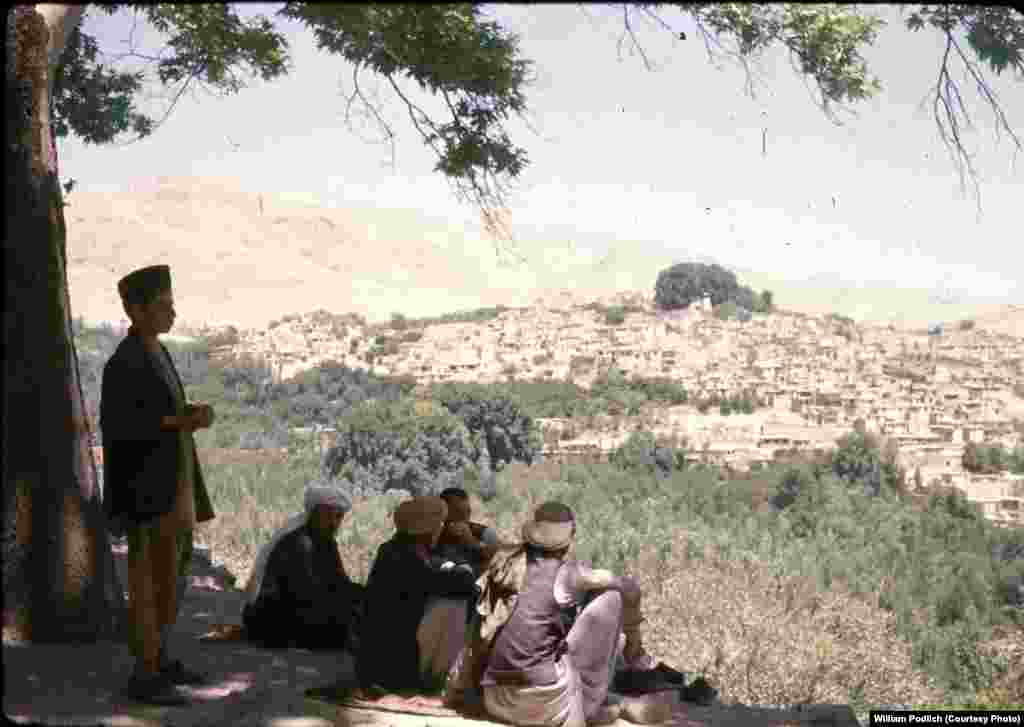
6/26Afghan men gaze out over the village of Istalif, some 30 kilometers northwest of Kabul.
The Kabul in William Podlich's photographs is an almost unrecognizable place -- a bustling capital of nattily attired men and women, many wearing Western dress; modern cars; and green parks. A place where women -- Afghans and foreigners -- could freely walk the streets. A peaceful place where tourists, unconcerned for their safety, could take buses to the major historic sites in the country or across the border to Pakistan.
In 1967, Podlich, a professor at Arizona State University, began a two-year stint in Afghanistan with UNESCO, teaching at the Higher Teachers College in Kabul. He brought along his wife, Margaret, and Peg and Jan, his two teenaged daughters.
Podlich, an amateur photographer, recorded his adventures in hundreds of photographs that his family is now sharing with the world. Podlich retired from Arizona State in 1981 and died in 2008 at the age of 92.
“When I look at my dad’s photos, I remember Afghanistan as a country with thousands of years of history and culture,” Peg Podlich told "The Denver Post," which worked with the family to first publish the photos. “It has been a gut-wrenching experience to watch and hear about the profound suffering which has occurred in Afghanistan during the battles of war for nearly 40 years. Fierce and proud yet fun-loving people have been beaten down by terrible forces."
Clayton Esterson, Peg Podlich's husband, who has assumed the role of archivist for the photographs, told "The Denver Post": "Many Afghans have written comments showing their appreciation for the photographs that show what their country was like before 33 years of war. This makes the effort to digitize and restore these photographs worthwhile." (26 PHOTOS)
Show moreShow less
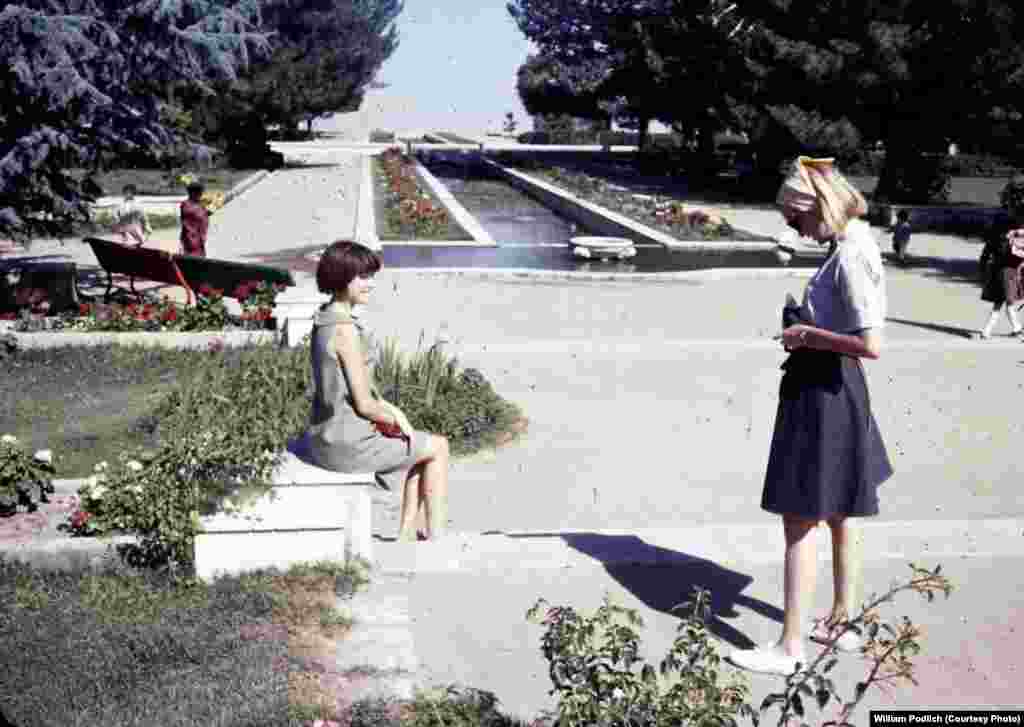
7/26Jan Podlich (left) and Peg Podlich at Paghman Gardens in Kabul. Then a lush oasis, today the gardens no longer exist.
The Kabul in William Podlich's photographs is an almost unrecognizable place -- a bustling capital of nattily attired men and women, many wearing Western dress; modern cars; and green parks. A place where women -- Afghans and foreigners -- could freely walk the streets. A peaceful place where tourists, unconcerned for their safety, could take buses to the major historic sites in the country or across the border to Pakistan.
In 1967, Podlich, a professor at Arizona State University, began a two-year stint in Afghanistan with UNESCO, teaching at the Higher Teachers College in Kabul. He brought along his wife, Margaret, and Peg and Jan, his two teenaged daughters.
Podlich, an amateur photographer, recorded his adventures in hundreds of photographs that his family is now sharing with the world. Podlich retired from Arizona State in 1981 and died in 2008 at the age of 92.
“When I look at my dad’s photos, I remember Afghanistan as a country with thousands of years of history and culture,” Peg Podlich told "The Denver Post," which worked with the family to first publish the photos. “It has been a gut-wrenching experience to watch and hear about the profound suffering which has occurred in Afghanistan during the battles of war for nearly 40 years. Fierce and proud yet fun-loving people have been beaten down by terrible forces."
Clayton Esterson, Peg Podlich's husband, who has assumed the role of archivist for the photographs, told "The Denver Post": "Many Afghans have written comments showing their appreciation for the photographs that show what their country was like before 33 years of war. This makes the effort to digitize and restore these photographs worthwhile." (26 PHOTOS)
Show moreShow less
8/26Afghan schoolgirls return home after attending school, an act that the Taliban would ban some 30 years later. "Afghan girls, as well as boys, were educated up to the high school level, and although girls [and boys] wore uniforms, the girls were not allowed to wear a chadri (burqa) on their way to secondary school," says Peg Podlich. "Able young women attended college, as did the men."
The Kabul in William Podlich's photographs is an almost unrecognizable place -- a bustling capital of nattily attired men and women, many wearing Western dress; modern cars; and green parks. A place where women -- Afghans and foreigners -- could freely walk the streets. A peaceful place where tourists, unconcerned for their safety, could take buses to the major historic sites in the country or across the border to Pakistan.
In 1967, Podlich, a professor at Arizona State University, began a two-year stint in Afghanistan with UNESCO, teaching at the Higher Teachers College in Kabul. He brought along his wife, Margaret, and Peg and Jan, his two teenaged daughters.
Podlich, an amateur photographer, recorded his adventures in hundreds of photographs that his family is now sharing with the world. Podlich retired from Arizona State in 1981 and died in 2008 at the age of 92.
“When I look at my dad’s photos, I remember Afghanistan as a country with thousands of years of history and culture,” Peg Podlich told "The Denver Post," which worked with the family to first publish the photos. “It has been a gut-wrenching experience to watch and hear about the profound suffering which has occurred in Afghanistan during the battles of war for nearly 40 years. Fierce and proud yet fun-loving people have been beaten down by terrible forces."
Clayton Esterson, Peg Podlich's husband, who has assumed the role of archivist for the photographs, told "The Denver Post": "Many Afghans have written comments showing their appreciation for the photographs that show what their country was like before 33 years of war. This makes the effort to digitize and restore these photographs worthwhile." (26 PHOTOS)
Show moreShow less
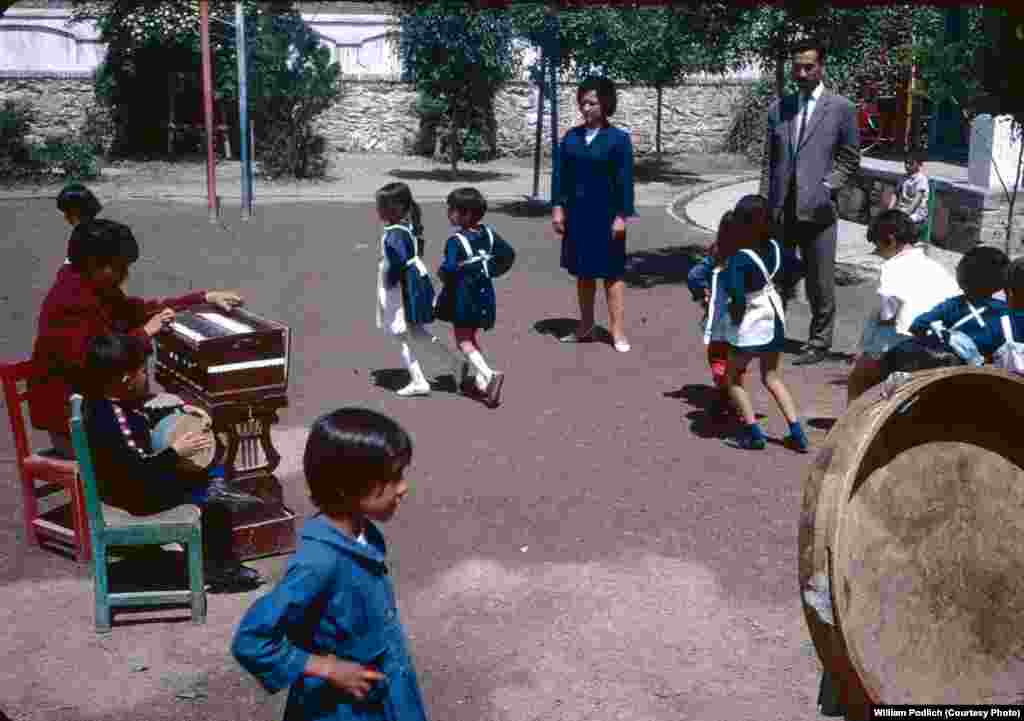
9/26Young Afghan students dance on a school playground as a teacher and a student accompany on instruments.
The Kabul in William Podlich's photographs is an almost unrecognizable place -- a bustling capital of nattily attired men and women, many wearing Western dress; modern cars; and green parks. A place where women -- Afghans and foreigners -- could freely walk the streets. A peaceful place where tourists, unconcerned for their safety, could take buses to the major historic sites in the country or across the border to Pakistan.
In 1967, Podlich, a professor at Arizona State University, began a two-year stint in Afghanistan with UNESCO, teaching at the Higher Teachers College in Kabul. He brought along his wife, Margaret, and Peg and Jan, his two teenaged daughters.
Podlich, an amateur photographer, recorded his adventures in hundreds of photographs that his family is now sharing with the world. Podlich retired from Arizona State in 1981 and died in 2008 at the age of 92.
“When I look at my dad’s photos, I remember Afghanistan as a country with thousands of years of history and culture,” Peg Podlich told "The Denver Post," which worked with the family to first publish the photos. “It has been a gut-wrenching experience to watch and hear about the profound suffering which has occurred in Afghanistan during the battles of war for nearly 40 years. Fierce and proud yet fun-loving people have been beaten down by terrible forces."
Clayton Esterson, Peg Podlich's husband, who has assumed the role of archivist for the photographs, told "The Denver Post": "Many Afghans have written comments showing their appreciation for the photographs that show what their country was like before 33 years of war. This makes the effort to digitize and restore these photographs worthwhile." (26 PHOTOS)
Show moreShow less
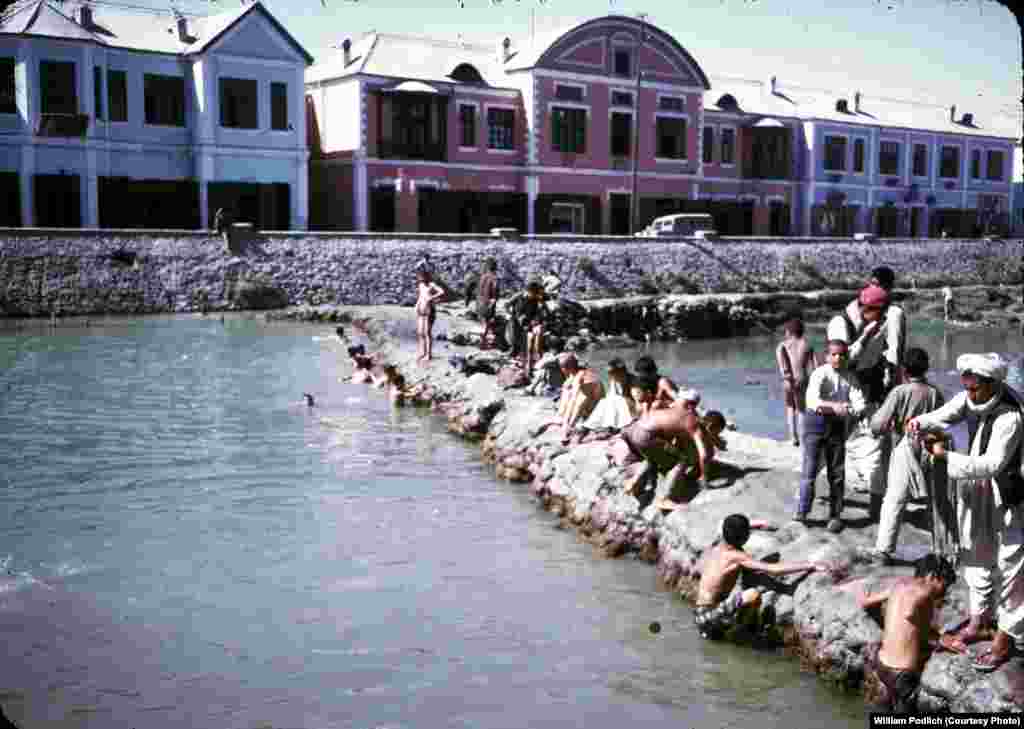
10/26Men and boys washing and swimming in the Kabul River.
The Kabul in William Podlich's photographs is an almost unrecognizable place -- a bustling capital of nattily attired men and women, many wearing Western dress; modern cars; and green parks. A place where women -- Afghans and foreigners -- could freely walk the streets. A peaceful place where tourists, unconcerned for their safety, could take buses to the major historic sites in the country or across the border to Pakistan.
In 1967, Podlich, a professor at Arizona State University, began a two-year stint in Afghanistan with UNESCO, teaching at the Higher Teachers College in Kabul. He brought along his wife, Margaret, and Peg and Jan, his two teenaged daughters.
Podlich, an amateur photographer, recorded his adventures in hundreds of photographs that his family is now sharing with the world. Podlich retired from Arizona State in 1981 and died in 2008 at the age of 92.
“When I look at my dad’s photos, I remember Afghanistan as a country with thousands of years of history and culture,” Peg Podlich told "The Denver Post," which worked with the family to first publish the photos. “It has been a gut-wrenching experience to watch and hear about the profound suffering which has occurred in Afghanistan during the battles of war for nearly 40 years. Fierce and proud yet fun-loving people have been beaten down by terrible forces."
Clayton Esterson, Peg Podlich's husband, who has assumed the role of archivist for the photographs, told "The Denver Post": "Many Afghans have written comments showing their appreciation for the photographs that show what their country was like before 33 years of war. This makes the effort to digitize and restore these photographs worthwhile." (26 PHOTOS)
Show moreShow less
11/26Afghan students learn chemistry in a mud-walled classroom.
The Kabul in William Podlich's photographs is an almost unrecognizable place -- a bustling capital of nattily attired men and women, many wearing Western dress; modern cars; and green parks. A place where women -- Afghans and foreigners -- could freely walk the streets. A peaceful place where tourists, unconcerned for their safety, could take buses to the major historic sites in the country or across the border to Pakistan.
In 1967, Podlich, a professor at Arizona State University, began a two-year stint in Afghanistan with UNESCO, teaching at the Higher Teachers College in Kabul. He brought along his wife, Margaret, and Peg and Jan, his two teenaged daughters.
Podlich, an amateur photographer, recorded his adventures in hundreds of photographs that his family is now sharing with the world. Podlich retired from Arizona State in 1981 and died in 2008 at the age of 92.
“When I look at my dad’s photos, I remember Afghanistan as a country with thousands of years of history and culture,” Peg Podlich told "The Denver Post," which worked with the family to first publish the photos. “It has been a gut-wrenching experience to watch and hear about the profound suffering which has occurred in Afghanistan during the battles of war for nearly 40 years. Fierce and proud yet fun-loving people have been beaten down by terrible forces."
Clayton Esterson, Peg Podlich's husband, who has assumed the role of archivist for the photographs, told "The Denver Post": "Many Afghans have written comments showing their appreciation for the photographs that show what their country was like before 33 years of war. This makes the effort to digitize and restore these photographs worthwhile." (26 PHOTOS)
Show moreShow less
12/26"For the year that I was in Kabul, my family lived in a house in Shar-e Naw, up the road from the Shar-e Naw Park," says Peg Podlich. "My parents had lived in Denver, Colorado, in the 1940s. My mother would say that Kabul reminded her of Denver: about a mile in altitude, often sunny, with beautiful mountains in the distance. I thought it seemed somewhat like Arizona because of the arid landscape and lack of rain. Since I was born [in Arizona], it was very easy for me to appreciate the stark beauty of the landscape there in Afghanistan."
The Kabul in William Podlich's photographs is an almost unrecognizable place -- a bustling capital of nattily attired men and women, many wearing Western dress; modern cars; and green parks. A place where women -- Afghans and foreigners -- could freely walk the streets. A peaceful place where tourists, unconcerned for their safety, could take buses to the major historic sites in the country or across the border to Pakistan.
In 1967, Podlich, a professor at Arizona State University, began a two-year stint in Afghanistan with UNESCO, teaching at the Higher Teachers College in Kabul. He brought along his wife, Margaret, and Peg and Jan, his two teenaged daughters.
Podlich, an amateur photographer, recorded his adventures in hundreds of photographs that his family is now sharing with the world. Podlich retired from Arizona State in 1981 and died in 2008 at the age of 92.
“When I look at my dad’s photos, I remember Afghanistan as a country with thousands of years of history and culture,” Peg Podlich told "The Denver Post," which worked with the family to first publish the photos. “It has been a gut-wrenching experience to watch and hear about the profound suffering which has occurred in Afghanistan during the battles of war for nearly 40 years. Fierce and proud yet fun-loving people have been beaten down by terrible forces."
Clayton Esterson, Peg Podlich's husband, who has assumed the role of archivist for the photographs, told "The Denver Post": "Many Afghans have written comments showing their appreciation for the photographs that show what their country was like before 33 years of war. This makes the effort to digitize and restore these photographs worthwhile." (26 PHOTOS)
Show moreShow less
13/26The Shah-Do Shamshira Mosque, near the Kabul River
The Kabul in William Podlich's photographs is an almost unrecognizable place -- a bustling capital of nattily attired men and women, many wearing Western dress; modern cars; and green parks. A place where women -- Afghans and foreigners -- could freely walk the streets. A peaceful place where tourists, unconcerned for their safety, could take buses to the major historic sites in the country or across the border to Pakistan.
In 1967, Podlich, a professor at Arizona State University, began a two-year stint in Afghanistan with UNESCO, teaching at the Higher Teachers College in Kabul. He brought along his wife, Margaret, and Peg and Jan, his two teenaged daughters.
Podlich, an amateur photographer, recorded his adventures in hundreds of photographs that his family is now sharing with the world. Podlich retired from Arizona State in 1981 and died in 2008 at the age of 92.
“When I look at my dad’s photos, I remember Afghanistan as a country with thousands of years of history and culture,” Peg Podlich told "The Denver Post," which worked with the family to first publish the photos. “It has been a gut-wrenching experience to watch and hear about the profound suffering which has occurred in Afghanistan during the battles of war for nearly 40 years. Fierce and proud yet fun-loving people have been beaten down by terrible forces."
Clayton Esterson, Peg Podlich's husband, who has assumed the role of archivist for the photographs, told "The Denver Post": "Many Afghans have written comments showing their appreciation for the photographs that show what their country was like before 33 years of war. This makes the effort to digitize and restore these photographs worthwhile." (26 PHOTOS)
Show moreShow less
14/26A boy decorates cakes, cookies, and other sweets.
The Kabul in William Podlich's photographs is an almost unrecognizable place -- a bustling capital of nattily attired men and women, many wearing Western dress; modern cars; and green parks. A place where women -- Afghans and foreigners -- could freely walk the streets. A peaceful place where tourists, unconcerned for their safety, could take buses to the major historic sites in the country or across the border to Pakistan.
In 1967, Podlich, a professor at Arizona State University, began a two-year stint in Afghanistan with UNESCO, teaching at the Higher Teachers College in Kabul. He brought along his wife, Margaret, and Peg and Jan, his two teenaged daughters.
Podlich, an amateur photographer, recorded his adventures in hundreds of photographs that his family is now sharing with the world. Podlich retired from Arizona State in 1981 and died in 2008 at the age of 92.
“When I look at my dad’s photos, I remember Afghanistan as a country with thousands of years of history and culture,” Peg Podlich told "The Denver Post," which worked with the family to first publish the photos. “It has been a gut-wrenching experience to watch and hear about the profound suffering which has occurred in Afghanistan during the battles of war for nearly 40 years. Fierce and proud yet fun-loving people have been beaten down by terrible forces."
Clayton Esterson, Peg Podlich's husband, who has assumed the role of archivist for the photographs, told "The Denver Post": "Many Afghans have written comments showing their appreciation for the photographs that show what their country was like before 33 years of war. This makes the effort to digitize and restore these photographs worthwhile." (26 PHOTOS)
Show moreShow less
15/26"In the spring of 1968, my family took a public, long-distance Afghan bus through the Khyber Pass to visit Pakistan (Peshawar and Lahore)," Peg Podlich remembers. "The road was rather bumpy in that direction, too. As I recall it was somewhat harrowing at certain points with a steep drop off on one side and a mountain straight up on the other! I remember that before we left Kabul my father paid for a young man to go around the bus with a smoking censor to bless the bus or ward off the evil eye. I guess it worked -- we had a safe trip."
The Kabul in William Podlich's photographs is an almost unrecognizable place -- a bustling capital of nattily attired men and women, many wearing Western dress; modern cars; and green parks. A place where women -- Afghans and foreigners -- could freely walk the streets. A peaceful place where tourists, unconcerned for their safety, could take buses to the major historic sites in the country or across the border to Pakistan.
In 1967, Podlich, a professor at Arizona State University, began a two-year stint in Afghanistan with UNESCO, teaching at the Higher Teachers College in Kabul. He brought along his wife, Margaret, and Peg and Jan, his two teenaged daughters.
Podlich, an amateur photographer, recorded his adventures in hundreds of photographs that his family is now sharing with the world. Podlich retired from Arizona State in 1981 and died in 2008 at the age of 92.
“When I look at my dad’s photos, I remember Afghanistan as a country with thousands of years of history and culture,” Peg Podlich told "The Denver Post," which worked with the family to first publish the photos. “It has been a gut-wrenching experience to watch and hear about the profound suffering which has occurred in Afghanistan during the battles of war for nearly 40 years. Fierce and proud yet fun-loving people have been beaten down by terrible forces."
Clayton Esterson, Peg Podlich's husband, who has assumed the role of archivist for the photographs, told "The Denver Post": "Many Afghans have written comments showing their appreciation for the photographs that show what their country was like before 33 years of war. This makes the effort to digitize and restore these photographs worthwhile." (26 PHOTOS)
Show moreShow less
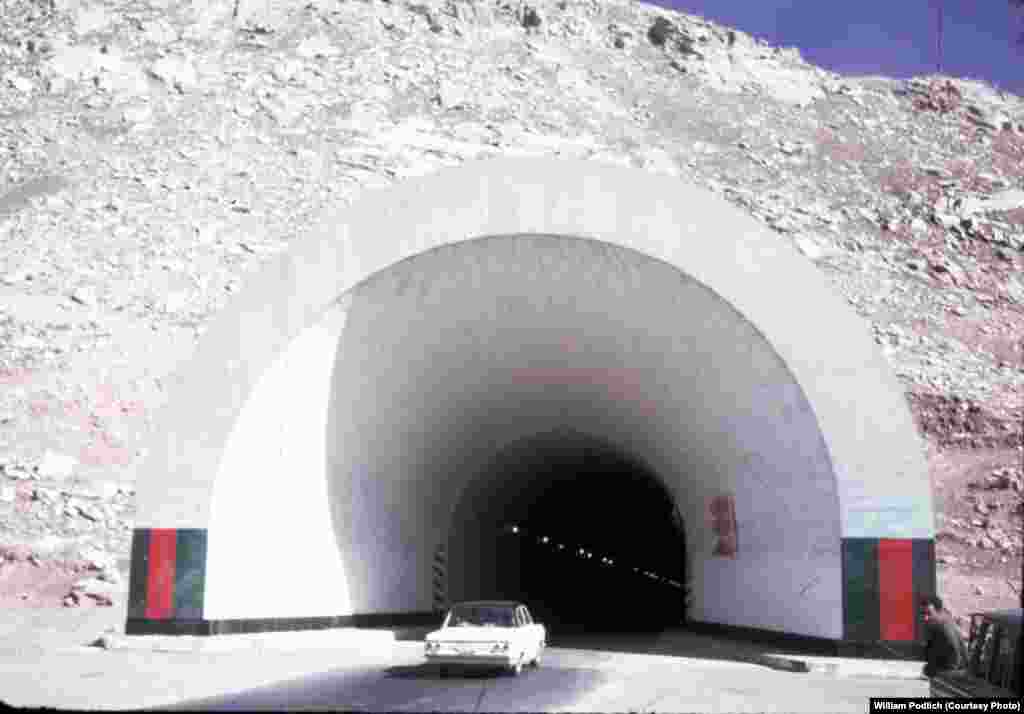
16/26The 2.6-kilometer-long Salang Tunnel, which passes beneath the Hindu Kush mountain range, was built with the help of the Soviet Union. It opened in 1964.
The Kabul in William Podlich's photographs is an almost unrecognizable place -- a bustling capital of nattily attired men and women, many wearing Western dress; modern cars; and green parks. A place where women -- Afghans and foreigners -- could freely walk the streets. A peaceful place where tourists, unconcerned for their safety, could take buses to the major historic sites in the country or across the border to Pakistan.
In 1967, Podlich, a professor at Arizona State University, began a two-year stint in Afghanistan with UNESCO, teaching at the Higher Teachers College in Kabul. He brought along his wife, Margaret, and Peg and Jan, his two teenaged daughters.
Podlich, an amateur photographer, recorded his adventures in hundreds of photographs that his family is now sharing with the world. Podlich retired from Arizona State in 1981 and died in 2008 at the age of 92.
“When I look at my dad’s photos, I remember Afghanistan as a country with thousands of years of history and culture,” Peg Podlich told "The Denver Post," which worked with the family to first publish the photos. “It has been a gut-wrenching experience to watch and hear about the profound suffering which has occurred in Afghanistan during the battles of war for nearly 40 years. Fierce and proud yet fun-loving people have been beaten down by terrible forces."
Clayton Esterson, Peg Podlich's husband, who has assumed the role of archivist for the photographs, told "The Denver Post": "Many Afghans have written comments showing their appreciation for the photographs that show what their country was like before 33 years of war. This makes the effort to digitize and restore these photographs worthwhile." (26 PHOTOS)
Show moreShow less
17/26Young boys walk home on the outskirts of Kabul.
The Kabul in William Podlich's photographs is an almost unrecognizable place -- a bustling capital of nattily attired men and women, many wearing Western dress; modern cars; and green parks. A place where women -- Afghans and foreigners -- could freely walk the streets. A peaceful place where tourists, unconcerned for their safety, could take buses to the major historic sites in the country or across the border to Pakistan.
In 1967, Podlich, a professor at Arizona State University, began a two-year stint in Afghanistan with UNESCO, teaching at the Higher Teachers College in Kabul. He brought along his wife, Margaret, and Peg and Jan, his two teenaged daughters.
Podlich, an amateur photographer, recorded his adventures in hundreds of photographs that his family is now sharing with the world. Podlich retired from Arizona State in 1981 and died in 2008 at the age of 92.
“When I look at my dad’s photos, I remember Afghanistan as a country with thousands of years of history and culture,” Peg Podlich told "The Denver Post," which worked with the family to first publish the photos. “It has been a gut-wrenching experience to watch and hear about the profound suffering which has occurred in Afghanistan during the battles of war for nearly 40 years. Fierce and proud yet fun-loving people have been beaten down by terrible forces."
Clayton Esterson, Peg Podlich's husband, who has assumed the role of archivist for the photographs, told "The Denver Post": "Many Afghans have written comments showing their appreciation for the photographs that show what their country was like before 33 years of war. This makes the effort to digitize and restore these photographs worthwhile." (26 PHOTOS)
Show moreShow less
18/26The Bamiyan Valley, home to giant Buddha statues that were destroyed by the Taliban in 2001. "That was a bumpy, rough trip," recalls Peg Podlich, "but I'll never forget how wide and green the valley was or how monumental those two Buddha statues were, carved into the face of the cliff.... The statues were a magnificent sight, even to someone like me who did not really understand the history or technical achievement of those statues."
The Kabul in William Podlich's photographs is an almost unrecognizable place -- a bustling capital of nattily attired men and women, many wearing Western dress; modern cars; and green parks. A place where women -- Afghans and foreigners -- could freely walk the streets. A peaceful place where tourists, unconcerned for their safety, could take buses to the major historic sites in the country or across the border to Pakistan.
In 1967, Podlich, a professor at Arizona State University, began a two-year stint in Afghanistan with UNESCO, teaching at the Higher Teachers College in Kabul. He brought along his wife, Margaret, and Peg and Jan, his two teenaged daughters.
Podlich, an amateur photographer, recorded his adventures in hundreds of photographs that his family is now sharing with the world. Podlich retired from Arizona State in 1981 and died in 2008 at the age of 92.
“When I look at my dad’s photos, I remember Afghanistan as a country with thousands of years of history and culture,” Peg Podlich told "The Denver Post," which worked with the family to first publish the photos. “It has been a gut-wrenching experience to watch and hear about the profound suffering which has occurred in Afghanistan during the battles of war for nearly 40 years. Fierce and proud yet fun-loving people have been beaten down by terrible forces."
Clayton Esterson, Peg Podlich's husband, who has assumed the role of archivist for the photographs, told "The Denver Post": "Many Afghans have written comments showing their appreciation for the photographs that show what their country was like before 33 years of war. This makes the effort to digitize and restore these photographs worthwhile." (26 PHOTOS)
Show moreShow less
19/26A smaller Buddha statue in the Bamiyan Valley
The Kabul in William Podlich's photographs is an almost unrecognizable place -- a bustling capital of nattily attired men and women, many wearing Western dress; modern cars; and green parks. A place where women -- Afghans and foreigners -- could freely walk the streets. A peaceful place where tourists, unconcerned for their safety, could take buses to the major historic sites in the country or across the border to Pakistan.
In 1967, Podlich, a professor at Arizona State University, began a two-year stint in Afghanistan with UNESCO, teaching at the Higher Teachers College in Kabul. He brought along his wife, Margaret, and Peg and Jan, his two teenaged daughters.
Podlich, an amateur photographer, recorded his adventures in hundreds of photographs that his family is now sharing with the world. Podlich retired from Arizona State in 1981 and died in 2008 at the age of 92.
“When I look at my dad’s photos, I remember Afghanistan as a country with thousands of years of history and culture,” Peg Podlich told "The Denver Post," which worked with the family to first publish the photos. “It has been a gut-wrenching experience to watch and hear about the profound suffering which has occurred in Afghanistan during the battles of war for nearly 40 years. Fierce and proud yet fun-loving people have been beaten down by terrible forces."
Clayton Esterson, Peg Podlich's husband, who has assumed the role of archivist for the photographs, told "The Denver Post": "Many Afghans have written comments showing their appreciation for the photographs that show what their country was like before 33 years of war. This makes the effort to digitize and restore these photographs worthwhile." (26 PHOTOS)
Show moreShow less
20/26"The Higher Teachers College was a two-year institution for training college-level teachers, located at Seh Aqrab Road and Pul-e Surkh Road, on the west side of Kabul, near Kart-e Sei," recalls Peg Podlich. In this photograph, a Mr. Bahir (left), who was William Podlich's counterpart at the college, and an Afghan teacher pose outside the school.
The Kabul in William Podlich's photographs is an almost unrecognizable place -- a bustling capital of nattily attired men and women, many wearing Western dress; modern cars; and green parks. A place where women -- Afghans and foreigners -- could freely walk the streets. A peaceful place where tourists, unconcerned for their safety, could take buses to the major historic sites in the country or across the border to Pakistan.
In 1967, Podlich, a professor at Arizona State University, began a two-year stint in Afghanistan with UNESCO, teaching at the Higher Teachers College in Kabul. He brought along his wife, Margaret, and Peg and Jan, his two teenaged daughters.
Podlich, an amateur photographer, recorded his adventures in hundreds of photographs that his family is now sharing with the world. Podlich retired from Arizona State in 1981 and died in 2008 at the age of 92.
“When I look at my dad’s photos, I remember Afghanistan as a country with thousands of years of history and culture,” Peg Podlich told "The Denver Post," which worked with the family to first publish the photos. “It has been a gut-wrenching experience to watch and hear about the profound suffering which has occurred in Afghanistan during the battles of war for nearly 40 years. Fierce and proud yet fun-loving people have been beaten down by terrible forces."
Clayton Esterson, Peg Podlich's husband, who has assumed the role of archivist for the photographs, told "The Denver Post": "Many Afghans have written comments showing their appreciation for the photographs that show what their country was like before 33 years of war. This makes the effort to digitize and restore these photographs worthwhile." (26 PHOTOS)
Show moreShow less
21/26Young Afghans gather to share tea, sing, and play music.
The Kabul in William Podlich's photographs is an almost unrecognizable place -- a bustling capital of nattily attired men and women, many wearing Western dress; modern cars; and green parks. A place where women -- Afghans and foreigners -- could freely walk the streets. A peaceful place where tourists, unconcerned for their safety, could take buses to the major historic sites in the country or across the border to Pakistan.
In 1967, Podlich, a professor at Arizona State University, began a two-year stint in Afghanistan with UNESCO, teaching at the Higher Teachers College in Kabul. He brought along his wife, Margaret, and Peg and Jan, his two teenaged daughters.
Podlich, an amateur photographer, recorded his adventures in hundreds of photographs that his family is now sharing with the world. Podlich retired from Arizona State in 1981 and died in 2008 at the age of 92.
“When I look at my dad’s photos, I remember Afghanistan as a country with thousands of years of history and culture,” Peg Podlich told "The Denver Post," which worked with the family to first publish the photos. “It has been a gut-wrenching experience to watch and hear about the profound suffering which has occurred in Afghanistan during the battles of war for nearly 40 years. Fierce and proud yet fun-loving people have been beaten down by terrible forces."
Clayton Esterson, Peg Podlich's husband, who has assumed the role of archivist for the photographs, told "The Denver Post": "Many Afghans have written comments showing their appreciation for the photographs that show what their country was like before 33 years of war. This makes the effort to digitize and restore these photographs worthwhile." (26 PHOTOS)
Show moreShow less
22/26A merchant fries jalebi, a sweet Afghan dessert, over an open fire.
The Kabul in William Podlich's photographs is an almost unrecognizable place -- a bustling capital of nattily attired men and women, many wearing Western dress; modern cars; and green parks. A place where women -- Afghans and foreigners -- could freely walk the streets. A peaceful place where tourists, unconcerned for their safety, could take buses to the major historic sites in the country or across the border to Pakistan.
In 1967, Podlich, a professor at Arizona State University, began a two-year stint in Afghanistan with UNESCO, teaching at the Higher Teachers College in Kabul. He brought along his wife, Margaret, and Peg and Jan, his two teenaged daughters.
Podlich, an amateur photographer, recorded his adventures in hundreds of photographs that his family is now sharing with the world. Podlich retired from Arizona State in 1981 and died in 2008 at the age of 92.
“When I look at my dad’s photos, I remember Afghanistan as a country with thousands of years of history and culture,” Peg Podlich told "The Denver Post," which worked with the family to first publish the photos. “It has been a gut-wrenching experience to watch and hear about the profound suffering which has occurred in Afghanistan during the battles of war for nearly 40 years. Fierce and proud yet fun-loving people have been beaten down by terrible forces."
Clayton Esterson, Peg Podlich's husband, who has assumed the role of archivist for the photographs, told "The Denver Post": "Many Afghans have written comments showing their appreciation for the photographs that show what their country was like before 33 years of war. This makes the effort to digitize and restore these photographs worthwhile." (26 PHOTOS)
Show moreShow less
23/26Two sisters pose for a photograph on a street in Kabul.
The Kabul in William Podlich's photographs is an almost unrecognizable place -- a bustling capital of nattily attired men and women, many wearing Western dress; modern cars; and green parks. A place where women -- Afghans and foreigners -- could freely walk the streets. A peaceful place where tourists, unconcerned for their safety, could take buses to the major historic sites in the country or across the border to Pakistan.
In 1967, Podlich, a professor at Arizona State University, began a two-year stint in Afghanistan with UNESCO, teaching at the Higher Teachers College in Kabul. He brought along his wife, Margaret, and Peg and Jan, his two teenaged daughters.
Podlich, an amateur photographer, recorded his adventures in hundreds of photographs that his family is now sharing with the world. Podlich retired from Arizona State in 1981 and died in 2008 at the age of 92.
“When I look at my dad’s photos, I remember Afghanistan as a country with thousands of years of history and culture,” Peg Podlich told "The Denver Post," which worked with the family to first publish the photos. “It has been a gut-wrenching experience to watch and hear about the profound suffering which has occurred in Afghanistan during the battles of war for nearly 40 years. Fierce and proud yet fun-loving people have been beaten down by terrible forces."
Clayton Esterson, Peg Podlich's husband, who has assumed the role of archivist for the photographs, told "The Denver Post": "Many Afghans have written comments showing their appreciation for the photographs that show what their country was like before 33 years of war. This makes the effort to digitize and restore these photographs worthwhile." (26 PHOTOS)
Show moreShow less
24/26Peg and Jan Podlich attended the American International School in Kabul. Peg says there were around 250 students attending the school in 1967-68, with 18 graduating seniors.
The Kabul in William Podlich's photographs is an almost unrecognizable place -- a bustling capital of nattily attired men and women, many wearing Western dress; modern cars; and green parks. A place where women -- Afghans and foreigners -- could freely walk the streets. A peaceful place where tourists, unconcerned for their safety, could take buses to the major historic sites in the country or across the border to Pakistan.
In 1967, Podlich, a professor at Arizona State University, began a two-year stint in Afghanistan with UNESCO, teaching at the Higher Teachers College in Kabul. He brought along his wife, Margaret, and Peg and Jan, his two teenaged daughters.
Podlich, an amateur photographer, recorded his adventures in hundreds of photographs that his family is now sharing with the world. Podlich retired from Arizona State in 1981 and died in 2008 at the age of 92.
“When I look at my dad’s photos, I remember Afghanistan as a country with thousands of years of history and culture,” Peg Podlich told "The Denver Post," which worked with the family to first publish the photos. “It has been a gut-wrenching experience to watch and hear about the profound suffering which has occurred in Afghanistan during the battles of war for nearly 40 years. Fierce and proud yet fun-loving people have been beaten down by terrible forces."
Clayton Esterson, Peg Podlich's husband, who has assumed the role of archivist for the photographs, told "The Denver Post": "Many Afghans have written comments showing their appreciation for the photographs that show what their country was like before 33 years of war. This makes the effort to digitize and restore these photographs worthwhile." (26 PHOTOS)
Show moreShow less
25/26"I was in my senior year of high school and I attended the American International School of Kabul out on Darul-aman Road," says Peg Podlich (pictured at left). "In Tempe, I had walked four blocks to school; in Kabul a school bus stopped outside our home. Jan and I ran out when the driver honked the horn. On the bus, we were supervised by Indian ladies wearing saris, of course, and were driven with about 20 kids back through Kabul, around the hill to the west side of town."
The Kabul in William Podlich's photographs is an almost unrecognizable place -- a bustling capital of nattily attired men and women, many wearing Western dress; modern cars; and green parks. A place where women -- Afghans and foreigners -- could freely walk the streets. A peaceful place where tourists, unconcerned for their safety, could take buses to the major historic sites in the country or across the border to Pakistan.
In 1967, Podlich, a professor at Arizona State University, began a two-year stint in Afghanistan with UNESCO, teaching at the Higher Teachers College in Kabul. He brought along his wife, Margaret, and Peg and Jan, his two teenaged daughters.
Podlich, an amateur photographer, recorded his adventures in hundreds of photographs that his family is now sharing with the world. Podlich retired from Arizona State in 1981 and died in 2008 at the age of 92.
“When I look at my dad’s photos, I remember Afghanistan as a country with thousands of years of history and culture,” Peg Podlich told "The Denver Post," which worked with the family to first publish the photos. “It has been a gut-wrenching experience to watch and hear about the profound suffering which has occurred in Afghanistan during the battles of war for nearly 40 years. Fierce and proud yet fun-loving people have been beaten down by terrible forces."
Clayton Esterson, Peg Podlich's husband, who has assumed the role of archivist for the photographs, told "The Denver Post": "Many Afghans have written comments showing their appreciation for the photographs that show what their country was like before 33 years of war. This makes the effort to digitize and restore these photographs worthwhile." (26 PHOTOS)
Show moreShow less
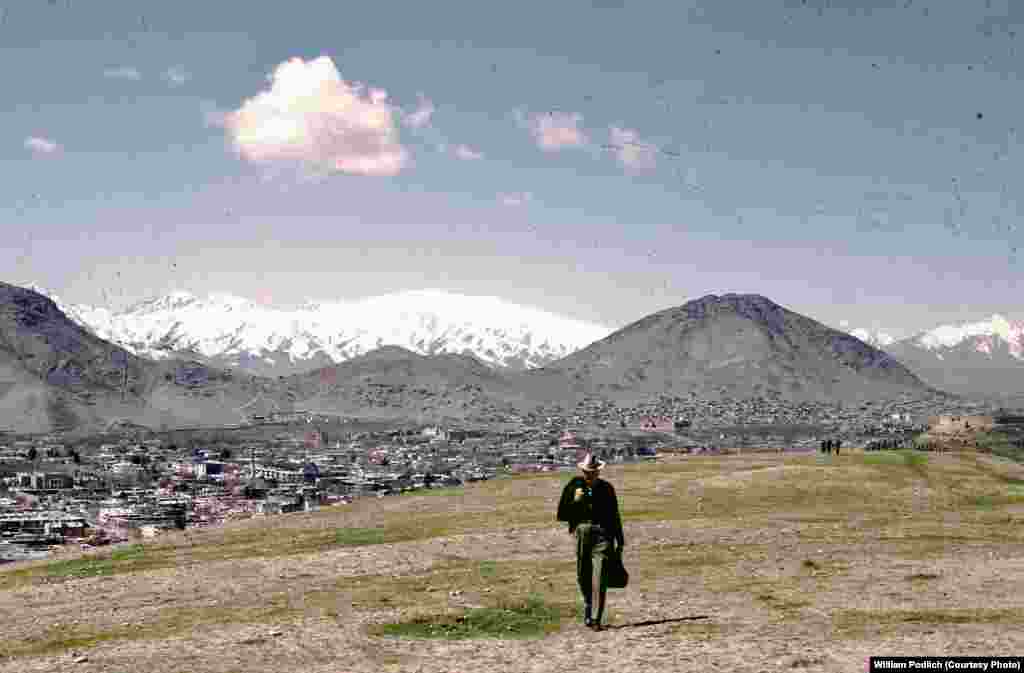
26/26William Podlich strolls on a hillside outside of Kabul.
The Kabul in William Podlich's photographs is an almost unrecognizable place -- a bustling capital of nattily attired men and women, many wearing Western dress; modern cars; and green parks. A place where women -- Afghans and foreigners -- could freely walk the streets. A peaceful place where tourists, unconcerned for their safety, could take buses to the major historic sites in the country or across the border to Pakistan.
In 1967, Podlich, a professor at Arizona State University, began a two-year stint in Afghanistan with UNESCO, teaching at the Higher Teachers College in Kabul. He brought along his wife, Margaret, and Peg and Jan, his two teenaged daughters.
Podlich, an amateur photographer, recorded his adventures in hundreds of photographs that his family is now sharing with the world. Podlich retired from Arizona State in 1981 and died in 2008 at the age of 92.
“When I look at my dad’s photos, I remember Afghanistan as a country with thousands of years of history and culture,” Peg Podlich told "The Denver Post," which worked with the family to first publish the photos. “It has been a gut-wrenching experience to watch and hear about the profound suffering which has occurred in Afghanistan during the battles of war for nearly 40 years. Fierce and proud yet fun-loving people have been beaten down by terrible forces."
Clayton Esterson, Peg Podlich's husband, who has assumed the role of archivist for the photographs, told "The Denver Post": "Many Afghans have written comments showing their appreciation for the photographs that show what their country was like before 33 years of war. This makes the effort to digitize and restore these photographs worthwhile." (26 PHOTOS)
Show moreShow less
Previous slide
Next slide
Thomas Barfield, a professor of anthropology at Boston University, is among the many foreigners who had the chance to experience Kabul in its heyday. He says his travels to Afghanistan profoundly impacted his life and career.
“I hitchhiked across Europe. It used to be called the old hippie trail, he said of the overland trips from Europe to India and Nepal through Afghanistan. “The first time I went to Afghanistan was in 1971. I was an undergraduate student, and I didn’t know anything about Afghanistan; I was just traveling. It was very easy; you just catch buses and trucks. Other people were going to Europe, but I thought I’d do something more interesting. I later became fascinated by the country and returned for research.”
An Unfamiliar City
When the Soviet tanks arrived to seize the country in late 1979, many elite Kabulis knew they had to shelter elsewhere. During the civil war that began after the collapse of the Afghan socialist regime in 1992, many Kabulis were forced to flee their homes once again, and a majority migrated to the West.
The exodus heralded the end of Kabul’s golden era. For former residents who revisited their city after decades away, the nostalgia runs deep.
Saleh Keshawarz, an engineering professor at Connecticut's University of Hartford, was born and raised in Kabul’s Karte Char neighborhood. He’s made many trips back to his roots, noting that much changed, both culturally and aesthetically.
“Coincidently, I left the country for America exactly one day before the fall of Daud Khan’s regime [in April 1978],” he told RFE/RL Gandhara. “But since the fall of the Taliban in the early 2000s, I have returned many times.”
Back in Kabul, Keshawarz found himself in a changed city, one seemingly at odds with his memories.
“Streets were damaged; lampposts were covered with bullet holes. All the buildings were in a bad state,” he said, adding that the most difficult part was seeing the low morale of his fellow countrymen. “The air is polluted, cars are not regulated, and the country suffers from a lack of proper clean drinking water, which can result in health issues for residents.”
“It was like a nightmare,” Keshawarz added.
Barfield says the city has changed, too, from how he remembers it. “It’s an entirely different place. It was a shock to see how leveled it was; the old Kabul I knew was razed. It was a mess, just wall-to-wall rubble,” he said.
For both natives and foreigners, the reality on the ground has drastically changed over the past four decades. As insecurity in the capital only heightens, Kabulis question if they will even have a city left for them.
A New Kabul In The Making
Frequent terrorist attacks and security incidents have left Kabul swinging from a state of destruction to repair. A city once renowned for its peace and beauty has fallen prey to warlords and insurgents.
Mohammed Yasin Hamdil is among the rare Kabulis who never left and has witnessed the ups and downs the city has endured.
“It hurts my heart. Tears stream from my eyes just talking about my beautiful Kabul,” he said. “Kabul was always blossoming and prospering, a city where the people were pure, talented, and well-achieved in many regards. But today, Kabul has changed. Kabul has lost its true colors, and sometimes I forget where I am and what I am doing.”
Kabul’s population has boomed, making it one of the fastest-growing cities in the world with a population of over 5 million. Rapid urbanization has changed its ethnic makeup and demographics, and rural Afghans now outnumber Kabul natives as many flock to the city, trying to escape Taliban violence.
In the 1970s, “rural Afghans never left their province in their entire life,” Barfield noted. “But when I went back years later, the isolation that existed at that time was destroyed during the war. Many had been to Iran, Pakistan, and other parts of Afghanistan. Afghans have a lot more world experience than they did in the ’70s.”
But this influx of people has created congestion and a lack of proper sanitation. Amid this cultural and ethnic melting pot, security in the city has crafted a new Kabul brimming with checkpoints, blast walls, high-rises, and traffic mayhem.
Despite the changes, Kabulis like Keshawarz remain hopeful. “When walking down the streets, the atmosphere is still the same, and it reminds me that this was once my home and I hope for the best,” he said.






![Of her father, Dr. William Podlich (second from left), Peg Podlich said: "He had always said that since he had served in WWII...he wanted to serve in the cause of peace. In 1967, he was hired by UNESCO as an expert on principles of education for a two-year stint in Kabul.... Throughout his adult life, because he was interested in social studies, whenever he traveled around [in Arizona, to Mexico, and other places] he continued to take pictures. In Afghanistan he took half-frame color slides [on Kodachrome] and I believe he used a small Olympus camera."](https://gdb.rferl.org/66103dcc-16dc-4cf5-87f3-6e998f41fd2f_w1024_q10_s.jpg)


![Afghan schoolgirls return home after attending school, an act that the Taliban would ban some 30 years later. "Afghan girls, as well as boys, were educated up to the high school level, and although girls [and boys] wore uniforms, the girls were not allowed to wear a chadri (burqa) on their way to secondary school," says Peg Podlich. "Able young women attended college, as did the men."](https://gdb.rferl.org/38062d8f-834e-49b6-968e-5300b15d1c0e_w1024_q10_s.jpg)

!["For the year that I was in Kabul, my family lived in a house in Shar-e Naw, up the road from the Shar-e Naw Park," says Peg Podlich. "My parents had lived in Denver, Colorado, in the 1940s. My mother would say that Kabul reminded her of Denver: about a mile in altitude, often sunny, with beautiful mountains in the distance. I thought it seemed somewhat like Arizona because of the arid landscape and lack of rain. Since I was born [in Arizona], it was very easy for me to appreciate the stark beauty of the landscape there in Afghanistan."](https://gdb.rferl.org/10ec66dd-74b0-40e8-a38f-1192b363bb54_w1024_q10_s.jpg)