




PRISTINA — Parliament elected Justina Shiroka Pula as Kosovo's new president early on October 7 following a last-minute political deal that secured lawmakers' approval of legal changes restricting the powers of a Hague-based war crimes court.
The secret ballot began just six minutes before a midnight deadline, with lawmakers racing to complete the presidential election -- which averted parliament’s automatic dissolution and another early election -- in time.
Shiroka Pula secured 81 votes to clinch the post in the first round. She needed at least 80 in the 120-seat legislature.
"This mandate does not belong to one person alone. It belongs to our citizens, our institutions, and the state for which so many generations sacrificed," Shiroka Pula said in an address to parliament after being sworn in.
While the election appeared to avoid a political crisis, some experts noted that the process didn't end until 12 minutes after midnight, creating the potential for a legal challenge, though none was immediately announced.

The vote followed a day of deadlock between Prime Minister Albin Kurti’s ruling Vetevendosje party and the opposition Democratic Party of Kosovo (PDK).
Shiroka Pula, an economist and the first woman to lead Kosovo’s Academy of Sciences and Arts, was proposed by Kurti late in the evening. PDK leader Bedri Hamza accepted her candidacy and nominated Eliza Hoxha as the opposing candidate.
Shiroka Pula previously served as energy and mining minister from 2008 to 2011 and as a PDK lawmaker from 2011 to 2014.
Immediately before the presidential election, parliament approved amendments to the law governing the Kosovo Specialist Chambers in a second and final reading, with 88 votes in favor.
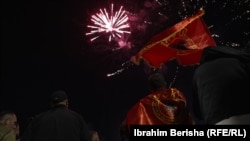
Protesters gathered outside parliament applauded as lawmakers approved the amendments.
The PDK had insisted that lawmakers complete passage of the amendments before electing a president. Kurti initially demanded the reverse.
The two leaders exchanged proposals and responses through press conferences after Hamza refused further face-to-face talks until the court amendments were passed.
A breakthrough came with Kurti’s third offer: proposing Shiroka Pula, a former member of Hamza’s party, and agreeing to hold the court-law vote first.
The amendments sharply narrow the jurisdiction of the Kosovo Specialist Chambers, cap prison sentences at 15 years, require sentences to be served in Kosovo and make people convicted by final judgments eligible for presidential pardons.
The legislation also narrows the period covered by the court to July 1, 1999–December 31, 2000, excluding the wartime period, and restricts its jurisdiction to offenses directly linked to alleged organ-trafficking operations at detention sites identified in a 2011 Council of Europe report.
Parliamentary approval does not by itself establish whether the changes can take effect. Legal experts have warned that Kosovo must respect its international commitments and that the amendments could face constitutional review.
The PDK submitted the proposal following the September 16 war crimes convictions of four former Kosovo Liberation Army leaders.
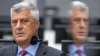
Former President Hashim Thaçi and Jakup Krasniqi received 25-year prison sentences, Kadri Veseli 18 years and Rexhep Selimi 13 years.
All four, however, were acquitted of other crimes against humanity charges. Their defense teams have announced plans to appeal.
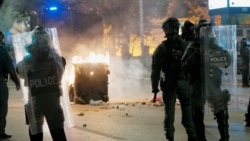
The dispute unfolded amid protests demanding passage of the court legislation. On October 5, some demonstrators threw glass bottles and pyrotechnics, while police used tear gas and water cannons to disperse crowds near parliament.
Police said six officers were injured, 11 civilians sought medical attention and three protesters were taken to a police station. Kosovo’s Police Inspectorate opened a preliminary investigation into police conduct during the protest.
Demonstrators gathered again on October 6. Police reported that one person was injured by pyrotechnics thrown by protesters.
Kosovo’s president serves a five-year term, beginning upon taking the oath before parliament.