

Accessibility links

Breaking News

Orthodox Church Of Ukraine Approves Calendar Switch In Widening Diversion From Russia

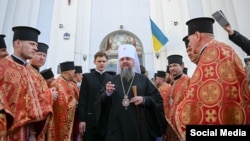
The head of the Orthodox Church of Ukraine, Metropolitan Epifaniy (center) said the move was "vitally necessary."

In another sign of the widening fissure between the main Orthodox churches in Ukraine and Russia over the Kremlin's war against its neighbor, the Orthodox Church of Ukraine (OCU) has approved a switch to the revised Julian calendar, a move that will move Christmas forward to December 25.

The OCU said on Facebook on May 24 that other Christian holidays will also be moved in accordance with the new Julian calendar -- which is aligned with the Gregorian calendar used in the secular world -- as of September 1.

Traditionally, Ukrainian Christians, most of whom are Orthodox, celebrate Christmas on January 7, the day most other Orthodox-dominated countries -- including Russia and several other Slavic countries -- mark the holiday. The switch brings Ukraine's Orthodox worshippers in line with the country's Catholics, who earlier this year approved a similar change in calendars.

The OCU's head, Metropolitan Epifaniy, said the move was "vitally necessary."

"This question arose with new impetus as a result of Russian aggression," the OCU wrote in the post, adding that the UCO's local council is expected to give final approval for the switch on July 27.

"Nowadays, the Julian calendar is perceived as connected with Russian church culture," it said.

Russia launched its full-scale, unprovoked invasion of Ukraine on February 24, 2022. Russia's Orthodox Church has staunchly backed President Vladimir Putin's move.

Blessed Are The Plates: Ukraine's Orthodox Church Consecrates Icon-Painted Body Armor
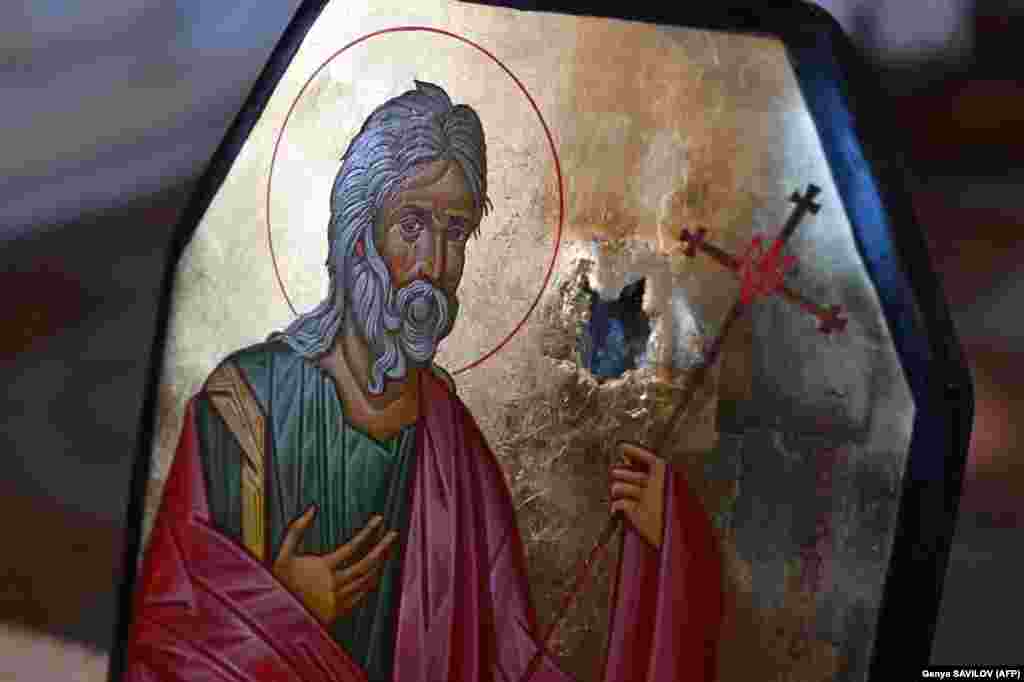
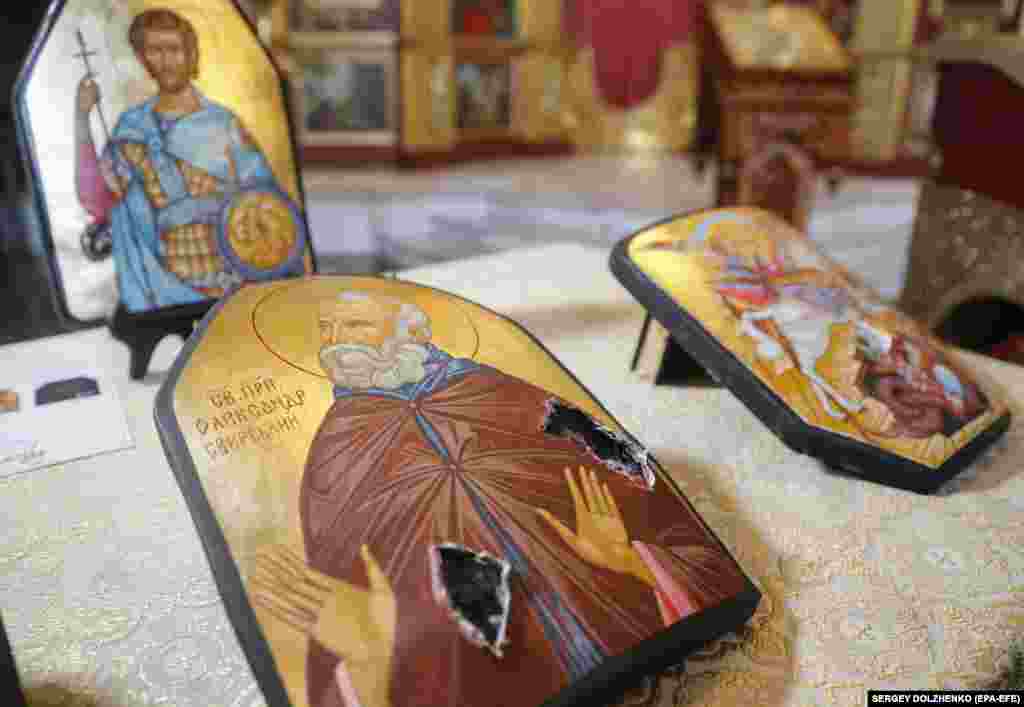
An Orthodox icon drawn on an armored plate with a bullet hole is displayed at a consecration ceremony at St. Michael's Golden-Domed Cathedral in Kyiv on May 23.
1/8 An Orthodox icon drawn on an armored plate with a bullet hole is displayed at a consecration ceremony at St. Michael's Golden-Domed Cathedral in Kyiv on May 23.
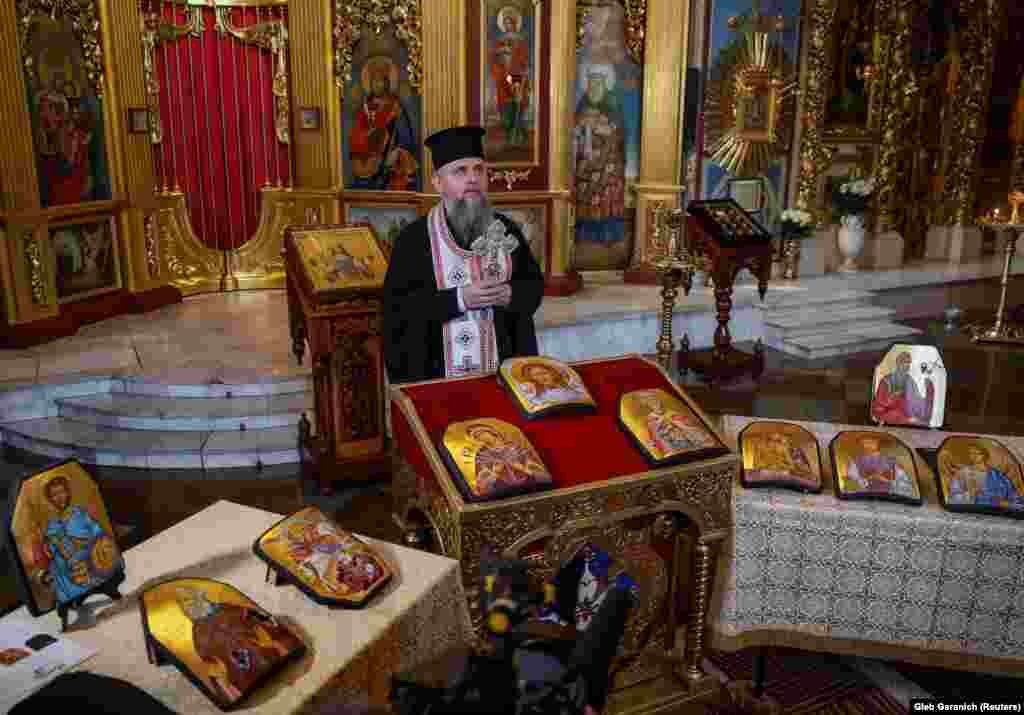
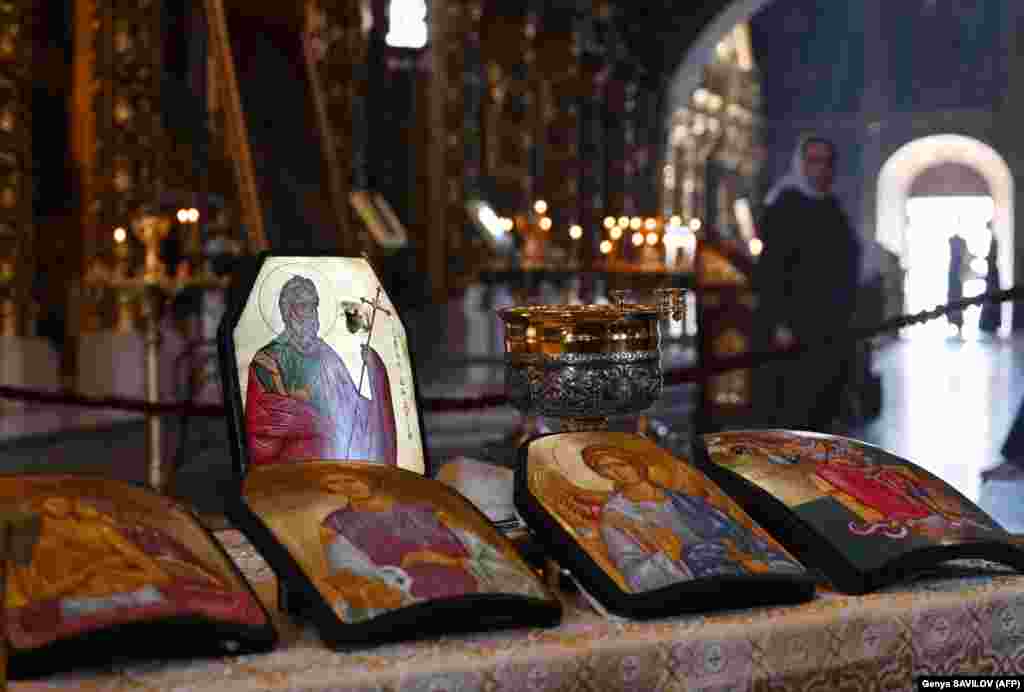
The leader of the Orthodox Church of Ukraine bestowed blessings upon 12 icons painted on body armor plates that saved the lives of Ukrainian soldiers as they battled invading Russian forces.
"This is the first series of plates. They are not just plates. They were brought from the front," said Oleksandr Kovalchuk, co-founder of the Ukraine for Heroes charitable foundation. "They saved the lives of our defenders."
2/8 "This is the first series of plates. They are not just plates. They were brought from the front," said Oleksandr Kovalchuk, co-founder of the Ukraine for Heroes charitable foundation. "They saved the lives of our defenders."
The leader of the Orthodox Church of Ukraine bestowed blessings upon 12 icons painted on body armor plates that saved the lives of Ukrainian soldiers as they battled invading Russian forces.
"It is about creativity, about art, about uniting people, the armed forces, and government through faith, faith in victory, faith in God. All of this is depicted on armor plates,” said Kovalchuk.
3/8 "It is about creativity, about art, about uniting people, the armed forces, and government through faith, faith in victory, faith in God. All of this is depicted on armor plates,” said Kovalchuk.
The leader of the Orthodox Church of Ukraine bestowed blessings upon 12 icons painted on body armor plates that saved the lives of Ukrainian soldiers as they battled invading Russian forces.
Metropolitan Epiphanius I, head of the Orthodox Church of Ukraine, leads the consecration ceremony for the blessing of Orthodox icons.
4/8 Metropolitan Epiphanius I, head of the Orthodox Church of Ukraine, leads the consecration ceremony for the blessing of Orthodox icons.
The leader of the Orthodox Church of Ukraine bestowed blessings upon 12 icons painted on body armor plates that saved the lives of Ukrainian soldiers as they battled invading Russian forces.
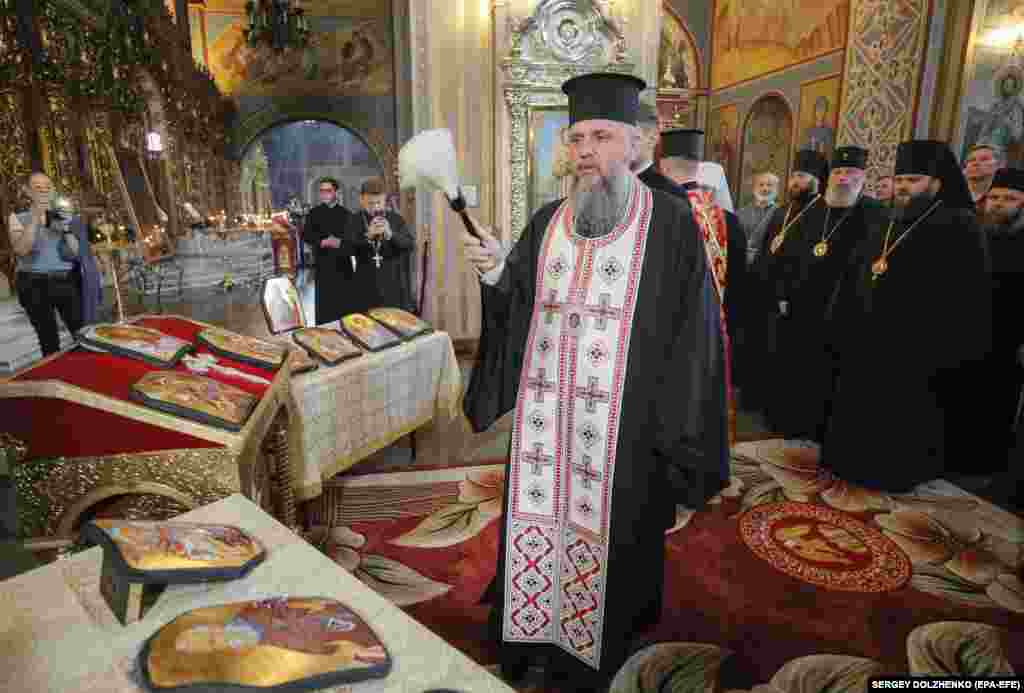
The icons are blessed with holy water.
5/8 The icons are blessed with holy water.
The leader of the Orthodox Church of Ukraine bestowed blessings upon 12 icons painted on body armor plates that saved the lives of Ukrainian soldiers as they battled invading Russian forces.
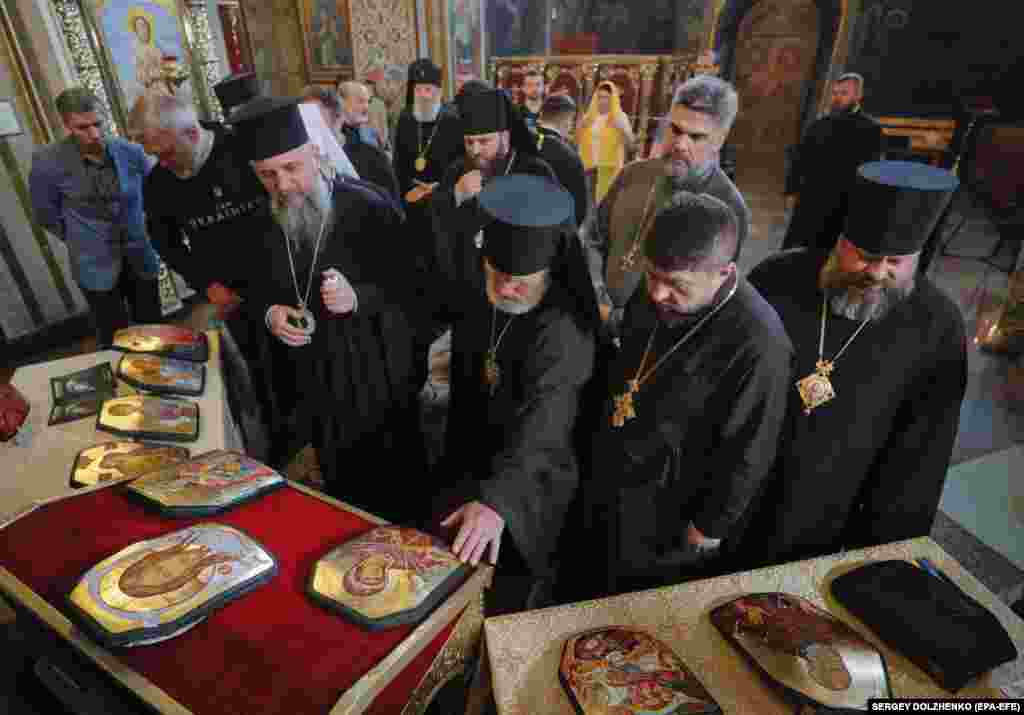
Epiphanius I along with other clergy members review the icons.
6/8 Epiphanius I along with other clergy members review the icons.
The leader of the Orthodox Church of Ukraine bestowed blessings upon 12 icons painted on body armor plates that saved the lives of Ukrainian soldiers as they battled invading Russian forces.
The icons were created as part of the&nbsp;<strong><a href="https://artarmor.org/en/">ArtArmor</a></strong>&nbsp;project that raises charitable donations and proclaims that &quot;art is stronger than weapons.&quot;<br />
<br />
There are plans to expand the collection of icons to 27, representing each region of Ukraine and three cities: Kyiv, Sevastopol, and Simferopol.
7/8 The icons were created as part of the ArtArmor project that raises charitable donations and proclaims that "art is stronger than weapons."

There are plans to expand the collection of icons to 27, representing each region of Ukraine and three cities: Kyiv, Sevastopol, and Simferopol.
The leader of the Orthodox Church of Ukraine bestowed blessings upon 12 icons painted on body armor plates that saved the lives of Ukrainian soldiers as they battled invading Russian forces.
The icons will travel to the United States to be used at prayer breakfasts where attendees will be encouraged to donate money for the Ukrainian military.
8/8 The icons will travel to the United States to be used at prayer breakfasts where attendees will be encouraged to donate money for the Ukrainian military.
The leader of the Orthodox Church of Ukraine bestowed blessings upon 12 icons painted on body armor plates that saved the lives of Ukrainian soldiers as they battled invading Russian forces.
Previous slide
Next slide

In 2019, the OCU was officially recognized by Patriarch Bartholomew of Constantinople -- the spiritual head of Orthodox Christianity's 300 million-strong worldwide community. It heralded a historic break with the Ukrainian Orthodox Church of the Moscow Patriarchate (UOC-MP), ending more than three centuries of Russian spiritual and temporal control of the dominant faith in Ukraine.

Ukraine has about 30 million Orthodox believers, roughly divided between the UOC-MP and two other Orthodox churches, including the independent OCU. More than 500 parishes have switched from the UOC-MP to the OCU in the past 18 months.

The OCU said in its Facebook post that "parishes and monasteries that wish to adhere to the old calendar will have this opportunity -- the calendar reform will take place without coercion, gradually and consciously."

"We remind people that the issue of calendar reform has long been discussed both in society and in the church. And we see that every year the number of supporters of the transition to the updated, modern calendar, which has been used by the majority of local Orthodox churches for a long time, has been growing," it said.

In December, a poll conducted by the Ukrainian government revealed that almost 60 percent of more than 1.5 million respondents supported switching to the new Julian calendar.

Ukraine's culture minister has previously expressed support for the switch in calendars, describing it as "appropriate to the demands of our time and public opinion."

With reporting by BBC, The Kyiv Independent, and Reuters
  • 16x9 Image

    RFE/RL

    RFE/RL journalists report the news in 24 languages in 18 countries where a free press is banned by the government or not fully established. We provide what many people cannot get locally: uncensored news, responsible discussion, and open debate.

This item is part of
XS
SM
MD
LG