




Accessibility links

Breaking News

Death Toll From Pakistan Heat Wave Tops 700

Updated
A man uses a hand-held fan to cool down his son while waiting in line for a medical checkup outside a health-center in Karachi.
1/13 A man uses a hand-held fan to cool down his son while waiting in line for a medical checkup outside a health-center in Karachi.
A four-day heat wave has killed more than 780 people in Karachi as the government declared a holiday in the southern Pakistani city to encourage people to stay home. The heat wave has coincided with severe electricity cuts and the holy month of Ramadan, when most Muslims do not eat or drink during daylight hours. Many of the deaths, among the elderly and poor have been caused by dehydration. Charities have been working to bridge the gaps in an overburdened and poorly funded public health system in the city of 20 million people, home to Pakistan's main stock market, central bank, and biggest port. Government health officials did not return calls seeking comment. Many of Karachi's wealthy have generators to run air conditioners to beat the heat, which reached 44 degrees Celsius over the weekend. Public services in Pakistan, a nuclear-armed nation of 190 million people, are starved of resources because of endemic tax evasion.
People cool off on a hot day in Karachi.
2/13 People cool off on a hot day in Karachi.
A four-day heat wave has killed more than 780 people in Karachi as the government declared a holiday in the southern Pakistani city to encourage people to stay home. The heat wave has coincided with severe electricity cuts and the holy month of Ramadan, when most Muslims do not eat or drink during daylight hours. Many of the deaths, among the elderly and poor have been caused by dehydration. Charities have been working to bridge the gaps in an overburdened and poorly funded public health system in the city of 20 million people, home to Pakistan's main stock market, central bank, and biggest port. Government health officials did not return calls seeking comment. Many of Karachi's wealthy have generators to run air conditioners to beat the heat, which reached 44 degrees Celsius over the weekend. Public services in Pakistan, a nuclear-armed nation of 190 million people, are starved of resources because of endemic tax evasion.
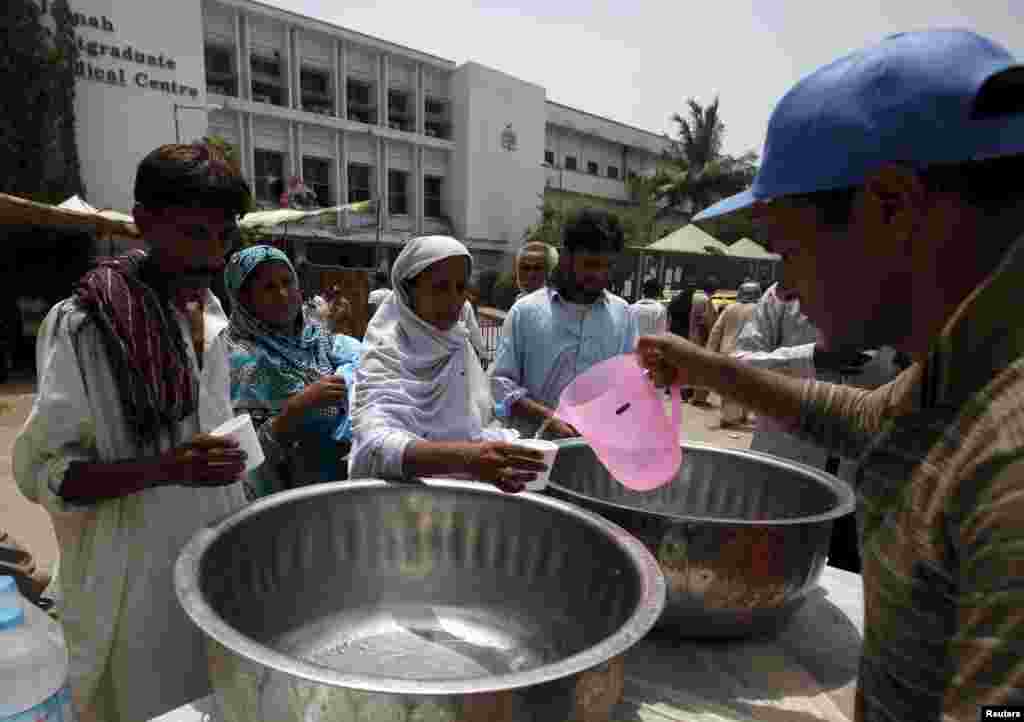
People receive drinking water from volunteers during the intensely hot weather in Karachi on June 23.
3/13 People receive drinking water from volunteers during the intensely hot weather in Karachi on June 23.
A four-day heat wave has killed more than 780 people in Karachi as the government declared a holiday in the southern Pakistani city to encourage people to stay home. The heat wave has coincided with severe electricity cuts and the holy month of Ramadan, when most Muslims do not eat or drink during daylight hours. Many of the deaths, among the elderly and poor have been caused by dehydration. Charities have been working to bridge the gaps in an overburdened and poorly funded public health system in the city of 20 million people, home to Pakistan's main stock market, central bank, and biggest port. Government health officials did not return calls seeking comment. Many of Karachi's wealthy have generators to run air conditioners to beat the heat, which reached 44 degrees Celsius over the weekend. Public services in Pakistan, a nuclear-armed nation of 190 million people, are starved of resources because of endemic tax evasion.
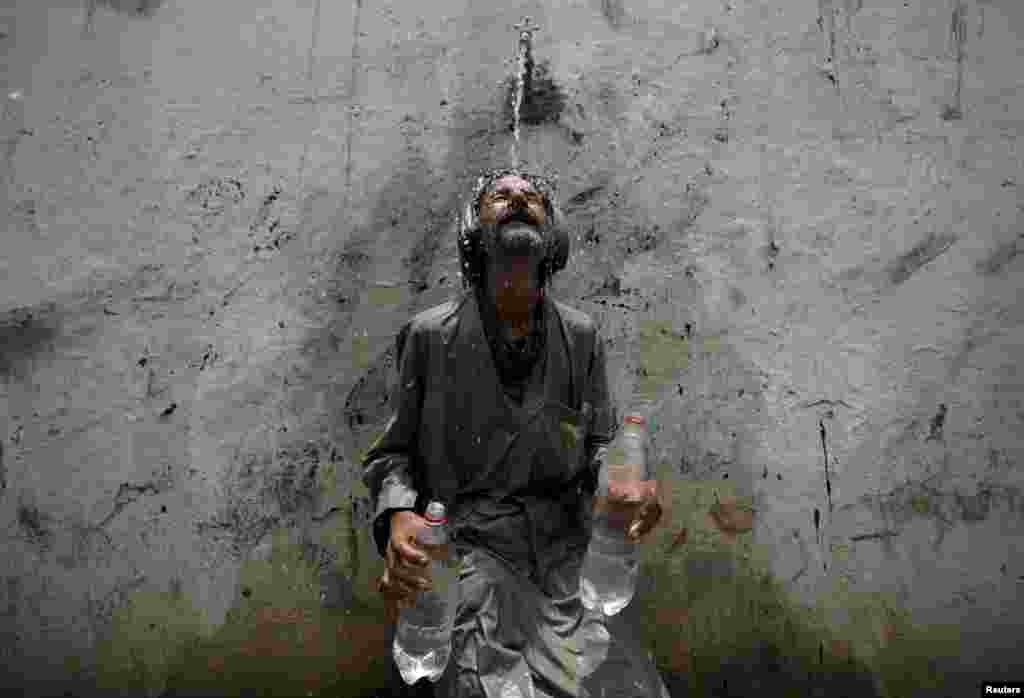
A Karachi man cools off under a public tap after filling bottles with water.
4/13 A Karachi man cools off under a public tap after filling bottles with water.
A four-day heat wave has killed more than 780 people in Karachi as the government declared a holiday in the southern Pakistani city to encourage people to stay home. The heat wave has coincided with severe electricity cuts and the holy month of Ramadan, when most Muslims do not eat or drink during daylight hours. Many of the deaths, among the elderly and poor have been caused by dehydration. Charities have been working to bridge the gaps in an overburdened and poorly funded public health system in the city of 20 million people, home to Pakistan's main stock market, central bank, and biggest port. Government health officials did not return calls seeking comment. Many of Karachi's wealthy have generators to run air conditioners to beat the heat, which reached 44 degrees Celsius over the weekend. Public services in Pakistan, a nuclear-armed nation of 190 million people, are starved of resources because of endemic tax evasion.
A woman receives treatment at an army heat-stroke relief center, which was set-up at a local Karachi school.
5/13 A woman receives treatment at an army heat-stroke relief center, which was set-up at a local Karachi school.
A four-day heat wave has killed more than 780 people in Karachi as the government declared a holiday in the southern Pakistani city to encourage people to stay home. The heat wave has coincided with severe electricity cuts and the holy month of Ramadan, when most Muslims do not eat or drink during daylight hours. Many of the deaths, among the elderly and poor have been caused by dehydration. Charities have been working to bridge the gaps in an overburdened and poorly funded public health system in the city of 20 million people, home to Pakistan's main stock market, central bank, and biggest port. Government health officials did not return calls seeking comment. Many of Karachi's wealthy have generators to run air conditioners to beat the heat, which reached 44 degrees Celsius over the weekend. Public services in Pakistan, a nuclear-armed nation of 190 million people, are starved of resources because of endemic tax evasion.
Karachi residents sit beside the body of a dead relative while waiting for an ambulance at a city morgue. 
6/13 Karachi residents sit beside the body of a dead relative while waiting for an ambulance at a city morgue. 
A four-day heat wave has killed more than 780 people in Karachi as the government declared a holiday in the southern Pakistani city to encourage people to stay home. The heat wave has coincided with severe electricity cuts and the holy month of Ramadan, when most Muslims do not eat or drink during daylight hours. Many of the deaths, among the elderly and poor have been caused by dehydration. Charities have been working to bridge the gaps in an overburdened and poorly funded public health system in the city of 20 million people, home to Pakistan's main stock market, central bank, and biggest port. Government health officials did not return calls seeking comment. Many of Karachi's wealthy have generators to run air conditioners to beat the heat, which reached 44 degrees Celsius over the weekend. Public services in Pakistan, a nuclear-armed nation of 190 million people, are starved of resources because of endemic tax evasion.
A Pakistani boy cools off in a stream on the outskirts of Islamabad.
7/13 A Pakistani boy cools off in a stream on the outskirts of Islamabad.
A four-day heat wave has killed more than 780 people in Karachi as the government declared a holiday in the southern Pakistani city to encourage people to stay home. The heat wave has coincided with severe electricity cuts and the holy month of Ramadan, when most Muslims do not eat or drink during daylight hours. Many of the deaths, among the elderly and poor have been caused by dehydration. Charities have been working to bridge the gaps in an overburdened and poorly funded public health system in the city of 20 million people, home to Pakistan's main stock market, central bank, and biggest port. Government health officials did not return calls seeking comment. Many of Karachi's wealthy have generators to run air conditioners to beat the heat, which reached 44 degrees Celsius over the weekend. Public services in Pakistan, a nuclear-armed nation of 190 million people, are starved of resources because of endemic tax evasion.
A man helps a heatstroke victim at a market area in Karachi. 
8/13 A man helps a heatstroke victim at a market area in Karachi. 
A four-day heat wave has killed more than 780 people in Karachi as the government declared a holiday in the southern Pakistani city to encourage people to stay home. The heat wave has coincided with severe electricity cuts and the holy month of Ramadan, when most Muslims do not eat or drink during daylight hours. Many of the deaths, among the elderly and poor have been caused by dehydration. Charities have been working to bridge the gaps in an overburdened and poorly funded public health system in the city of 20 million people, home to Pakistan's main stock market, central bank, and biggest port. Government health officials did not return calls seeking comment. Many of Karachi's wealthy have generators to run air conditioners to beat the heat, which reached 44 degrees Celsius over the weekend. Public services in Pakistan, a nuclear-armed nation of 190 million people, are starved of resources because of endemic tax evasion.
Muslim men rest in the heat at a mosque in Peshawar.
9/13 Muslim men rest in the heat at a mosque in Peshawar.
A four-day heat wave has killed more than 780 people in Karachi as the government declared a holiday in the southern Pakistani city to encourage people to stay home. The heat wave has coincided with severe electricity cuts and the holy month of Ramadan, when most Muslims do not eat or drink during daylight hours. Many of the deaths, among the elderly and poor have been caused by dehydration. Charities have been working to bridge the gaps in an overburdened and poorly funded public health system in the city of 20 million people, home to Pakistan's main stock market, central bank, and biggest port. Government health officials did not return calls seeking comment. Many of Karachi's wealthy have generators to run air conditioners to beat the heat, which reached 44 degrees Celsius over the weekend. Public services in Pakistan, a nuclear-armed nation of 190 million people, are starved of resources because of endemic tax evasion.
People receive medical treatment at a hospital in Karachi.
10/13 People receive medical treatment at a hospital in Karachi.
A four-day heat wave has killed more than 780 people in Karachi as the government declared a holiday in the southern Pakistani city to encourage people to stay home. The heat wave has coincided with severe electricity cuts and the holy month of Ramadan, when most Muslims do not eat or drink during daylight hours. Many of the deaths, among the elderly and poor have been caused by dehydration. Charities have been working to bridge the gaps in an overburdened and poorly funded public health system in the city of 20 million people, home to Pakistan's main stock market, central bank, and biggest port. Government health officials did not return calls seeking comment. Many of Karachi's wealthy have generators to run air conditioners to beat the heat, which reached 44 degrees Celsius over the weekend. Public services in Pakistan, a nuclear-armed nation of 190 million people, are starved of resources because of endemic tax evasion.
A Karachi boy cools off.
11/13 A Karachi boy cools off.
A four-day heat wave has killed more than 780 people in Karachi as the government declared a holiday in the southern Pakistani city to encourage people to stay home. The heat wave has coincided with severe electricity cuts and the holy month of Ramadan, when most Muslims do not eat or drink during daylight hours. Many of the deaths, among the elderly and poor have been caused by dehydration. Charities have been working to bridge the gaps in an overburdened and poorly funded public health system in the city of 20 million people, home to Pakistan's main stock market, central bank, and biggest port. Government health officials did not return calls seeking comment. Many of Karachi's wealthy have generators to run air conditioners to beat the heat, which reached 44 degrees Celsius over the weekend. Public services in Pakistan, a nuclear-armed nation of 190 million people, are starved of resources because of endemic tax evasion.
A man waits while volunteers search for the body of a deceased relative among people who died due to the intense heat wave in Karachi.
12/13 A man waits while volunteers search for the body of a deceased relative among people who died due to the intense heat wave in Karachi.
A four-day heat wave has killed more than 780 people in Karachi as the government declared a holiday in the southern Pakistani city to encourage people to stay home. The heat wave has coincided with severe electricity cuts and the holy month of Ramadan, when most Muslims do not eat or drink during daylight hours. Many of the deaths, among the elderly and poor have been caused by dehydration. Charities have been working to bridge the gaps in an overburdened and poorly funded public health system in the city of 20 million people, home to Pakistan's main stock market, central bank, and biggest port. Government health officials did not return calls seeking comment. Many of Karachi's wealthy have generators to run air conditioners to beat the heat, which reached 44 degrees Celsius over the weekend. Public services in Pakistan, a nuclear-armed nation of 190 million people, are starved of resources because of endemic tax evasion.
People jump into water to cool off in Karachi.
13/13 People jump into water to cool off in Karachi.
A four-day heat wave has killed more than 780 people in Karachi as the government declared a holiday in the southern Pakistani city to encourage people to stay home. The heat wave has coincided with severe electricity cuts and the holy month of Ramadan, when most Muslims do not eat or drink during daylight hours. Many of the deaths, among the elderly and poor have been caused by dehydration. Charities have been working to bridge the gaps in an overburdened and poorly funded public health system in the city of 20 million people, home to Pakistan's main stock market, central bank, and biggest port. Government health officials did not return calls seeking comment. Many of Karachi's wealthy have generators to run air conditioners to beat the heat, which reached 44 degrees Celsius over the weekend. Public services in Pakistan, a nuclear-armed nation of 190 million people, are starved of resources because of endemic tax evasion.
Previous slide
Next slide

Pakistani Prime Minister Nawaz Sharif has called for emergency measures as the death toll from a three-day heat wave in southern Pakistan reached nearly 700.

The National Disaster Management Authority (NDMA) said on June 23 that it had received orders from Sharif to take immediate action.

An NDMA official was quoted as saying heatstroke treatment centers would be established at all hospitals across the southern province of Sindh.

The majority of deaths occurred in the port city of Karachi, where temperatures hit 45 degrees Celsius at the weekend, while several other deaths occurred in other parts of southern Sindh Province.

The deaths come a month after neighboring India suffered the second-deadliest heat wave in its history, with more than 2,000 deaths.

Semi Jamali, a doctor at Karachi's largest hospital, said they had treated about 3,000 patients suffering from heatstroke.

In Karachi, a city of 20 million people, electricity shortages crippled the water supply system, hampering the pumping of millions of gallons of water to consumers.

Based on reporting by AFP and dpa
This item is part of
XS
SM
MD
LG