


Accessibility links

Breaking News

Putin To Hold Calls With Biden, Macron After U.S. Says Russia Could Attack Ukraine 'Any Day'

Updated
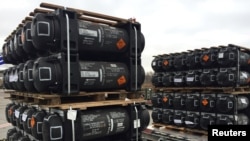
Military aid, delivered as part of U.S. security assistance to Ukraine, is unloaded from a plane at Boryspil International Airport outside Kyiv on February 11.

Russian President Vladimir Putin will hold telephone calls with U.S. President Joe Biden and French President Emmanuel Macron on February 12 amid growing fears Russia may be preparing for an invasion of Ukraine.

Kremlin spokesman Dmitry Peskov said on February 11 that the request for a phone call between Putin and Biden came from Washington. A White House official confirmed that the call will take place, according to Reuters. The call with Macron, which Peskov confirmed, comes days after the two leaders met in Moscow for more than five hours of talks.

The calls were arranged after U.S. officials said Russia has massed enough troops near Ukraine to launch a major invasion and urged all U.S. citizens to leave the country within 48 hours.

In Photos: New Images Capture Russia Massing Weaponry Around Ukraine
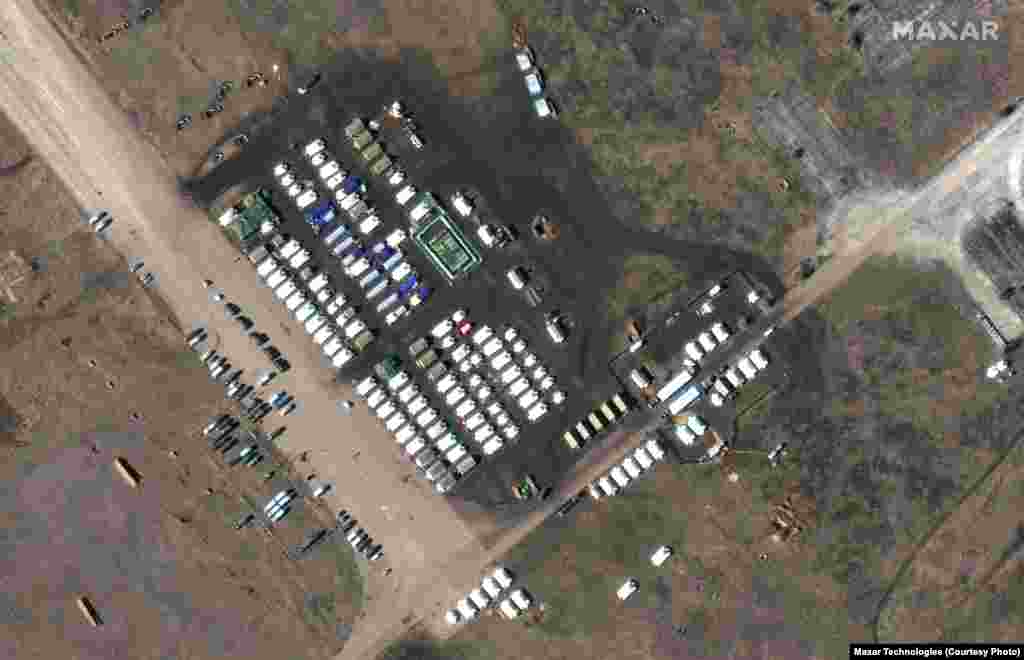
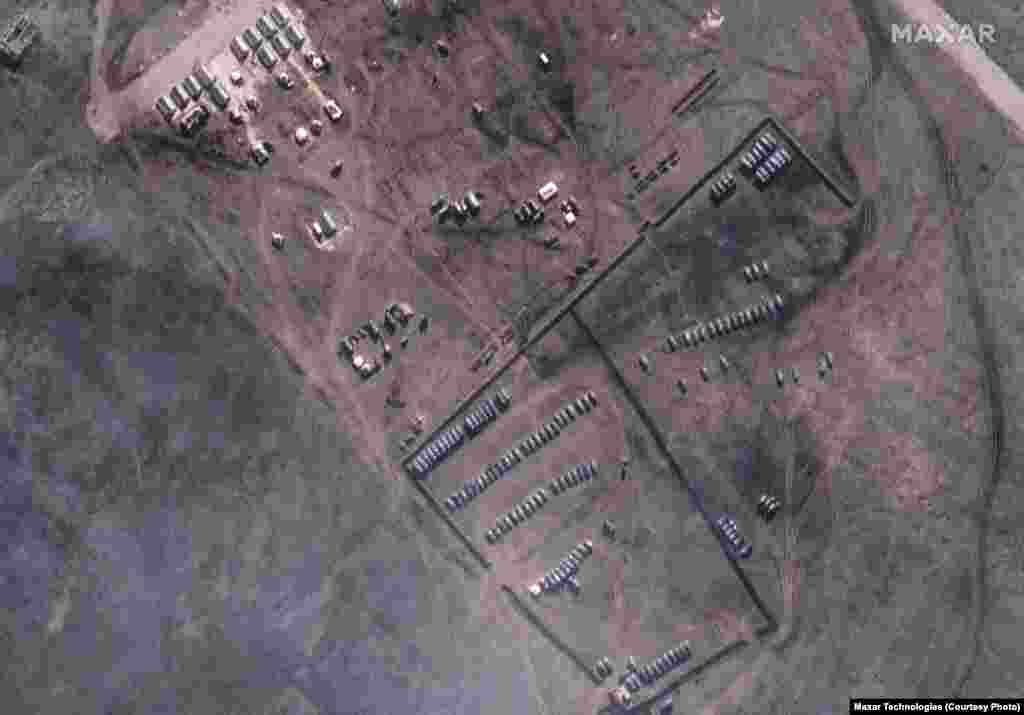
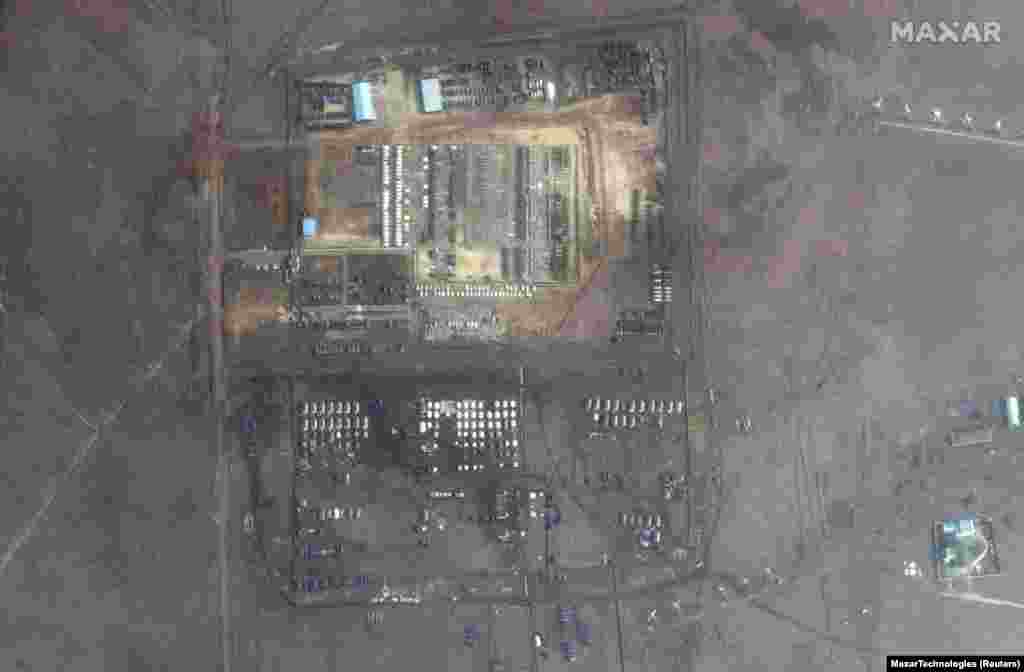
In Crimea, a new deployment of troops and equipment is visible at the Oktyabrskoye airfield north of Simferopol on February 10.
1/24 In Crimea, a new deployment of troops and equipment is visible at the Oktyabrskoye airfield north of Simferopol on February 10.
Satellite photos from February 10 and earlier show a massive Russian buildup of military hardware, reportedly including ballistic-missile systems. Some of the buildup is in Belarus, not far from the Ukrainian border.
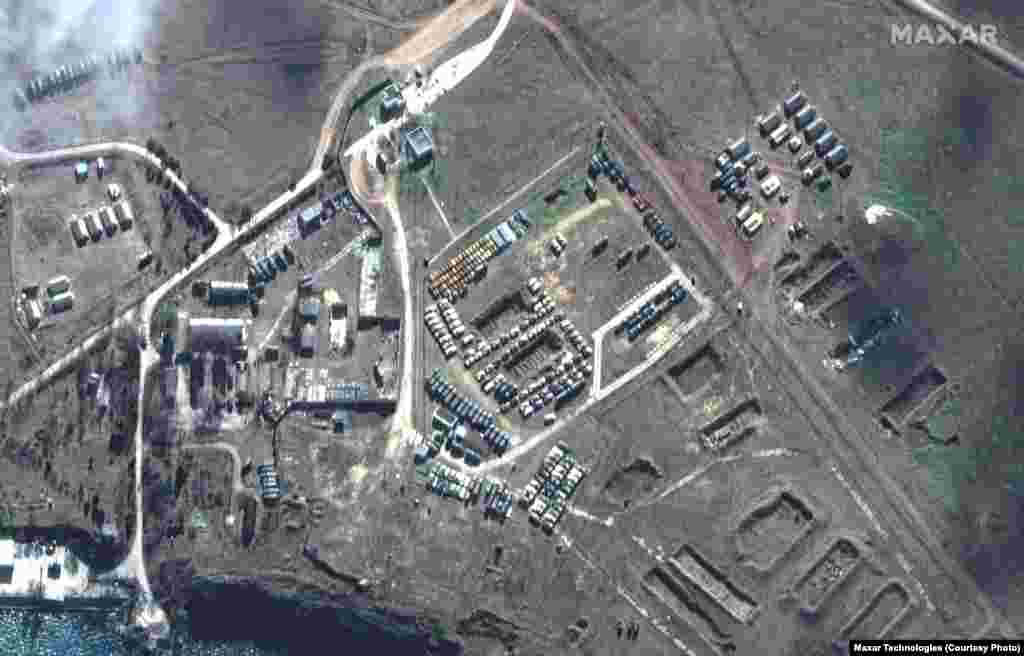
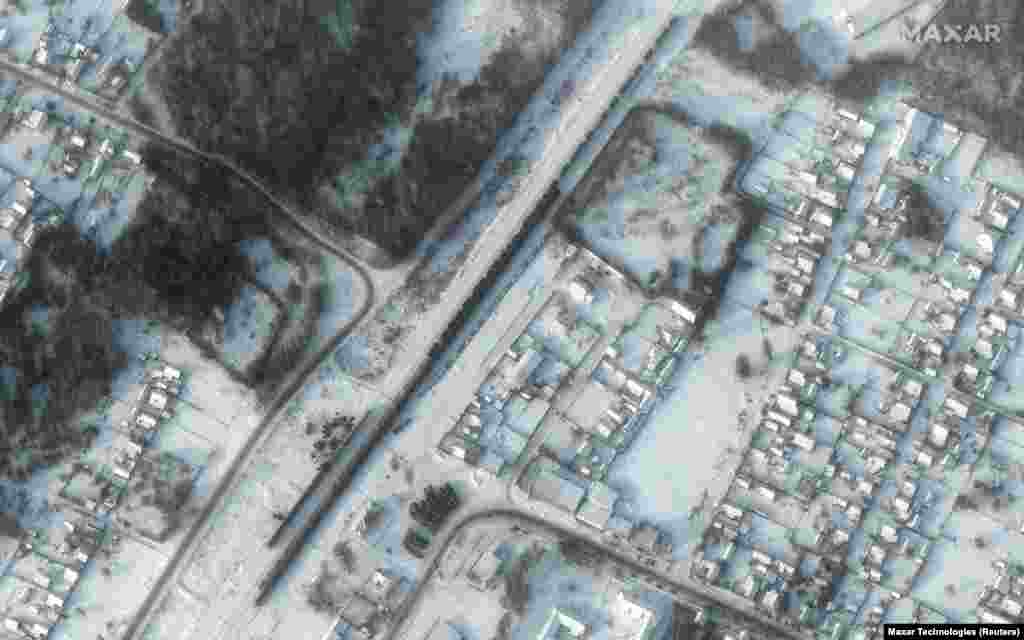
Armored vehicles of a new deployment are visible in Slavne on Crimea's northwest coast on February 9.
2/24 Armored vehicles of a new deployment are visible in Slavne on Crimea's northwest coast on February 9.
Satellite photos from February 10 and earlier show a massive Russian buildup of military hardware, reportedly including ballistic-missile systems. Some of the buildup is in Belarus, not far from the Ukrainian border.
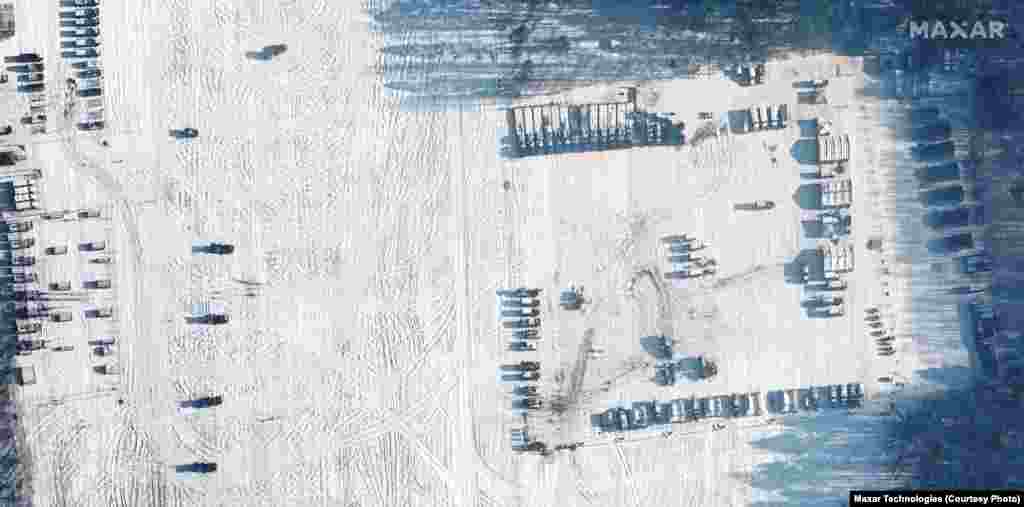
Equipment and new deployments are visible in Novoozernoye, Crimea, on February 9.
3/24 Equipment and new deployments are visible in Novoozernoye, Crimea, on February 9.
Satellite photos from February 10 and earlier show a massive Russian buildup of military hardware, reportedly including ballistic-missile systems. Some of the buildup is in Belarus, not far from the Ukrainian border.
A new deployment of troops, vehicles, and helicopters was identified on February 10 at the Zyabrovka airfield near Homel, Belarus, less than 25 kilometers from the border with Ukraine.
4/24 A new deployment of troops, vehicles, and helicopters was identified on February 10 at the Zyabrovka airfield near Homel, Belarus, less than 25 kilometers from the border with Ukraine.
Satellite photos from February 10 and earlier show a massive Russian buildup of military hardware, reportedly including ballistic-missile systems. Some of the buildup is in Belarus, not far from the Ukrainian border.
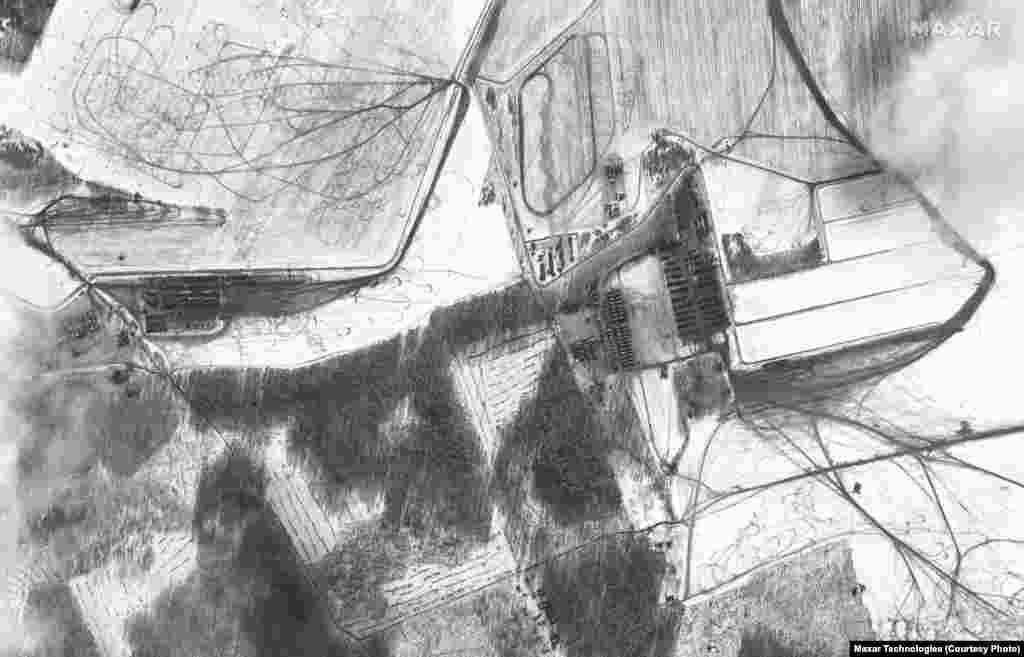
An overview of deployment areas near Rechytsa on February 9. Rechytsa is in Belarus's southeastern Homel region, some 55 kilometers from the Ukrainian border.
5/24 An overview of deployment areas near Rechytsa on February 9. Rechytsa is in Belarus's southeastern Homel region, some 55 kilometers from the Ukrainian border.
Satellite photos from February 10 and earlier show a massive Russian buildup of military hardware, reportedly including ballistic-missile systems. Some of the buildup is in Belarus, not far from the Ukrainian border.
Armored vehicles and transporters arrive at Russia's Kursk training area on February 9, about 100 kilometers east of Ukraine.
6/24 Armored vehicles and transporters arrive at Russia's Kursk training area on February 9, about 100 kilometers east of Ukraine.
Satellite photos from February 10 and earlier show a massive Russian buildup of military hardware, reportedly including ballistic-missile systems. Some of the buildup is in Belarus, not far from the Ukrainian border.
Multiple battle groups and troop housing areas are visible at the Kursk training area on February 9.
7/24 Multiple battle groups and troop housing areas are visible at the Kursk training area on February 9.
Satellite photos from February 10 and earlier show a massive Russian buildup of military hardware, reportedly including ballistic-missile systems. Some of the buildup is in Belarus, not far from the Ukrainian border.
Six SU-25 ground-attack aircraft are shown at Luninets airfield in Belarus. The image was taken on February 4. Luninets is in the southwestern Brest region, about 50 kilometers from the Ukrainian border.
8/24 Six SU-25 ground-attack aircraft are shown at Luninets airfield in Belarus. The image was taken on February 4. Luninets is in the southwestern Brest region, about 50 kilometers from the Ukrainian border.
Satellite photos from February 10 and earlier show a massive Russian buildup of military hardware, reportedly including ballistic-missile systems. Some of the buildup is in Belarus, not far from the Ukrainian border.
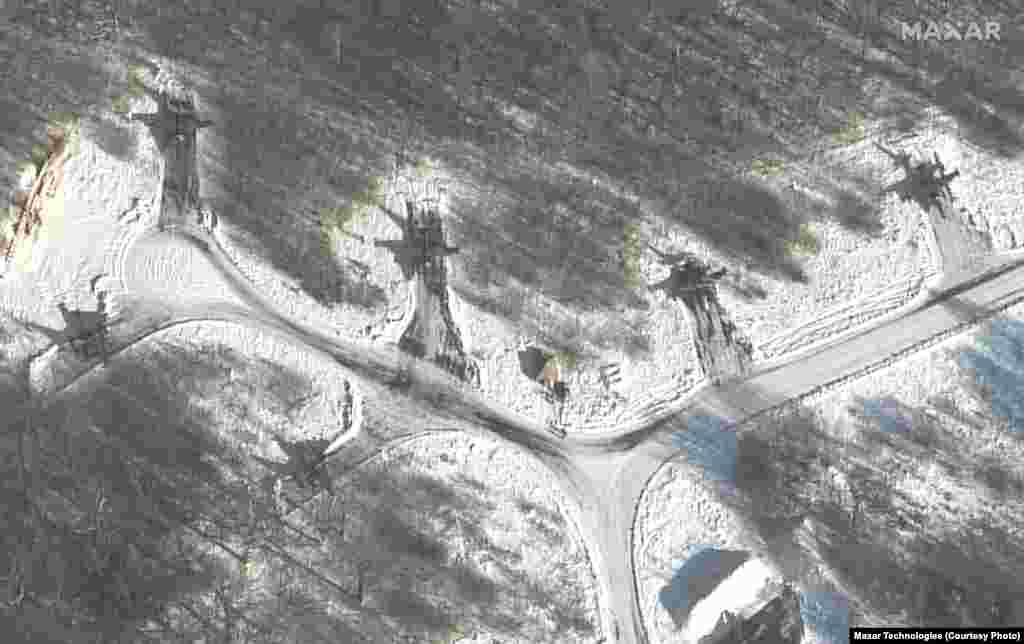
Probable S-400 air-defense deployments at the Luninets airfield on February 4.
9/24 Probable S-400 air-defense deployments at the Luninets airfield on February 4.
Satellite photos from February 10 and earlier show a massive Russian buildup of military hardware, reportedly including ballistic-missile systems. Some of the buildup is in Belarus, not far from the Ukrainian border.
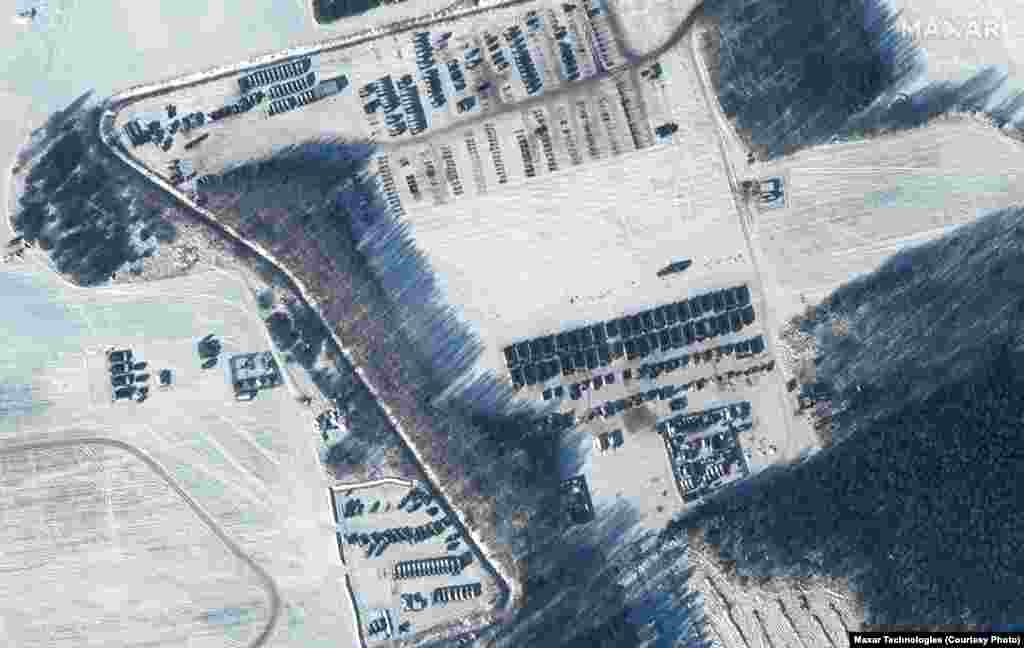
Probable SS-26 Iskander and multiple-rocket launchers deployed northwest of Yelsk on February 4. Yelsk is in Belarus's Homel region, about 20 kilometers from the Ukrainian border.
10/24 Probable SS-26 Iskander and multiple-rocket launchers deployed northwest of Yelsk on February 4. Yelsk is in Belarus's Homel region, about 20 kilometers from the Ukrainian border.
Satellite photos from February 10 and earlier show a massive Russian buildup of military hardware, reportedly including ballistic-missile systems. Some of the buildup is in Belarus, not far from the Ukrainian border.
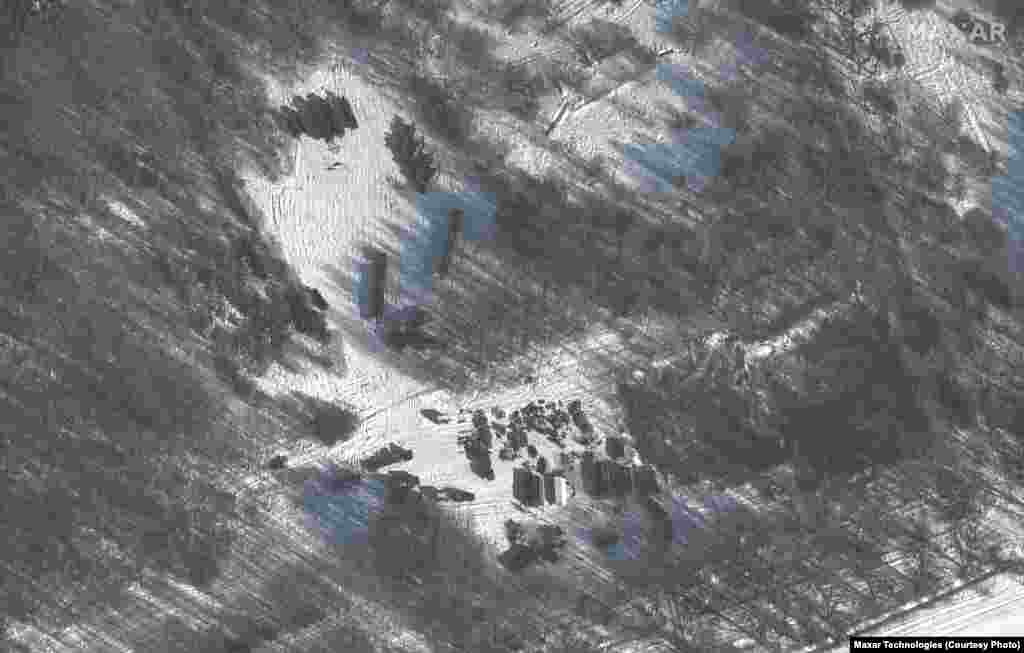
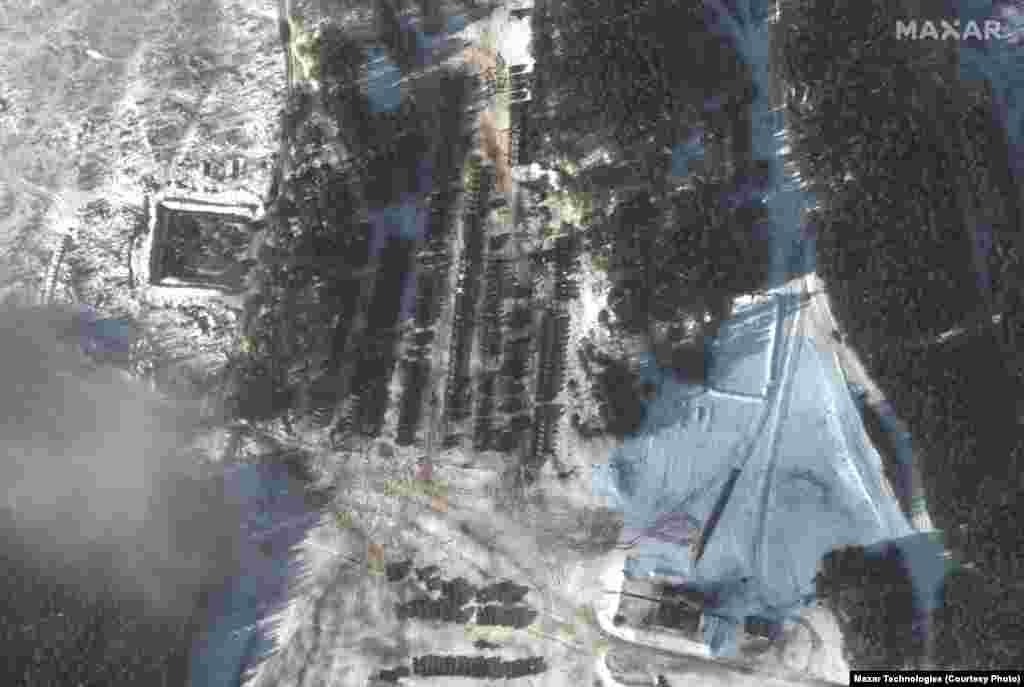
Troops and logistics-material-support units northwest of Yelsk on February 4.
11/24 Troops and logistics-material-support units northwest of Yelsk on February 4.
Satellite photos from February 10 and earlier show a massive Russian buildup of military hardware, reportedly including ballistic-missile systems. Some of the buildup is in Belarus, not far from the Ukrainian border.
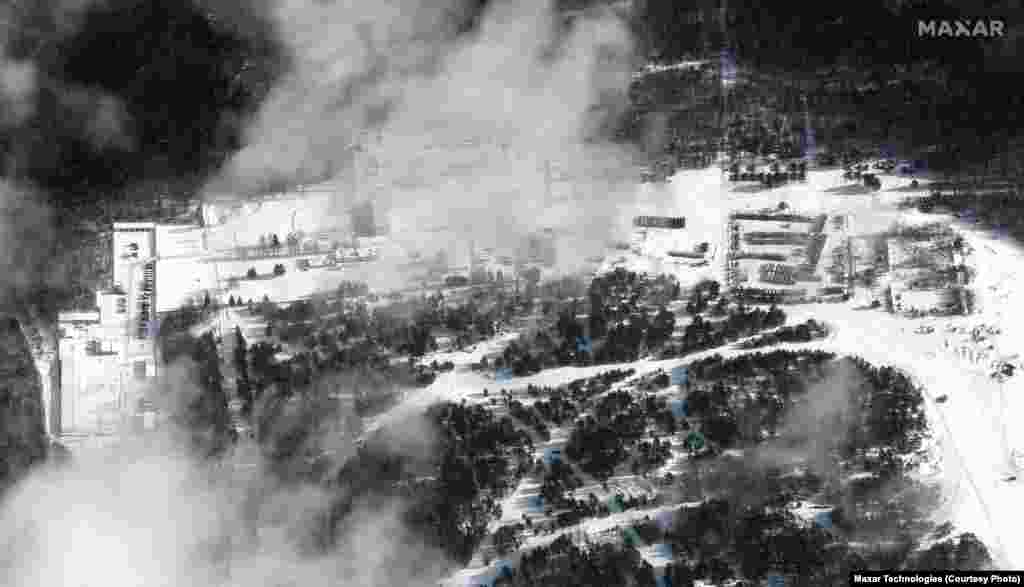
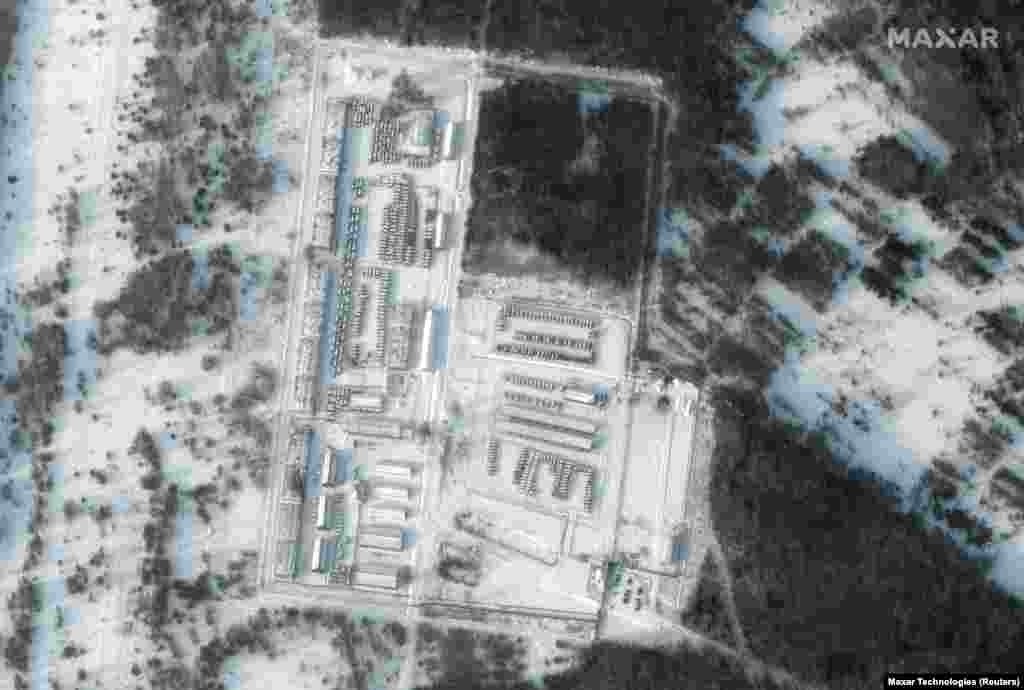
A troop-housing area and vehicle park in Rechytsa on February 4.
12/24 A troop-housing area and vehicle park in Rechytsa on February 4.
Satellite photos from February 10 and earlier show a massive Russian buildup of military hardware, reportedly including ballistic-missile systems. Some of the buildup is in Belarus, not far from the Ukrainian border.
A cluster of vehicles that reportedly includes truck-launched Iskander missile systems at the Osipovichi military training area, just south of Minsk. The image was taken on February 1. 
13/24 A cluster of vehicles that reportedly includes truck-launched Iskander missile systems at the Osipovichi military training area, just south of Minsk. The image was taken on February 1. 
Satellite photos from February 10 and earlier show a massive Russian buildup of military hardware, reportedly including ballistic-missile systems. Some of the buildup is in Belarus, not far from the Ukrainian border.
A wider view of the Osipovichi military facility on February 1. Russian-made Iskander missiles are capable of precise strikes on targets up to 500 kilometers away. 
14/24 A wider view of the Osipovichi military facility on February 1. Russian-made Iskander missiles are capable of precise strikes on targets up to 500 kilometers away. 
Satellite photos from February 10 and earlier show a massive Russian buildup of military hardware, reportedly including ballistic-missile systems. Some of the buildup is in Belarus, not far from the Ukrainian border.
An overview of vehicles and housing for troops near Baranovichi, Belarus, on January 29. Russia has placed troops and equipment inside Belarus in recent days as the countries prepare to hold joint military exercises.
15/24 An overview of vehicles and housing for troops near Baranovichi, Belarus, on January 29. Russia has placed troops and equipment inside Belarus in recent days as the countries prepare to hold joint military exercises.
Satellite photos from February 10 and earlier show a massive Russian buildup of military hardware, reportedly including ballistic-missile systems. Some of the buildup is in Belarus, not far from the Ukrainian border.
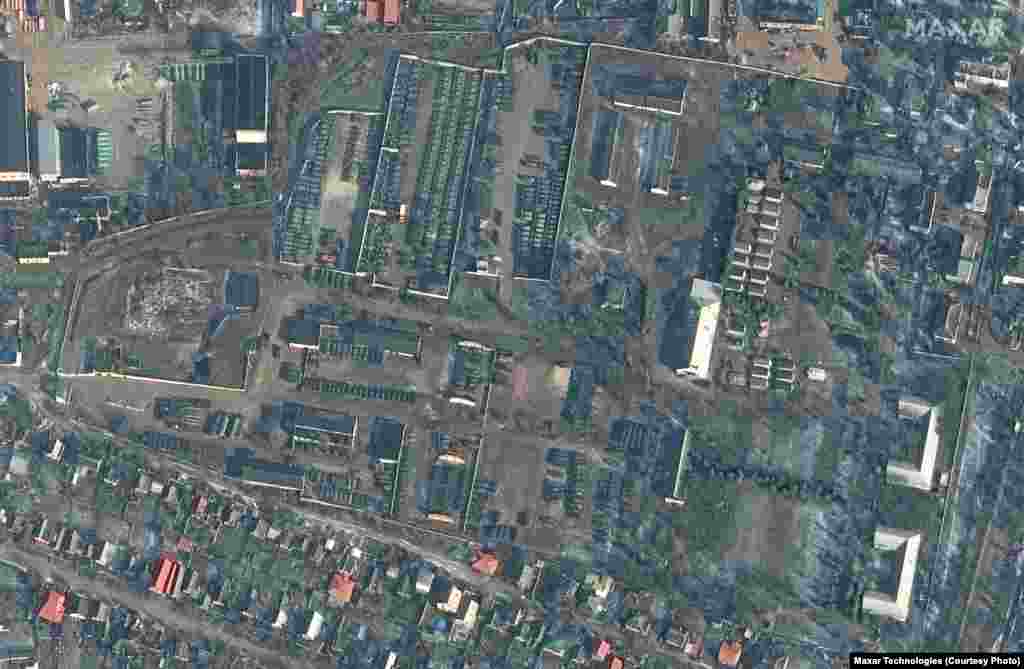
A crowded military base in Bakhchisaray on the Russian-occupied Crimean Peninsula on February 1. 
16/24 A crowded military base in Bakhchisaray on the Russian-occupied Crimean Peninsula on February 1. 
Satellite photos from February 10 and earlier show a massive Russian buildup of military hardware, reportedly including ballistic-missile systems. Some of the buildup is in Belarus, not far from the Ukrainian border.
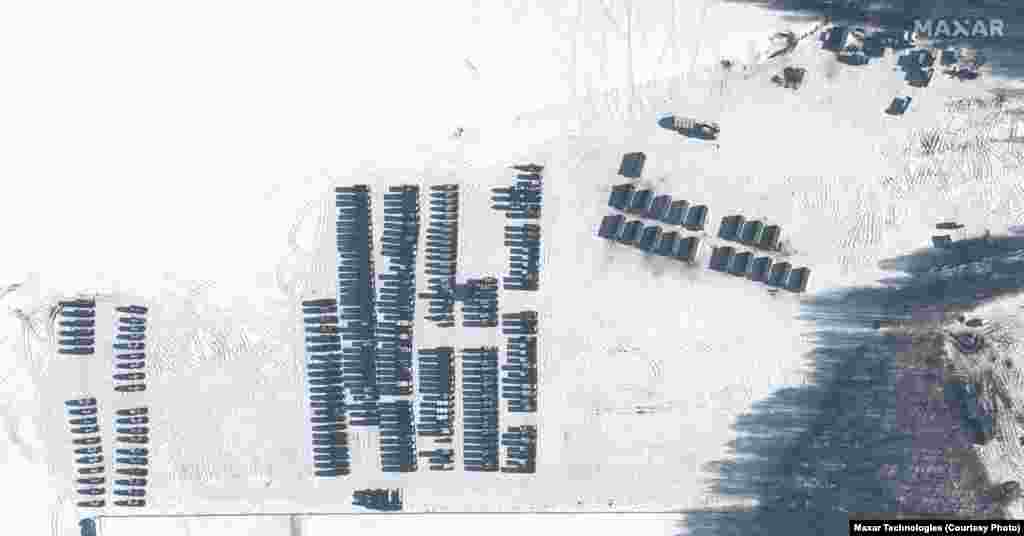
Massed vehicles at a military base in Novoozernoye, Crimea, as photographed by satellite on February 1. 
17/24 Massed vehicles at a military base in Novoozernoye, Crimea, as photographed by satellite on February 1. 
Satellite photos from February 10 and earlier show a massive Russian buildup of military hardware, reportedly including ballistic-missile systems. Some of the buildup is in Belarus, not far from the Ukrainian border.
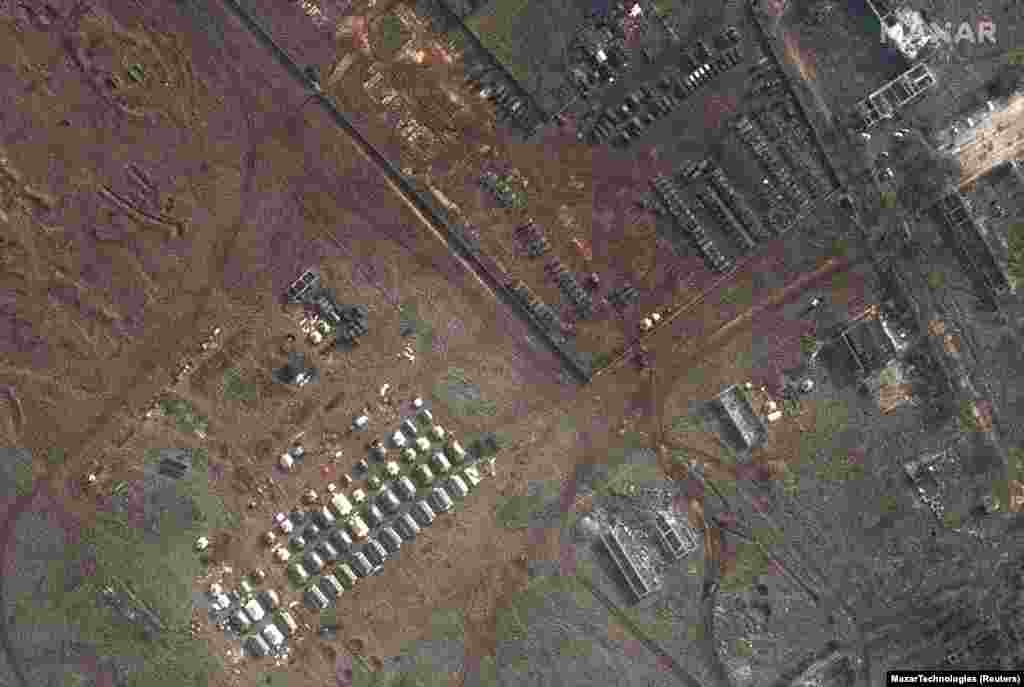
Military tents and armored vehicles in Yevpatoria, Crimea, on February 1.
18/24 Military tents and armored vehicles in Yevpatoria, Crimea, on February 1.
Satellite photos from February 10 and earlier show a massive Russian buildup of military hardware, reportedly including ballistic-missile systems. Some of the buildup is in Belarus, not far from the Ukrainian border.
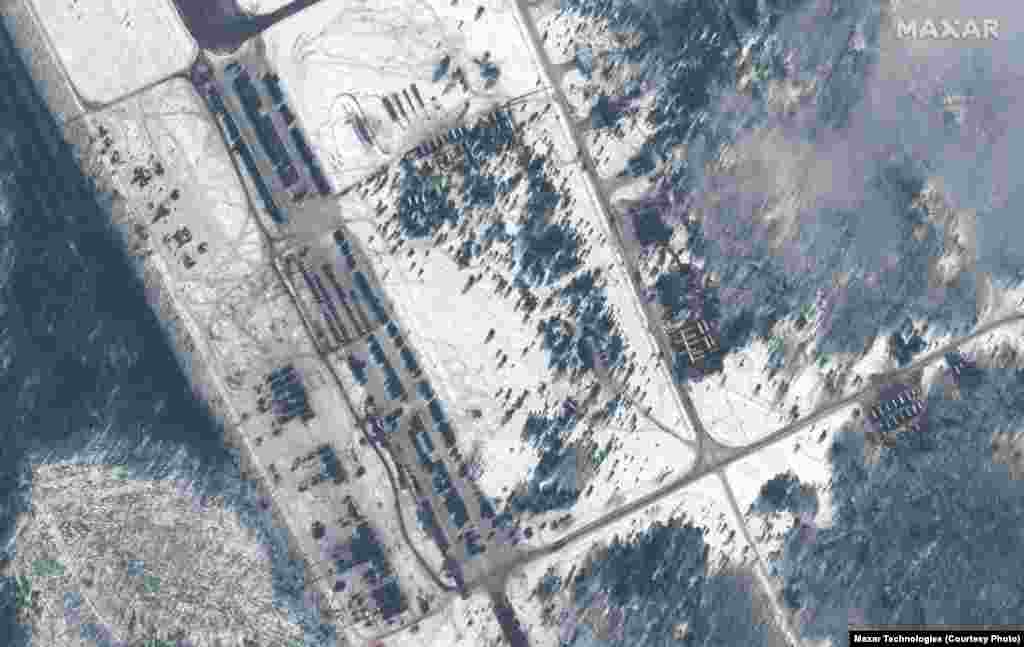
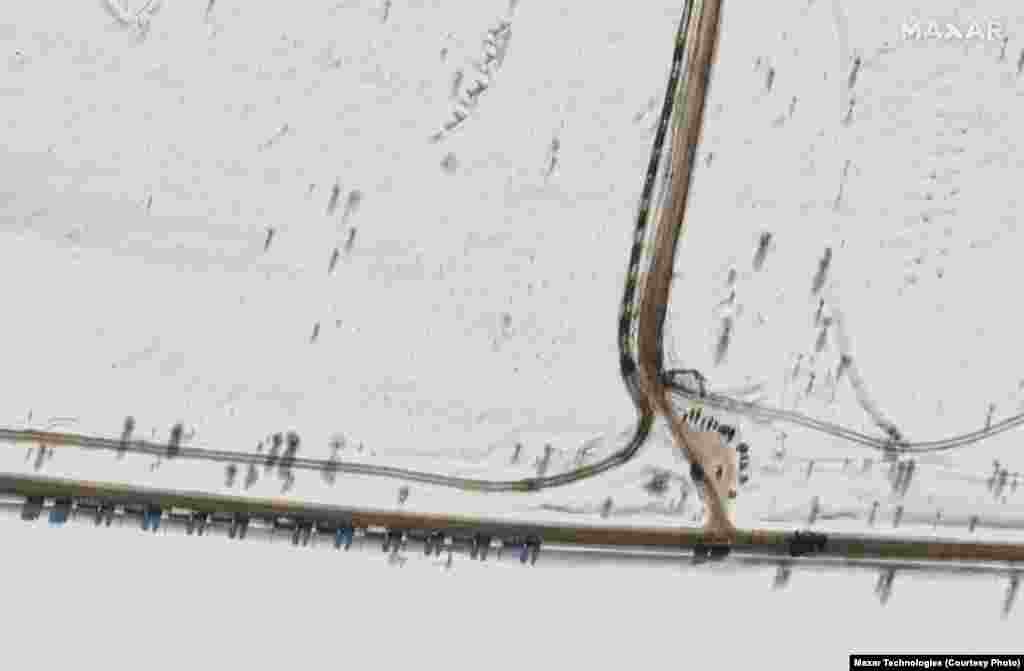
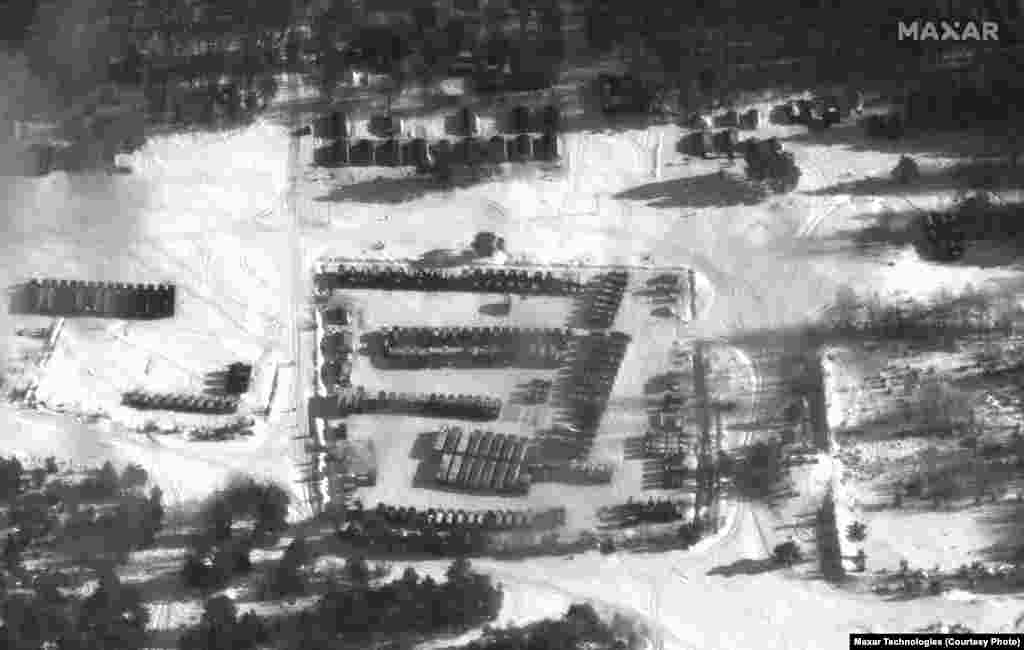
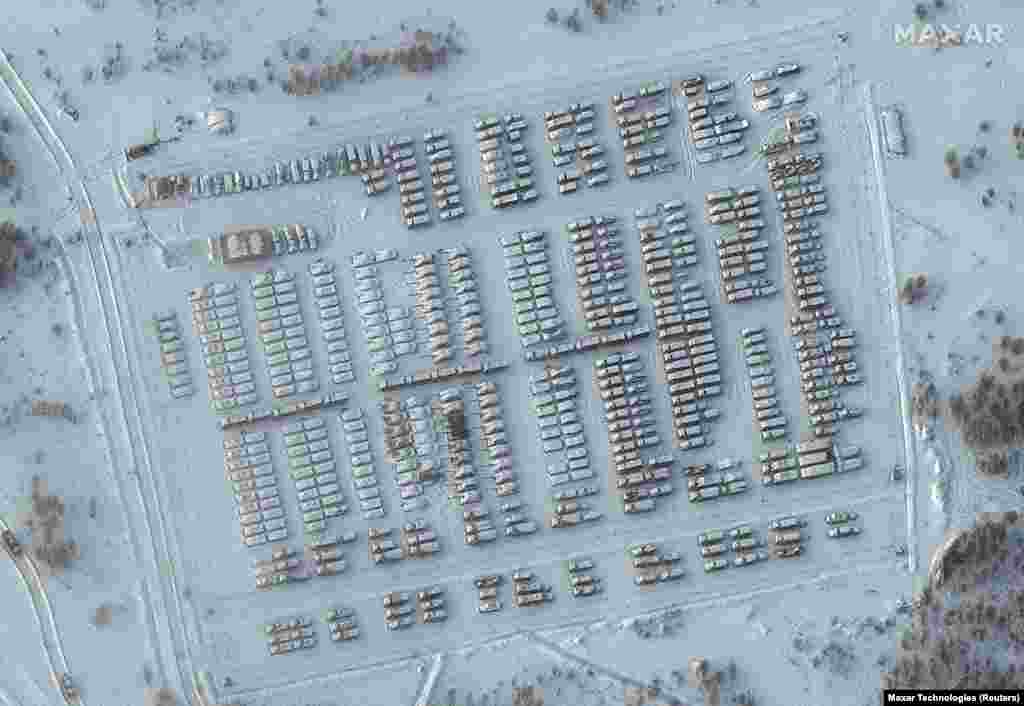
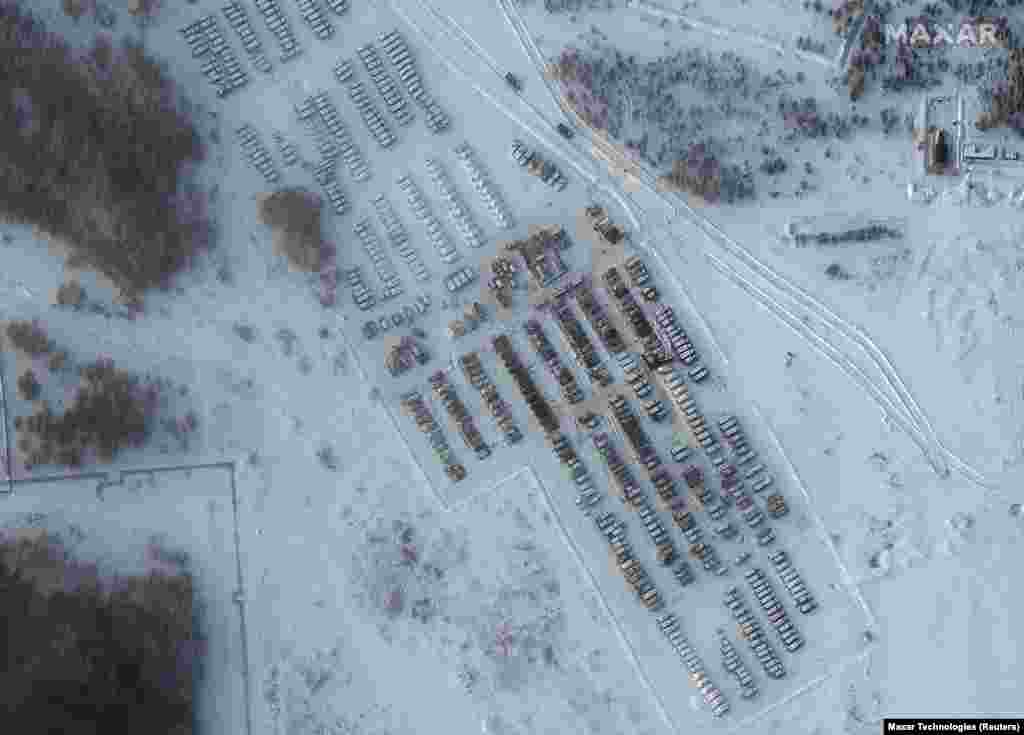
An older satellite image shows snow-dusted Russian military vehicles parked in Yelnya, Russia, on January 19. Yelnya is in Russia's northwestern Smolensk region, around 120 kilometers from the border with Belarus and 260 kilometers from Ukraine. 
19/24 An older satellite image shows snow-dusted Russian military vehicles parked in Yelnya, Russia, on January 19. Yelnya is in Russia's northwestern Smolensk region, around 120 kilometers from the border with Belarus and 260 kilometers from Ukraine. 
Satellite photos from February 10 and earlier show a massive Russian buildup of military hardware, reportedly including ballistic-missile systems. Some of the buildup is in Belarus, not far from the Ukrainian border.
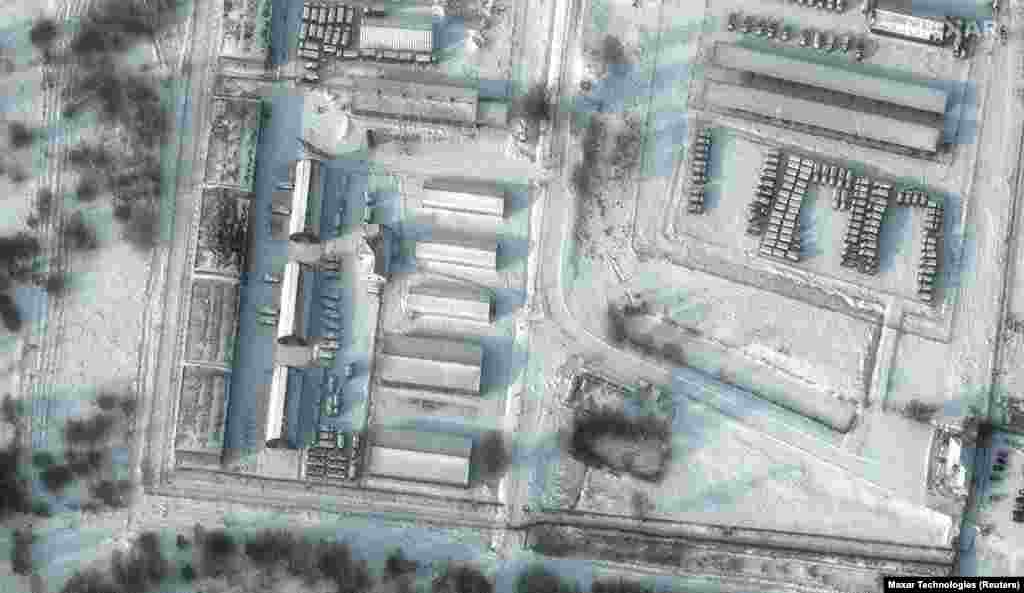
Armored personnel carriers and trucks at Klimovo on January 19. The Klimovo military storage facility is located just 35 kilometers from the Ukrainian border. 
20/24 Armored personnel carriers and trucks at Klimovo on January 19. The Klimovo military storage facility is located just 35 kilometers from the Ukrainian border. 
Satellite photos from February 10 and earlier show a massive Russian buildup of military hardware, reportedly including ballistic-missile systems. Some of the buildup is in Belarus, not far from the Ukrainian border.
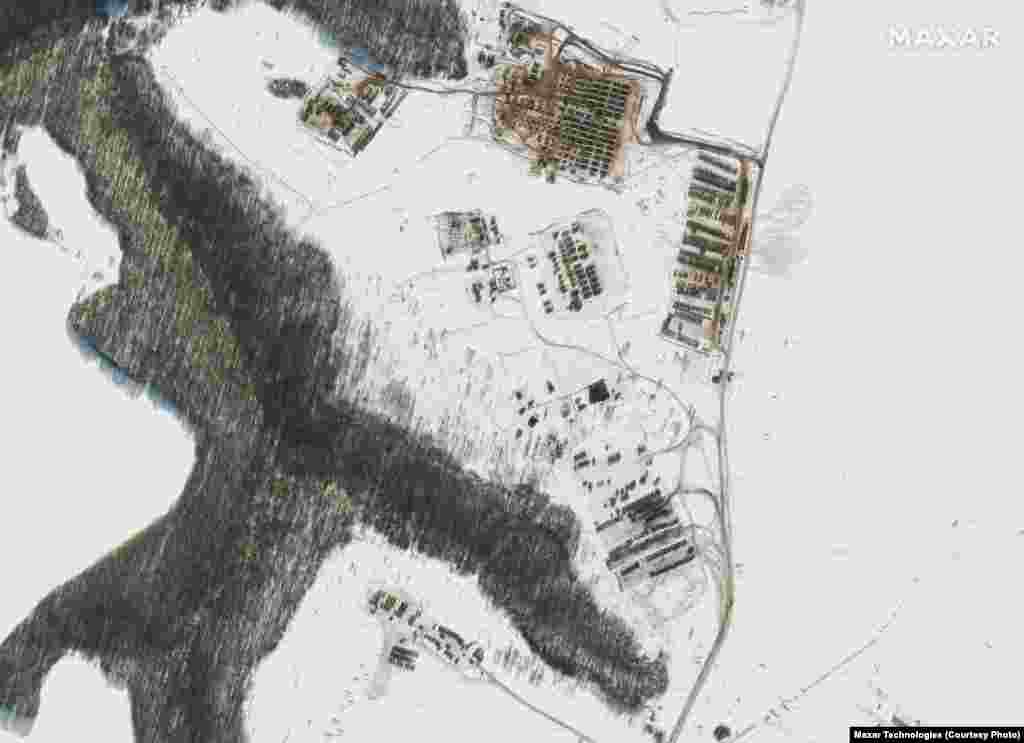
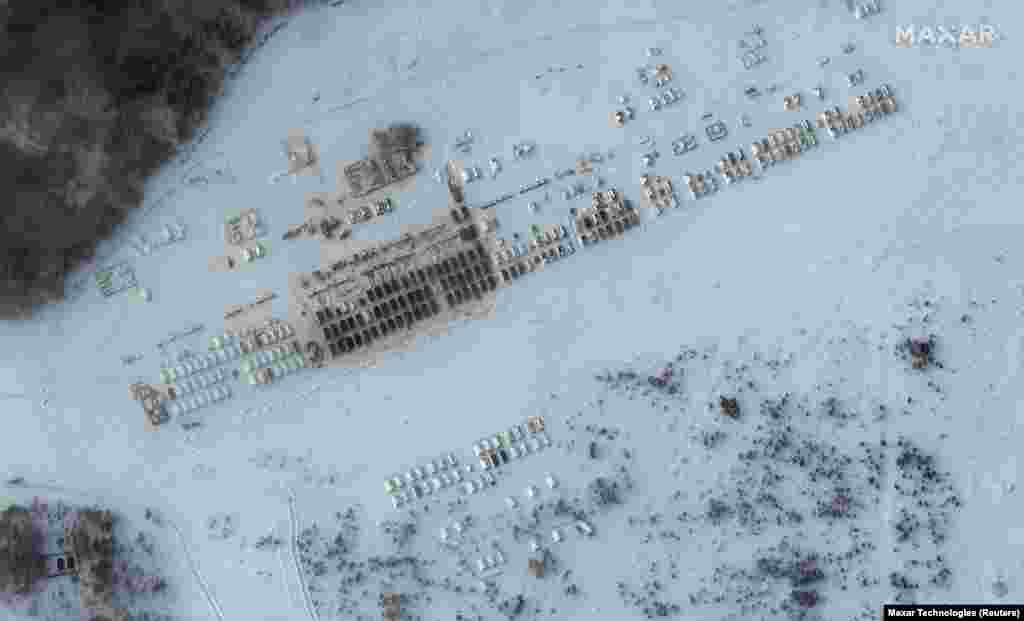
Tents and housing for Russian troops in Yelnya on January 19.
21/24 Tents and housing for Russian troops in Yelnya on January 19.
Satellite photos from February 10 and earlier show a massive Russian buildup of military hardware, reportedly including ballistic-missile systems. Some of the buildup is in Belarus, not far from the Ukrainian border.
Russian tanks and artillery-support equipment, some of which was apparently in use recently, parked in Yelnya on January 19.
22/24 Russian tanks and artillery-support equipment, some of which was apparently in use recently, parked in Yelnya on January 19.
Satellite photos from February 10 and earlier show a massive Russian buildup of military hardware, reportedly including ballistic-missile systems. Some of the buildup is in Belarus, not far from the Ukrainian border.
Military equipment massed at the Klimovo storage facility on January 19. Older imagery <a href="https://www.google.com/maps/place/Klimovo,+Bryansk+Oblast,+Russia/@52.346282,32.1680393,567m/data=!3m1!1e3!4m5!3m4!1s0x46d4a0d137ad6257:0x7ea4add83a2b92ac!8m2!3d52.3763189!4d32.2005574" target="_blank"><strong>from Google Maps of the same location</strong> </a>shows a fraction of the military vehicles present.&nbsp;
23/24 Military equipment massed at the Klimovo storage facility on January 19. Older imagery from Google Maps of the same location shows a fraction of the military vehicles present. 
Satellite photos from February 10 and earlier show a massive Russian buildup of military hardware, reportedly including ballistic-missile systems. Some of the buildup is in Belarus, not far from the Ukrainian border.
Military hardware at a railway yard in Klimovo on January 19. Recent videos have captured massive amounts of military hardware <strong><a href="https://twitter.com/RALee85/status/1483373599977259009" target="_blank">being transported by rail</a></strong> in western Russia.&nbsp;
24/24 Military hardware at a railway yard in Klimovo on January 19. Recent videos have captured massive amounts of military hardware being transported by rail in western Russia. 
Satellite photos from February 10 and earlier show a massive Russian buildup of military hardware, reportedly including ballistic-missile systems. Some of the buildup is in Belarus, not far from the Ukrainian border.
Previous slide
Next slide

U.S. Secretary of State Antony Blinken said he would speak to his Russian counterpart, Sergei Lavrov, on February 12 in a last-ditch attempt to head off a possible invasion.

"We continue to see very troubling signs of Russian escalation, including new forces arriving around Ukraine's borders," Blinken said at a press conference in Fij on February 12. He expressed hope that Putin would choose diplomacy but said Washington would impose economic sanctions if Moscow invades.

"I continue to hope that he will not choose the path of renewed aggression and he'll chose the path of diplomacy and dialogue," Blinken told told reporters. "But if he doesn't, we're prepared."

A major military operation against Ukraine could begin "any day now,” even before the end of the Winter Olympics, White House national-security adviser Jake Sullivan said on February 11 as he urged Americans to leave the country within 48 hours.

Speaking to reporters at the White House, Sullivan also said that if a Russian attack on Ukraine proceeds, “it is likely to begin with aerial bombing and missile attacks that could obviously kill civilians."

Sullivan said such an air assault would make departures difficult, therefore any American still in Ukraine “should leave as soon as possible, and in any event in the next 24 to 48 hours."

Echoing comments earlier on February 11 by U.S. Secretary of State Antony Blinken, Sullivan said U.S. intelligence now believes Russian President Vladimir Putin could order an invasion before the end of the Winter Olympics in Beijing. He also said a rapid assault on the Ukrainian capital, Kyiv, is a possibility.

It remains unclear, Sullivan said, whether Putin has definitively given an order to start an invasion. Thus far, Russia has denied it plans to invade Ukraine.
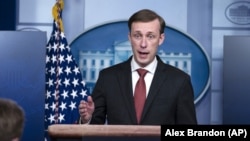
U.S. national-security adviser Jake Sullivan (file photo)

Sullivan spoke after President Joe Biden held a video call with transatlantic leaders and sought allied unity in the face of a worsening situation.

Biden also ordered the deployment of an additional 3,000 U.S. soldiers to NATO ally Poland. A statement from the Pentagon on February 11 said the troops should be in place by "early next week," joining some 1,700 soldiers who arrived in Poland at the start of the month.

"All told, these 5,000 additional personnel comprise a highly mobile and flexible force, capable of multiple missions. They are being deployed to reassure our NATO allies, deter any potential aggression against NATO’s eastern flank, train with host-nation forces, and contribute to a wide range of contingencies," the Pentagon statement said.

On February 11, the Russian Foreign Ministry said it had received "no substantive reaction" from the EU and NATO over its demands for guarantees on European security, including a legally binding commitment that NATO will not accept Ukraine and other former Soviet states as members, that the alliance will halt weapon deployments there, and also roll back its forces from Eastern Europe.

"Simply put, we continue to see very troubling signs of Russian escalation, including new forces arriving at the Ukrainian border," Blinken told a news conference in the Australian city of Melbourne on February 11.

"As we've said before, we're in a window when an invasion could begin at any time, and to be clear, that includes during the Olympics," he said, adding that Washington was continuing to "draw down" its embassy staff in Kyiv and repeated a State Department call to U.S. citizens in Ukraine to leave the country immediately.

Russia denies Western accusations it may be planning an invasion. But it is also holding military drills in Belarus involving some 30,000 troops, a move the West has called provocative. The Winter Olympics are being hosted by Beijing until February 20 and countries traditionally, though not always, adhere to a truce to stop all hostilities through the course of the Games.

The U.S. State Department previously urged Americans in Ukraine to leave immediately and the Associated Press said the United States is set to evacuate its embassy in Kyiv.

The West has said Moscow's main demands are nonstarters, with the EU and NATO delivering joint responses this week saying their members had agreed to speak as one.

Defense Minister Sergei Shoigu said Russia would respond in the "nearest future" to counterproposals on European security made by the United States and NATO.
'Not This Tense Since World War II': Hungarians On Ukrainian Border Fear War
please wait

No media source currently available

0:00 0:03:45 0:00

He made the remarks after talks with British Defense Minister Ben Wallace, who arrived in the Russian capital earlier on February 11.

Shoigu urged the West to stop supplying arms to Ukraine and said Russia was not the one to blame for the rising tensions in Europe, according to Interfax. He also said he wanted to know why London was sending special forces to Ukraine.

Wallace described his talks with Shoigu as constructive and frank. He said he took Russian assurances that Moscow will not invade Ukraine seriously, but that he wanted to see accompanying action.

He reaffirmed that a Russian invasion would have “tragic consequences” and emphasized the need to maintain contacts between military forces to prevent incidents.

With reporting by Reuters, AFP, AP, and dpa
  • 16x9 Image

    RFE/RL

    RFE/RL journalists report the news in 24 languages in 18 countries where a free press is banned by the government or not fully established. We provide what many people cannot get locally: uncensored news, responsible discussion, and open debate.

This item is part of
XS
SM
MD
LG