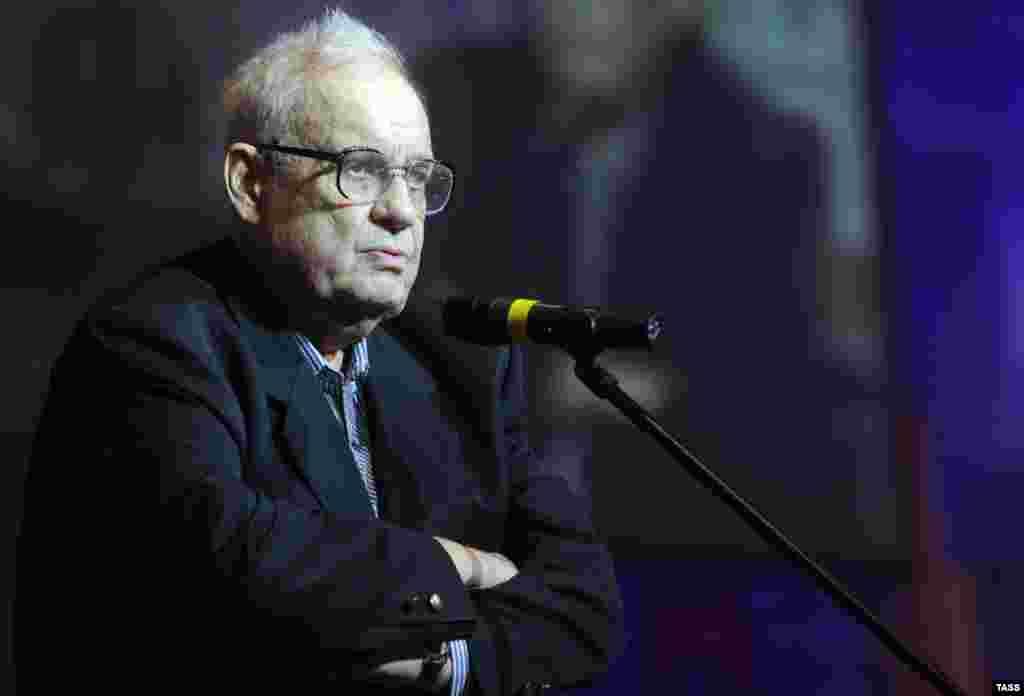



Eldar Ryazanov's films ridiculed Soviet bureaucracy and trained a clear eye on the predicaments and peculiarities of daily life during the communist era, but the light touch of his satire helped him dodge government censorship.
Eldar Ryazanov, a Russian film director whose iconic comedies captured the flavor of life and love in the Soviet Union while deftly skewering the absurdities of the communist system, has died at the age of 88.
Ryazanov died from heart and lung failure at a Moscow hospital early on November 30, his family said. He had been admitted on November 21, with shortness of breath, after spending several months in hospitals since he suffered a stroke in November 2014.
His death was met with a deep sense of loss in Russia and other ex-Soviet republics, where lines from movies he made almost half a century ago are still known by heart by millions. Watching one of them, The Irony Of Fate, has become part of the New Year's Eve tradition in households nationwide.
Ryazanov's films ridiculed Soviet bureaucracy and trained a clear eye on the predicaments and peculiarities of daily life during the communist era, but the light touch of his satire helped him dodge government censorship.
President Vladimir Putin mourned him as a "real master and creator" whose films have become "true classics of Russian cinema and part of our national heritage, part of the history of our country," according to the text of a condolence telegram posted on the Kremlin website.
PHOTO GALLERY: Eldar Ryazanov And His Films
Eldar Ryazanov And His Films
1/9Eldar Ryazanov
Eldar Ryazanov, a Russian film director whose iconic comedies captured the flavor of life and love in the Soviet Union while deftly skewering the absurdities of the communist system, has died at the age of 88. His films ridiculed Soviet bureaucracy and trained a clear eye on the predicaments and peculiarities of daily life during the communist era, but the light touch of his satire helped him dodge government censorship.
2/9"My favorite genre is tragic comedy because it reflects life most fully," Ryazanov said in 2007.
Eldar Ryazanov, a Russian film director whose iconic comedies captured the flavor of life and love in the Soviet Union while deftly skewering the absurdities of the communist system, has died at the age of 88. His films ridiculed Soviet bureaucracy and trained a clear eye on the predicaments and peculiarities of daily life during the communist era, but the light touch of his satire helped him dodge government censorship.
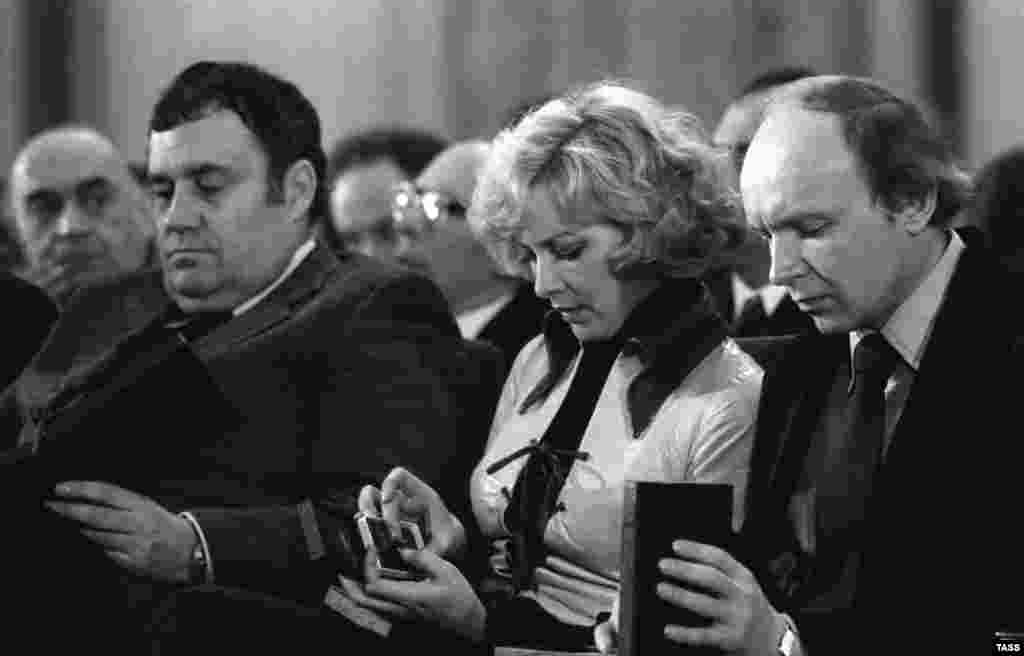
3/9Ryazanov (left) with actors who appeared in his 1975 film The Irony Of Fate
Eldar Ryazanov, a Russian film director whose iconic comedies captured the flavor of life and love in the Soviet Union while deftly skewering the absurdities of the communist system, has died at the age of 88. His films ridiculed Soviet bureaucracy and trained a clear eye on the predicaments and peculiarities of daily life during the communist era, but the light touch of his satire helped him dodge government censorship.
4/9
Eldar Ryazanov, a Russian film director whose iconic comedies captured the flavor of life and love in the Soviet Union while deftly skewering the absurdities of the communist system, has died at the age of 88. His films ridiculed Soviet bureaucracy and trained a clear eye on the predicaments and peculiarities of daily life during the communist era, but the light touch of his satire helped him dodge government censorship.
5/9Ryazanov speaks after winning the Russian national TV prize, TEFI, in 1997.
Eldar Ryazanov, a Russian film director whose iconic comedies captured the flavor of life and love in the Soviet Union while deftly skewering the absurdities of the communist system, has died at the age of 88. His films ridiculed Soviet bureaucracy and trained a clear eye on the predicaments and peculiarities of daily life during the communist era, but the light touch of his satire helped him dodge government censorship.
6/9Ryazanov (shown in 1991) continued working after the Soviet Union fell apart, although his later films never achieved the same cult status.
Eldar Ryazanov, a Russian film director whose iconic comedies captured the flavor of life and love in the Soviet Union while deftly skewering the absurdities of the communist system, has died at the age of 88. His films ridiculed Soviet bureaucracy and trained a clear eye on the predicaments and peculiarities of daily life during the communist era, but the light touch of his satire helped him dodge government censorship.
7/9Ryazanov attends a celebration of his 80th birthday at the Moscow Operetta Theater in 2007.
Eldar Ryazanov, a Russian film director whose iconic comedies captured the flavor of life and love in the Soviet Union while deftly skewering the absurdities of the communist system, has died at the age of 88. His films ridiculed Soviet bureaucracy and trained a clear eye on the predicaments and peculiarities of daily life during the communist era, but the light touch of his satire helped him dodge government censorship.
8/9Ryazanov and actress Olga Naumenko (right) attend the unveiling of a memorial plaque on the house in Moscow where the famous film The Irony Of Fate was shot in 1975.
Eldar Ryazanov, a Russian film director whose iconic comedies captured the flavor of life and love in the Soviet Union while deftly skewering the absurdities of the communist system, has died at the age of 88. His films ridiculed Soviet bureaucracy and trained a clear eye on the predicaments and peculiarities of daily life during the communist era, but the light touch of his satire helped him dodge government censorship.
9/9Ryazanov appears at the 80th birthday celebration of filmmaker Georgy Danelia in 2010.
Eldar Ryazanov, a Russian film director whose iconic comedies captured the flavor of life and love in the Soviet Union while deftly skewering the absurdities of the communist system, has died at the age of 88. His films ridiculed Soviet bureaucracy and trained a clear eye on the predicaments and peculiarities of daily life during the communist era, but the light touch of his satire helped him dodge government censorship.
Previous slide
Next slide
Born in the Volga River city of Samara in 1927, Ryazanov graduated with honors from the Soviet State Institute of Cinematography (VGIK) in Moscow in 1950.
He went on to produce documentaries before taking up a job at Mosfilm Studios in 1955.
His first feature film, Carnival Night, released in 1956, earned him instant fame as a director.
It was followed by a string of crowd-pleasers, including Hussar Ballad, Beware Of The Car, Office Romance, The Garage, and A Cruel Romance.
Perhaps most beloved is The Irony of Fate, from 1975, which tells the story of a man who ends up by mistake in a strange woman's home in another city on New Year's Eve.
The plot is a pointed satirical jab at the numbing uniformity of buildings, furniture, and life itself in the Soviet Union: After a bathhouse bender with friends, a vodka-soaked Moscow man trying to make his way home for a romantic dinner with his fiancee instead finds himself at the exact same address -- in Leningrad. After many twists and arguments, the two fall in love.
In a 2007 interview with RFE/RL, Ryazanov evoked the mix of happiness and melancholy that characterize his most famous films.
"My favorite genre is tragic comedy because it reflects life most fully," he said. "Life does not consist of purely merry or sad things; it's like a tiger's pelt. What I like best is when a person has tears in his eyes from the last scene and is already laughing."
Ryazanov continued working after the Soviet Union fell apart, although his later films never achieved the same cult status.
He also taught at the VGIK film school and co-founded the Russian cinema guild Kinosoyuz.
In the last years of his life, Ryazanov was no fan of Putin's Ukraine policy. In 2014, he and other guild members signed an open letter condemning the Kremlin's support for separatists in eastern Ukraine following Moscow's annexation of the Crimean peninsula from Ukraine.
Ryazanov is survived by his wife, a daughter, and a grandson.
His family, friends, and admirers will pay their respects to the film director on December 2 at Eldar, a Moscow movie theater named after him.

RFE/RL journalists report the news in 24 languages in 18 countries where a free press is banned by the government or not fully established. We provide what many people cannot get locally: uncensored news, responsible discussion, and open debate.