


Accessibility links

Breaking News

At Least One Dead, 14 Injured In Russian Missile Attack On Zaporizhzhya, Ukrainian Officials Say

Updated
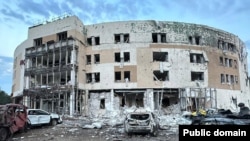
Aftermath of rocket attack on August 10 on Ukrainian city of Zaporizhzhya.

A Russian strike on the southern Ukrainian city of Zaporizhzhya killed at least one person and wounded 14 others, Ukrainian officials said on August 10, a day of heavy fighting across the front line that prompted the mandatory evacuation of dozens of settlements in an embattled eastern region.

Ukrainian President Volodymyr Zelenskiy said a fire broke out in a civilian building in Zaporizhzhya after Russian forces attacked the city with a missile.

Zelenskiy posted a video on Telegram showing a burning car near a hotel in Zaporizhzhya, which was hit by a Russian missile the night before, killing three people and wounding six.

Zaporizhzhya city-council secretary Anatoliy Kurtev said two children, a 3-year-old girl and a 14-year-old boy, were among the people wounded in the strike on August 10. Kurtev said at least four buildings were damaged.

Zaporizhzhya regional Governor Yuriy Malashko said the number of injured was 16, including four children.

Malashko said there were no military targets at the site of the attack, and that the area was "very crowded" at that time of the strike.

Zelenskiy said in his evening address on August 10 that Ukrainian authorities were preparing "more defense packages" for the military. Efforts are under way to increase the number of air-defense systems, he said.

He also said he had a closed conversation with representatives of the military leadership of Britain, calling it "productive."

Ukrainian officials issued the mandatory evacuation for 37 settlements in the Kupyansk district of the Kharkiv region amid reports of increased shelling by Russian forces. Kharkiv regional Governor Oleh Synyehubov said about 11,000 people would be evacuated.

The General Staff of the Ukrainian military reported that about 25 combat clashes took place at the front during the day on August 10. The General Staff said Russian forces carried out "unsuccessful offensive actions" in multiple areas around Kupyansk and said Ukrainian forces near Avdiyivsk came under heavy fire but "continue to hold back the advance of the Russian troops."

According to the command, Russian troops launched three missile and 49 air strikes and fired 36 rocket salvo missiles at positions of Ukrainian troops and populated areas during the day on August 10.

In its early update on August 10, Ukraine's military said its forces were on the offensive in Bakhmut in the east and in Melitopol and Berdyansk in the south.

But it acknowledged "strong resistance" from Russian forces that were "relocating units and troops [and] actively using their reserves."

Russia's emergency service said late on August 10 that a warehouse in a town to the west of Moscow had caught fire. TASS cited an emergency service's statement as saying that the fire in Odintsovo was 2,000 square meters at around midnight Moscow time. It did not say how the fire started.

The warehouse is located about 6 kilometers from the official government residence of President Vladimir Putin in Novo-Ogaryovo.

Russia's Defense Ministry and the mayor of Moscow also reported that Russian forces downed two drones approaching the Russian capital for the second night in a row, with eyewitnesses reporting a fire within kilometers of Moscow's Domodedovo airport.

The Astra news Telegram channel shared an image it said was of residents huddled near the Domodedovo blaze.

Domodedovo and Vnukovo, another major Moscow airport, reportedly introduced tighter restrictions overnight on incoming aircraft to account for the risk of aerial attacks, causing a handful of minor flight delays.

The Russian Defense Ministry also said it had intercepted two drones near Sevastopol, the city in Russian-occupied Crimea that hosts a Black Sea naval base. It said nine more Ukrainian drones had been destroyed around Crimea after they were jammed and plummeted into the sea.

Ukrainian shelling of the Russian village of Chausy in the Bryansk region bordering Ukraine killed two people and injured two others, said the region's governor, Aleksandr Bogomaz.

The Russian-backed administration in the southern Ukrainian town of Nova Kakhovka said a civilian had been killed and another wounded in a Ukrainian strike on a business.

Ukrainian officials generally avoid acknowledging responsibility for suspected drone attacks on Russian territory, although they have privately taken credit for a slew of aerial and other strikes well inside Russia since a drone was reportedly destroyed over the Kremlin in May.

More recently, unmanned seaborne drones are also thought to have been used in Ukrainian attacks on a Russian fuel tanker and a Russian Black Sea naval base at Novorossiisk.


Also on August 10, the Ukrainian General Staff said it had destroyed seven of 10 Iranian-made Shahed kamikaze drones that flew into Ukraine from the Kursk region to the northeast in a five-hour span overnight on August 9-10.

The head of the military administration in Rivne, Vitaliy Koval, described a "massive" overnight drone attack that destroyed an oil depot in the region of Dubna but caused no casualties. Explosions were also reported in the Kyiv and Khmelnytsky regions.

RFE/RL cannot confirm claims from either side in the areas of the heaviest fighting.

On The Front Line: Ukraine's Counteroffensive Yields Small Gains

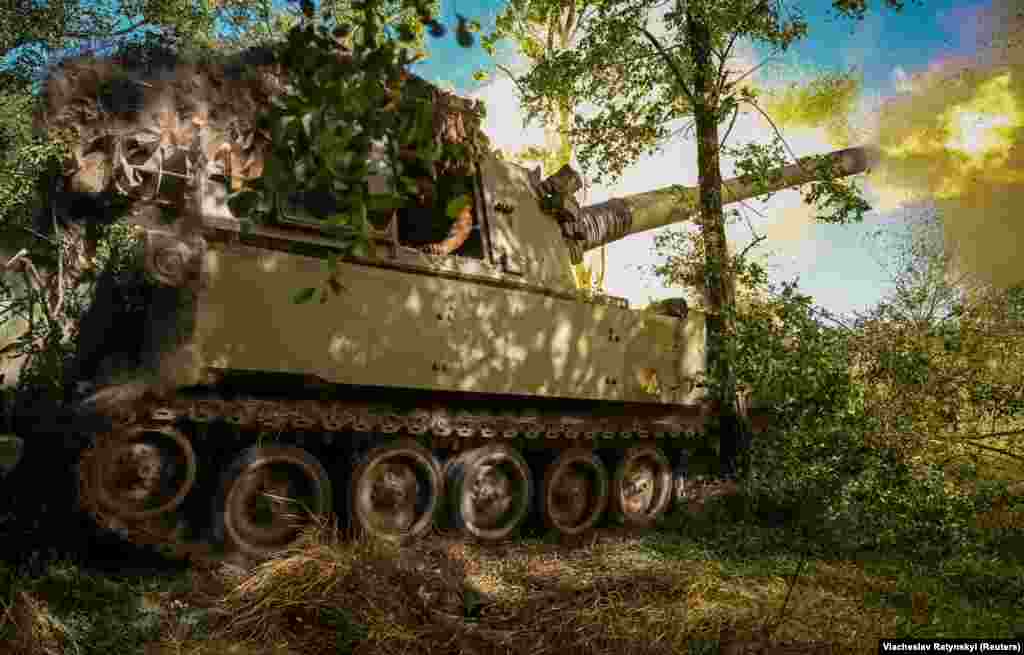
Ukrainian soldiers fire a self-propelled howitzer toward Russian positions at the front line in the Donetsk region on August 9.<br />
<br />
After months of preparations and resupply -- with as many as nine newly constituted, NATO-trained armored brigades -- Ukraine&#39;s counteroffensive to&nbsp;break through Russia&#39;s multilayered defenses is going slowly.
1/11 Ukrainian soldiers fire a self-propelled howitzer toward Russian positions at the front line in the Donetsk region on August 9.

After months of preparations and resupply -- with as many as nine newly constituted, NATO-trained armored brigades -- Ukraine's counteroffensive to break through Russia's multilayered defenses is going slowly.
Kyiv's forces continue their struggle to break through Russia's multilayered defenses in Ukraine's Donetsk region.
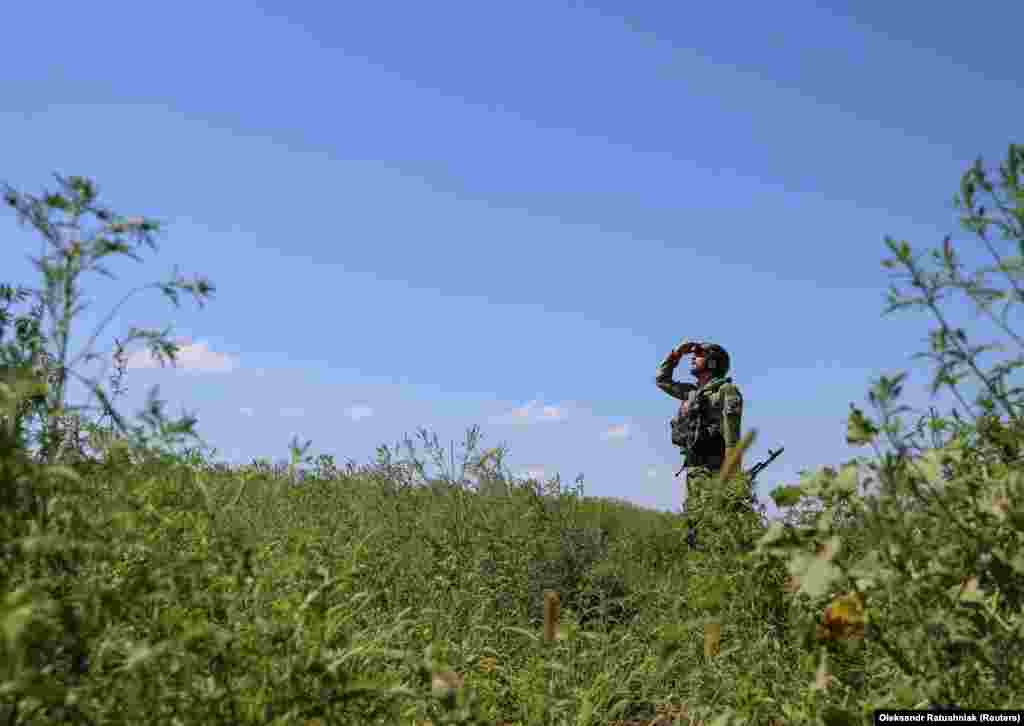
A Ukrainian air-defense soldier scans the sky for Russian drones at the front line.<br />
<br />
The size and complexity of Russian defenses across southern and eastern Ukraine have proven formidable.
2/11 A Ukrainian air-defense soldier scans the sky for Russian drones at the front line.

The size and complexity of Russian defenses across southern and eastern Ukraine have proven formidable.
Kyiv's forces continue their struggle to break through Russia's multilayered defenses in Ukraine's Donetsk region.
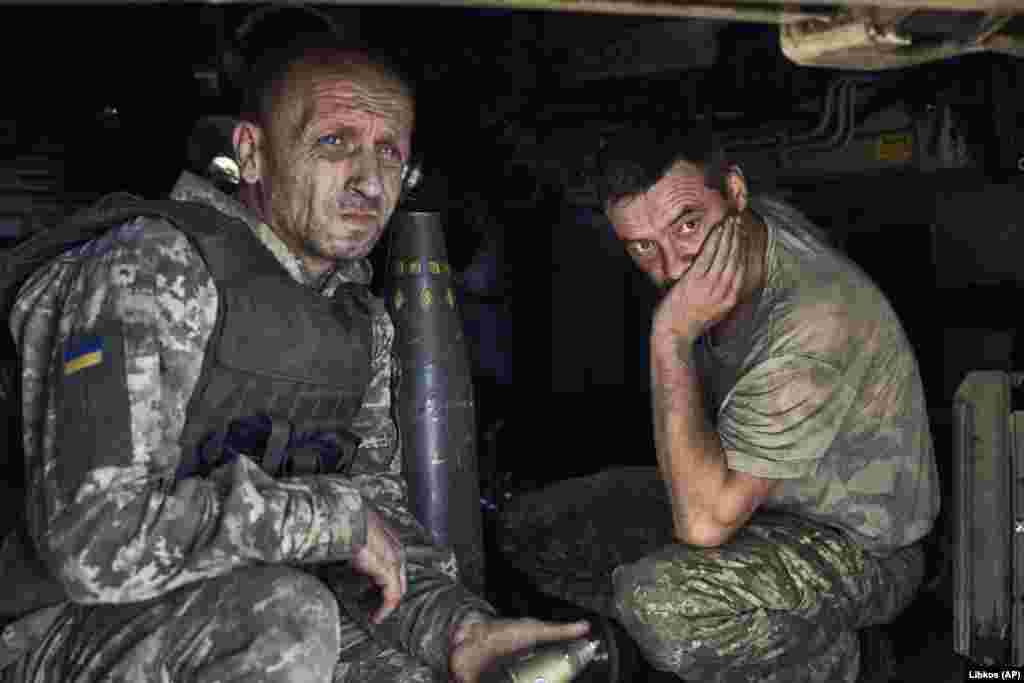
Ukrainian soldiers wait inside a self-propelled howitzer.
3/11 Ukrainian soldiers wait inside a self-propelled howitzer.
Kyiv's forces continue their struggle to break through Russia's multilayered defenses in Ukraine's Donetsk region.
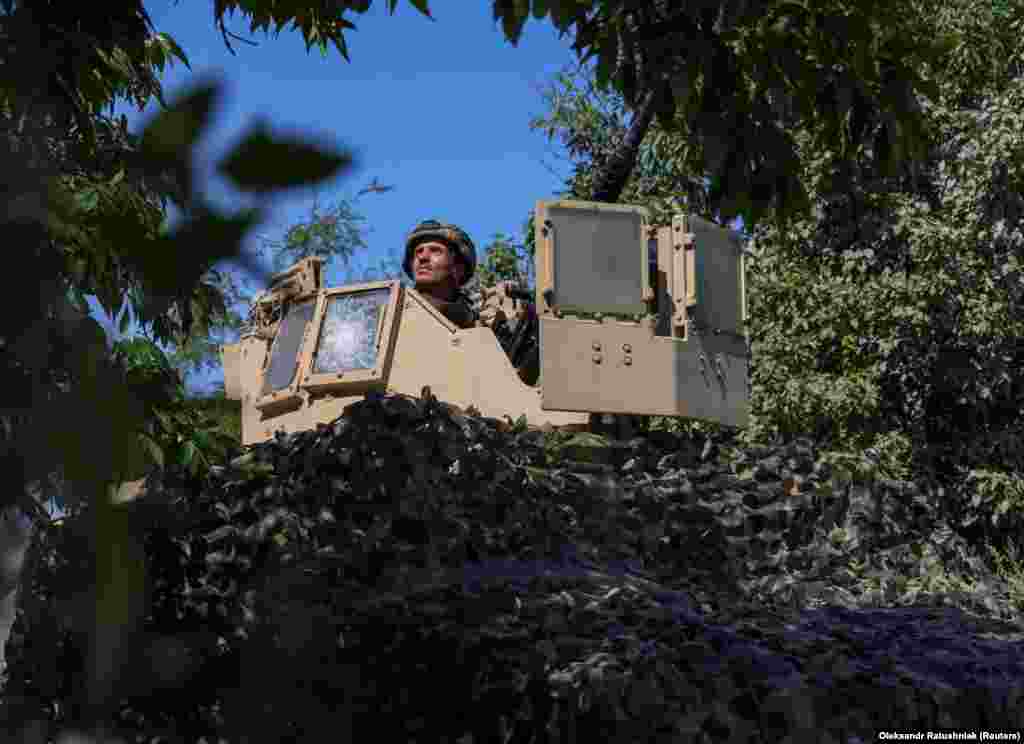
A camouflaged Ukrainian air-defense unit hidden among the trees keeps watch.<br />
<br />
&nbsp;
4/11 A camouflaged Ukrainian air-defense unit hidden among the trees keeps watch.

 
Kyiv's forces continue their struggle to break through Russia's multilayered defenses in Ukraine's Donetsk region.
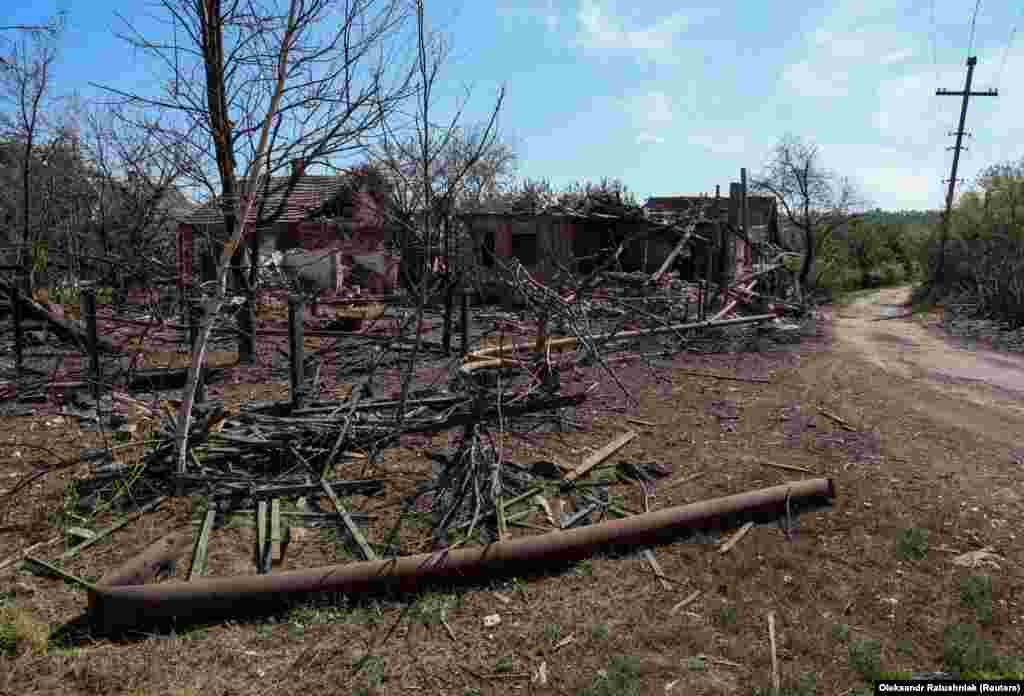
A view of the shattered Ukrainian town of New York, which lies some 35 kilometers to the north of the Russian-held city of Donetsk.<br />
<br />
Kyiv&#39;s troops took a series of villages south of Velyka Novosilka and seized high ground around Bakhmut, both north of the city and also to its south, near the village of Klishchiyivka.
5/11 A view of the shattered Ukrainian town of New York, which lies some 35 kilometers to the north of the Russian-held city of Donetsk.

Kyiv's troops took a series of villages south of Velyka Novosilka and seized high ground around Bakhmut, both north of the city and also to its south, near the village of Klishchiyivka.
Kyiv's forces continue their struggle to break through Russia's multilayered defenses in Ukraine's Donetsk region.
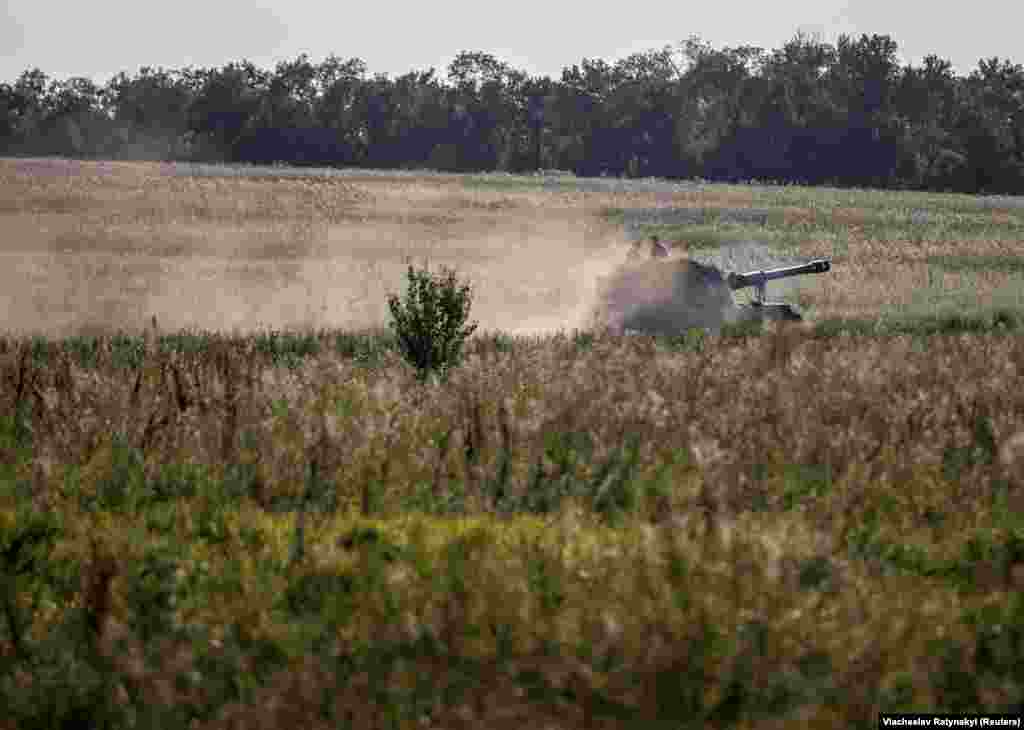
A Ukrainian M109 self-propelled howitzer roars through farmland in the Donetsk region on August 7.<br />
<br />
In the Zaporizhzhya region, Kyiv&#39;s forces ran into what experts described as a meat-grinder of Russian fortifications -- layers of trenches, minefields, barbed wire, anti-tank defenses, pillboxes -- that forced Ukrainian units into narrow strips of land where they were punished by Russian artillery.
6/11 A Ukrainian M109 self-propelled howitzer roars through farmland in the Donetsk region on August 7.

In the Zaporizhzhya region, Kyiv's forces ran into what experts described as a meat-grinder of Russian fortifications -- layers of trenches, minefields, barbed wire, anti-tank defenses, pillboxes -- that forced Ukrainian units into narrow strips of land where they were punished by Russian artillery.
Kyiv's forces continue their struggle to break through Russia's multilayered defenses in Ukraine's Donetsk region.
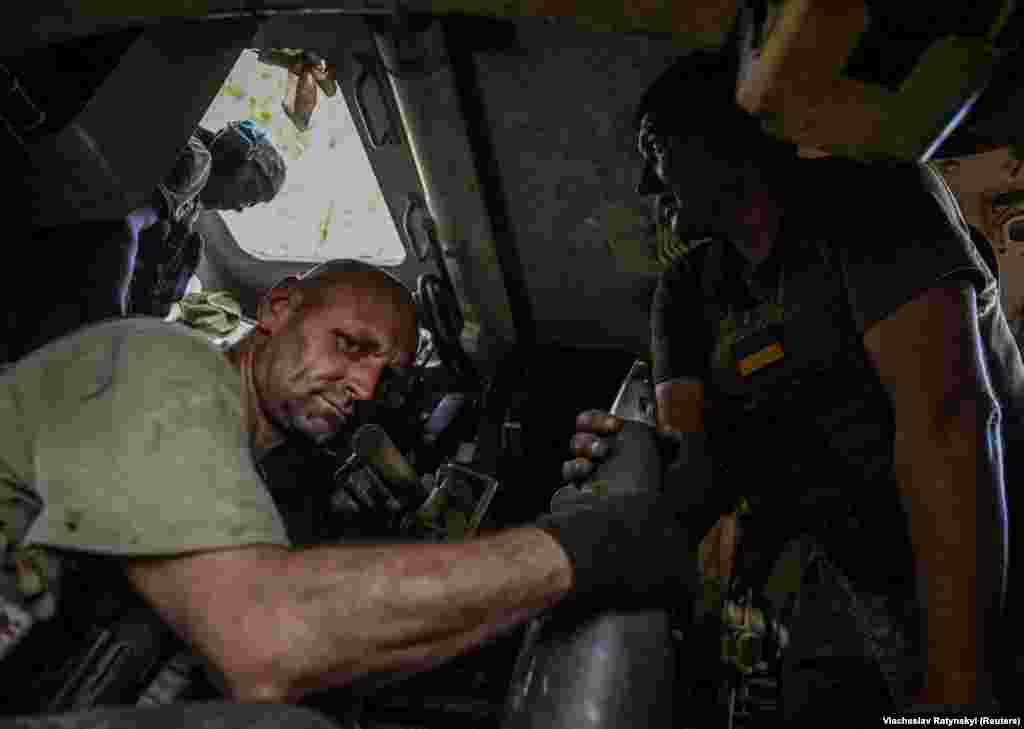
Ukrainian soldiers load 155-mm shells into a M109 self-propelled howitzer.<br />
<br />
The defenses have been dubbed &quot;Surovikin lines,&quot; named after Russian General Sergei Surovikin, who briefly commanded Moscow&#39;s forces that invaded Ukraine until he was demoted in January.
7/11 Ukrainian soldiers load 155-mm shells into a M109 self-propelled howitzer.

The defenses have been dubbed "Surovikin lines," named after Russian General Sergei Surovikin, who briefly commanded Moscow's forces that invaded Ukraine until he was demoted in January.
Kyiv's forces continue their struggle to break through Russia's multilayered defenses in Ukraine's Donetsk region.
<div>Ukrainian soldiers fire a M109 self-propelled howitzer toward Russian positions.<br />
<br />
At a speech in Washington on June 30, the chairman of the U.S. joint chiefs of staff&nbsp;<strong><a href="https://www.c-span.org/video/?529060-1/joint-chiefs-staff-chair-career-military-strategy" target="_blank">defended&nbsp;</a></strong>Ukraine&#39;s progress. &quot;That it&#39;s going slower than people predicted doesn&#39;t surprise me at all,&quot; General Mark Milley said.&nbsp;</div>
8/11
Ukrainian soldiers fire a M109 self-propelled howitzer toward Russian positions.

At a speech in Washington on June 30, the chairman of the U.S. joint chiefs of staff defended Ukraine's progress. "That it's going slower than people predicted doesn't surprise me at all," General Mark Milley said. 
Kyiv's forces continue their struggle to break through Russia's multilayered defenses in Ukraine's Donetsk region.
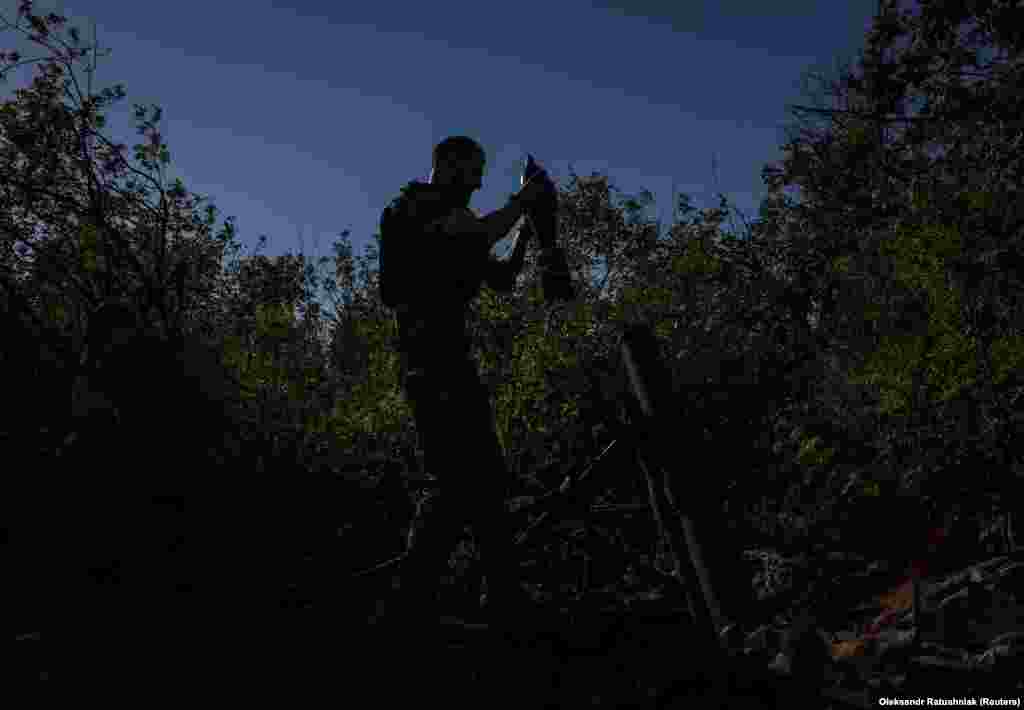
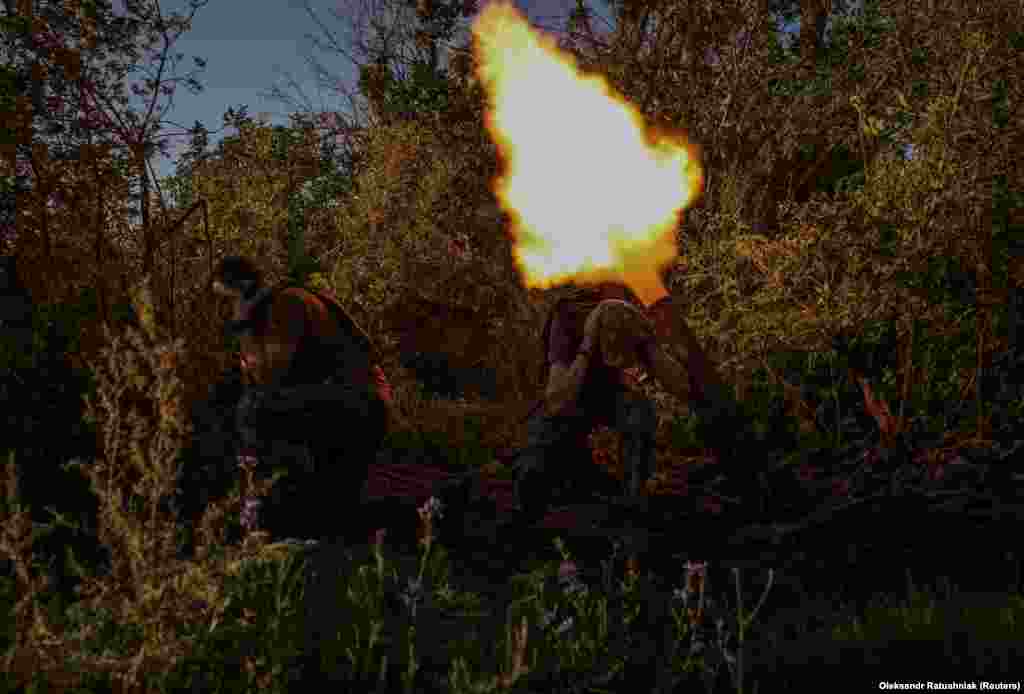
A Ukrainian soldier prepares to fire a mortar onto Russian positions near the city of Bakhmut on August 7.<br />
<br />
&nbsp;
9/11 A Ukrainian soldier prepares to fire a mortar onto Russian positions near the city of Bakhmut on August 7.

 
Kyiv's forces continue their struggle to break through Russia's multilayered defenses in Ukraine's Donetsk region.
&quot;It&#39;s going to be very difficult, very long, and it&#39;s going to be very, very bloody, and no one should have any illusions about any of that,&quot;&nbsp;Milley said.&nbsp;
10/11 "It's going to be very difficult, very long, and it's going to be very, very bloody, and no one should have any illusions about any of that," Milley said. 
Kyiv's forces continue their struggle to break through Russia's multilayered defenses in Ukraine's Donetsk region.
Smoke rises over a sunflower field on the front line on August 9.
11/11 Smoke rises over a sunflower field on the front line on August 9.
Kyiv's forces continue their struggle to break through Russia's multilayered defenses in Ukraine's Donetsk region.
Previous slide
Next slide

Meanwhile, the Ukrainian Navy on August 10 announced new "temporary corridors" to and from the country's Black Sea ports for civilian vessels prepared to accept the risk posed by "a military and mortal danger from the Russian Federation."

It said the routes "will primarily be used for the possibility of exit of civilian vessels in the Ukrainian ports of Chernomorsk, Odesa, and Pivdenniy."

A navy spokesman, Oleh Chalyk, told Reuters the corridor would also be for grain and agricultural products, which have been at the center of disputes since Russia's invasion began in February 2022.

With reporting by Reuters
  • 16x9 Image

    RFE/RL's Ukrainian Service

    RFE/RL's Ukrainian Service has seen its audience grow significantly since Russia's full-scale invasion in February 2022 and is among the most cited media outlets in the country. Its bold, in-depth reporting from the front lines has won many accolades and awards. Its comprehensive coverage also includes award-winning reporting by the Donbas.Realities and Crimea.Realities projects and the Schemes investigative unit.

  • 16x9 Image

    Current Time

    Current Time is the Russian-language TV and digital network run by RFE/RL.

This item is part of
XS
SM
MD
LG