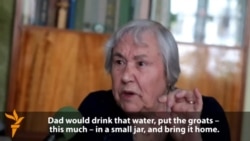
As Russia marks the 70th anniversary of the end of the Siege of Leningrad, Yelena Ryzhova, who was a teen when the siege began in 1941, shares her memories about the hardship endured by her family during the blockade. (RFE/RL's Russian Service)
Russian President Vladimir Putin has attended events marking the 70th anniversary of the end of the 872-day siege of Leningrad during World War II.
Putin laid flowers at the Piskaryovskoye cemetery in his native St. Petersburg on January 27, commemorating the more than 1 million people who died from famine and bombardments during the siege.
He also laid flowers at the Nevsky Pyatachok war memorial, at the site where his father was seriously wounded defending the city.
Putin, accompanied by hundreds of remaining survivors of the siege, also observed a military parade.
The siege of Leningrad was a prolonged military operation against the city undertaken by Nazi Germany that lasted from September 8, 1941, to January 27, 1944.
It was one of the longest and most destructive sieges in history.
PHOTO GALLERY: The Siege Of Leningrad
Seventy Years After The Siege Of Leningrad
1/5Leningrad's Pulkovo Observatory is seen in ruins in January 1944, near the end of the siege that lasted for two years and five months.
Russia is marking the 70th anniversary of the end of the Siege of Leningrad on January 27, 1944. The siege by German and Finnish forces during World War II lasted for 872 days -- one of the longest and deadliest in history. Estimates of casualties vary, but some sources state that 1 million residents of Leningrad -- present-day St. Petersburg -- died from hunger, disease, exposure, and shelling. (10 PHOTOS)
Show moreShow less
2/5A truck travels over frozen Lake Ladoga on a route known as "the Road of Life." During the winter months of the siege, the frozen lake allowed food, ammunition, and fuel to move into the city, and allowed children, the elderly, and the wounded to be evacuated.
Russia is marking the 70th anniversary of the end of the Siege of Leningrad on January 27, 1944. The siege by German and Finnish forces during World War II lasted for 872 days -- one of the longest and deadliest in history. Estimates of casualties vary, but some sources state that 1 million residents of Leningrad -- present-day St. Petersburg -- died from hunger, disease, exposure, and shelling. (10 PHOTOS)
Show moreShow less
3/5Shipments arrive along the frozen "Road of Life."
Russia is marking the 70th anniversary of the end of the Siege of Leningrad on January 27, 1944. The siege by German and Finnish forces during World War II lasted for 872 days -- one of the longest and deadliest in history. Estimates of casualties vary, but some sources state that 1 million residents of Leningrad -- present-day St. Petersburg -- died from hunger, disease, exposure, and shelling. (10 PHOTOS)
Show moreShow less
4/5
Russia is marking the 70th anniversary of the end of the Siege of Leningrad on January 27, 1944. The siege by German and Finnish forces during World War II lasted for 872 days -- one of the longest and deadliest in history. Estimates of casualties vary, but some sources state that 1 million residents of Leningrad -- present-day St. Petersburg -- died from hunger, disease, exposure, and shelling. (10 PHOTOS)
Show moreShow less
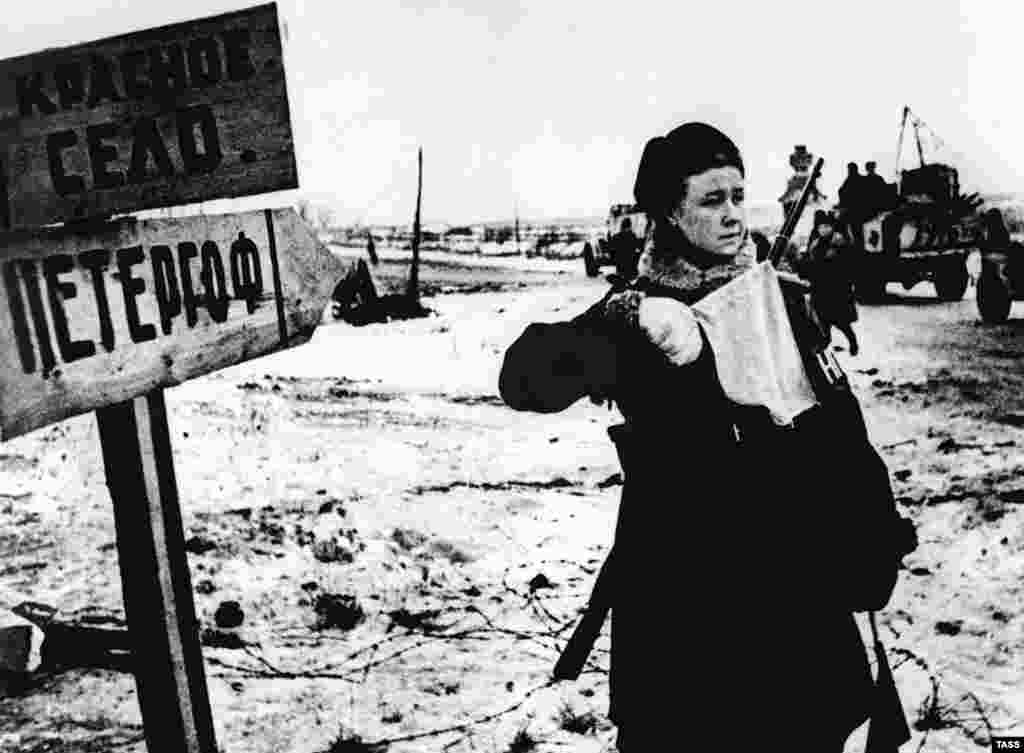
5/5A resident of Leningrad waits in the final days before the siege is lifted.
Russia is marking the 70th anniversary of the end of the Siege of Leningrad on January 27, 1944. The siege by German and Finnish forces during World War II lasted for 872 days -- one of the longest and deadliest in history. Estimates of casualties vary, but some sources state that 1 million residents of Leningrad -- present-day St. Petersburg -- died from hunger, disease, exposure, and shelling. (10 PHOTOS)