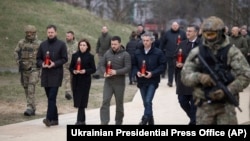
(Left to right) Slovakia's Prime Minister Eduard Heger, Moldova's President Maia Sandu, Ukrainian President Volodymyr Zelenskiy, Slovenia's Prime Minister Robert Golob, and Croatia's Prime Minister Andrej Plenkovic attend an event to mark the liberation of Bucha on March 31.
Ukraine on March 31 marked one year since Russian forces withdrew from Bucha, leaving behind hundreds of bodies of murdered civilians on the streets of the commuter town near the capital in what Kyiv said was a massacre and a Russian war crime.
President Volodymyr Zelenskiy presided over an official outdoor ceremony in Bucha that was also attended by Moldovan President Maia Sandu and the prime ministers of EU and NATO members Croatia, Slovakia, and Slovenia -- Eduard Geger, Robert Golob, and Andrej Plenkovich.
In a video posted on social media, Zelenskiy called the Bucha massacre "a symbol of the atrocities" committed by the Russian military.
"We will never forgive. We will punish all those guilty," Zelenskiy said in a statement accompanying the video.
As the Russian military was forced to hastily leave Bucha and Irpin, another town on the outskirts of Kyiv, after a failed attempt to capture the Ukrainian capital, images of the dead bodies scattered on the streets of Bucha sparked a wave of shock and condemnation around the world.
Russia has denied committing the massacres and claimed the deaths were "staged" by Ukraine.
Ukrainian officials estimate about 400 bodies of civilians were found in Bucha, as well as more than 1,000 throughout the region around Kyiv.
Many of the bodies were buried in mass graves.
In a video message, U.S. Secretary of State Antony Blinken said the United States "will continue pushing for accountability and for justice for as long as it takes."
Ukrainian and international investigators have opened a probe into war crimes in Bucha, Irpin, and other locations in Ukraine where apparent massacres occurred.
"The key word today is justice. Justice...for all our people who lost relatives, loved ones, health, home, [and] normal life due to Russian aggression, due to the terror of the occupier," Zelenskiy said in his evening video message.
He added that the events that took place in Bucha on the anniversary and other talks with international officials were aimed at speeding up the process of creating a tribunal on Russian aggression.
Sandu tweetedabout the event in Bucha, saying the people of Moldova "stand with the global community in remembering the terror inflicted on the civilians in Bucha one year ago."
"We honor and grieve the innocent. Democracies must work together to ensure that these atrocities are investigated and punished," she added.
Ukraine Remembers The Victims Of Bucha, One Year After Liberation
1/12When Russian forces withdrew from the Kyiv suburb of Bucha after 33 days of occupation, following their failed attempt to seize the nation's capital, they left behind scenes of horror that, a year later, have not been forgotten.
Images of civilian bodies, some with their hands bound behind their backs, were beamed across the world.
On March 31, Ukraine marked one year since Russian forces withdrew from the Kyiv suburb of Bucha. After more than a month of occupation, Russian troops left behind the bodies of hundreds of dead civilians. Ukrainian and international officials have called the deaths a war crime.
Show moreShow less
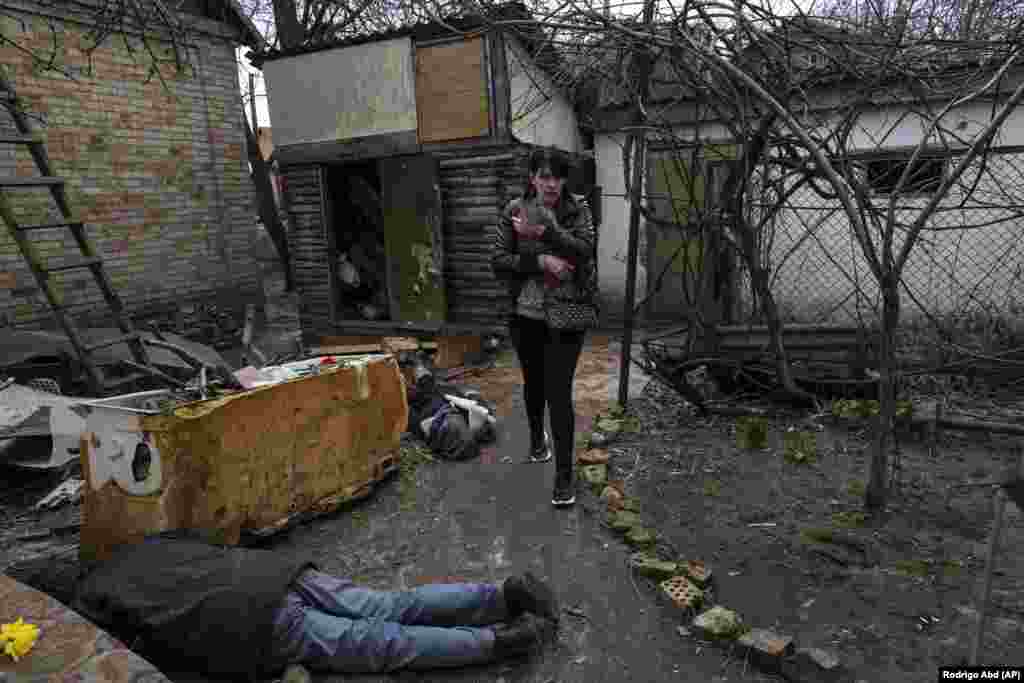
2/12Other images, such as Ira Gavriluk holding her cat as she walks past the corpses of her husband and her brother on April 4, stunned viewers.
Kyiv authorities said that more than 1,400 deaths, including 37 children, occurred during the Russian occupation of Bucha.
On March 31, Ukraine marked one year since Russian forces withdrew from the Kyiv suburb of Bucha. After more than a month of occupation, Russian troops left behind the bodies of hundreds of dead civilians. Ukrainian and international officials have called the deaths a war crime.
Show moreShow less
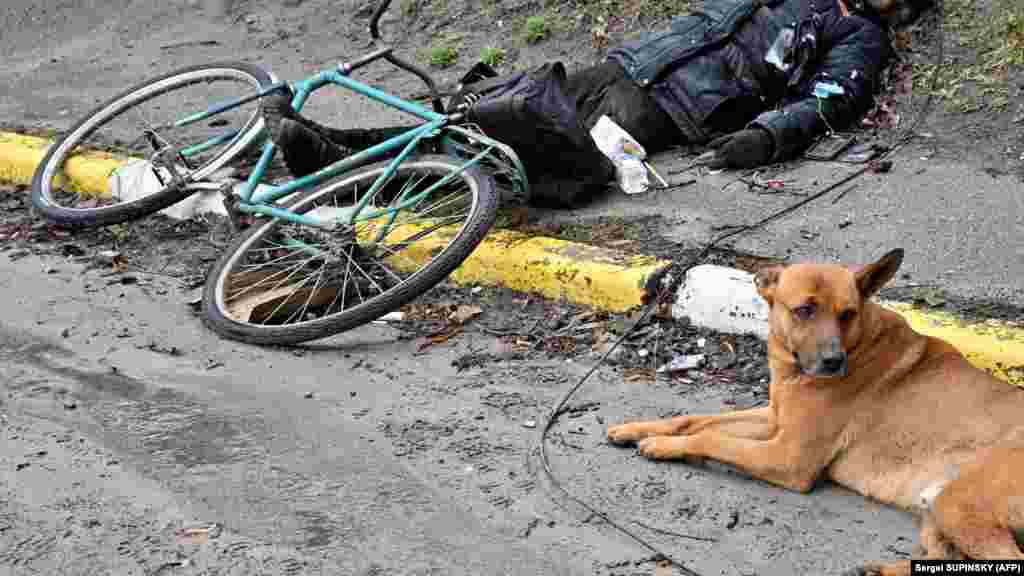
3/12A dog sitting near a civilian identified as Volodymyr Brovchenko, who was shot dead while riding his bike in Bucha.
Ukraine and its Western allies accused Russian troops of war crimes after the discoveries, pointing to an abundance of footage and witness accounts. Moscow denies the accusations, claiming the atrocities in Bucha were staged.
On March 31, Ukraine marked one year since Russian forces withdrew from the Kyiv suburb of Bucha. After more than a month of occupation, Russian troops left behind the bodies of hundreds of dead civilians. Ukrainian and international officials have called the deaths a war crime.
Show moreShow less
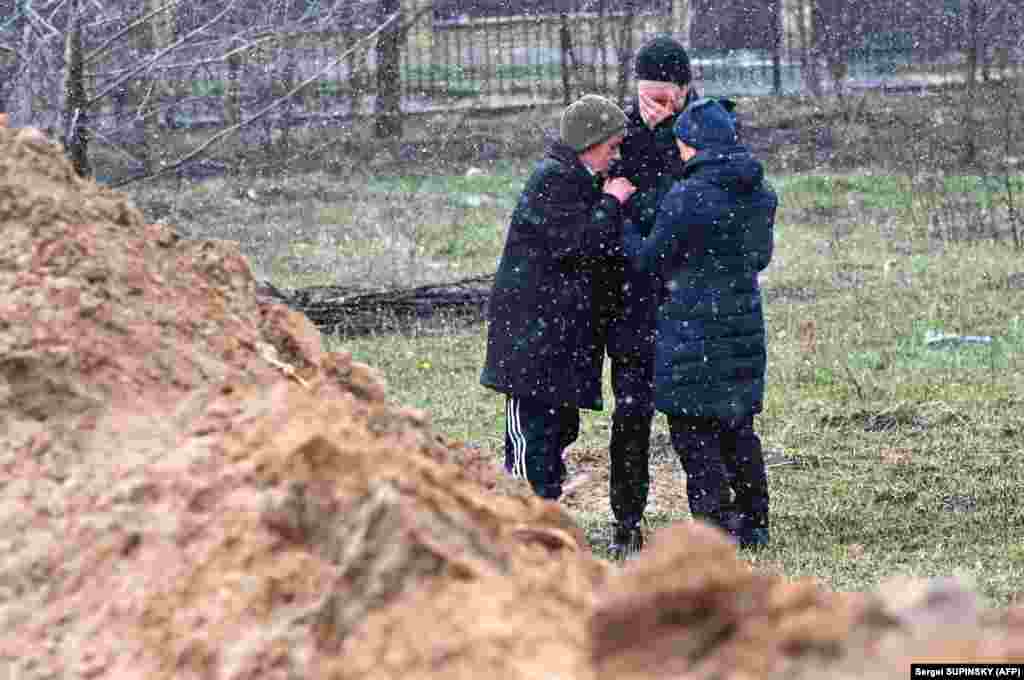
4/12People react as they gather close to a mass grave on April 3, 2022.
Kyiv also reported that 175 people were found in various mass graves and torture chambers.
On March 31, Ukraine marked one year since Russian forces withdrew from the Kyiv suburb of Bucha. After more than a month of occupation, Russian troops left behind the bodies of hundreds of dead civilians. Ukrainian and international officials have called the deaths a war crime.
Show moreShow less
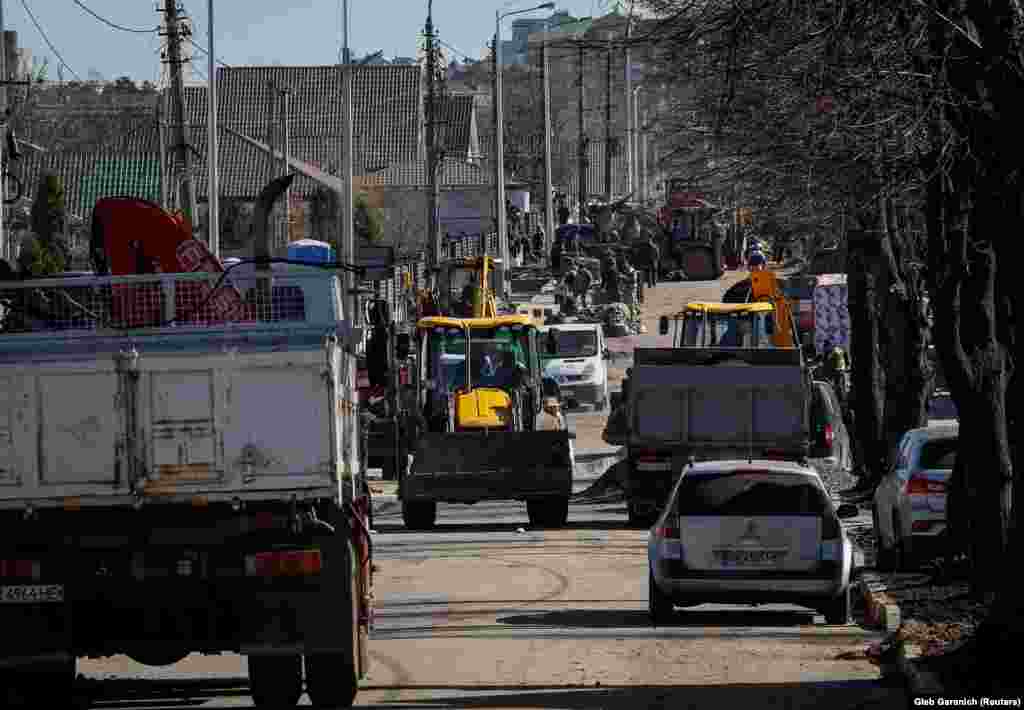
5/12Nearly a year later, community workers have rebuilt the streets, erasing most of the visible signs of death and destruction.
On March 31, Ukraine marked one year since Russian forces withdrew from the Kyiv suburb of Bucha. After more than a month of occupation, Russian troops left behind the bodies of hundreds of dead civilians. Ukrainian and international officials have called the deaths a war crime.
Show moreShow less
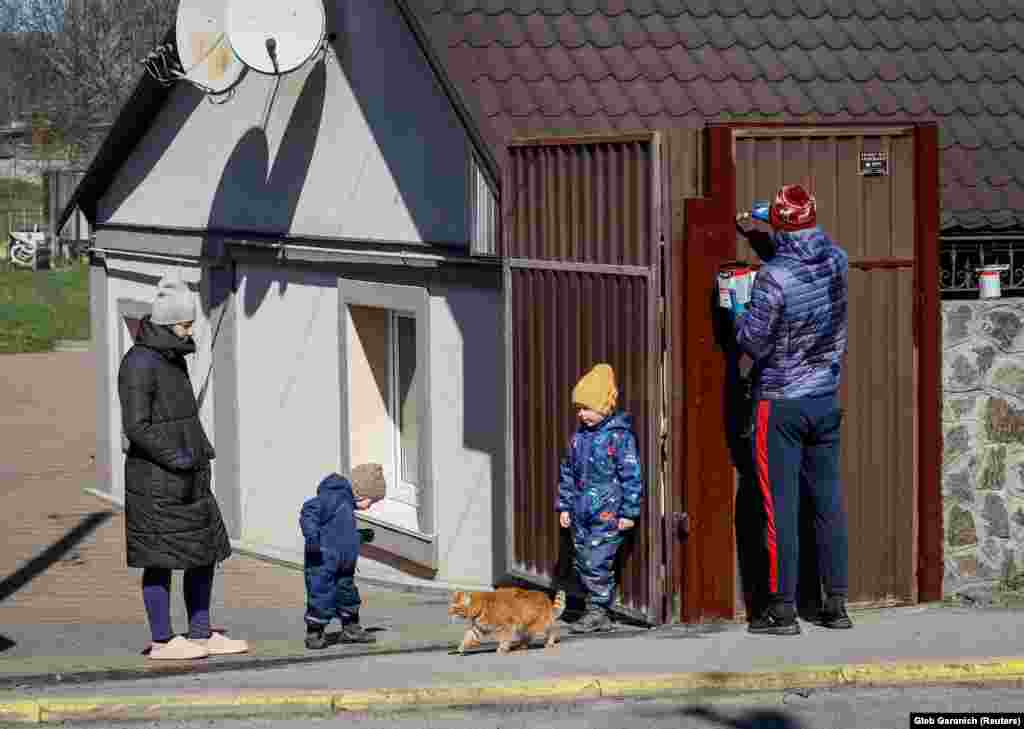
6/12Daria (left) looks on as her husband Maxim paints a gate to their house while their children play, on March 30, 2023. Dead civilians were strewn along the street in front of their house a year ago.
On March 31, Ukraine marked one year since Russian forces withdrew from the Kyiv suburb of Bucha. After more than a month of occupation, Russian troops left behind the bodies of hundreds of dead civilians. Ukrainian and international officials have called the deaths a war crime.
Show moreShow less
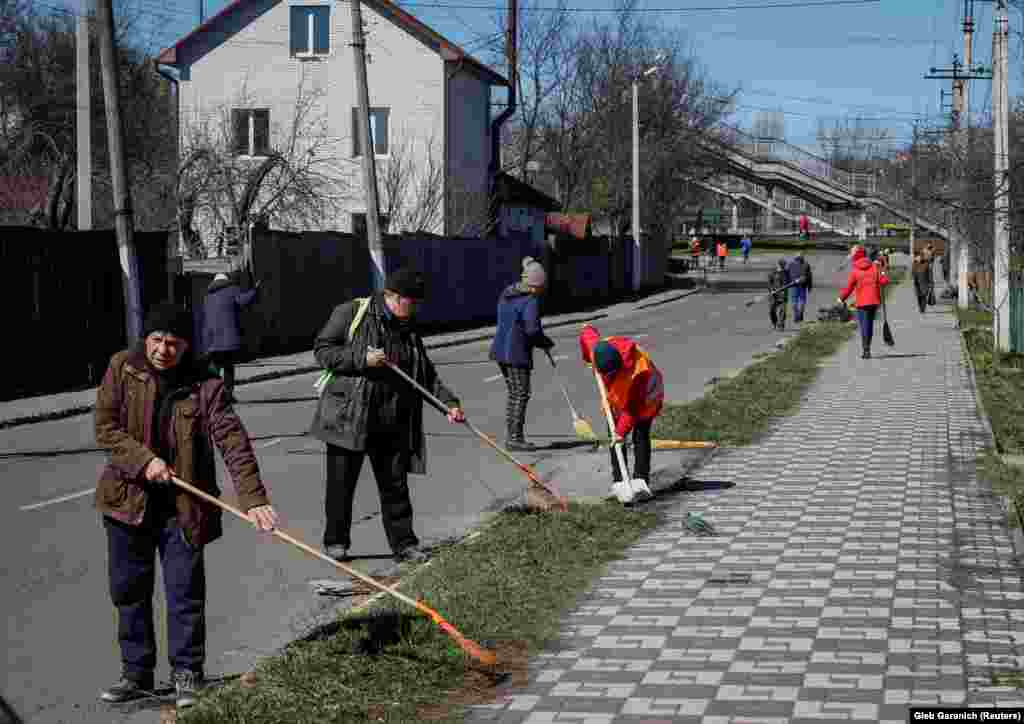
7/12Though the streets and many homes have been repaired and cleared of debris, residents say the deep psychological wounds left by the occupation will take generations to overcome.
On March 31, Ukraine marked one year since Russian forces withdrew from the Kyiv suburb of Bucha. After more than a month of occupation, Russian troops left behind the bodies of hundreds of dead civilians. Ukrainian and international officials have called the deaths a war crime.
Show moreShow less
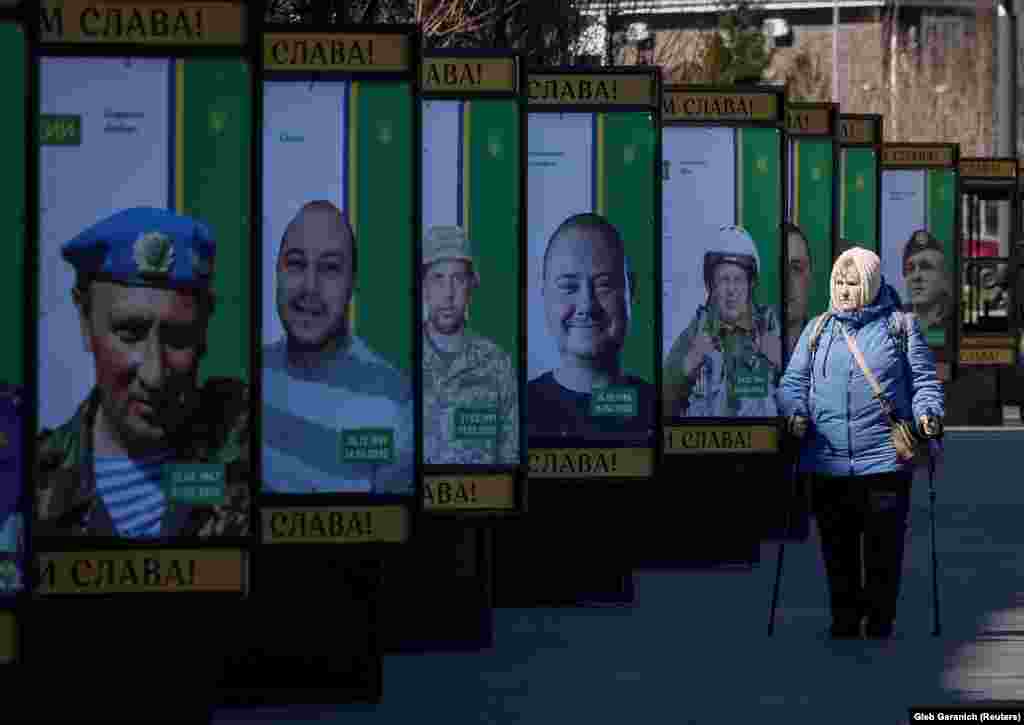
8/12A woman walks by billboards in Bucha of Ukrainian soldiers who died defending their country.
On March 31, Ukraine marked one year since Russian forces withdrew from the Kyiv suburb of Bucha. After more than a month of occupation, Russian troops left behind the bodies of hundreds of dead civilians. Ukrainian and international officials have called the deaths a war crime.
Show moreShow less
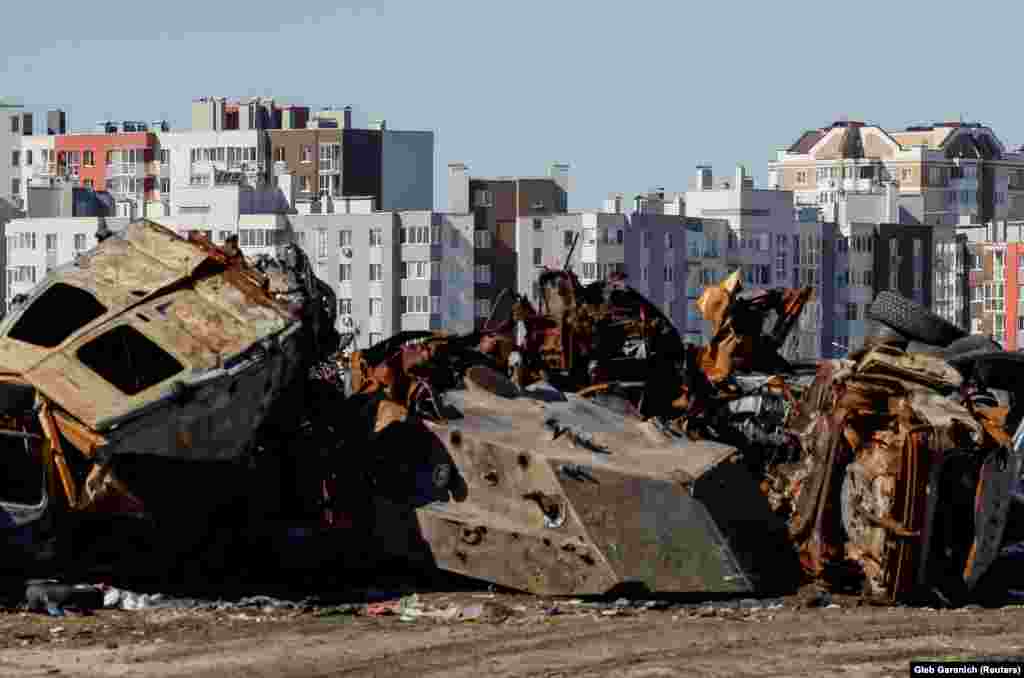
9/12Civilian cars and military vehicle destroyed during the invasion can still be seen near repaired apartment buildings in Bucha before the first anniversary of its liberation.
On March 31, Ukraine marked one year since Russian forces withdrew from the Kyiv suburb of Bucha. After more than a month of occupation, Russian troops left behind the bodies of hundreds of dead civilians. Ukrainian and international officials have called the deaths a war crime.
Show moreShow less
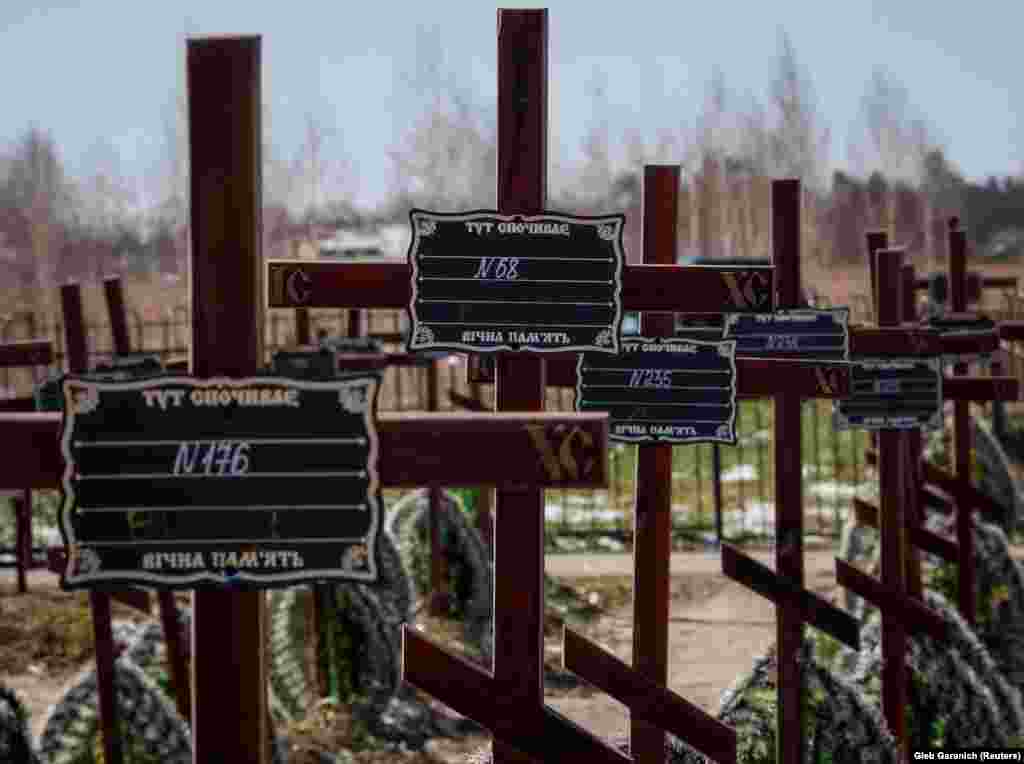
10/12The graves of unidentified people, including children killed during the Russian occupation of Bucha, are marked with numbers.
On March 31, Ukraine marked one year since Russian forces withdrew from the Kyiv suburb of Bucha. After more than a month of occupation, Russian troops left behind the bodies of hundreds of dead civilians. Ukrainian and international officials have called the deaths a war crime.
Show moreShow less
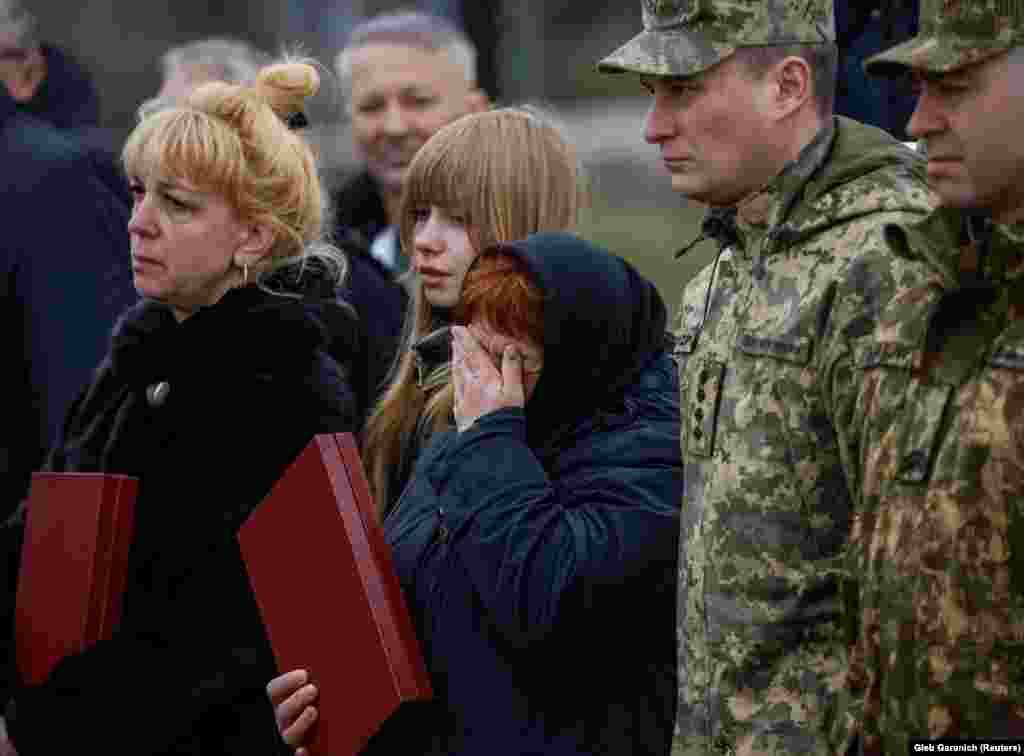
11/12Family members and soldiers paid tribute to those were killed on the first anniversary of the liberation of Bucha on March 31.
On March 31, Ukraine marked one year since Russian forces withdrew from the Kyiv suburb of Bucha. After more than a month of occupation, Russian troops left behind the bodies of hundreds of dead civilians. Ukrainian and international officials have called the deaths a war crime.
Show moreShow less
12/12A member of the Honor Guard is seen as the Ukrainian national flag is hoisted during a ceremony to mark the first anniversary of the liberation of Bucha.
President Volodymyr Zelenskiy said that Ukraine will never forgive the atrocities committed there.
On March 31, Ukraine marked one year since Russian forces withdrew from the Kyiv suburb of Bucha. After more than a month of occupation, Russian troops left behind the bodies of hundreds of dead civilians. Ukrainian and international officials have called the deaths a war crime.
Show moreShow less
Previous slide
Next slide
EU foreign policy chief Josep Borrell said the bloc "assists Ukraine to investigate such crimes and collect evidence," while Estonian Prime Minister Kaja Kallas said Bucha showed the world "the true face of Russian occupation."
"A year ago, Ukraine liberated Bucha and the world woke up to the true face of Russian occupation. Bucha is a crime scene and a symbol for all Russian crimes -- mass killings, deportations, erasing whole cities," Estonian Prime Minister Kaja Kallas wrote on Twitter on March 31. "There's no going back -- Russia will be held accountable."
The Bucha Victim Who Became A Symbol Of Ukraine's Suffering
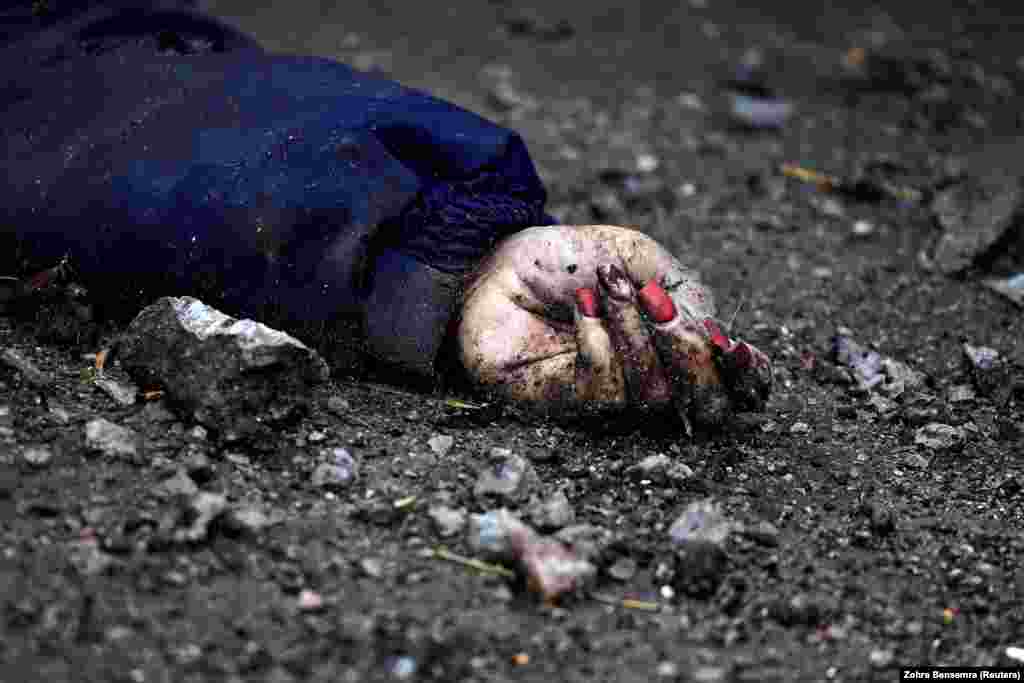
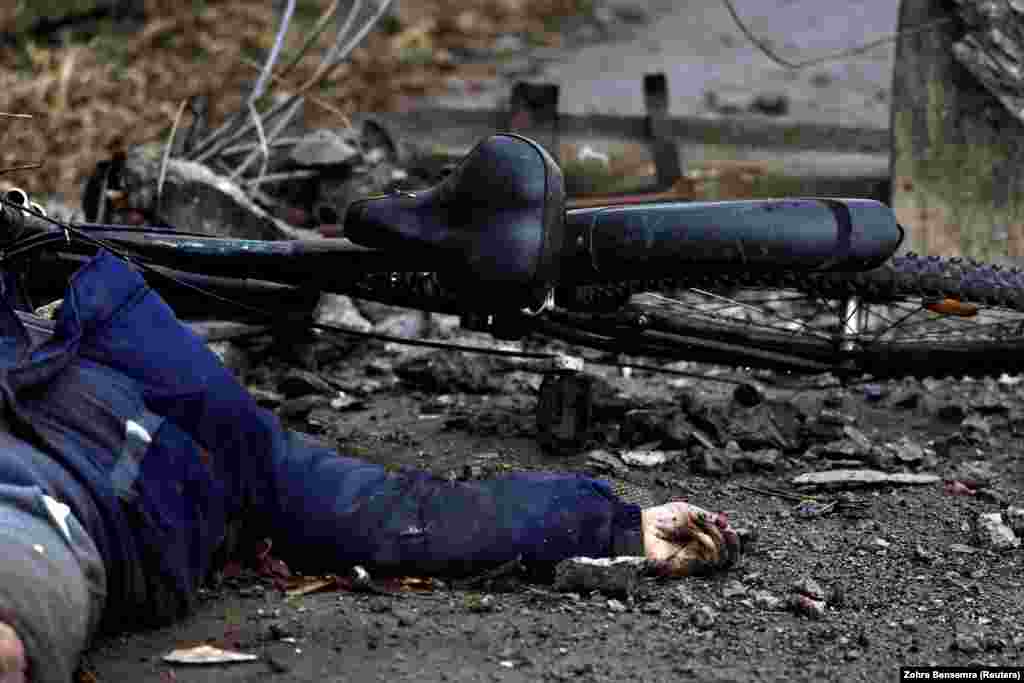
1/8The brightly painted nails -- four were red and the fifth had a small purple heart bordered by silver varnish -- revealed the woman's identity. Iryna Filkina was a 52-year-old heating operator at a shopping mall when she was killed in Bucha, a town northwest of the Ukrainian capital, Kyiv.
The photo of a dead woman's hand, her freshly-varnished nails standing out against the mud on her skin, became an iconic image of Russian atrocities in the Ukrainian town of Bucha. Months after the picture was taken, her family and friends are struggling to cope with her loss.
Show moreShow less
2/8When journalists entered Bucha following the withdrawal of Russian forces, they found Filkina's body next to her bike.
The photo of a dead woman's hand, her freshly-varnished nails standing out against the mud on her skin, became an iconic image of Russian atrocities in the Ukrainian town of Bucha. Months after the picture was taken, her family and friends are struggling to cope with her loss.
Show moreShow less
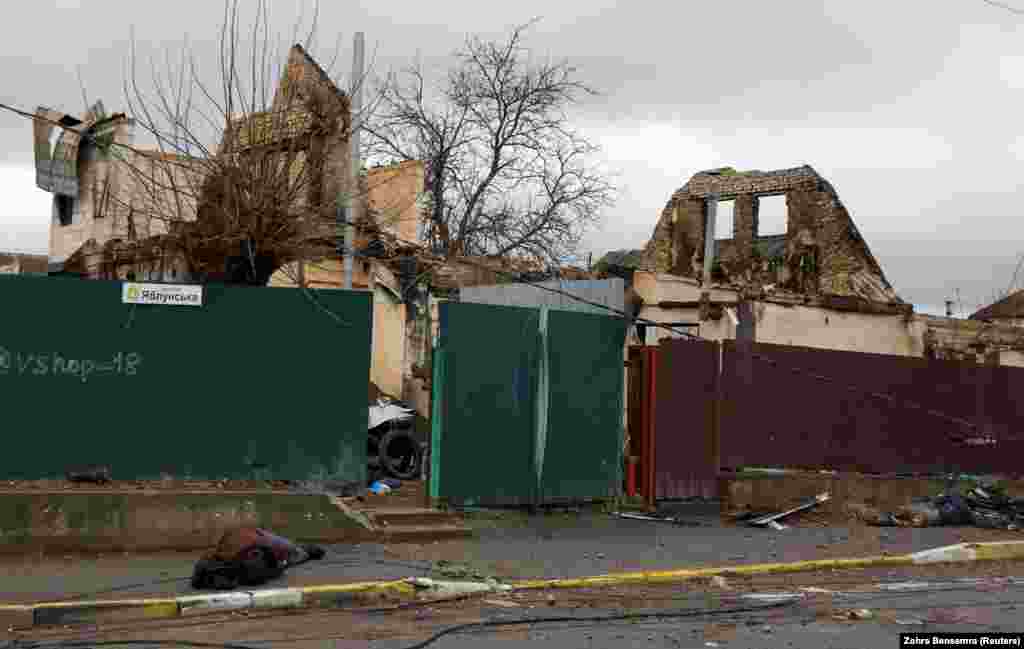
3/8Filkina died on Yablunska Street, a long, now-infamous, thoroughfare on Bucha's southern edge, where other bodies of civilians, some with their hands tied behind their backs, were left untended. The mayor of Bucha says 400 civilians were killed by Russian forces.
The photo of a dead woman's hand, her freshly-varnished nails standing out against the mud on her skin, became an iconic image of Russian atrocities in the Ukrainian town of Bucha. Months after the picture was taken, her family and friends are struggling to cope with her loss.
Show moreShow less
4/8Iryna’s beautician, Anastasia Subacheva, who now lives in Vilnius, Lithuania, recalls the evening in April when she came across a social media post showing the lifeless hand. "I went through our messages and compared the pictures I took of her to that picture. And it was her. I started screaming.... I cried on my mother's shoulder, I felt very empty and hurt."
The photo of a dead woman's hand, her freshly-varnished nails standing out against the mud on her skin, became an iconic image of Russian atrocities in the Ukrainian town of Bucha. Months after the picture was taken, her family and friends are struggling to cope with her loss.
Show moreShow less
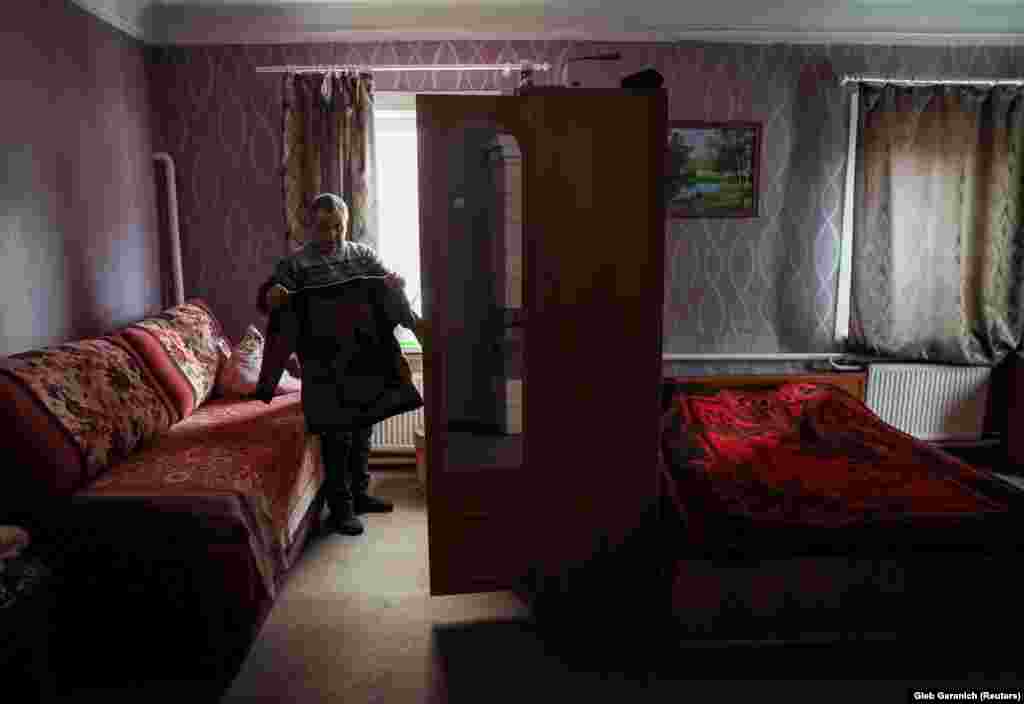
5/8Another person still trying to make sense of her killing is her partner, Anatoliy Shchyruk, pictured here holding one of her sweaters.
The photo of a dead woman's hand, her freshly-varnished nails standing out against the mud on her skin, became an iconic image of Russian atrocities in the Ukrainian town of Bucha. Months after the picture was taken, her family and friends are struggling to cope with her loss.
Show moreShow less
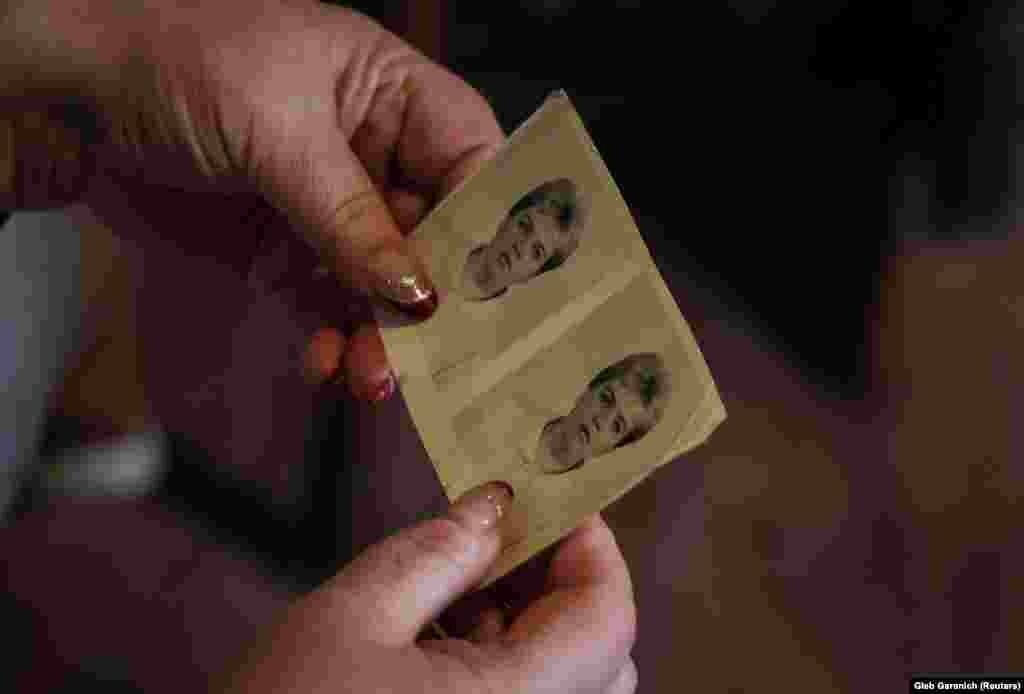
6/8Svitlana Safonova looks at a photo of Filkina, who was her sister. She learned of her death from Filkina's daughters.
The photo of a dead woman's hand, her freshly-varnished nails standing out against the mud on her skin, became an iconic image of Russian atrocities in the Ukrainian town of Bucha. Months after the picture was taken, her family and friends are struggling to cope with her loss.
Show moreShow less
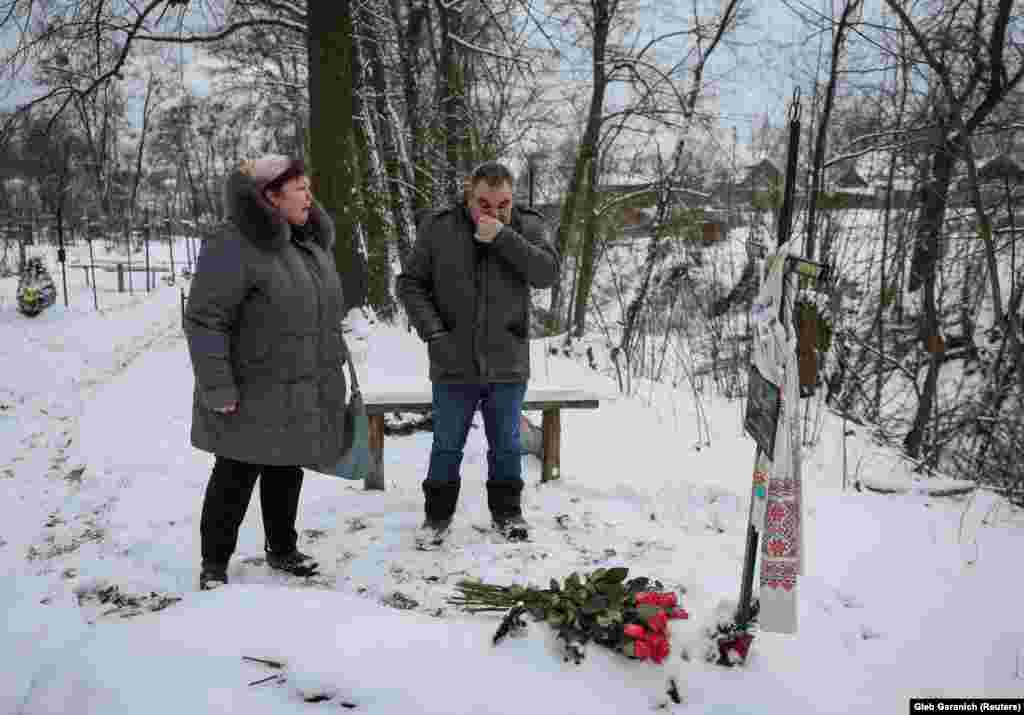
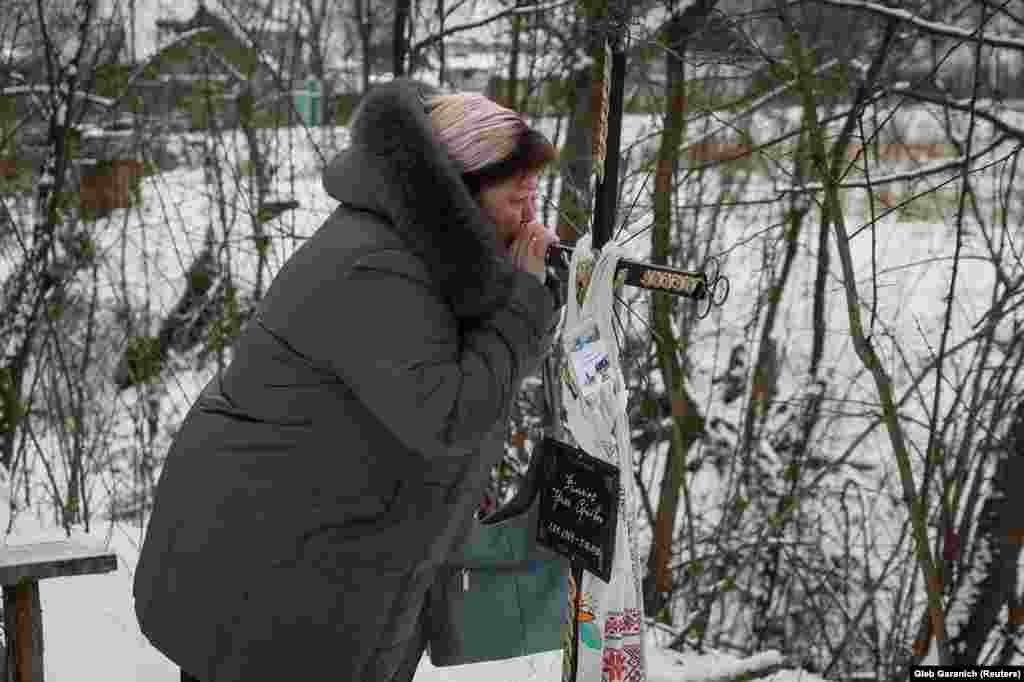
7/8On a cold February day, Safonova was joined by Shchyruk as they visited Filkina's grave in Bucha. They struggled to hold back their tears after placing 12 pink roses near the simple cross that marks her final resting place.
The photo of a dead woman's hand, her freshly-varnished nails standing out against the mud on her skin, became an iconic image of Russian atrocities in the Ukrainian town of Bucha. Months after the picture was taken, her family and friends are struggling to cope with her loss.
Show moreShow less
8/8"For me the world ended on March 5 (believed to be the day of Filkina's death)," Safonova said as she sobbed next to her sister's grave. "It is one thing when someone dies after a long illness and is buried. It is another if someone is killed unexpectedly and for no reason."
The photo of a dead woman's hand, her freshly-varnished nails standing out against the mud on her skin, became an iconic image of Russian atrocities in the Ukrainian town of Bucha. Months after the picture was taken, her family and friends are struggling to cope with her loss.
Show moreShow less
Previous slide
Next slide
Meanwhile, fighting between Ukrainian and Russian forces for control of Bakhmut and other key towns in the eastern region of Donetsk continued unabated as the northeastern city of Kharkiv was targeted with missile and drone strikes overnight, the military said on March 31.
Russia targeted civilian infrastructure in the city of Kharkiv with nine missile strikes launched from S-300 air-to-surface systems and 10 Iranian-made Shahed drones, Ukraine's General Staff said in its daily report, adding that nine drones were destroyed.
At least five civilians were wounded, authorities said.
"The enemy continues to ignore the laws and customs of war, using terror tactics against the peaceful citizens of our country," the military said.
WATCH: Ukrainian artillery targets Russian armored guns at a range of up to 28 kilometers in the ongoing battle for Bakhmut. Using a captured self-propelled cannon, a Ukrainian artillery crew is also trying to destroy Russian command posts.
In the southern Kherson region, Russian troops shelled settlements 64 times over the past day, killing one person and wounding two, the regional military administration reported on March 31.
The city of Kramatorsk in Donetsk was also struck by two Russian missiles that damaged eight residential buildings, the military said.
Heavy fighting continued in and around Bakhmut, where the Ukrainian defenders repelled 22 attacks over the past 24 hours, and in Avdiyivka, Lyman, and Maryinka.
A civilian was killed and six others were wounded by Russian shelling the area around Bakhmut, the governor of the Donetsk region, Pavlo Kirylenko, wrote on Telegram on March 31.
Bakhmut, a mining city with a prewar population of 70,000 people, has become the epicenter of Russia's offensive for the control of eastern Ukraine. About 2,000 civilians are thought to be left in the city, which has been all but razed to the ground.
In southern Ukraine, the city of Zaporizhzhya was targeted by overnight shelling by Russia that damaged civilian infrastructure, the secretary of the Zaporizhzhya city council, Anatoliy Kurtev, reported on Telegram.
RFE/RL's Ukrainian Service has seen its audience grow significantly since Russia's full-scale invasion in February 2022 and is among the most cited media outlets in the country. Its bold, in-depth reporting from the front lines has won many accolades and awards. Its comprehensive coverage also includes award-winning reporting by the Donbas.Realities and Crimea.Realities projects and the Schemes investigative unit.