




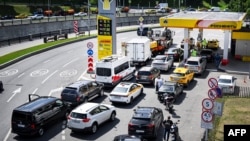
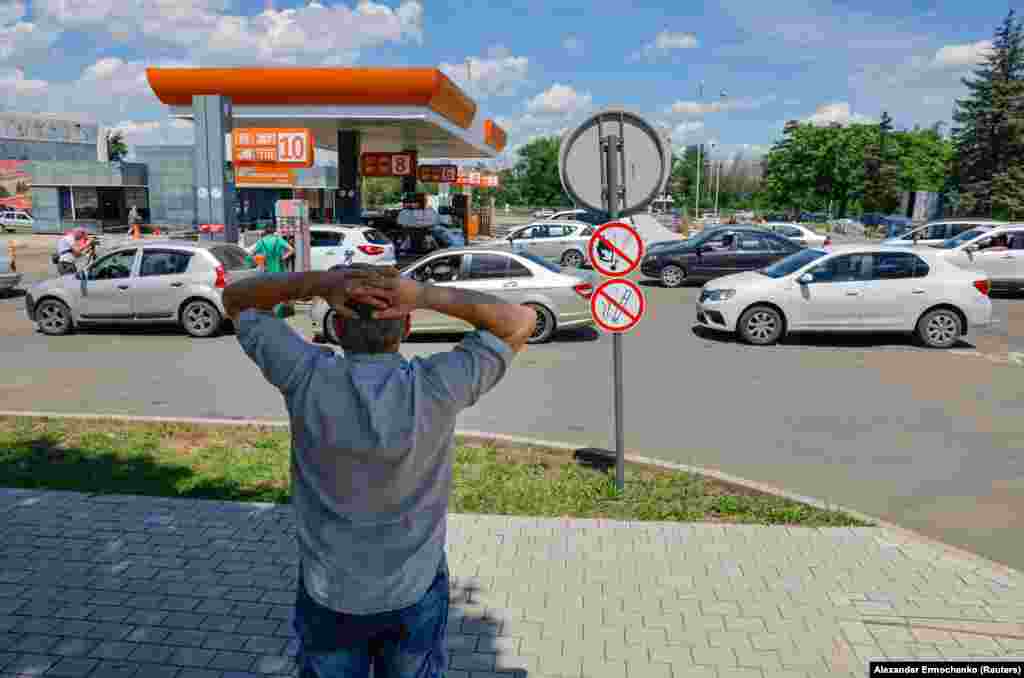
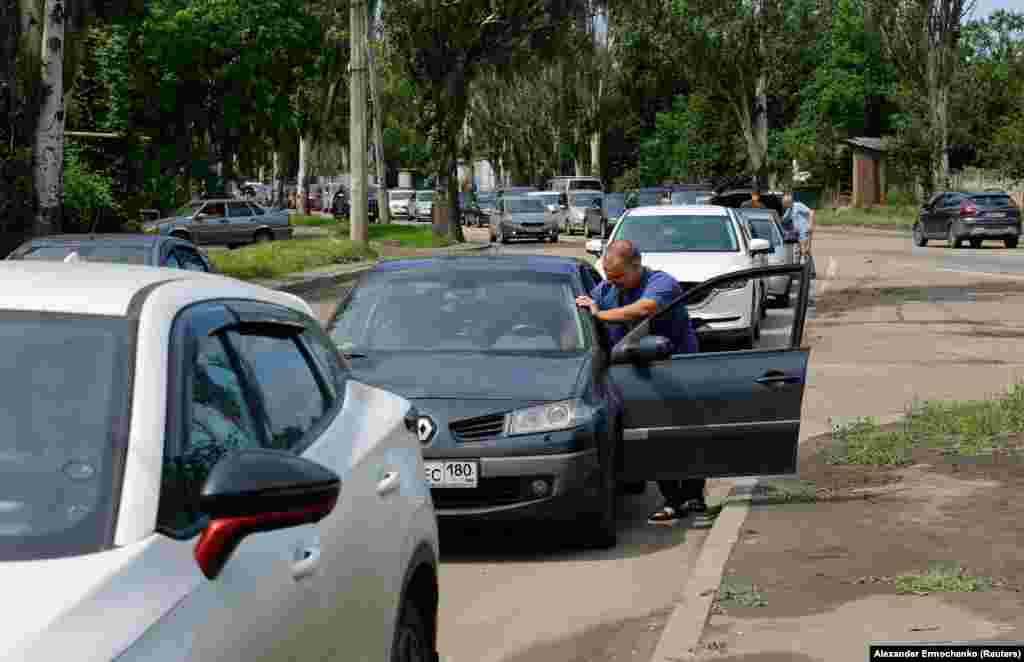
In the capital of the Siberian region of Zabaikalye-- some 6,300 kilometers from Ukraine -- the line of drivers desperate to fill up their car tanks was 3 kilometers long.
In some Zabaikalye districts, municipal garbage collection has been suspended because there's no fuel for the trucks. In yet another Siberian location, local villagers are fighting wildfires on their own because firefighters have no gas for their fire trucks.
And one woman said that when her diabetic husband fell into a coma and she called for an ambulance, the dispatcher told her to find her own transport as the ambulance was out of fuel.
Far from Ukraine's battlefields, where Russian forces are still grinding forward at a glacial pace, a mounting fuel crisis prompted by a targeted Ukrainian drone campaign is seeping into the lives of average Russians.
In Moscow, the fuel crisis has already hit home. As Russia's center of gravity, the city has outsized resonance, and gas shortages, and public complaints, are directly in the line of sight for Kremlin bureaucrats, business leaders, military officers, and top decision-makers.
But the effect is no less meaningful in the far-flung hinterlands, where average people are also grumbling and suffering.
For Ukraine, that's the goal.
"They haven't actually picked up [the garbage] for a week now. Garbage is lying in the courtyards, rotting; there are rats, stray dogs. How long is this temporary situation supposed to last?" Yekaterina, a resident of Krasnokamensk, a small town located not far from the border with China, told RFE/RL by private message. "Another month and we'll die from the smell."
Like others interviewed for this article, Yekaterina asked to be identified by a pseudonym for security purposes.
The crisis has caught the concern at the Kremlin. President Vladimir Putin staged televised meetings in recent days where he openly discussed the problem of Ukraine's drone strikes and their effects on oil refining capacity, and tried to minimize it.
"Of course, they're creating problems, that's obvious," he said in an interview with state TV on June 28. "Right now we're observing some shortages, but it's not critical."
Putin "is trying to plug everything at once, using his authority to do so. He will say that everything is fine with fuel, and people will calm down. If Putin said it, then everything will be fine," said Dmitry Oreshkin, an exiled Russian political analyst. "But most likely, it won't."
"That's when the main problems begin," he told RFE/RL's Russian Service.
'You Have To Find Your Own Car, We're Out Of Gas'
Ukraine has been ramping up its drone campaign for months now, using long-range strikes to hit oil export facilities as far away as the Baltic Sea, to try to keep Russia from exporting hydrocarbons and earning hard currency to fund the Ukraine war.
More recently, the campaign has focused on gasoline refineries, pipelines, fuel tanker trucks, and related infrastructure, all aimed at squeezing supplies for car and truck fuel, gasoline, and diesel.
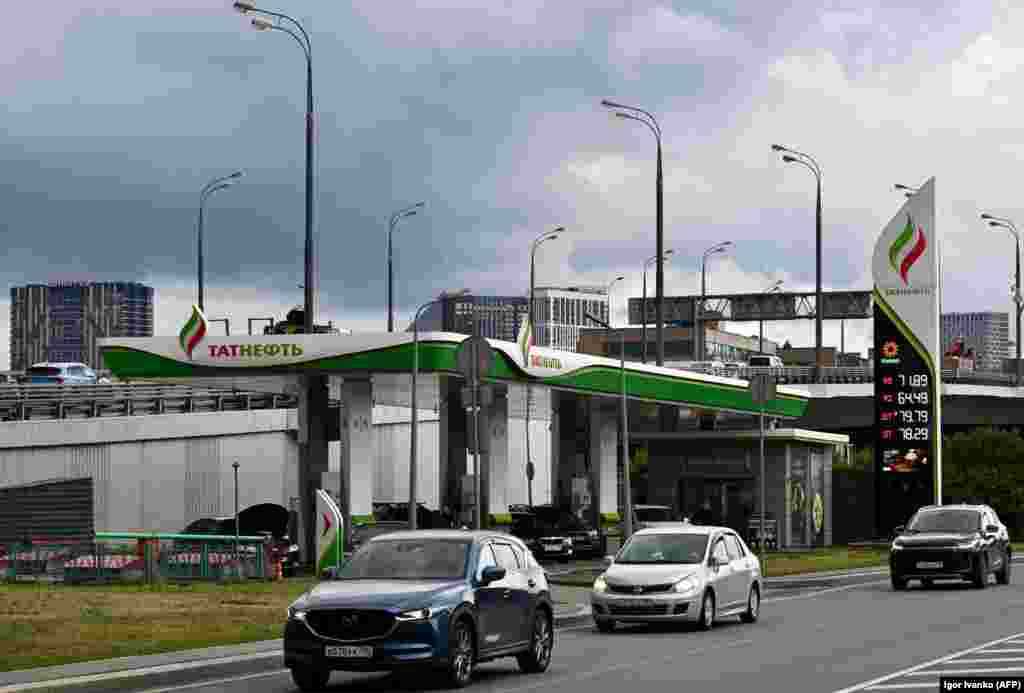
As of last week, more than 55 of Russia's 83 regions and federally designated cities were reporting either government-imposed restrictions or shortages due to fuel company supply problems.
"If Putin wants to sacrifice another million of his soldiers to keep smashing up against this wall, then the millions of Russians who have not yet been mobilized into the Russian Army and who are arguing in gas lines should think about what awaits them next," Ukraine's president, Volodymyr Zelenskyy, said in a mocking video address on June 29.
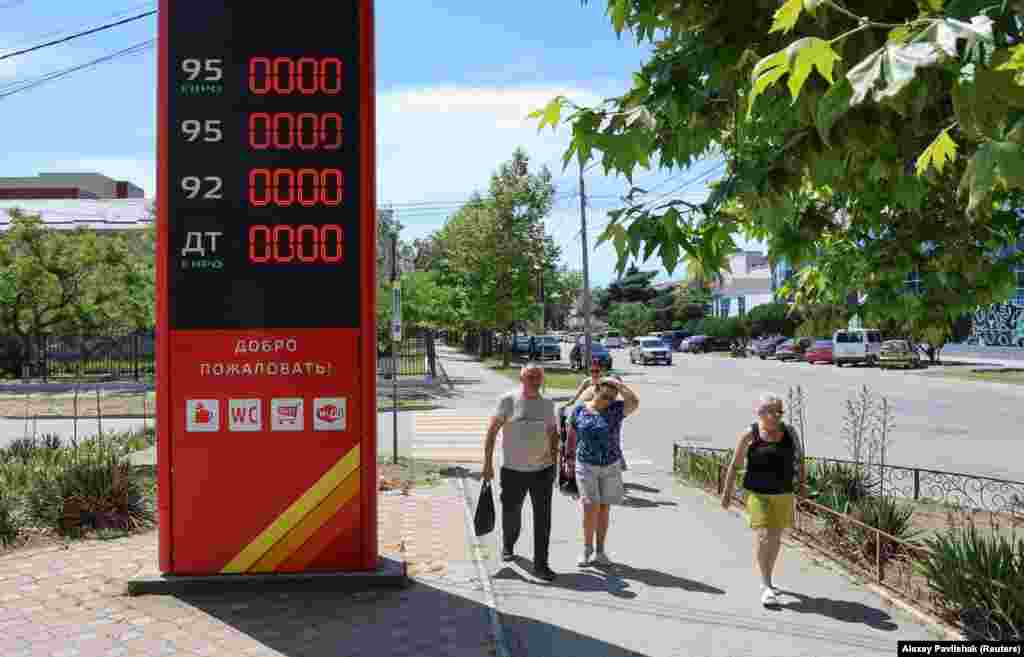
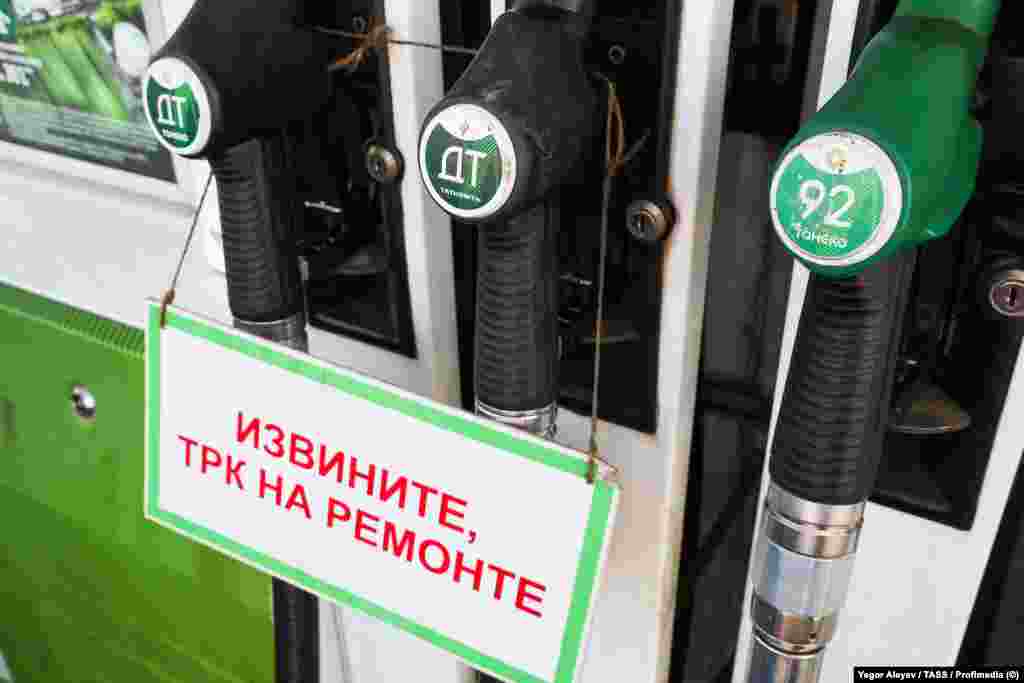
In Crimea, the Ukrainian Black Sea peninsula that Russia annexed in 2014, the drone campaign has led to rolling blackouts and widespread fuel shortages as well as soaring black market prices and semilegal workarounds.
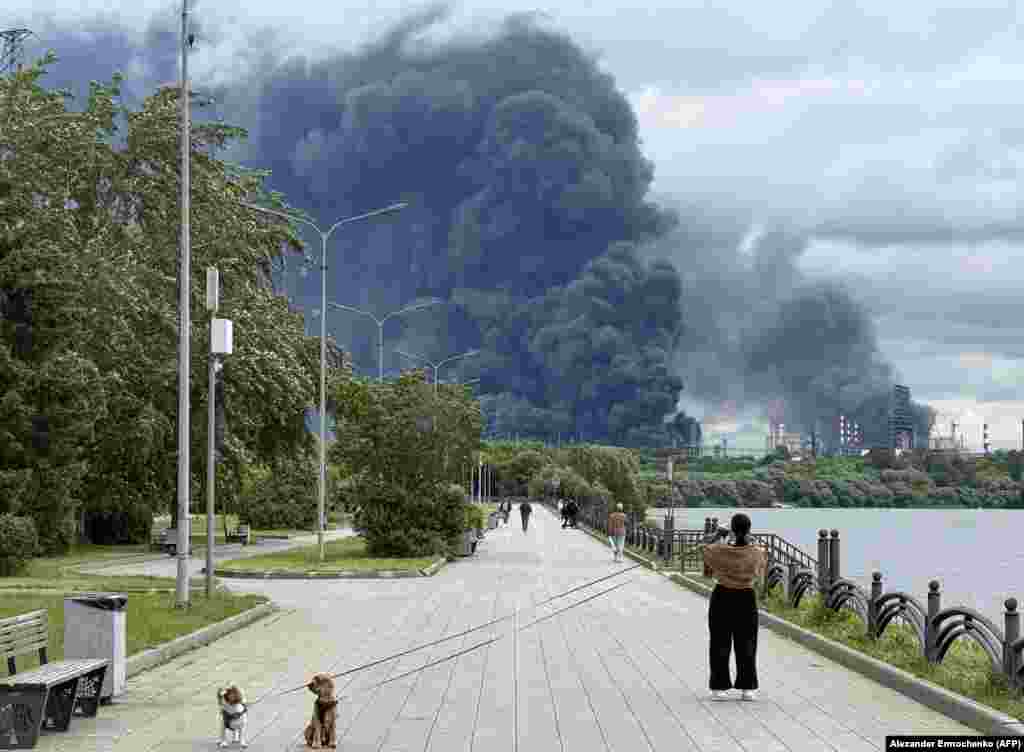
The Moscow region's single largest supplier of refined fuel has been hit twice by Ukrainian drones this month; officials told Reuters last week that the facility would be out of service for the rest of the year.
In the Zabaikalye region, located six time zones east of Moscow, regional authorities last week advised residents to limit their driving in and out of the region. The mayor of the regional capital, Chita, announced daily limits for individual drivers. And local residents have complained vocally about the difficulty of locating fuel.
Viktoria, a resident of a Zabaikalye village close to the border with China, said her husband recently suffered a diabetic coma because she was unable to give him a necessary dose of insulin. When she called the emergency help line for an ambulance, the dispatcher told her to find her own car.
"'We're out of gas,'" she said she was told. "So, I walked 15 kilometers to the neighboring village so my husband's friend could take him. They revived him, but it's still unclear how a multi-hour coma will affect his condition. If it had been a stroke, we definitely would have lost him."

"We stand in line for 12 hours or more, filling up our 15 liters" of fuel, said Nikolai, another Chita resident. "And then we try to sneak an additional canister to top up with another 15 liters. But now they've started watching out for it."
"Previously, my kids used to take the bus to their clubs or to the gyms, but now those bastards have shut down some routes and I have to drive them around myself," he said.
On June 25, a regional waste management company suspended garbage collection services in four districts. A lack of fuel for the garbage trucks was to blame.
Aleksei said his bus to his home in a Chita city suburb was canceled the other day without any notice and he had sleep in the bus station "like a homeless person." Bus fares have gone up sharply, squeezing people with limited salaries.
"And I have to go: There simply aren't any jobs in my village," he said. "I'm lucky, at least they're still collecting the trash."
Fights have broken out at some fueling stations on several occasions, some Chita residents said.
Аt one fueling station north of the city, wait times were running about three hours for drivers in recent days, said Grigory, a local salesman. At another nearby location, he said, there was an argument that erupted into a full-out brawl.
"Not only can you run out of fuel, you can also get beaten up," he said, adding that people were selling priority spaces in lines of cars waiting outside another fueling station -- for 800 rubles (around $10), you can get a spot in the top 20 cars.
As Moscow Burns, Russia's Fuel Crisis Spreads

No Gas For The Fire Trucks
In the Irkutsk region, to the west of Zabaikalye, prices for standard-grade gasoline have gone up by nearly 10 percent in a week, said Sergei, a resident.
"If you arrive after 9 in the morning, the station is already empty. Two days ago, I stood in line...for 12 1/2 hours just to fill up with a measly 15 liters," he said.
Irkutsk's city mayor offered a small gesture of support for exasperated drivers waiting in lines, saying portable toilets would be installed at area gas stations "to reduce inconvenience."
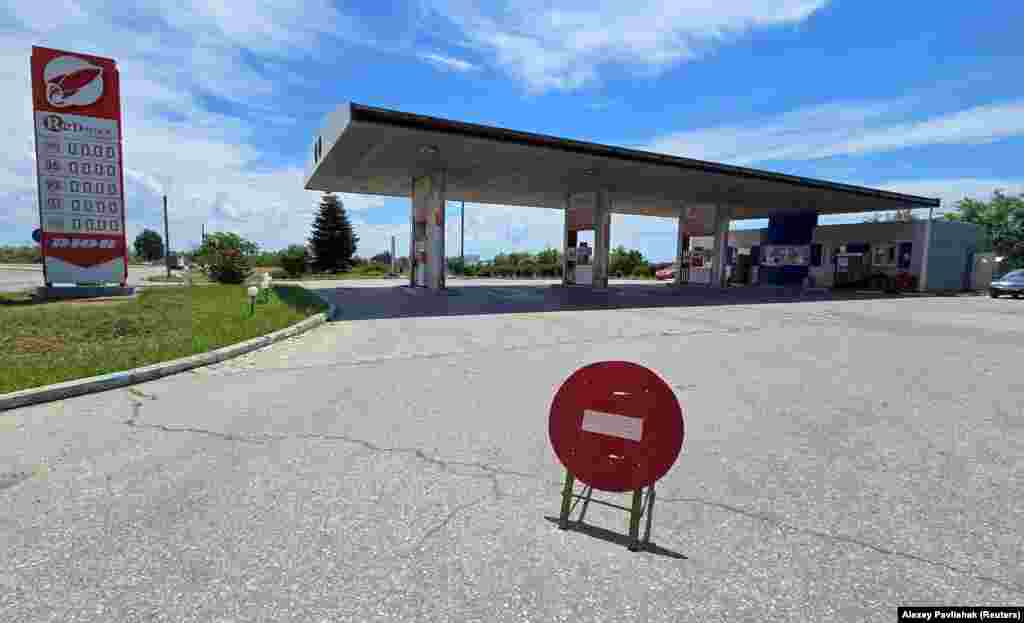
Further to the east, in the Pacific region of Khabarovsk, Governor Dmitry Demeshin reported that about 40 percent of the region's fueling stations are out of gas.
Residents describe the situation as dire. In districts of the regional capital, Khabarovsk, people reported having no gasoline or diesel whatsoever and having to fight wildfires on their own.
"Not only was no one digging fire trenches, but the equipment hadn't even arrived," said a Khabarovsk resident named Anatoly. "They said they had nothing to drive them on."
"This is the first time I've heard ordinary working people, not just the intelligentsia, cursing the supreme leader," he said, using a snarky nickname for Putin. "Wherever I go -- cafeteria, store, barbershop -- it's the only thing they're talking about."

