

Russian Soldiers Reportedly Looted Priceless Artifacts From Southern Ukrainian Museum
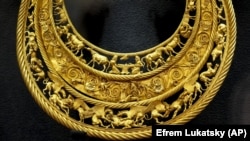
A golden Scythian pectoral, or breastplate, is seen on exhibit in Kyiv in 2021.
Ukraine has accused Russian forces of looting priceless artifacts from a museum in the southern city of Melitopol as fighting and missile strikes continued in Ukraine’s south and east.
Melitopol Mayor Ivan Fedorov said during a national telethon that “the orcs have taken hold of our Scythian gold,” using a derogatory term by which many Ukrainians refer to the invading Russian soldiers. “We don’t know where they took it.”
The New York Times reported that the director of the Melitopol Museum of Local History, Leila Ibrahimova, said museum workers had hidden the priceless treasure in boxes in a cellar. After Russian troops abducted and interrogated her for several hours in March, Ibrahimova left Melitopol for Kyiv-controlled territory.
Melitopol has been occupied by Russian forces since early March.
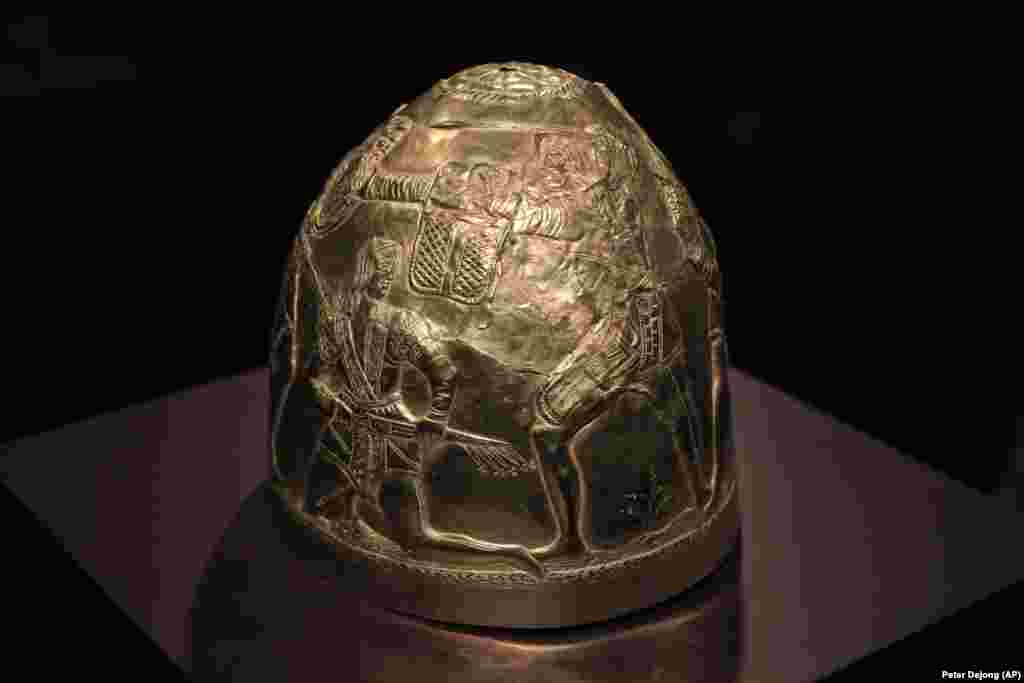
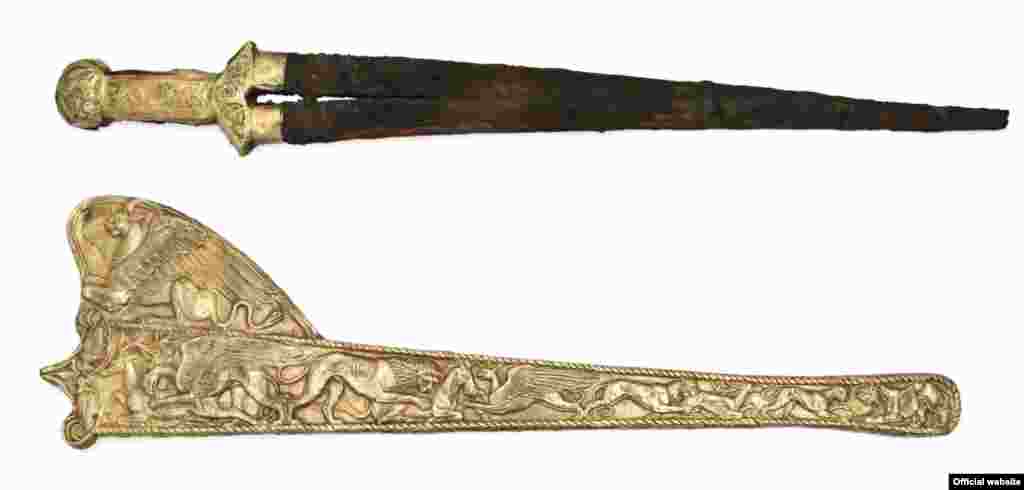
Scythian Gold, Crimean Treasures
1/13A spiraling torque from the second century A.D. The Scythians were master craftsmen, using a combination of techniques like casting, forging, and inlaying.
An appeals court in the Netherlands ruled on October 26 that Ukraine has legal control over a trove of ancient artifacts from Crimea that was on loan to a Dutch museum when Russia seized the peninsula in 2014.
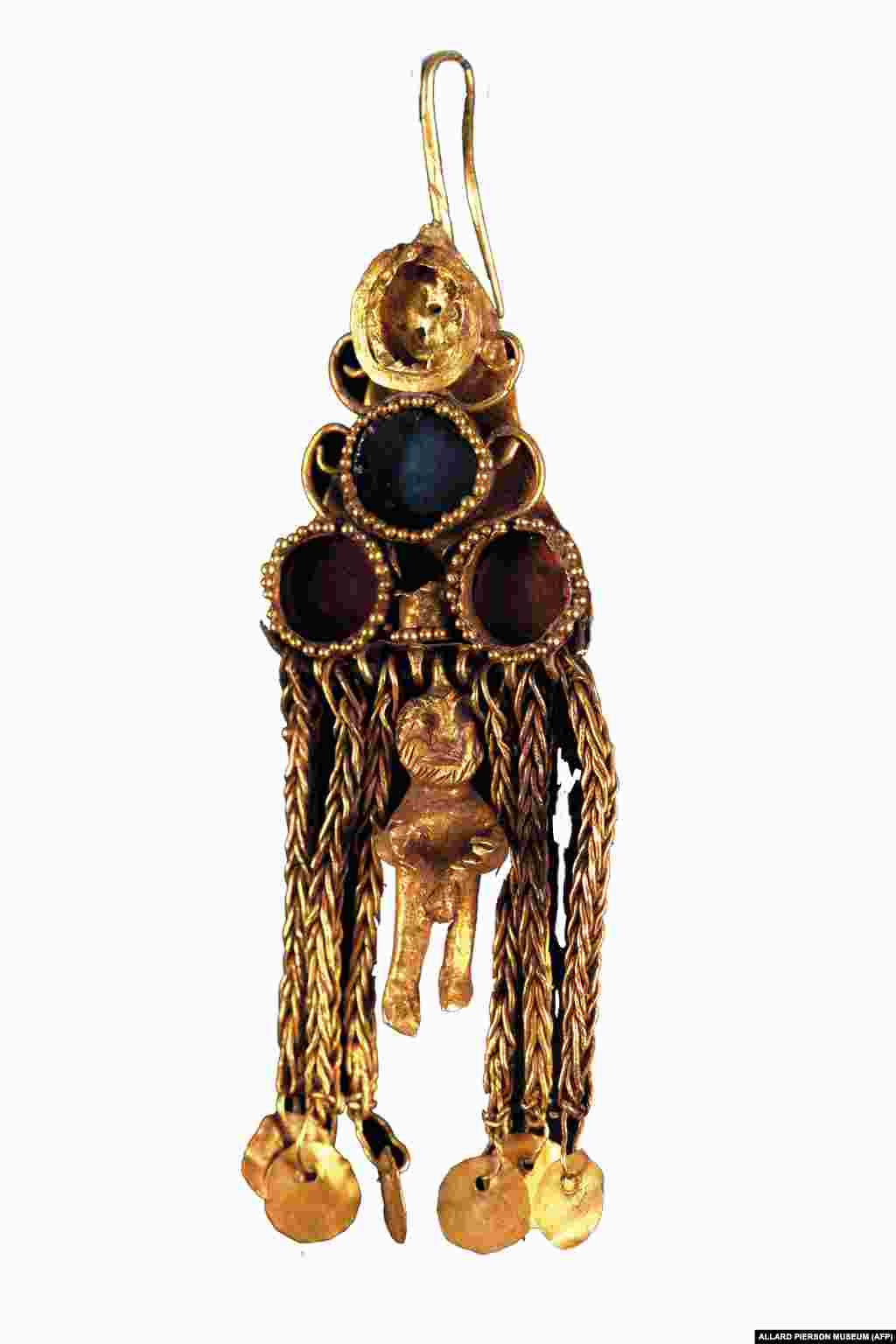
2/13A second-century A.D. golden earring with glass inlay and figurine, found in a woman's grave at the necropolis of Ust-Alma.
An appeals court in the Netherlands ruled on October 26 that Ukraine has legal control over a trove of ancient artifacts from Crimea that was on loan to a Dutch museum when Russia seized the peninsula in 2014.
4/13A picture dated August 21, 2014 shows objects on display at the Allard Pierson Museum in Amsterdam.
An appeals court in the Netherlands ruled on October 26 that Ukraine has legal control over a trove of ancient artifacts from Crimea that was on loan to a Dutch museum when Russia seized the peninsula in 2014.
5/13A visitor at the museum on August 21, 2014. The exhibits are currently held in storage.
An appeals court in the Netherlands ruled on October 26 that Ukraine has legal control over a trove of ancient artifacts from Crimea that was on loan to a Dutch museum when Russia seized the peninsula in 2014.
6/13The art and objects have an insured value of about $1.57 million. This photo was taken in Simferopol museum, in Crimea, where the pieces were taken from.
An appeals court in the Netherlands ruled on October 26 that Ukraine has legal control over a trove of ancient artifacts from Crimea that was on loan to a Dutch museum when Russia seized the peninsula in 2014.
7/13An image provided by the Allard Pierson Museum from its 2014 exhibition, titled Crimea: Gold And Secrets From the Black Sea
An appeals court in the Netherlands ruled on October 26 that Ukraine has legal control over a trove of ancient artifacts from Crimea that was on loan to a Dutch museum when Russia seized the peninsula in 2014.
8/13The original 2016 court ruling said the collection was part of Ukraine's cultural heritage and should be sent to Kyiv. It said only sovereign states could claim objects as cultural heritage.
An appeals court in the Netherlands ruled on October 26 that Ukraine has legal control over a trove of ancient artifacts from Crimea that was on loan to a Dutch museum when Russia seized the peninsula in 2014.
9/13Artifacts from the grave of a Scythian noblewoman from the first century A.D.
An appeals court in the Netherlands ruled on October 26 that Ukraine has legal control over a trove of ancient artifacts from Crimea that was on loan to a Dutch museum when Russia seized the peninsula in 2014.
10/13An equestrian-themed gravestone from the first or second century A.D. The Scythians were famed for their horsemanship.
An appeals court in the Netherlands ruled on October 26 that Ukraine has legal control over a trove of ancient artifacts from Crimea that was on loan to a Dutch museum when Russia seized the peninsula in 2014.
11/13A first-second century A.D. statue of a sea monster with two tails. It was found at the site of the Greek colony of Pantikapaion on the eastern shore of Crimea.
An appeals court in the Netherlands ruled on October 26 that Ukraine has legal control over a trove of ancient artifacts from Crimea that was on loan to a Dutch museum when Russia seized the peninsula in 2014.
12/13A Chinese lacquer box from the first century A.D., a burial gift for a Scythian woman
An appeals court in the Netherlands ruled on October 26 that Ukraine has legal control over a trove of ancient artifacts from Crimea that was on loan to a Dutch museum when Russia seized the peninsula in 2014.
13/13Objects on display in Amsterdam, August 21, 2014. The Scythians were a nomadic people who left a rich heritage of art and artifacts.
An appeals court in the Netherlands ruled on October 26 that Ukraine has legal control over a trove of ancient artifacts from Crimea that was on loan to a Dutch museum when Russia seized the peninsula in 2014.
Previous slide
Next slide
Last week, she was informed by the museum’s caretaker that the Russians had discovered the boxes with the help of the Russian-appointed de facto museum director. Russian troops and intelligence officers watched as a Russian in a white lab coat carefully removed the artifacts, which are more than 2,300 years old, and took them away.
According to The New York Times, at least 198 gold items, rare old weapons, a number of silver coins, and medals were removed

Ukrainian officials had earlier said that Russian forces had looted paintings, icons, and sculptures from a museum in the Azov Sea port of Mariupol. Officials said on April 29 that more than 250 cultural institutions had been damaged or destroyed since the Russians invaded on February 24. Kyiv has accused the Russian government of carrying out a policy of “genocide” against the Ukrainian nation.
In an interview on Russian television, the Russian-appointed de facto museum head, Yevhen Horlachev, said the artifacts “are of great culture value for the entire former Soviet Union” and accused the museum staff of expending “a lot of effort and energy” to hide them.
He did not say where the artifacts had been taken.
Russia and Ukraine have been locked in a dispute over other Scythian artifacts currently located in the Netherlands since the Russian annexation of Ukraine’s Crimea region in 2014.
The artifacts from several Crimean museums were on display in Amsterdam when Russia seized the Black Sea peninsula, and both Russia and Ukraine claimed ownership. In October 2021, a Dutch court awarded control of the treasures to Ukraine, but they remain in the Netherlands.
Melitopol Museum Director Ibrahimova said the museum’s caretaker was abducted from her home at gunpoint on April 29 and has not been heard from since.

With reporting from The New York Times, The Art Newspaper, and UkrInform
RFE/RL journalists report the news in 24 languages in 18 countries where a free press is banned by the government or not fully established. We provide what many people cannot get locally: uncensored news, responsible discussion, and open debate.