


As Ukraine targets Russia's refineries and fuel shortages worsen across the country, Moscow is now turning abroad to process its oil.
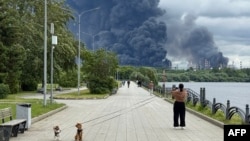
Kyiv has knocked out dozens of oil refineries across Russia with drone strikes in recent months to disrupt Moscow's ability to finance and sustain its four-year full-scale war in Ukraine.
Russia has already halted exports to curb its fuel crisis and introduced rationing measures. Now, Moscow has struck a deal with a small private refinery in Kazakhstan to use its facility.
But experts say the move is unlikely to solve the severe fuel shortages in Russia, which has retaliated by targeting Ukraine's own energy facilities.



Kazakh Energy Minister Yerlan Akkenzhenov said on August 25 that the Kondensat refinery in western Kazakhstan would process Russian crude, with around 70 percent being sent back to Russia.
A country of 143 million people, Russia consumes up to 120,000 metric tons of gasoline per day during the summer months, according to an estimate by Reuters. But the Kondensat refinery can only produce up to 200,000 metric tons of gasoline per year, meeting about 0.3 percent of Russia's daily gasoline demand.
John Roberts, nonresident senior fellow at the Atlantic Council, a Washington-based think tank, said that with Russia facing severe fuel shortages, even the smallest additional supplies of gasoline and diesel could help.
That includes on the front line, where the fuel shortages have put pressure on Russia's military operations.
"Possibly this may simply be a question of sheer desperation by Russia," he said. "The shortage that they have of fuel, of gasoline and diesel, is acute. It helps, but it doesn't solve the problem."
Kondensat's Links To Russia
The Kondensat refinery, which has operated well below capacity for years, has previous links to Russia.
Corporate records link Kondensat to Tatneft, Russia's fifth-largest oil company and third-largest refiner, through Osprey Investment. Osprey is a shareholder in Kondensat's main shareholder, Birinshi Shina Kompaniyasy, and previously co-owned Mining Development Company with Turkish fuel distributor Aytemiz. Tatneft acquired Aytemiz in 2023.
In 2024, Kondensat began processing Russian oil supplied through Tatneft's TANECO refinery in the Tatarstan region. Later that year, Kazakhstan and Russia agreed to allow Kondensat to export gasoline made from Russian oil to Russia. This arrangement was renewed in 2025.
After the United Kingdom sanctioned Tatneft in 2025, the oil company transferred its entire stake in Aytemiz to TNCI Holding, an investment company controlled by the government of Russia's Tatarstan region.
The change removed Tatneft's direct corporate link to Aytemiz and by extension the connection between Tatneft and Kondensat through Osprey's shared ownership interests.
How Far Can Russia Push the Kondensat Model?
As Ukraine continues to knock out Russia's refineries, Moscow is likely to turn to more facilities in Central Asia, experts say. Russia is a key political and economic power in the energy-rich region, which was part of the Soviet Union.
"They will try to coerce Kazakhstan, in particular, and Uzbekistan, next, to provide them with as much gasoline and diesel as they can," said Roberts of the Atlantic Council.
Hennadii Ryabtsev, a Ukrainian energy analyst, said there is no excess capacity in Central Asia and the region is "incapable of significantly influencing the situation in Russia."
"This applies to Kazakhstan, Kyrgyzstan, India, China, and Belarus as well, because for the Russian market these are drops in the ocean," he told Schemes, the investigative unit of RFE/RL's Ukrainian Service.

Central Asian governments are also likely to be wary of becoming a wartime energy supplier to Russia, which has come under heavy Western sanctions over its full-scale invasion of Ukraine.
"They have got to think: What does this do to their trade with the rest of the world? They don't particularly want to come under sanctions. But perhaps the bigger point is that, whether or not the sanctions are direct, it's going to hit their inward investment from countries apart from Russia," Roberts said.
Vladyslav Vlasiuk, Ukrainian President Volodymyr Zelenskyy's commissioner for sanctions policy, said Kyiv does not think "Russia will have a line of willing suppliers for petroleum products because everyone understands that this is primarily about military needs."
"This is also influenced by the possibility of being sanctioned for helping Russia, cases of which have already occurred," he told Schemes.

