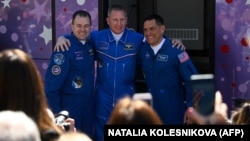
NASA astronaut Frank Rubio (right) and Russian cosmonauts Sergei Prokopyev (center) and Dmitry Petelin pose in front of a bus while leaving a hotel for prelaunch preparations on September 21.
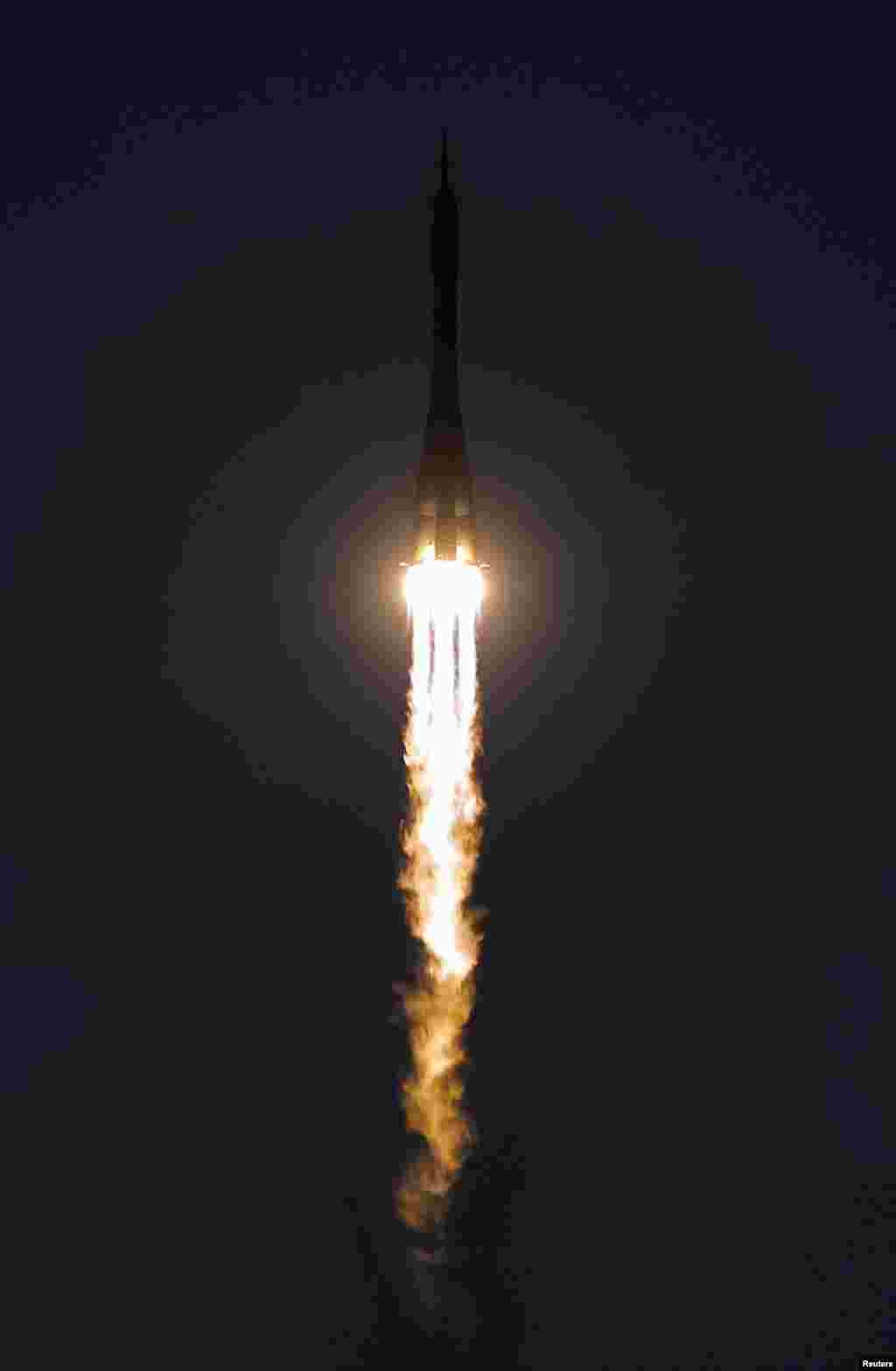
A U.S. astronaut and two Russian cosmonauts have arrived at the International Space Station (ISS) after blasting off on a Russian Soyuz rocket in a rare instance of cooperation between Moscow and Washington.
The Russian space agency Roskosmos and NASA both broadcast the launch live from the Baikonur Cosmodrome in Kazakhstan on September 21.
NASA astronaut Frank Rubio and cosmonaut Sergei Prokopyev and Dmitry Petelin comprise the crew, who will spend six months on the ISS. They join three other Russian cosmonauts, three other U.S. astronauts, and one Italian currently on the orbiting space laboratory.
Amid War In Ukraine, U.S. Astronaut Joins Russian Cosmonauts In Launch To International Space Station
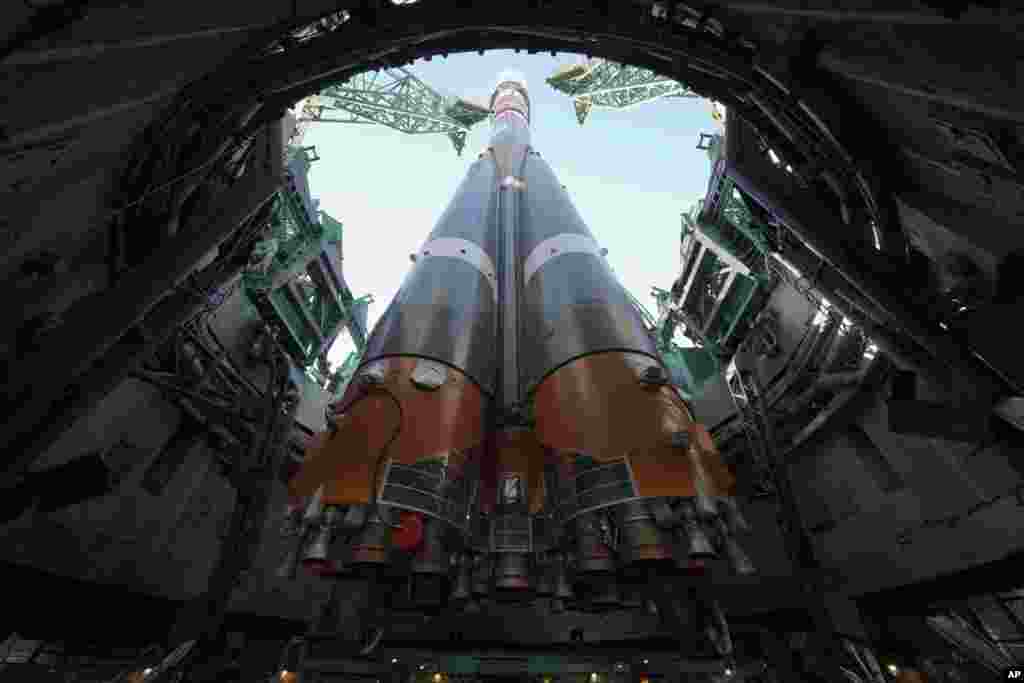
1/10Russia's Soyuz-2.1a booster rocket stands on the launchpad on September 18 ahead of the mission.
In a rare display of joint U.S.-Russian teamwork despite the war in Ukraine, flight crew members from both countries smiled and joined hands ahead of the Soyuz spacecraft's scheduled launch on September 21 from the Baikonur Cosmodrome in Kazakhstan.
Show moreShow less
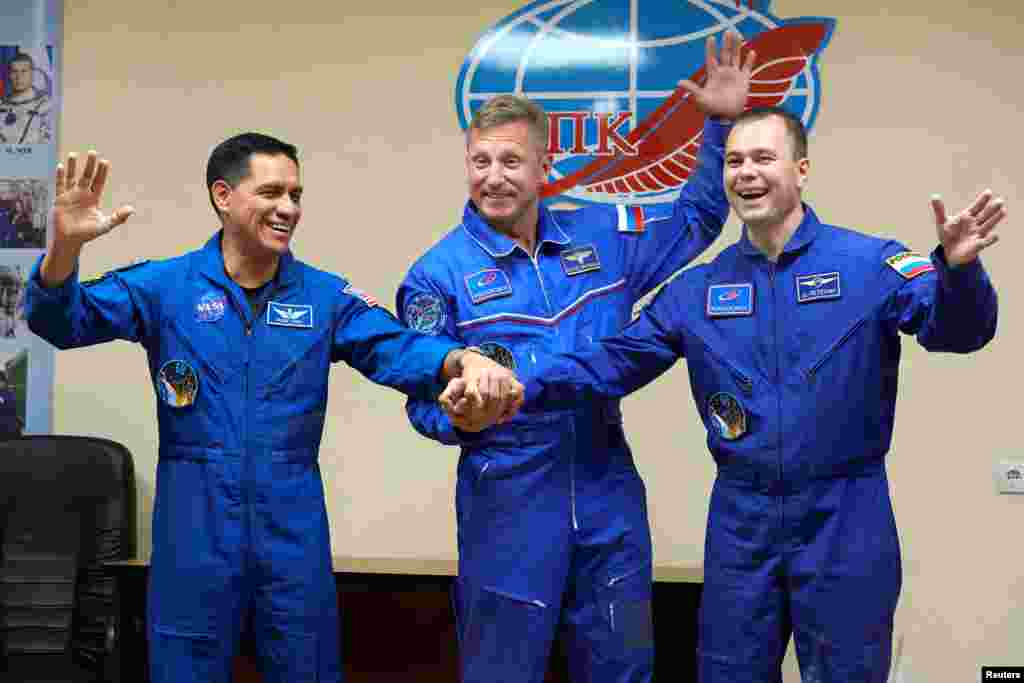
2/10Frank Rubio (left), the first U.S. astronaut to board a Soyuz spacecraft launch since April 2021, joins hands with Russian counterparts Sergei Prokopyev (center) and Dmitry Petelin (right) on September 20. A U.S. Army doctor and veteran pilot, Rubio said he will appreciate the chance to contribute to research on how long-term weightlessness affects the human body during his six months in space.
In a rare display of joint U.S.-Russian teamwork despite the war in Ukraine, flight crew members from both countries smiled and joined hands ahead of the Soyuz spacecraft's scheduled launch on September 21 from the Baikonur Cosmodrome in Kazakhstan.
Show moreShow less
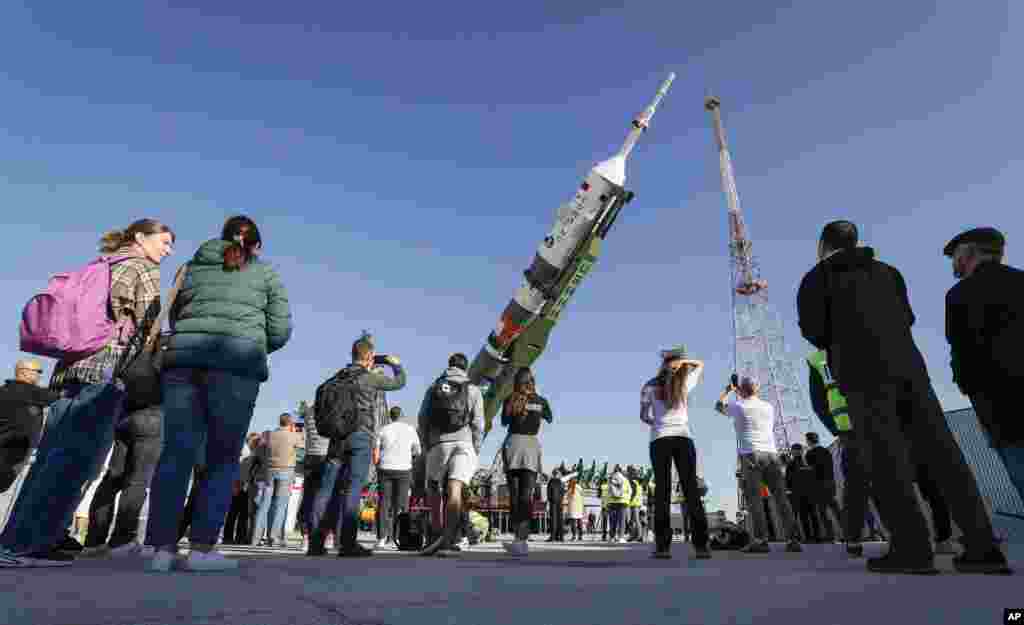
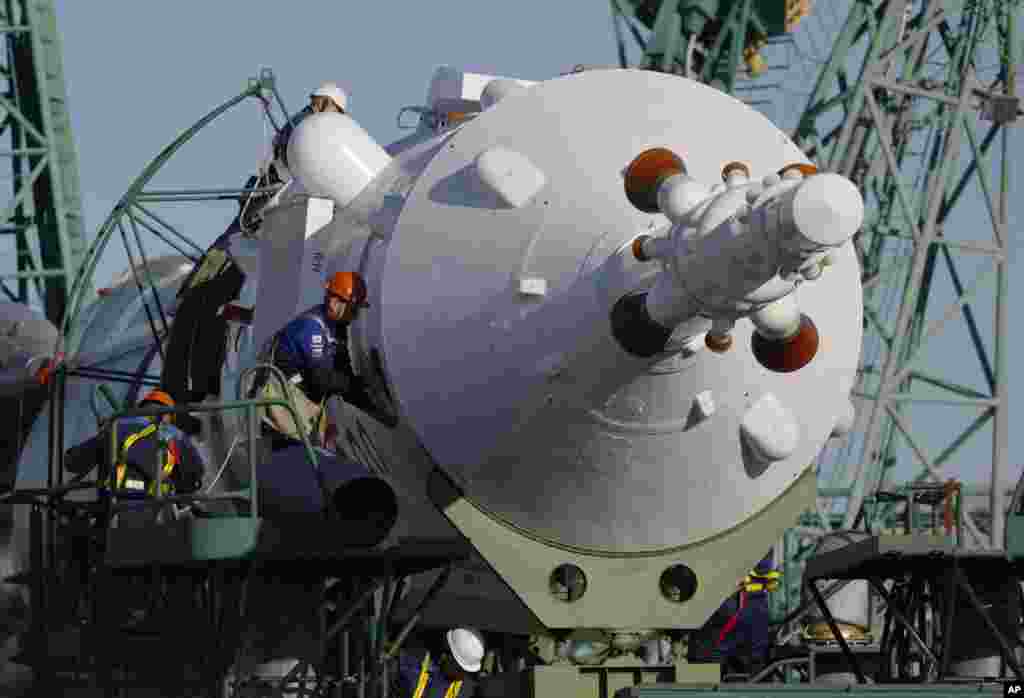
3/10The Soyuz rocket, after being transported to the Baikonur Cosmodrome, is lifted into a vertical position on September 18.
In a rare display of joint U.S.-Russian teamwork despite the war in Ukraine, flight crew members from both countries smiled and joined hands ahead of the Soyuz spacecraft's scheduled launch on September 21 from the Baikonur Cosmodrome in Kazakhstan.
Show moreShow less
4/10The rocket, after being hauled to the Russian-leased Kazakh space complex, is ready for its placement on the launch pad.
In a rare display of joint U.S.-Russian teamwork despite the war in Ukraine, flight crew members from both countries smiled and joined hands ahead of the Soyuz spacecraft's scheduled launch on September 21 from the Baikonur Cosmodrome in Kazakhstan.
Show moreShow less
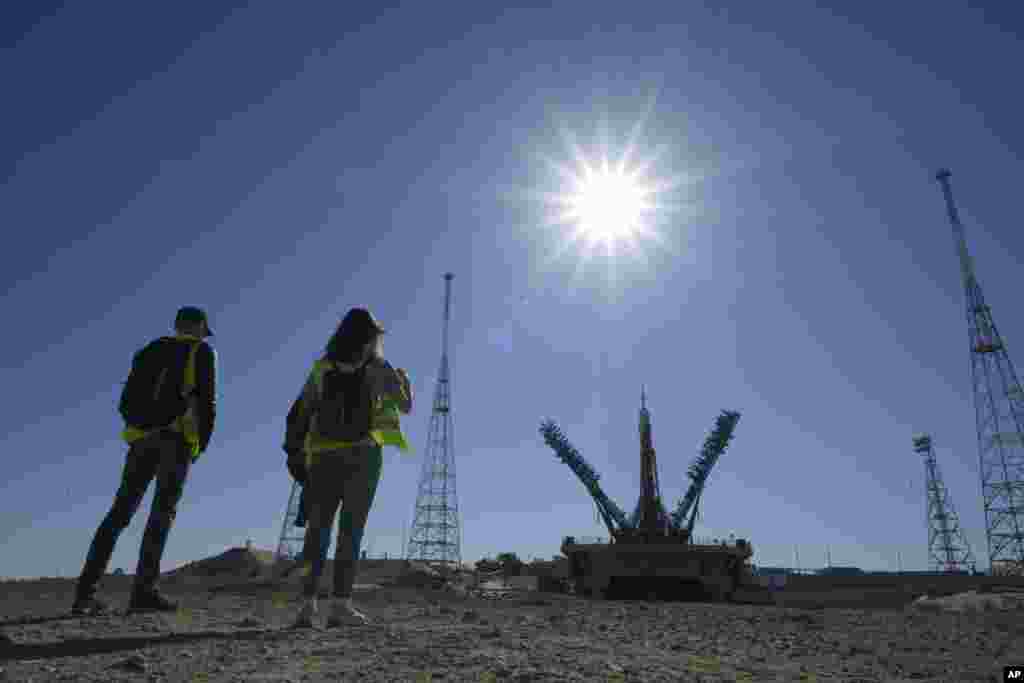
5/10International observers gathered at Baikonur to document the Soyuz launch, part of a spacecraft seat exchange program between NASA and the Russian space program. Previously, NASA had paid for places on the Soyuz but the current arrangement involves no transfer of funds, according to U.S. government sources.
In a rare display of joint U.S.-Russian teamwork despite the war in Ukraine, flight crew members from both countries smiled and joined hands ahead of the Soyuz spacecraft's scheduled launch on September 21 from the Baikonur Cosmodrome in Kazakhstan.
In a rare display of joint U.S.-Russian teamwork despite the war in Ukraine, flight crew members from both countries smiled and joined hands ahead of the Soyuz spacecraft's scheduled launch on September 21 from the Baikonur Cosmodrome in Kazakhstan.
In a rare display of joint U.S.-Russian teamwork despite the war in Ukraine, flight crew members from both countries smiled and joined hands ahead of the Soyuz spacecraft's scheduled launch on September 21 from the Baikonur Cosmodrome in Kazakhstan.
Show moreShow less
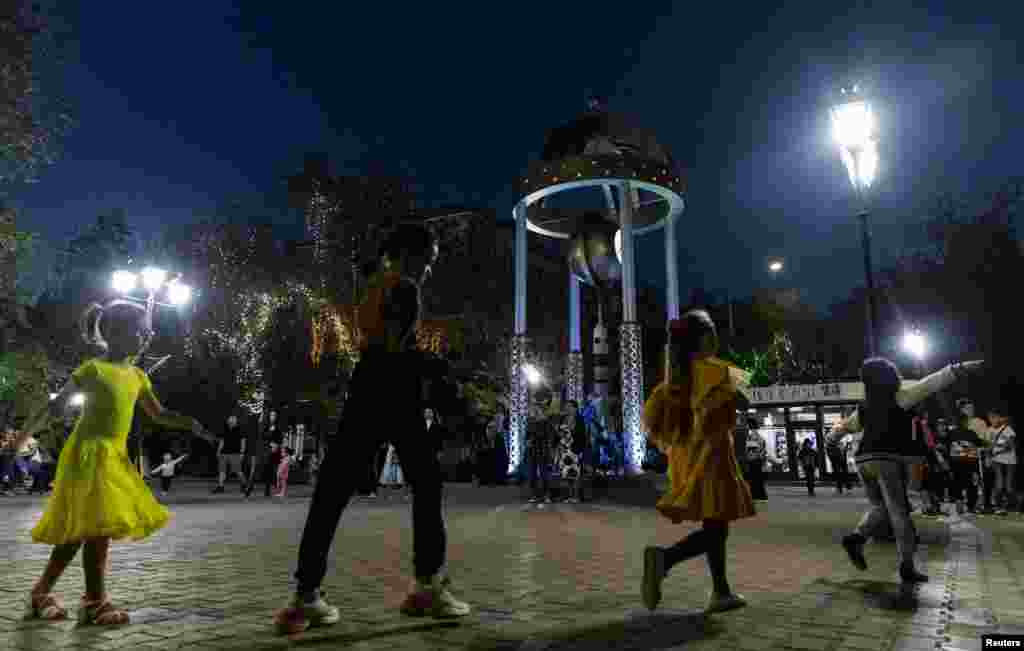
8/10The Baikonur Cosmodrome in Kazakhstan, which dates from 1955 and was built by the Soviet Union, is the world's oldest spaceport for orbital launches. In the town of Baikonur, girls dance around the monument to the Soyuz rocket on September 17.
In a rare display of joint U.S.-Russian teamwork despite the war in Ukraine, flight crew members from both countries smiled and joined hands ahead of the Soyuz spacecraft's scheduled launch on September 21 from the Baikonur Cosmodrome in Kazakhstan.
Show moreShow less
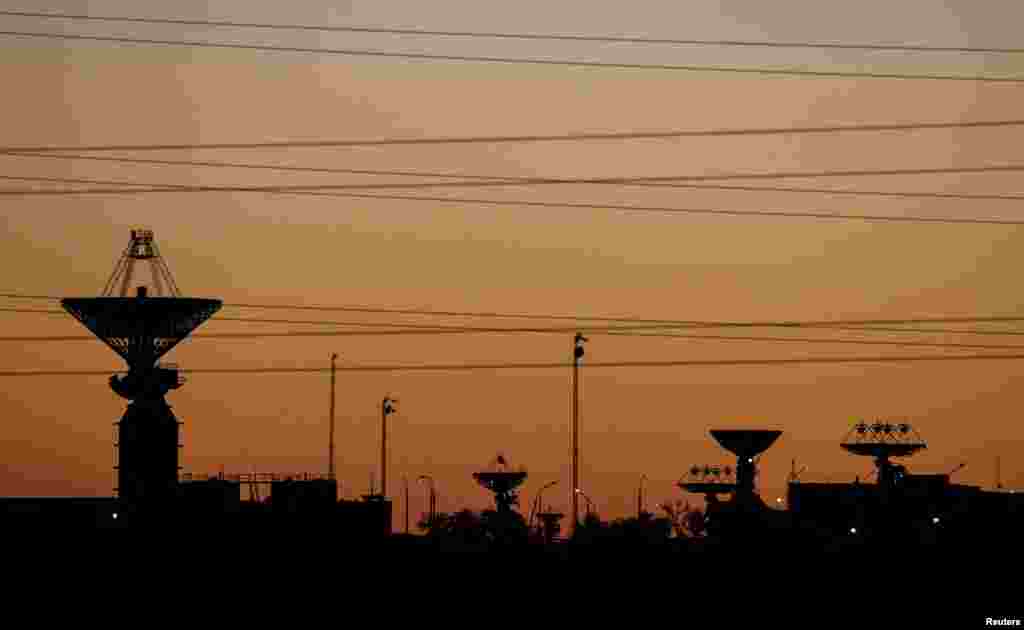
9/10The Baikonur complex was originally built as a test site for intercontinental ballistic missiles.
In a rare display of joint U.S.-Russian teamwork despite the war in Ukraine, flight crew members from both countries smiled and joined hands ahead of the Soyuz spacecraft's scheduled launch on September 21 from the Baikonur Cosmodrome in Kazakhstan.
Show moreShow less
10/10The Soyuz MS-20 spacecraft carrying the International Space Station (ISS) crew blasts off at the Baikonur Cosmodrome on September 21.
In a rare display of joint U.S.-Russian teamwork despite the war in Ukraine, flight crew members from both countries smiled and joined hands ahead of the Soyuz spacecraft's scheduled launch on September 21 from the Baikonur Cosmodrome in Kazakhstan.
Show moreShow less
Previous slide
Next slide
Cosmonauts Oleg Artemyev, Dennis Matveyev, and Sergei Korsakov are scheduled to leave the station next week after their six-month stay, NASA said.
The flight marked the first time a U.S. astronaut traveled to the ISS on a Russian Soyuz rocket since President Vladimir Putin sent troops into Ukraine on February 24.
The United States and other Western countries have hit Moscow with unprecedented sanctions over the invasion, sinking Russia's relations with the West to new lows.
The ISS, a collaboration among the United States, Canada, Japan, the European Space Agency, and Russia, represents one of the last remaining areas of cooperation.
But the new head of the Russian space agency Roskosmos in July said Russia intended to quit the ISS after 2024 in favor of creating its own orbital station.
Speaking a few weeks ahead of the mission, Rubio called the cooperation between NASA and Roskosmos "good and strong" despite the heightened tensions between Moscow and the West.
RFE/RL journalists report the news in 24 languages in 18 countries where a free press is banned by the government or not fully established. We provide what many people cannot get locally: uncensored news, responsible discussion, and open debate.