




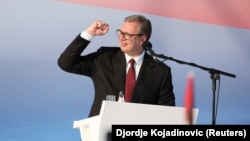
BELGRADE -- Serbian President Aleksandar Vucic said he will resign in the near future, announcing early presidential and parliamentary elections days after a student-led protest in the city of Novi Sad demanded snap general elections.
"These are my last days and weeks as the republic's president. After that, I will resign," Vucic, whose second and last mandate expires in 2027, told thousands of supporters of the ruling Serbian Progressive Party (SNS) at a June 27 rally in Belgrade.
He did not specify the date of his resignation or when the new elections will be held but said he had told the SNS leadership that he planned to "help us win the people's trust for the next four years."

A Balkan nation, Serbia has been witnessing anti-government protests, sparked by the deadly collapse of a railway station roof in Novi Sad, for more than a year and a half.
The tragedy in the northern city of Novi Sad on November 1, 2024, killed 16 people and shocked the public amid reports that corrupt practices had led to shoddy construction at the railway station, a flagship government project carried out by Chinese companies.
At their peak, the protests over the incident, largely attended by students, were the largest in Serbia since the demonstrations that led to the toppling of Yugoslav leader Slobodan Milosevic 25 years ago.
At the June 27 rally, Vucic called for dialogue with the demonstrators but at the same time accused the movement of being influenced by foreign actors, who are allegedly interfering in the country's politics. He provided no evidence for the claims.
Separately, in recent months, Serbia has faced a series of other scandals, including rising nationalist sentiment, controversial construction projects, and uncertainty over its stalled path to the European Union, as some member states are fretting about the country's nonalignment with the bloc's sanctions policy toward Russia.
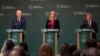
Once an ultranationalist, Vucic has been the country's president since 2017. In the following years, he solidified his grip on power by reinventing himself as a reformer committed to Serbia's drive toward EU membership, while maintaining close ties with Russia and China.
Vucic said that if reelected, the ruling party would continue its path toward the EU but would also continue its "traditional partnership" with Moscow and Beijing, saying that Belgrade would not "abandon friends when times are difficult."
He also said that this time, the ruling party will be part of a broader political coalition called United Serbia, a name that recalls the ruling Russian party, United Russia, President Vladimir Putin's instrument of power across the country.

