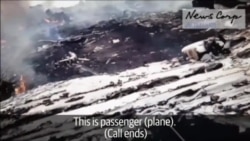
Damning video obtained by Australian media shows pro-Russian rebels in eastern Ukraine sifting through the wreckage of MH17 and finding to their surprise that the aircraft was civilian rather than military.
Part of the 17-minute video, published one year after the Malaysia Airlines plane was shot down over rebel-held territory in eastern Ukraine, appears to include the moment rebels realize a civilian airplane rather than a Ukrainian military jet has crashed.
The video, taken on mobile phones by the rebels themselves, could support initial evidence that the civilian airliner with 298 passangers on board was shot down mistakenly by rebels who believed they had destroyed a Ukrainian Sukhoi air force fighter jet.
News Corp Australia, owner of the newspaper, called the video exclusive footage that was taken by the rebels and smuggled out of Donetsk just this week after months of efforts to obtain it.
The newspaper said that the video shows a rebel unit dispatched from Donetsk to the crash site to hunt for Ukrainian military pilots that the rebels believed had parachuted out after rebels shot their jet fighter down.
News Corp said that in one frame a man wore a clearly visible identification tag from the self-proclaimed Donetsk People's Republic around his neck.
The rebels, holding guns and dressed in army camouflage as they wandered around the still-smoldering wreckage, can be heard in the video talking about looking for the Ukrainian pilots and then expressing surprise and confusion as they discovered the aircraft and its passengers were civilian.
“It’s a civilian!” said the commander. And then, in a revealing admission: “They [headquarters] say the Sukhoi brought down the civilian plane and ours brought down the fighter."
Speaking in both Russian and Ukrainian, the rebels ask how this passenger plane was allowed to fly over Ukraine. An unidentified commander is heard receiving calls from rebel leaders trying to find out what is going on.
Rummaging Through Luggage
The rebels express surprise and dismay as they find dismembered bodies of civilians with luggage tags showing they were from Australia and Malaysia.
Despite their macabre discoveries, the rebels are seen rummaging through luggage and gathering phones, wallets and other items of value.
"It is sickening to watch, and 12 months on from the downing of MH17, it is deeply concerning that this footage has emerged now," said Australian Foreign Minister Julie Bishop on Australian TV.
"It is certainly consistent with the intelligence advice that we received 12 months ago, that Malaysia Airlines flight MH17 had been shot down by a surface-to-air missile," she said.
PHOTO GALLERY: Tragic Scenes At MH17 Crash Site
Scenes Of Tragedy At The MH17 Crash Site
1/17Flowers and candles are placed near wreckage at the crash site of Malaysian Airlines Flight 17 near the village of Grabovo on July 19, 2014, two days after the plane was shot down.
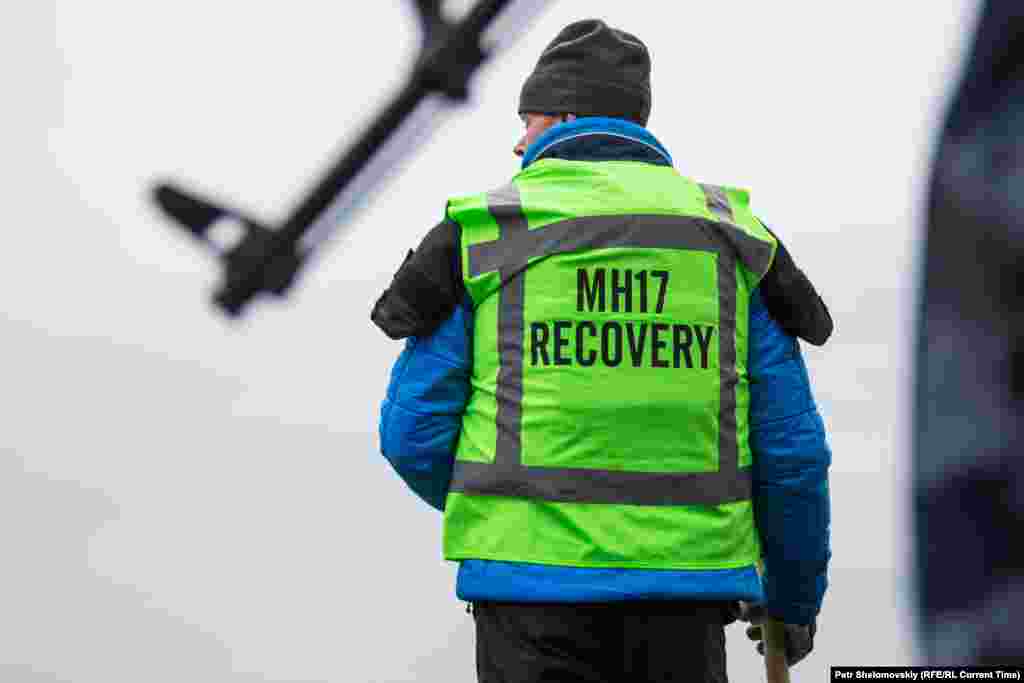
One year ago, on July 17, 2014, Malaysian Airlines flight MH17 was shot down over rebel-held territory in eastern Ukraine, killing all 298 passengers and crew. Photographer Petr Shelomovskiy of RFE/RL's Current Time TV program documented the disaster in its immediate aftermath, and returned to the crash site near the village of Grabovo repeatedly in the months that followed.
Show moreShow less
2/17Shortly after the disaster, rescue workers carry body bags containing the remains of passengers and crew from flight MH17.
One year ago, on July 17, 2014, Malaysian Airlines flight MH17 was shot down over rebel-held territory in eastern Ukraine, killing all 298 passengers and crew. Photographer Petr Shelomovskiy of RFE/RL's Current Time TV program documented the disaster in its immediate aftermath, and returned to the crash site near the village of Grabovo repeatedly in the months that followed.
Show moreShow less
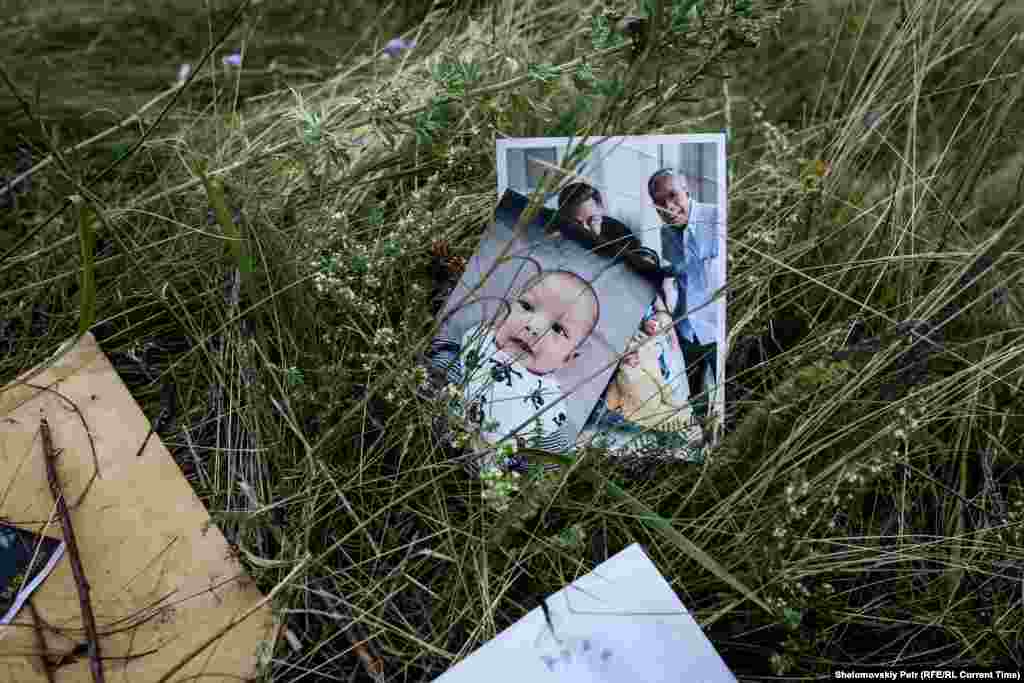
3/17Pictures found among the victims' belongings
One year ago, on July 17, 2014, Malaysian Airlines flight MH17 was shot down over rebel-held territory in eastern Ukraine, killing all 298 passengers and crew. Photographer Petr Shelomovskiy of RFE/RL's Current Time TV program documented the disaster in its immediate aftermath, and returned to the crash site near the village of Grabovo repeatedly in the months that followed.
Show moreShow less
4/17A woman passes by the wreckage of MH17 on July 20, 2014.
One year ago, on July 17, 2014, Malaysian Airlines flight MH17 was shot down over rebel-held territory in eastern Ukraine, killing all 298 passengers and crew. Photographer Petr Shelomovskiy of RFE/RL's Current Time TV program documented the disaster in its immediate aftermath, and returned to the crash site near the village of Grabovo repeatedly in the months that followed.
Show moreShow less
5/17A child's doll is seen among the victims' belongings scattered near the village of Grabovo.
One year ago, on July 17, 2014, Malaysian Airlines flight MH17 was shot down over rebel-held territory in eastern Ukraine, killing all 298 passengers and crew. Photographer Petr Shelomovskiy of RFE/RL's Current Time TV program documented the disaster in its immediate aftermath, and returned to the crash site near the village of Grabovo repeatedly in the months that followed.
Show moreShow less
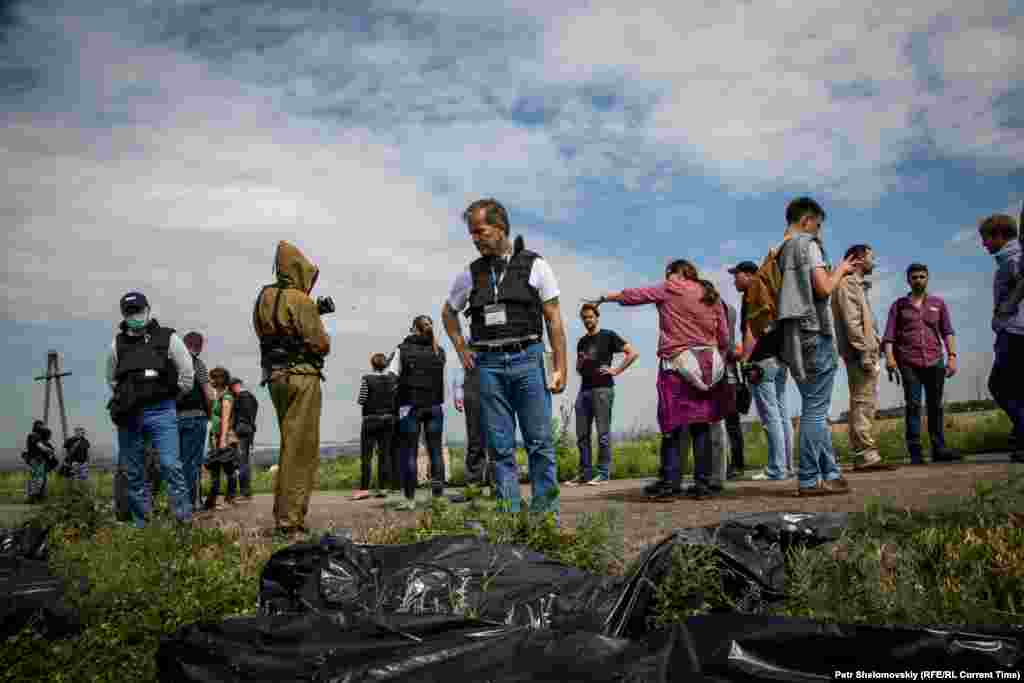
6/17Body bags are lined up near the crash site on July 20, 2014.
One year ago, on July 17, 2014, Malaysian Airlines flight MH17 was shot down over rebel-held territory in eastern Ukraine, killing all 298 passengers and crew. Photographer Petr Shelomovskiy of RFE/RL's Current Time TV program documented the disaster in its immediate aftermath, and returned to the crash site near the village of Grabovo repeatedly in the months that followed.
Show moreShow less
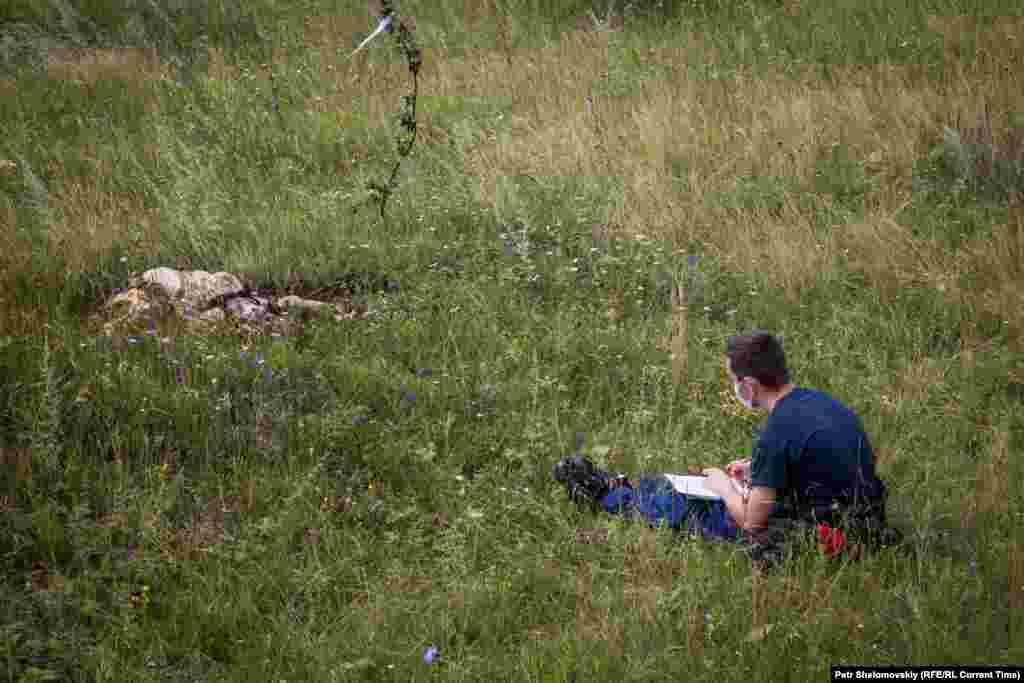
7/17An investigator takes notes during a visit by OSCE monitors.
One year ago, on July 17, 2014, Malaysian Airlines flight MH17 was shot down over rebel-held territory in eastern Ukraine, killing all 298 passengers and crew. Photographer Petr Shelomovskiy of RFE/RL's Current Time TV program documented the disaster in its immediate aftermath, and returned to the crash site near the village of Grabovo repeatedly in the months that followed.
Show moreShow less
8/17An armed separatist fighter surveys the crash site.
One year ago, on July 17, 2014, Malaysian Airlines flight MH17 was shot down over rebel-held territory in eastern Ukraine, killing all 298 passengers and crew. Photographer Petr Shelomovskiy of RFE/RL's Current Time TV program documented the disaster in its immediate aftermath, and returned to the crash site near the village of Grabovo repeatedly in the months that followed.
Show moreShow less
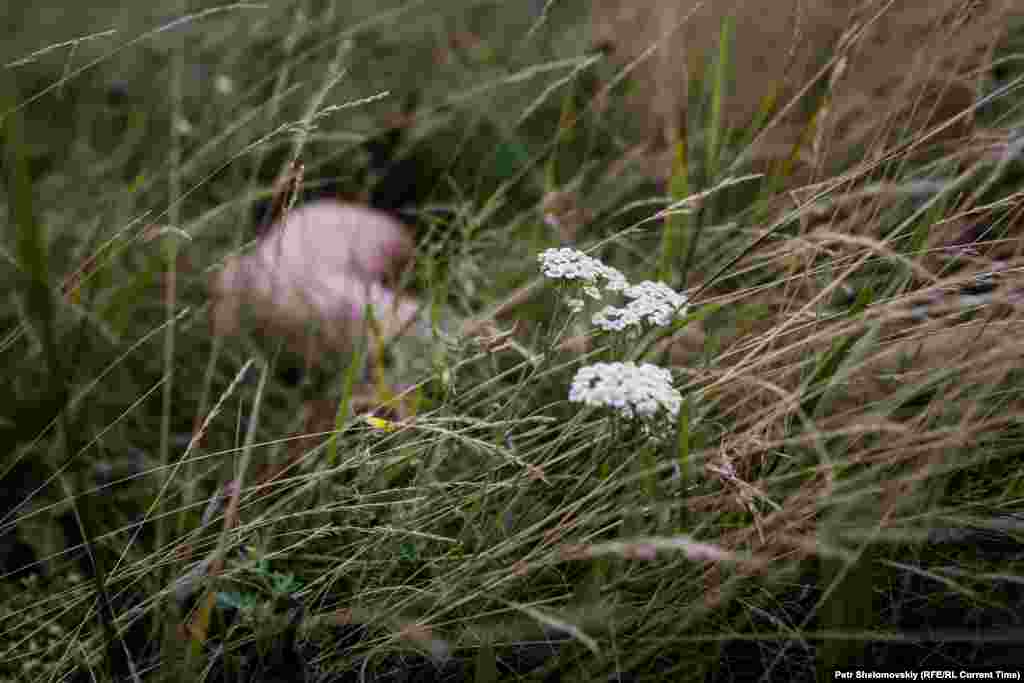
9/17A body part is seen in the field where the fragments of the plane came down.
One year ago, on July 17, 2014, Malaysian Airlines flight MH17 was shot down over rebel-held territory in eastern Ukraine, killing all 298 passengers and crew. Photographer Petr Shelomovskiy of RFE/RL's Current Time TV program documented the disaster in its immediate aftermath, and returned to the crash site near the village of Grabovo repeatedly in the months that followed.
Show moreShow less
10/17Emergency workers carry a body bag.
One year ago, on July 17, 2014, Malaysian Airlines flight MH17 was shot down over rebel-held territory in eastern Ukraine, killing all 298 passengers and crew. Photographer Petr Shelomovskiy of RFE/RL's Current Time TV program documented the disaster in its immediate aftermath, and returned to the crash site near the village of Grabovo repeatedly in the months that followed.
Show moreShow less
11/17Residents of the village of Grabovo stand near the crash site.
One year ago, on July 17, 2014, Malaysian Airlines flight MH17 was shot down over rebel-held territory in eastern Ukraine, killing all 298 passengers and crew. Photographer Petr Shelomovskiy of RFE/RL's Current Time TV program documented the disaster in its immediate aftermath, and returned to the crash site near the village of Grabovo repeatedly in the months that followed.
Show moreShow less
12/17OSCE monitors visit the crash site.
One year ago, on July 17, 2014, Malaysian Airlines flight MH17 was shot down over rebel-held territory in eastern Ukraine, killing all 298 passengers and crew. Photographer Petr Shelomovskiy of RFE/RL's Current Time TV program documented the disaster in its immediate aftermath, and returned to the crash site near the village of Grabovo repeatedly in the months that followed.
Show moreShow less
13/17A section of the Malaysian Airlines passenger plane
One year ago, on July 17, 2014, Malaysian Airlines flight MH17 was shot down over rebel-held territory in eastern Ukraine, killing all 298 passengers and crew. Photographer Petr Shelomovskiy of RFE/RL's Current Time TV program documented the disaster in its immediate aftermath, and returned to the crash site near the village of Grabovo repeatedly in the months that followed.
Show moreShow less
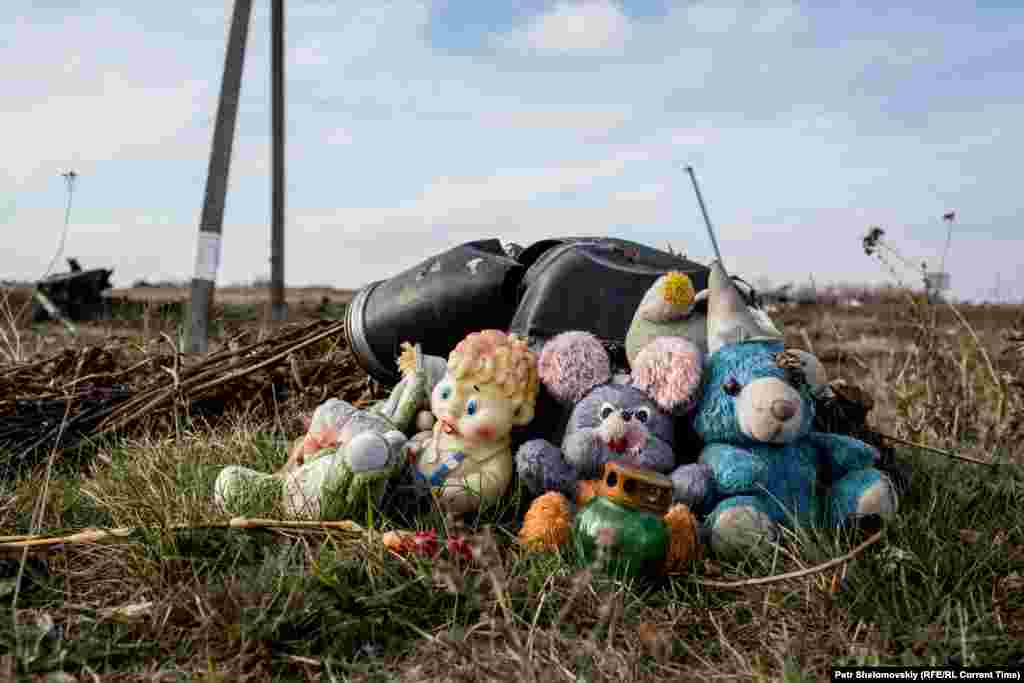
14/17Toys left by local residents in memory of dozens of children who were among the victims.
One year ago, on July 17, 2014, Malaysian Airlines flight MH17 was shot down over rebel-held territory in eastern Ukraine, killing all 298 passengers and crew. Photographer Petr Shelomovskiy of RFE/RL's Current Time TV program documented the disaster in its immediate aftermath, and returned to the crash site near the village of Grabovo repeatedly in the months that followed.
Show moreShow less
15/17Dutch investigators inspect the wreckage. The flight departed from Amsterdam with mostly Dutch passengers on board.
One year ago, on July 17, 2014, Malaysian Airlines flight MH17 was shot down over rebel-held territory in eastern Ukraine, killing all 298 passengers and crew. Photographer Petr Shelomovskiy of RFE/RL's Current Time TV program documented the disaster in its immediate aftermath, and returned to the crash site near the village of Grabovo repeatedly in the months that followed.
Show moreShow less
16/17The charred passport of Mabel Anthonysamy Soosai from Malaysia is seen among the debris on April 1, 2015.
One year ago, on July 17, 2014, Malaysian Airlines flight MH17 was shot down over rebel-held territory in eastern Ukraine, killing all 298 passengers and crew. Photographer Petr Shelomovskiy of RFE/RL's Current Time TV program documented the disaster in its immediate aftermath, and returned to the crash site near the village of Grabovo repeatedly in the months that followed.
Show moreShow less
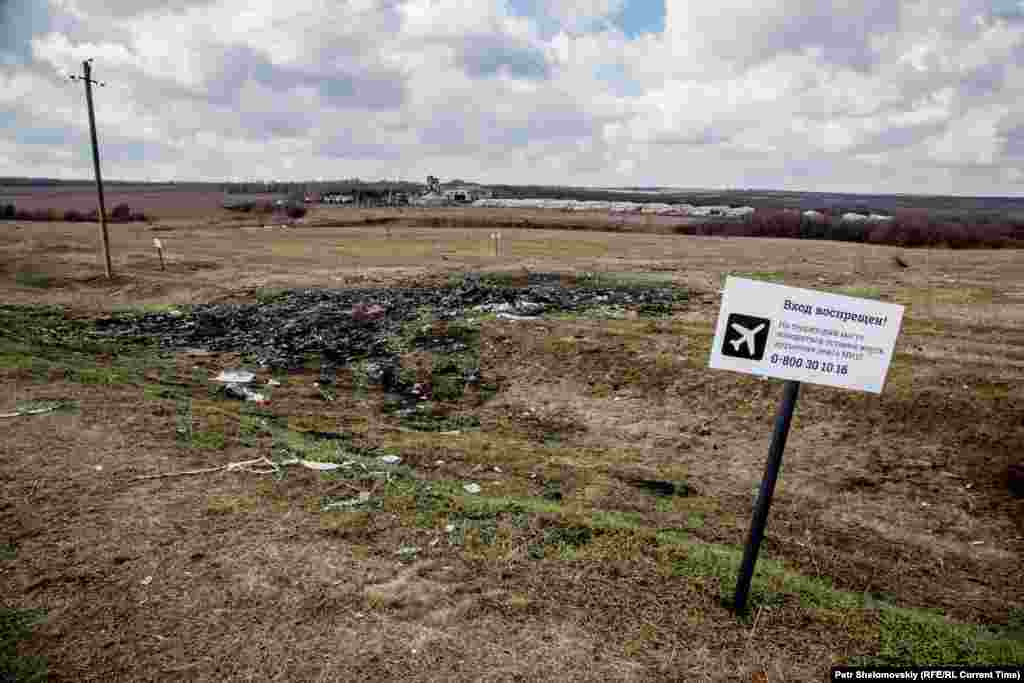
17/17A sign forbidding access to the crash site, April 4, 2015
One year ago, on July 17, 2014, Malaysian Airlines flight MH17 was shot down over rebel-held territory in eastern Ukraine, killing all 298 passengers and crew. Photographer Petr Shelomovskiy of RFE/RL's Current Time TV program documented the disaster in its immediate aftermath, and returned to the crash site near the village of Grabovo repeatedly in the months that followed.
Show moreShow less
Previous slide
Next slide
Australian Prime Minister Tony Abbott said the images demonstrate that the downing was an atrocity and the rebels were "deliberately shooting out of the sky what they knew was a large aircraft."
Abbott said he had no doubt that the aircraft was shot down with a Russian-supplied surface-to-air missile.
“Rebels don’t get hold of this kind of weaponry by accident. I mean, this was obviously very sophisticated weaponry,” he told ABC TV.
“We are confident that it was weaponry that came across the border from Russia, fired, and then shortly thereafter, once it was realized what had happened, went back into Russia.”
Most of the plane's passengers were from the Netherlands, but it also was carrying 38 Australians and dozens of Malaysians. All passengers and crew were killed in the crash.
The plane was shot down during a bout of heavy fighting last year between Ukrainian forces and pro-Russian separatists, and followed other downings in previous weeks claimed by the rebels of Ukrainian military aircraft.
Kyiv and the West have long maintained that the rebels shot the plane down using a BUK surface-to-air missile supplied by Russia. But Moscow denies involvement and instead accuses Ukraine's air force of shooting the plane down.
News Corp. said that local people around the crash site were instructed to say they saw the plane being shot down by a fighter jet.
A criminal probe by a joint investigation team consisting of Australian, Belgian, Dutch, Malaysian, and Ukrainian detectives is currently underway.
With reporting by dpa, AFP, the Australian, and Sydney Daily Telegraph
RFE/RL journalists report the news in 24 languages in 18 countries where a free press is banned by the government or not fully established. We provide what many people cannot get locally: uncensored news, responsible discussion, and open debate.