



Lending help
One group helping the Kurdish peshmerga forces fight IS militants is the Syrian Kurdish militia known as the People's Protection Units, or YPG.
Mutlu Civiroglu, an expert on Kurdish affairs, wrote a story for Vice News about how the YPG is helping their compatriots in Iraq, which have recently suffered defeats to the IS:
Though originally linked to the Democratic Union Party (PYD), the most powerful Kurdish political party in Syria, the YPG is now seen as the armed force of all of Syrian Kurdistan. The PYD is also affiliated with the Kurdistan Worker's Party, or PKK.
The YPG has previously not really been active in the battle against the IS because they were prevented from entering by the dominant Iraqi Kurdish party, the Kurdistan Democratic Party (KDP). Following the recent losses by its armed forces, the peshmerga, however, the YPG and other PKK forces have entered Iraq to fill the vacuum and fight the IS.
And they have proven to be pretty damn good at it. As of now, there are currently hundreds of YPG fighters in Rabia, Sinjar, and Kirkuk actively fighting against the Islamic State on several fronts in Iraq.
You can read the full story here.
More, better arms needed
Masrour Barzain, the intelligence and security chief of the Kurdistan Regional Government (KRG) tells the BBC that the arms they have received from the West are "nothing as effective as we are asking for."
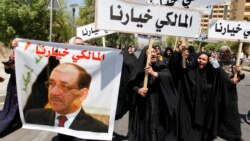
Sistani played key role in Maliki snub
In an op-ed published on Al Jazeera, Hayder al-Khoei, an Iraq analyst at Chatham House, says that Sistani "played a crucial factor in minimising Maliki's chances of remaining in power for the third term."
Sistani did that, Khoei says, by making public a handwritten letter responding to a query from the Islamic Dawa Party - which Maliki heads - on the religious establishment's views on the current crisis.
Khoei:
Sistani's letter made it clear that in order for Iraq to be saved, a new prime minister had to be chosen who has broad support on a national level and who could work with the political leaders of different Iraqi communities. In other words, Sistani was suggesting to the Dawa Party that the solution would be to find someone other than Maliki.
The letter was a game changer because it forced Maliki's own party to find a replacement candidate for the premiership. It was made public in response to Maliki's claim that unconstitutional attempts to unseat him are part of a regional conspiracy. Yesterday, Maliki's own Dawa Party officially endorsed Abadi as the prime minister designate.
Iraq's leading Shi'ite religious figure, Ayatollah Ali al-Sistani, delivering a sermon.
Masrour Barzani interview
BBC Hard Talk interview with Masrour Barzani, the son of Masoud Barzani, president of the Kurdistan Regional Government (KRG). Masrour is a member of the Kurdistan Democratic Party leadership and the director of intelligence and security in the automous region.
Peshmerga's weaknesses
One of the most troubling surprises of the past week was the ease with which IS militants defeated Peshmerga forces, seizing several towns in northern Iraq, the Mosul Dam, and even threatening to advance on Irbil, the capital of the Kurdistan autonomous region.
Kenneth M. Pollack from Brookings looks at the weaknesses of the Peshmerga. Pollock puts it down to four factors:
First, the seemingly invincible Peshmerga forces of the past have lost a great many of the combat veterans forged during decades of war.
Second, they have not been replaced by the same kinds of recruits.
Third, the Peshmerga have become much more of a garrison/checkpoint army than they were in the past.
Finally, there is the matter of equipment. Peshmerga forces are primarily a light infantry force with a relatively small number of tanks, artillery pieces, armored vehicles, and other heavy weapons.
You can read the full report here.