



Good morning. We'll start the live blog today with this update from our news desk:
Russia has blocked a UN Security Council statement that would have criticized a pro-Russian Ukrainian separatist leader and condemned a recent increase in violence in eastern Ukraine.
The office of UN Secretary General Ban Ki-moon issued a statement on January 24 strongly condemning a rocket attack on the Ukrainian port city of Mariupol earlier that day that left at least 30 people dead and nearly 100 wounded.
Ban's statement also denounced the January 23 "unilateral withdrawal from the cease-fire by rebel leadership, and particularly their provocative statements about claiming further territory."
Britain proposed a Security Council statement that echoed Ban's condemnation and called for an investigation into the attacks on Mariupol but Russia rejected it.
The statement specifically named Aleksandr Zakharchenko, the head of the self-proclaimed Donetsk People's Republic in eastern Ukraine.
Since January 23, Zakharchenko has announced his group would no longer negotiate a truce, was instead launching an offensive and later praised the attack on Mariupol as the "best possible monument to all our dead."
(Reuters, TASS)
We are now closing the Live Blog for today. Until we resume tomorrow, you can keep up with our ongoing Ukraine coverage here.
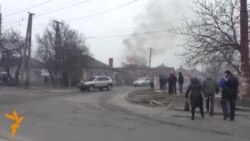
Here's a video from RFE/RL's Ukrainian Service showing the aftermath of the rocket attacks on Mariupol today:

RFE/RL's Cark Schreck has been looking at why Mariupol is such a stratgeic and symbolic target for the rebels:
Should the separatists manage to push through to Mariupol and take control of the city, its port could provide a critical logistical lifeline for the rebels and Russian fighters battling Ukrainian forces, Melnyk added.
The Mariupol Sea Port handled 13 million metric tons of cargo -- including steel -- last year, making it Ukraine's fifth largest port in terms of freight traffic in 2014 and by far the busiest commercial marine hub on the Azov Sea, according to official data from the state-owned port.
"Should the rebels capture it, this would essentially deprive Ukraine of the Azov coast. Not in a geographical sense, but in an economic sense," said Aleksandr Khramchikhin, deputy director of the Moscow-based Institute of Political and Military Analysis in Moscow.
Read the entire article here