



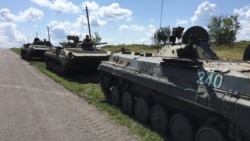

More from our news desk on the possible truce talks today:
Ukraine hoped to hold truce talks on January 31 with pro-Russian separatists as the death toll from the figthing between government troops and pro-Russian rebels continued to mount.
The urgent new round of negotiations in Minsk that had been agreed for January 30 was postponed due to disagreements over who should represent the rebel camp.
Kyiv said it expected to send its envoy, former Ukrainian president Leonid Kuchma, to Minsk on January 31 for the talks -- formally backed by the Kremlin -- aimed at reinforcing a shaky September truce reached also in Minsk.
"We expect the signing of a document on further developing the Minsk agreements of September 15 and of the peace plans of Presidents [Petro] Poroshenko [of Ukraine] and [Vladimir] Putin [of Russia]," Kuchma told the Interfax Ukraine news agency.
But Kuchma insisted the leaders of the self-proclaimed Donetsk and Luhansk people's republics, Aleksandr Zakharchenko and Igor Plotnytsky, participate in negotiations, rather than their representatives, in order for some decisions to be made.
Plans for the negotiations in the Belarussian capital Minsk were announced on January 29, raising hopes of dialogue after the collapse of a September truce in the nine-month war that has killed more than 5,100 people, according to the United Nations.
The insurgents on January 23 pulled out of peace talks and announced the start of an offensive designed to expand their control over a much broader swathe of the industrial southeast.
They also said January 30 they would not halt their actions in restive areas if the talks failed.
"Should the negotiations collapse... the Donetsk and Luhansk People's Republics reserve the right to pursue their offensive until the entire Donetsk and Luhansk regions are freed" of Ukrainian troops, the rebel regions' main negotiators said in a joint statement.
The statement said the rebels were prepared to withdraw heavy weaponry from the frontline if the Ukrainian army did the same.
But they also said that the new border outlining rebel-held territory should run along the current front, giving them an area around 500 square kilometers larger than lines agreed in September.
The latest violence has alarmed Ukraine's Western allies, with U.S. Secretary of State John Kerry announcing plans to visiti Kyiv on February 5 to hold talks with President Poroshenko and Prime Minister Arseniy Yatsenyuk.
There had been speculation Kerry might travel to Moscow during the trip.
State Department spokeswoman Jen Psaki said no such stop was planned but that Kerry would meet with Russian Foreign Minister Sergei Lavrov while in Germany, on the sidelines of the Munich Security Conference.
Meanwhile on January 30 Poroshenko reaffirmed that an "immediate cease-fire" was necessary in a telephone conversation with German Chancellor Angela Merkel.
On January 31, Ukrainian officials said 15 troops and three civilians had been killed over the past 24 hours.
"In the last day, 15 soldiers died and 30 more were wounded. That is the figure for the whole frontline," Defense Minister Stepan Poltorak told journalists.
Fighting is also raging around the strategic Ukrainian-controlled transport hub of Debaltseve, some 50 kilometers northeast of the rebel stronghold of Donetsk.
Two civilians were killed in Debaltseve overnight amid intense fighting between the Ukrainian army and the pro-Russian rebels for the control of the 25,000 people, according to Donetsk regional police chief Vyacheslav Abroskin's Facebook account. Abroskin also said a civilian was killed west of the city of Donetsk.
Rebel leader Zakharchenko has told Russian state television that Ukrainian troops in the town were "surrounded" and unable to receive supplies or send their wounded for treatment in regional hospitals.
Western governments and Ukraine accuse Russia of arming and training the rebels, who are deploying sophisticated and heavy weaponry, including tanks and multiple rocket launchers. Russia denies aiding the rebels who claim to get all their weaponry from captured Ukrainian supplies.
The 28-nation EU on January 29 extended through September a first wave of targeted sanctions it had imposed on Moscow and Crimean leaders in the wake of Russia's March seizure of the Black Sea peninsula from Ukraine.
EU foreign ministers also agreed to start work on further "appropriate action" if Moscow and the rebels continued breaching the original terms of the collapsed September truce.
The latest from our news desk on the talks that may or may not take place in Minsk today:
Ukraine hopes to hold truce talks on January 31 with pro-Russian separatists despite the rebels' vow to push their latest offensive in eastern Ukraine if the negotiations should fail.
The urgent new round of negotiations in Minsk that had been agreed for January 30 was postponed due to disagreements over who should represent the rebel camp.
Kyiv said it expected to send its envoy, former Ukrainian President Leonid Kuchma, to Minsk on January 31 for the talks -- formally backed by the Kremlin -- aimed at reinforcing a shaky September truce which was reached also in Minsk.
Kuchma told the Interfax-Ukraine news agency, "We expect to sign a document that reinforces the Minsk Memorandum [of September] and the peace plan of presidents [Petro] Poroshenko and [Vladimir] Putin."
On January 30, Ukrainian President Petro Poroshenko reaffirmed that an "immediate ceasefire" was necessary in a telephone conversation with German Chancellor Angela Merkel.
Meanwhile, the U.S. State Department announced that Secretary of State John Kerry will travel to Ukraine February 5 to show U.S. support for the government.
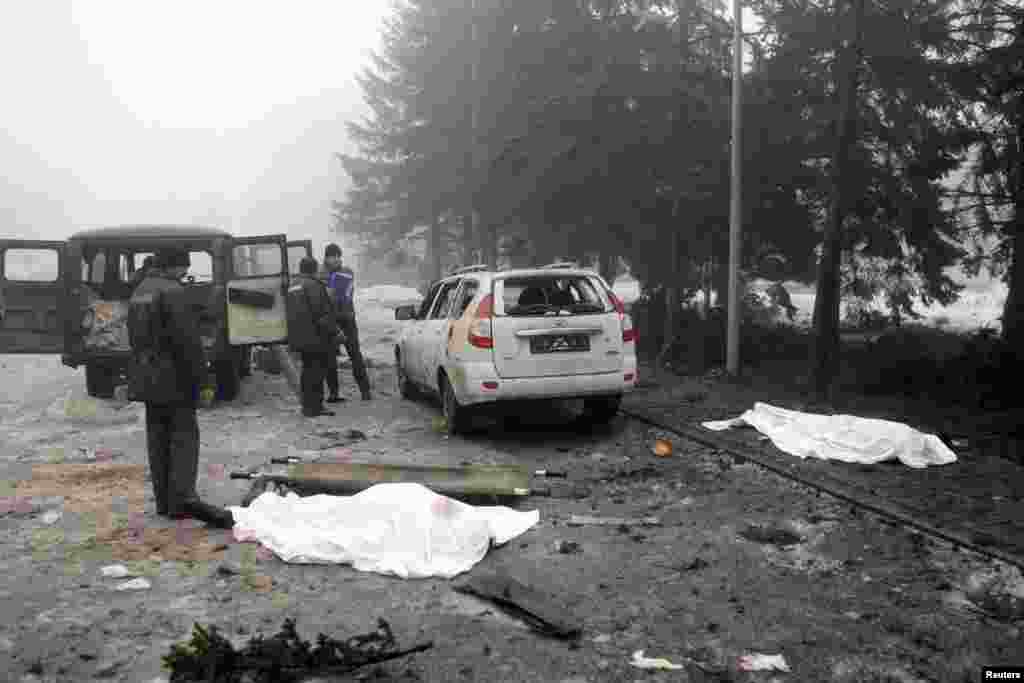
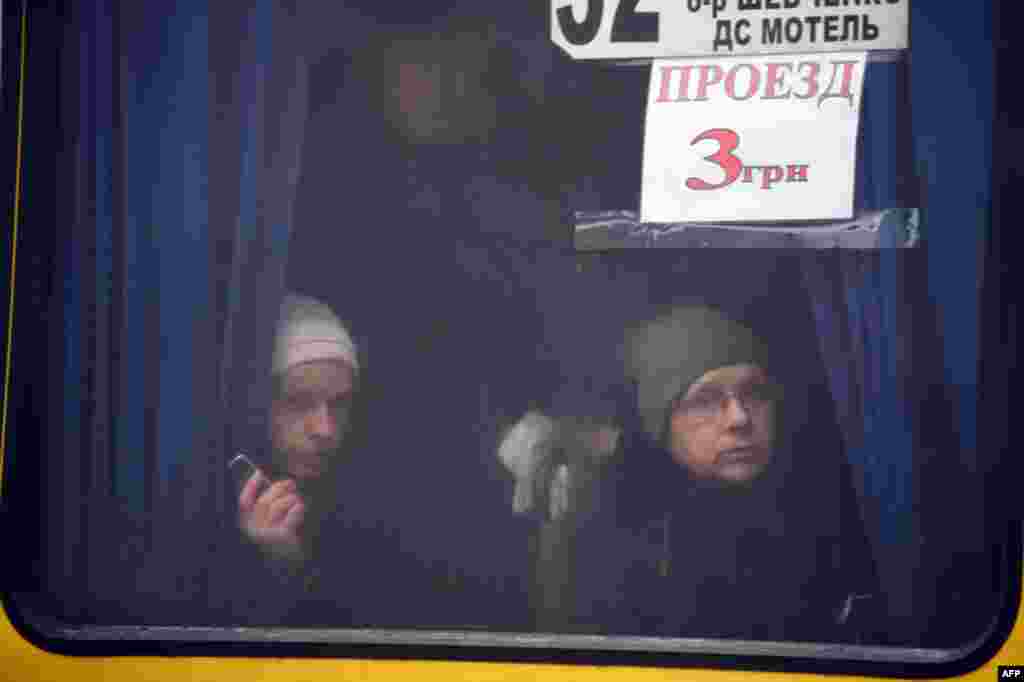
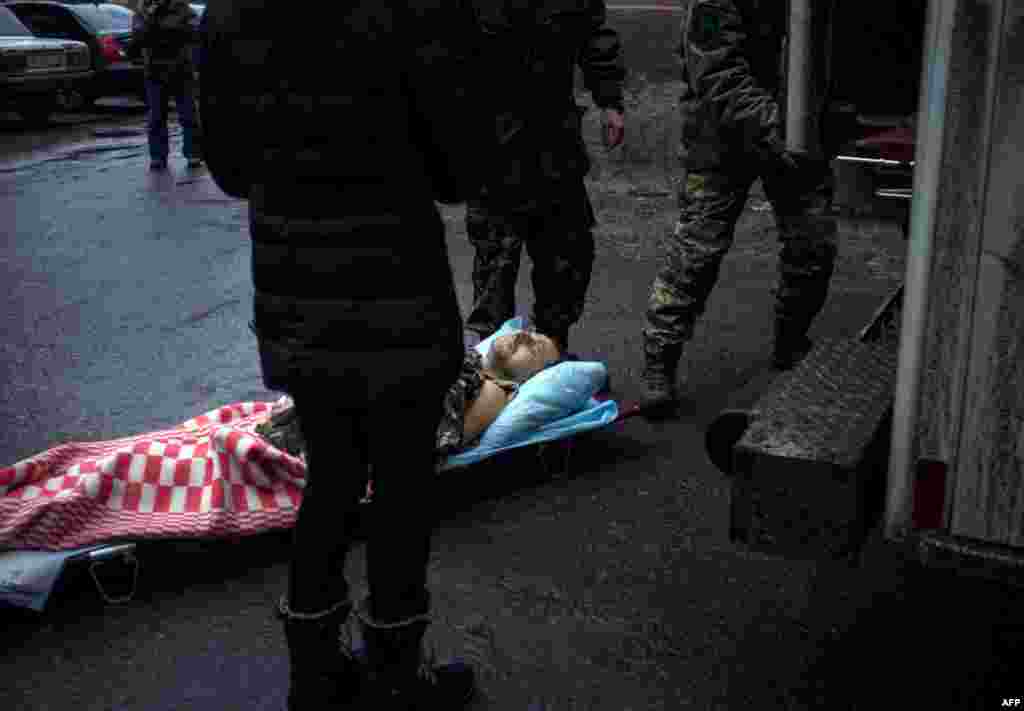
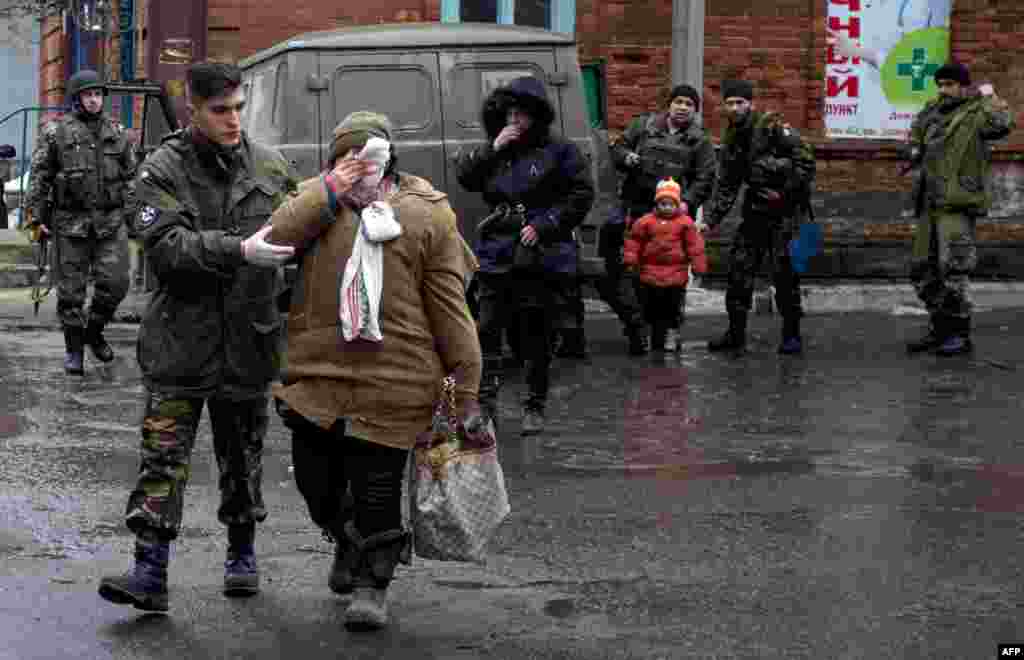
We put together these photos yesterday evening showing the civilian suffering in Donetsk as shells rain down.
Civilians Suffer, Again, As Shells Rain Down On Donetsk






Here's more on Savchenko from our news desk:
A lawyer for Nadia Savchenko, a Ukrainian military pilot who has been on a hunger strike in a Russian jail since mid-December, says a new charge has been filed against his client.
Savchenko's lawyer Ilya Novikov wrote on Facebook late on January 29 that she had been charged with illegal border crossing.
Savchenko was captured by pro-Russian separatists in Ukraine in June and transferred to Russian custody in July.
She is charged with involvement in the deaths of two Russian journalists killed in the conflict in eastern Ukraine, but says Russia has no right to prosecute her.
Also on January 29, Savchenko was transferred to a hospital ward at Moscow's notorious Matrosskaya Tishina detention center because of what Novikov cited medical personnel as saying was abrupt weight loss.
On Facebook, Novikov later posted a letter Savchenko addressed to a jailed Russian activist, Mark Galperin, in which she wrote that she feels "okay and will fight on."
She wrote that "Ukraine and Russia together will defeat the evil and shameful government."
Russian officials have rejected calls by Kyiv and the West for her release.
Good morning.
A few news items from overnight:
-- U.S. Secretary of State John Kerry will travel to Ukraine next week to show U.S. support for the government as fighting spikes with pro-Russian separatists in the east of the country.
-- A lawyer for Nadia Savchenko, a Ukrainian military pilot who has been on a hunger strike in a Russian jail since mid-December, says a new charge has been filed against his client.
Barring any major developments, that ends the live blogging for today.
Our D.C. correspondent Carl Schreck flagged this. Are Russian rebels standing up the Contact Group?
The Special Representative of the CiO to the Trilateral Contact Group, Ambassador Heidi Tagliavini, wishes to emphasize that her representatives have been waiting in Minsk since yesterday morning in order to prepare for a meeting of the Trilateral Contact Group with representatives from certain areas of Donetsk and Luhansk.