

This just in from our correspondent in Brussels, Rikard Jozwiak:
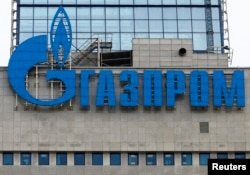
EU Energy Commissioner Maros Sefcovic says the EU Commission will present the results of its investigation into Gazprom in a "matter of weeks."
The EU Commission launched an investigation into the state-owned energy giant in 2012 on suspicion that it was abusing its market dominance in several eastern EU member states.
Brussels is especially looking into whether Gazprom has hindered the free flow of natural gas across Europe and whether it has imposed excessively high prices by linking the price of its gas to oil.
The decision to present the results of the investigation and to announce possible penalties lies with Sefocovic's colleague, the EU competition commissioner Margrethe Vestager.
The probe was initially supposed to be presented last year but has proceeded slowly since the Ukraine conflict flared up.
Sefcovic added that he will propose that, in future, the EU Commission take part in negotiations between EU members and suppliers such as Gazprom.
Meanwhile in Russia...
Russia's main supermarket chains are calling for a freeze on the prices of several staple foods, which have risen sharply in recent months as the economy struggles under the weight of low oil prices and Western sanctions.
According to a February 25 article in the Russian newspaper Vedomosti, the Association of Retail Companies has appealed to the Federal Antimonopoly Service (FAC) to impose a two-month freeze on prices for goods such as meat, fish, milk and dairy products, sugar, salt, cooking oil, and vegetables.
A freeze would bring back memories of the Soviet era, when the communist government set prices.
The retail association includes companies Magnit, X5 Retail Group, Auchan, Dixie, Metro Cash & Carry, and Lenta.
Its deputy director, Andrei Kashevarov, said he has no doubt the FAC would agree to implement the price freeze.
Prices of many goods soared at the end of last year as the ruble currency declined sharply and the effects of plummeting prices for oil, one of Russia's major exports, and sanctions imposed by the European Union and the United States over Moscow's interference in Ukraine hit the country's economy.
(Vedomosti, TASS, Interfax)
The commander of the U.S. European Command, General Philip Mark Breedlove has issued his annual statement or "posture" on the state of his sphere of responsibility. Our news desk will be issuing a report on this statement shortly, but here is an excerpt worth perusing until then. (You can statement the report in full here)
For almost two decades, the United States and Europe have engaged with Russia as a
partner, seeking to build relationships militarily, economically, and culturally. In 1994, Russia became a Partnership for Peace member with NATO. That same year, Russia, the United States, and the United Kingdom signed the Budapest Memorandum, reaffirming commitments made by all parties under the Helsinki Final Act and the UN Charter to “respect the independence and sovereignty and the existing borders of Ukraine.”
Under the 1997 Founding Act, NATO made a political commitment that, “in the current and foreseeable security environment,” the Alliance would carry out its collective defense and other missions without “additional permanent stationing of substantial combat forces.” In 2009, the United States sought to “reset” its relationship with Russia, which had been damaged by the 2008 Russian invasion of the Republicof Georgia. During this period, the Department of Defense made security and force posture determinations significantly reducing European force structure based on the assumption that Russia was a partner.
Despite these and many other U.S. and European overtures of partnership, Russia has
continued to view its own security from a zero-sum point of view. Since the beginning of 2014, President Putin’s Russia has abandoned all pretense of participating in a collaborative security process with its neighbors and the international community. Instead, Russia has employed “hybrid warfare” (which includes regular, irregular, and cyber forms of war as well as political and economic intimidations) to illegally seize Crimea, foment separatist fever in several sovereign nations, and maintain frozen conflicts within its so-called “sphere of influence” or “near abroad.” Undergirding all of these direct approaches is the pervasive presence of the Russia propaganda machine, which inserts itself into media outlets globally and attempts to exploit potential sympathetic or aggrieved populations.
Russia uses energy as a tool of coercion. Many former-Soviet bloc and Eastern and
Central European states have long been concerned about Russia’s intentions in Europe and they consider the Ukraine crisis the latest validation of their concerns. Recent Ukrainian and Russian energy negotiations show how Russian coercion threatens broader European cooperation as individual countries must weigh their own security and economic concerns. Russia’s coercion using energy has grown along with Russia’s threats and outright use of force.
[...]
Russia views Ukraine as part of its sphere of influence, regardless of the views of the Ukrainian people. While Russia’s aggressive actions in Ukraine are the most current manifestation in a pattern of continuing behavior to coerce its neighbors in Central and Eastern Europe. Beyond its actions in Georgia and Ukraine, other examples of this pattern are abandoning the Conventional Armed Forces in Europe Treaties; the ZAPAD 2013 snap exercise along the borders of the Baltics and Poland; intercepts of U.S. aircraft and shadowing of U.S. ships in international airspace and waters; basing Russian fighter aircraft in Belarus; threats to deploy nuclear-capable Iskander-M missiles in Kaliningrad; and pressure on former Soviet states through the manipulation of prolonged, “frozen” conflicts.
You can watch a live stream of General Philip Breedlove presenting his annual statement on the state of the European command here. (Needless to say, Ukraine has been figuring highly.)