


More Russian military drills:
Russian fighter jets will take part in exercises on thwarting a potential attack over the Barents Sea, off the coasts of Russia and NATO member state Norway.
The Russian military said on February 26 that MiG-31 interceptor aircraft were taking part in the initial part of the exercises at an air base in the Perm region.
During the next stage, to be launched in the coming days from Monchegorsk air base in the northwestern region of Murmansk, crews will intercept missiles and planes of an imaginary army.
The drill is to end on March 6.
Russia's ex-Soviet neighbors in the Baltics and other NATO members have voiced concern over an increase in Russian air activity around Europe and a series of drills since the start of the conflict in Ukraine.
On February 25, Russian soldiers took part in drills in Pskov region bordering NATO and EU members Estonia and Latvia.
The drills, which will see some 1,500 paratroopers parachute en masse, were to continue until February 28.
Good news:
Ukraine's military has reported there were no combat fatalities in the conflict zone in the east for a second straight 24-hour period.
The February 26 announcement raises hopes the latest cease-fire agreement could be taking hold after Russian-backed separatists initially ignored the truce and seized the strategic town of Debaltseve in a major offensive.
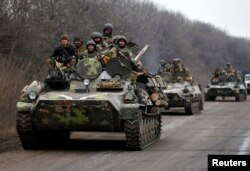
National Security and Defense Council spokesman Andriy Lysenko said all conditions have now been created for government forces to withdraw their heavy weaponry from the front lines, a step Kyiv had been unwilling to take because of what it said were persistent rebel attacks.
The Council said the order to pull back heavy weapons had not yet been given, however.
At the devasted Donetsk airport -- the scene of some of the heaviest fighting in a conflict that has killed more than 5,600 people since April -- separatist forces claimed to have recovered the bodies of at least 30 Ukrainian soldiers.
Ukrainian troops were forced to abandon the airport last month.
LATEST: Ukraine's military says it will begin withdrawing heavy weapons from the front line in eastern Ukraine on February 26.
More on the weapons withdrawal:
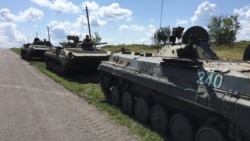
The Ukrainian military said it was starting to withdraw heavy weapons from the front line in its conflict with Russian-backed rebels on February 26 after reporting that there were no combat fatalities for a second straight 24-hour period.
The announcements raise hopes that a European-brokered cease-fire agreement reached in Minsk could be taking hold, after the rebels initially ignored the truce and seized the strategic town of Debaltseve in a major offensive.
"Implementing the agreements reached in Minsk on February 12, Ukraine is beginning the withdrawal of 100-mm guns from the line of
contact today," the military said in a statement. "This is the first step in the pull-back of heavy weapons."
Kyiv had been unwilling to begin its withdrawal because of what it said were persistent rebel attacks.
The conflict has killed more than 5,600 people in eastern Ukraine since April.
Latest: NATO Secretary-General Jens Stoltenberg says Russia should withdraw some 1,000 items of military equipment from Ukraine. He also said that any attempt by pro-Russian separatists to expand the territory they hold in eastern Ukraine would be "unacceptable."
More on Russian gas deliveries to Ukraine.
Russian gas giant Gazprom says it is willing to discuss alterations to the current gas agreement with Kyiv but also warns time is running out for Ukraine to order further shipments.
Gazprom spokesman Sergei Kupriyanov suggested on February 26 that the company was "ready" to exclude gas supplies to the separatist-held areas of eastern Ukraine from Kyiv's gas bill.
Ukraine's state energy company Naftogaz said this week Gazprom had not supplied all the gas Ukraine already paid for, only to learn Gazprom considered gas sent to areas held by rebels as being part of the gas shipped to Ukraine.
Naftogaz said it would not make an advance payment for more gas until Ukraine received all the gas from its last payment.
Gazprom's Kupriyanov said Ukraine should have enough gas to last until the end of this week, but Kyiv has not prepaid for any more shipments after that.