




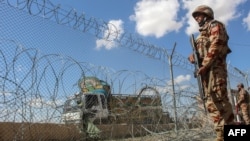
Asadullah lives with his wife and six children in a tent on the edge of Asadabad, the capital of Afghanistan’s eastern province of Kunar.
The 42-year-old is among the tens of thousands of Afghans who have been displaced by deadly border clashes between Afghanistan and Pakistan in recent months.
Pakistan has accused Taliban-controlled Afghanistan of sheltering the Tehrik-e Taliban Pakistan (TTP) and carried out deadly air strikes in Afghanistan targeting the extremist group. Islamabad’s attacks have triggered retaliatory attacks by the Afghan Taliban and brought the neighbors to the brink of all-out war.
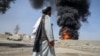
The violence has taken a toll on civilians on both sides of the porous 2,600-kilometer-long border. In Afghanistan, nearly 100,000 people have been displaced, according to UN. While some have returned to their homes, others have become refugees in their own country.
Asadullah owned a home and retail store in Asadabad. But both were destroyed in the border clashes, and he now relies on humanitarian aid and donations from locals to survive.
“My children are also unable to attend school or access health care facilities,” Asadullah, who only goes by one name, told RFE/RL. “There is a cease-fire in place now, but no one knows what will happen next.”
From Allies to Foes
In October 2025, Pakistan carried out unprecedented drone strikes in the center of the Afghan capital, Kabul, as well as air strikes in the country’s east. It came days after the TTP claimed responsibility for an attack in northwestern Pakistan that killed 11 soldiers.
Fierce fighting erupted between Taliban fighters and Pakistani security forces, leaving dozens dead and key border crossings closed.
In February, Pakistan carried out air strikes in two of Afghanistan’s largest cities, heightening fears of an all-out war between the two neighbors.
Pakistani jets on February 27 bombed military targets in Kabul, the southern city of Kandahar, home to the Taliban’s spiritual leader Mullah Haibatullah Akhundzada, and in the eastern provinces of Nangarhar, Paktia, Paktika, and Laghman.
In retaliation, Afghanistan’s Taliban government said it launched drone and rocket attacks targeting military installations and security forces in northwestern Pakistan.
A Pakistani air strike on a hospital in Kabul in March killed over 100 people, according to the UN. The Afghan Taliban said hundreds of civilians were killed in the deadliest-ever attack carried out by Pakistani forces. Islamabad claimed the strike had targeted military installations and TTP infrastructure.
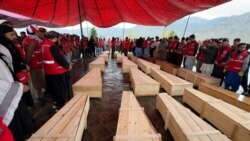

Since then, sporadic clashes have erupted along the border, despite an unofficial cease-fire.
The Afghan Taliban has repeatedly denied that it is harboring the TTP, with which it has close ideological, organizational, and tribal ties.
The dispute has turned Islamabad and the Afghan Taliban, longtime allies, into foes. Pakistan had supported the Afghan Taliban since the group first emerged in the 1990s, including allegedly during the group’s 20-year insurgency against the US-backed Afghan government.
The TTP leadership is believed to have taken shelter in Afghanistan after the Afghan Taliban seized power in 2021 following the withdrawal of international troops. Many TTP foot soldiers are believed to be operating along the border.
Formed in 2007, the TTP has waged an increasingly deadly insurgency against Islamabad and killed hundreds of Pakistani security personnel in recent years.
'Significant Humanitarian Needs'
Hundreds of thousands of Afghans have been affected by the hostilities between Kabul and Islamabad.
The UN said around 1,000 homes were either destroyed or partially damaged during fighting in the past six months. Around 160,000 people -- most of them in eastern provinces bordering Pakistan, including Kunar -- are experiencing “significant humanitarian needs,” according to the world body.
Afghanistan is already one of the largest humanitarian crises in the world. The impoverished country lost vital Western aid, and the economy collapsed after the Taliban seized power five years ago.
“Our children and women are becoming psychologically broken,” Asmatullah, a resident of Afghanistan’s southeastern province of Khost, told RFE/RL.
“They cannot sleep. When someone accidentally bangs on the door, they mistake it for the sound of mortar shells,” added Asmatullah, who lives in a village only 10 kilometers from the Pakistani border.
In March, a mortar shell landed on his home in the middle of the night, killing his 27-year-old nephew.
Some Afghans displaced by the fighting in recent months have returned to their homes. Others are reluctant, fearing a resumption of violence.
“We are afraid to return to our villages unless the two sides announce a permanent cease-fire,” a resident of the eastern province of Nangarhar told RFE/RL’s Radio Azadi.
Speaking on condition of anonymity, he said his family is currently staying with relatives in a neighboring district.

