




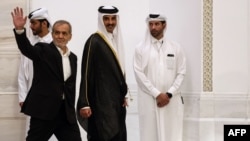
Iranian President Masud Pezeshkian said on October 2 that he is not seeking war but warned Israel against retaliating against Iran's missile attack the day before, promising a strong response from Tehran to any further Israeli actions amid growing fears of a wider regional conflict.
"We are not looking for war. It is Israel that forces us to react," Pezeshkian said after arriving in Qatar for a summit with Asian countries.
Pezeshkian criticised Israel over the killing of Ismail Haniyeh, the leader of Hamas -- designated as a terrorist organization by the United States and the EU -- in July in Tehran, an assassination Israel has neither claimed nor denied responsibility for.
"We also want security and peace. It was Israel that assassinated Haniyeh in Tehran," Pezeshkian was quoted saying on his arrival in Qatar.
Pezeshkian arrived in Qatar a day after Iran fired waves of ballistic missiles at Israel and Israel stepped up its war with Tehran's proxy Hezbollah by sending troops over the border into Lebanon. Israeli Prime Minister Benjamin Netanyahu has said he would strike back at Iran following the October 1 missile attack.
"If the Zionist regime (Israel) does not stop its crimes, it will face harsher reactions," Pezeshkian said as he left for the trip, Iranian state media reported.
He added that the United States and European countries should tell Israel not to destabilize the region.
He reiterated his remarks at a joint press conference in Doha with Qatar's Emir Sheikh Tamim bin Hamad al-Thani, saying that if Israel acts in one way against Iran then Tehran will respond in a more severe way.
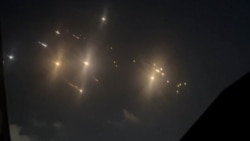
Tehran on October 1 launched a massive ballistic missile attack on Israel, its largest so far, in retaliation for the campaign launched by the Jewish state in southern Lebanon against the Iran-backed Hezbollah militant group, prompting warnings of countermeasures from Israel and its main ally, the United States.
Iranian Foreign Minister Abbas Araghchi said in a message on X that the attack targeted "solely military and security sites" involved in what he said was the Israeli "genocide in Gaza and Lebanon" and was conducted by Iran in "self-defense under Article 51 of the UN Charter."
"Our action is concluded unless the Israeli regime decides to invite further retaliation. In that scenario, our response will be stronger and more powerful," Araghchi said.

Iran's powerful Islamic Revolutionary Guard Corps (IRGC) earlier said the missile attack was in response to Israel's killing of Hezbollah leader Hassan Nasrallah last week.
Hezbollah is both an armed group and political party that controls much of southern Lebanon. It is considered a terrorist organization by the United States, although the European Union has only blacklisted its armed wing.
People who left audio messages for RFE/RL's Radio Farda in response to the attack indicated they had little hope that anything would change.
"The Islamic republic wanted to show pragmatism, but some in analytical circles (experts and journalists) who live outside of Iran, voiced support for war [and] pushed Iran to attack. Nothing will happen and [it] went hand in hand with hard-liners inside," said one man. "You can't just call for war and bloodshed living in the free world. This is against the basics of democracy. Please help. The world needs peace."
Israel Counts The Cost After Iranian Missile Barrage
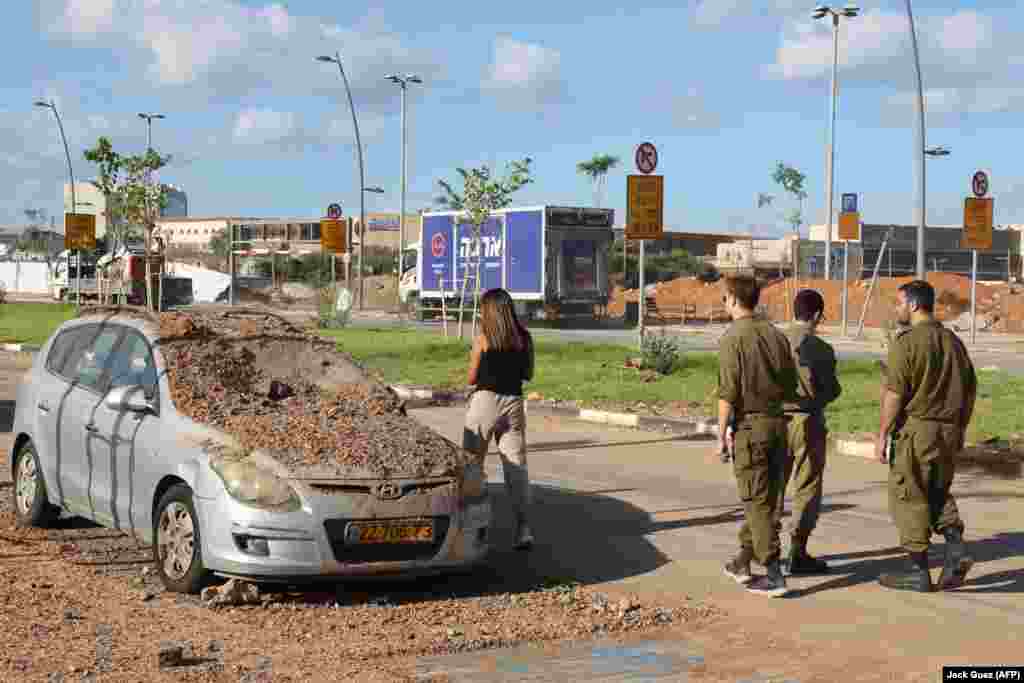
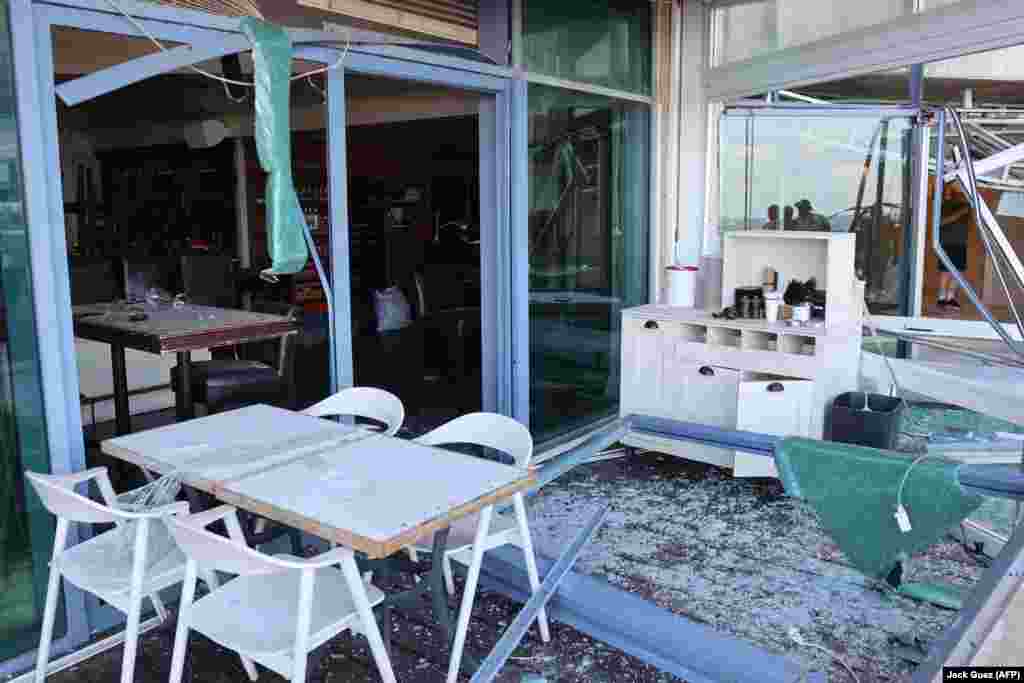
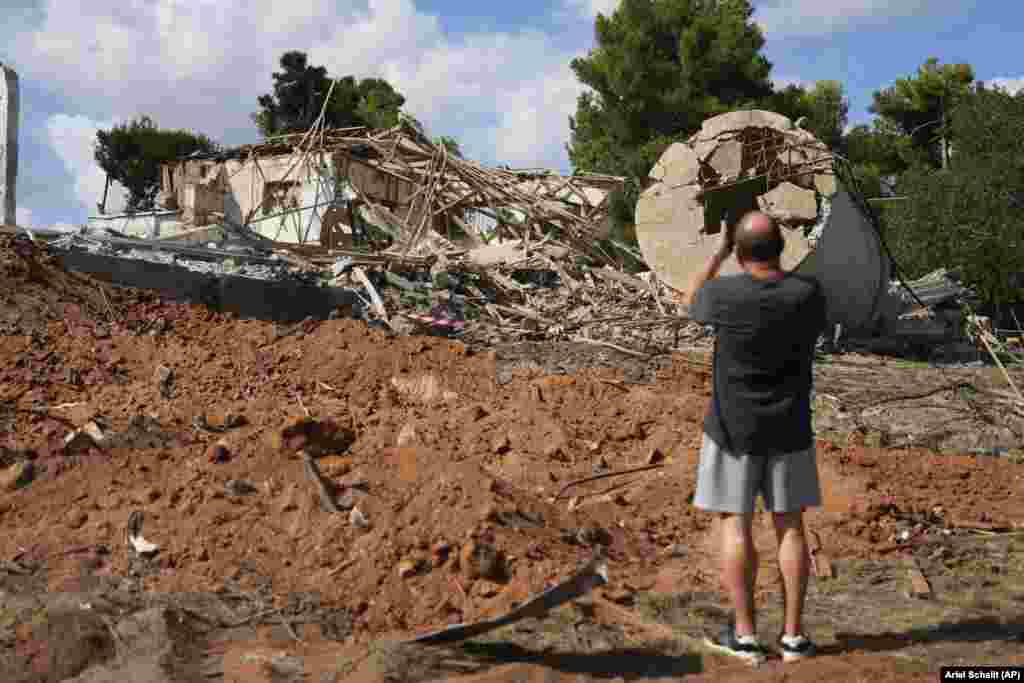
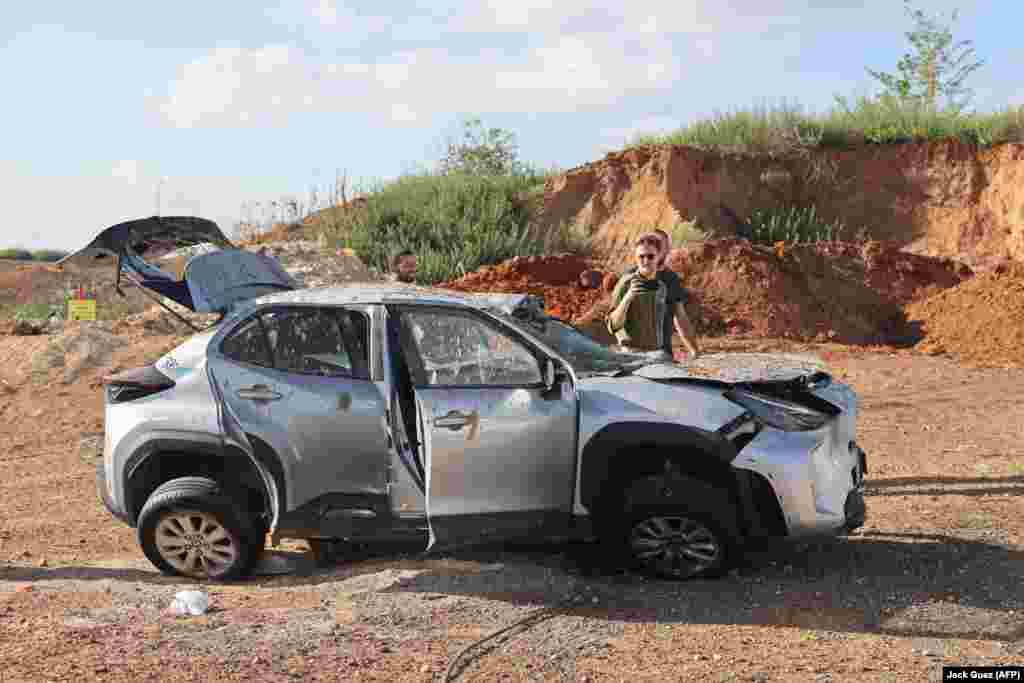
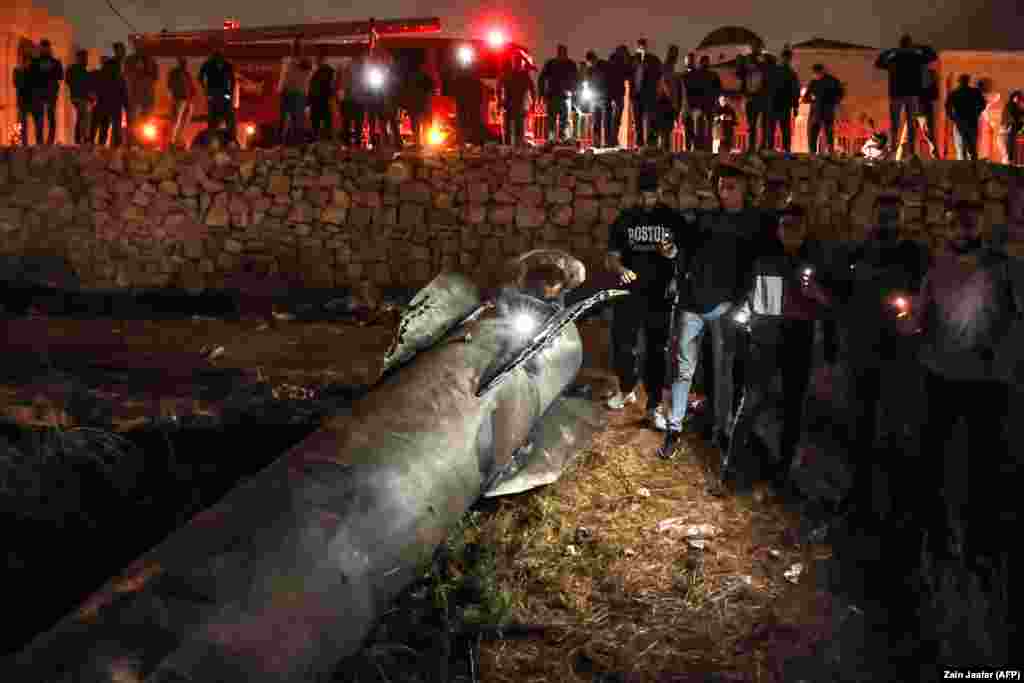
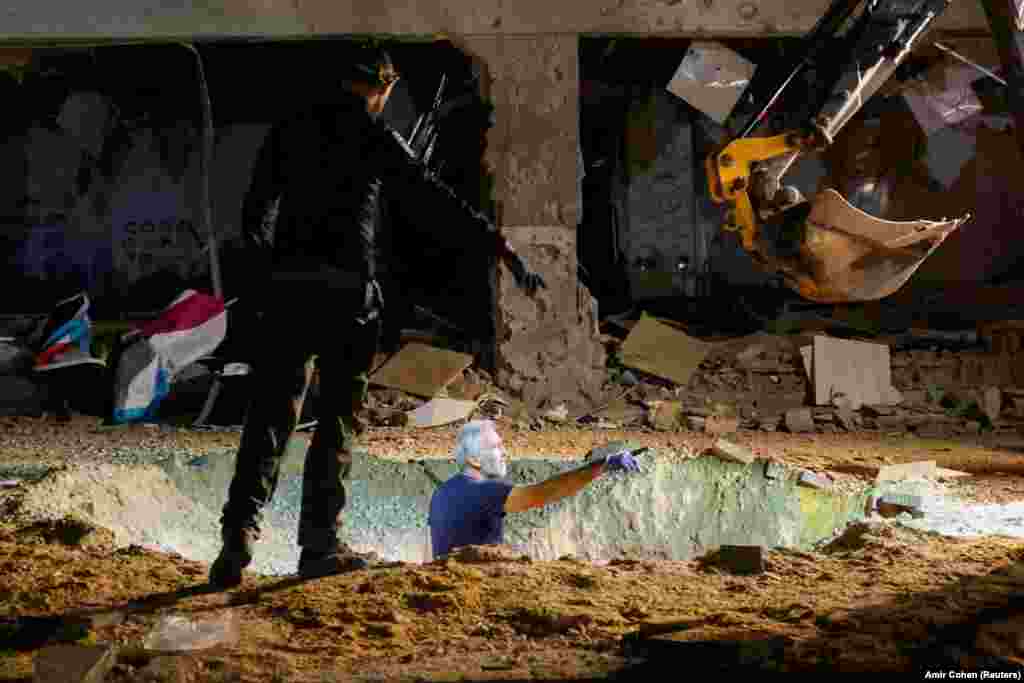
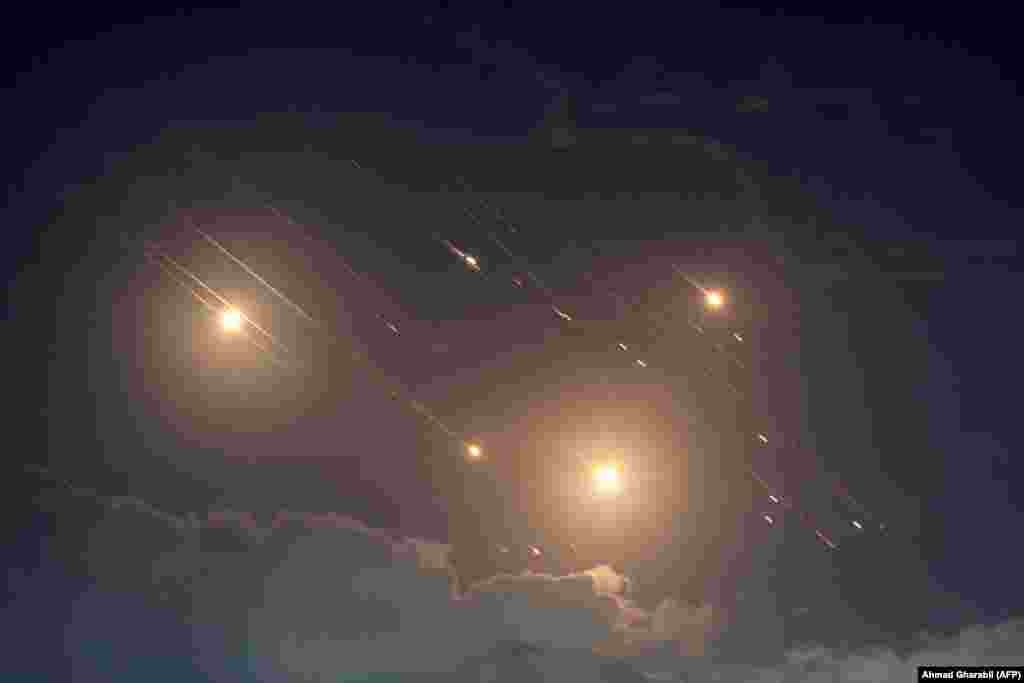
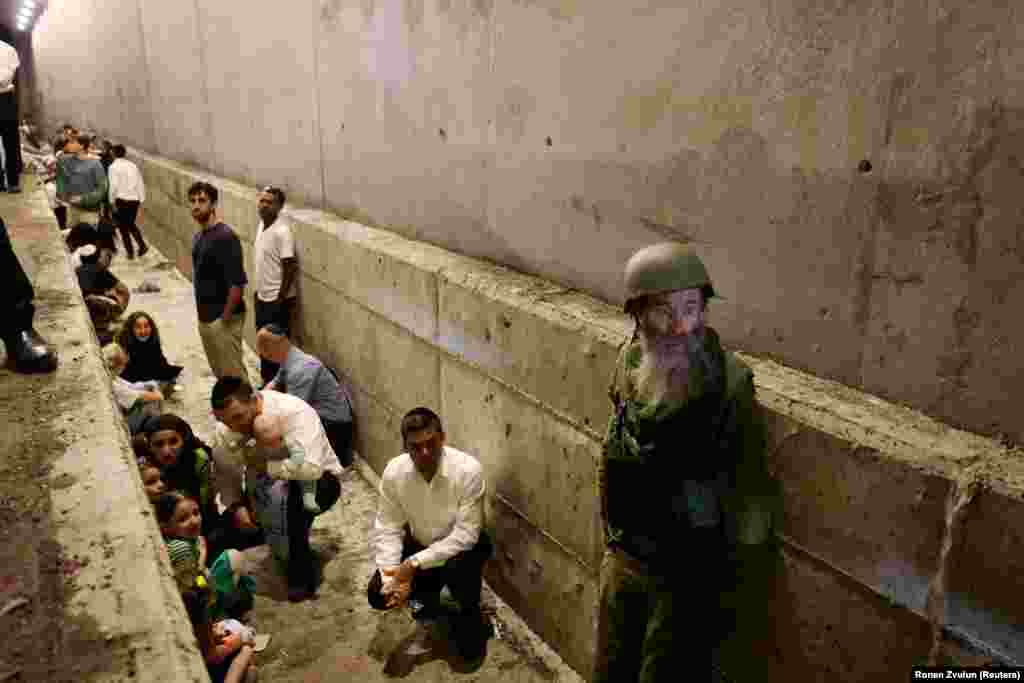
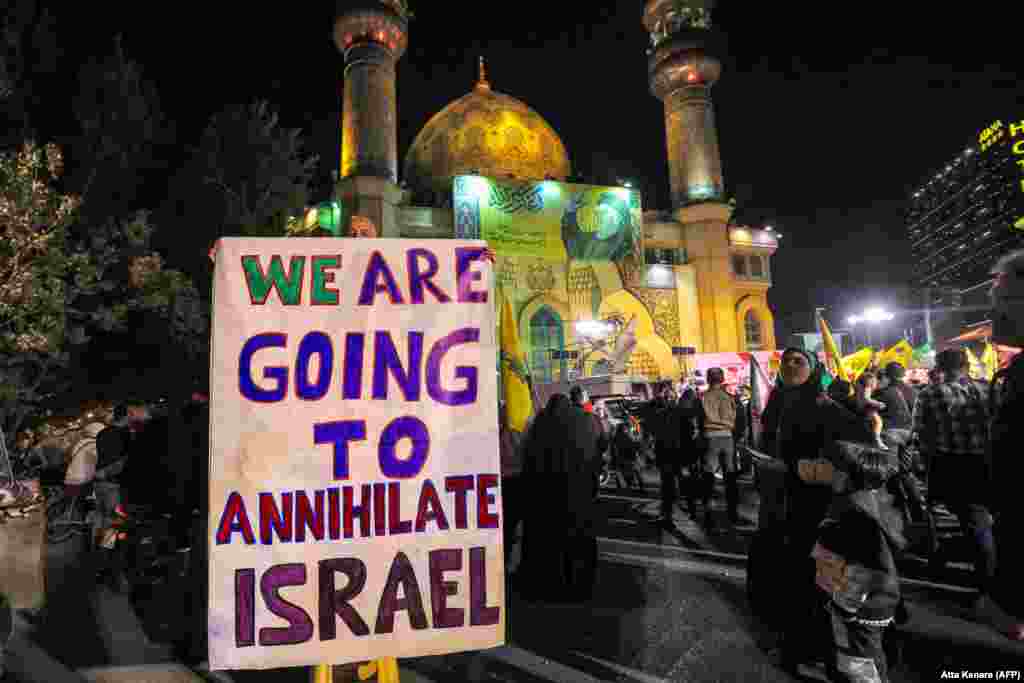
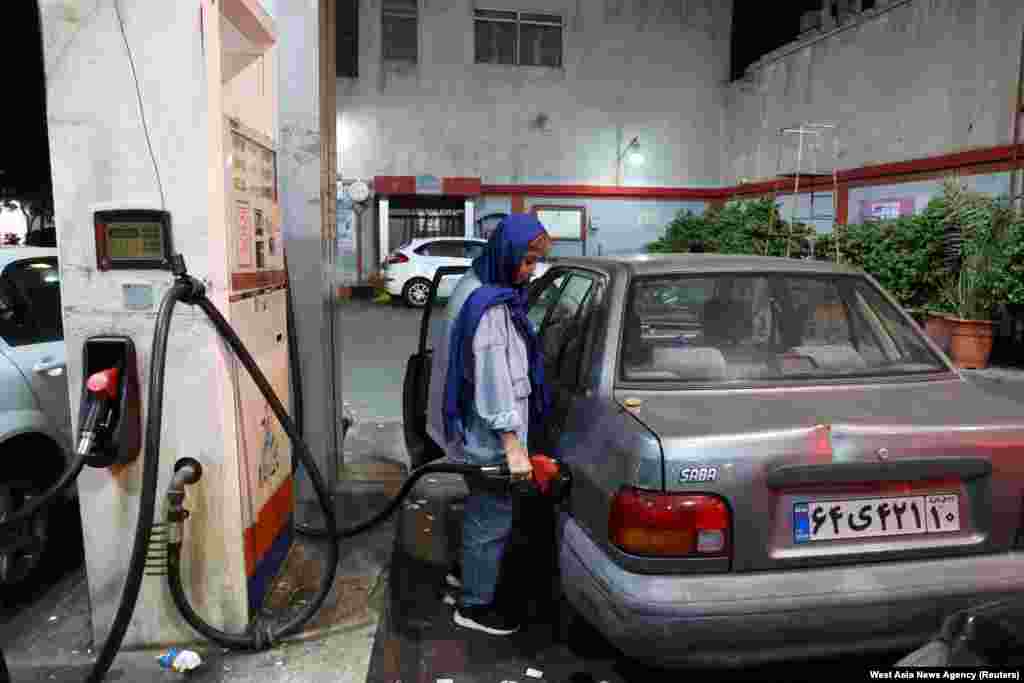
A woman said it was "ridiculous," and noted that some missiles landed inside Iran.
"They think they can do anything. They lit a fire -- I hope they burn in it as well," she said.
Israeli air defenses intercepted most of the estimated 180 missiles that were fired, military spokesman Rear Admiral Daniel Hagari said, though some landed in central and southern Israel.
Israeli rescuers said two people were lightly injured by shrapnel while in the occupied West Bank, and a Palestinian was killed in Jericho "when pieces of a rocket fell from the sky and hit him," according to the city's governor Hussein Hamayel.

In Damascus, Syria, on October 2, an attack took place in the upscale Mezzeh neighborhood. The official Syrian news agency says three people were killed in the attack that targeted an apartment. The Syrian Observatory says the apartment is used by officers from the IRGC and Hezbollah.
Hezbollah said it repelled the Israeli incursion into southern Lebanon, and Israel reported its first losses -- eight soldiers killed -- since launching cross-border raids this week.
Iran's UN envoy said at an emergency meeting of the UN Security Council that the only way to prevent further escalation is for Israel to end the war in Gaza and stop attacks on Lebanon.
Iran's missile attack was "to restore balance and deterrence" and further escalation could be avoided if Israel stopped the war in Gaza and attacks on Lebanon, said Iranian UN Ambassador Amir Saied Iravani.
"Iran is fully prepared to take further defensive measures, if necessary, to protect its legitimate interests and defend its territorial integrity and sovereignty against any acts of military aggression and the illegal use of force," he said.
Israeli Prime Minister Benjamin Netanyahu called the October 1 attack "a big mistake" and said Tehran "will pay for it."
There has been speculation that Israeli might attack sites related to Tehran’s nuclear program, but U.S. President Joe Biden said he would not support that.
Biden’s comments came after he and fellow Group of Seven leaders spoke by phone on October 2 to discuss coordinating new sanctions against Iran.
The G7 leaders "unequivocally condemned Iran's attack against Israel” and Biden reiterated the United States' "full solidarity and support to Israel and its people," a White House statement said.

