

Accessibility links

Breaking News

On Genocide Remembrance Day, Armenians Told To 'Overcome Trauma' Of 1915 Mass Killings

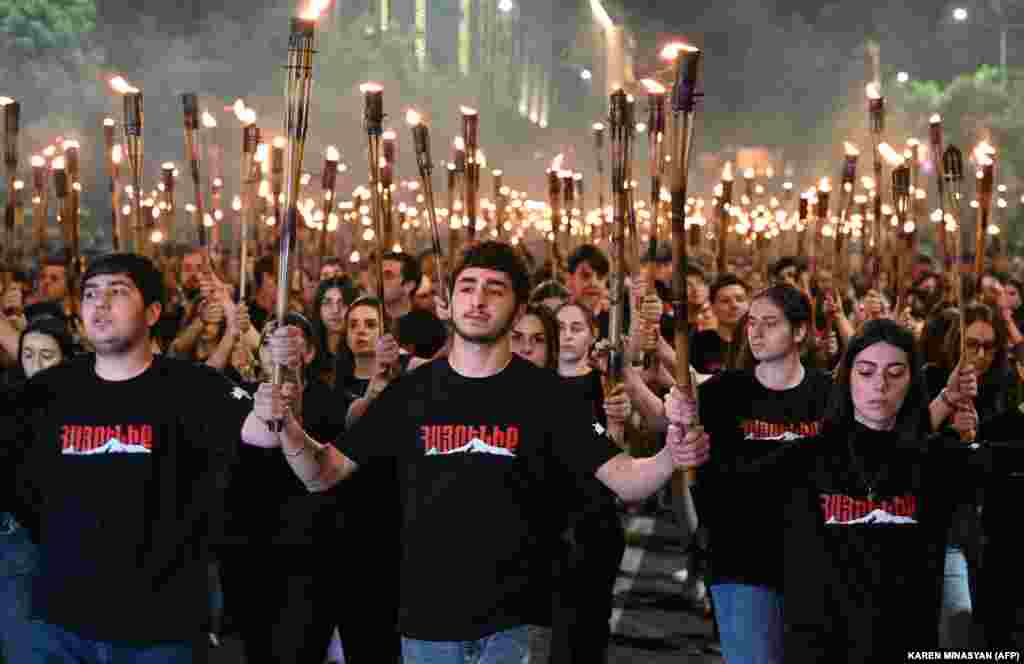
People march on April 24 to the Tsitsernakaberd memorial in Yerevan to commemorate the Armenian genocide.

Prime Minister Nikol Pashinian urged Armenians to “overcome the trauma” of the massacre of their ethnic kin by Ottoman Turks more than a century ago and stop yearning for their “lost homeland” as they marked the anniversary of the Armenian genocide on April 24.

Pashinian said the enduring trauma prevents many Armenians from objectively assessing international affairs and challenges facing Armenia.

“Maybe this is also a reason why we get new shocks, reliving the trauma of the Armenian genocide as a legacy and as a tradition,” he said in a statement as tens of thousands of people marched to the Tsitsernakaberd memorial in Yerevan to commemorate the genocide.

The daylong procession followed a wreath-laying ceremony at the hilltop memorial led by Pashinian, Parliament Speaker Alen Simonian, and President Vahagn Khachaturian. Catholicos Garegin II, the supreme head of the Armenian Apostolic Church, who has increasingly been at odds with Pashinian’s government, was again excluded from the ceremony.

Armenians Hold Somber Memorials To Mark Genocide Remembrance Day

The Eternal Flame at the Armenian Genocide <strong><a href="https://www.cipdh.gob.ar/memorias-situadas/en/lugar-de-memoria/en-memorial-tsitsernakaberd-al-genocidio-armenio/" target="_blank">Museum</a></strong> in Yerevan where, every April 24, Armenia mourns the killing of up to 1.5 million Armenians under Ottoman rule.<br />
<br />
&nbsp;
1/9 The Eternal Flame at the Armenian Genocide Museum in Yerevan where, every April 24, Armenia mourns the killing of up to 1.5 million Armenians under Ottoman rule.

 
Somber commemorations for the victims of the 1915 mass killings of Armenians were held on April 24 at Armenia’s Genocide Museum complex in Yerevan.
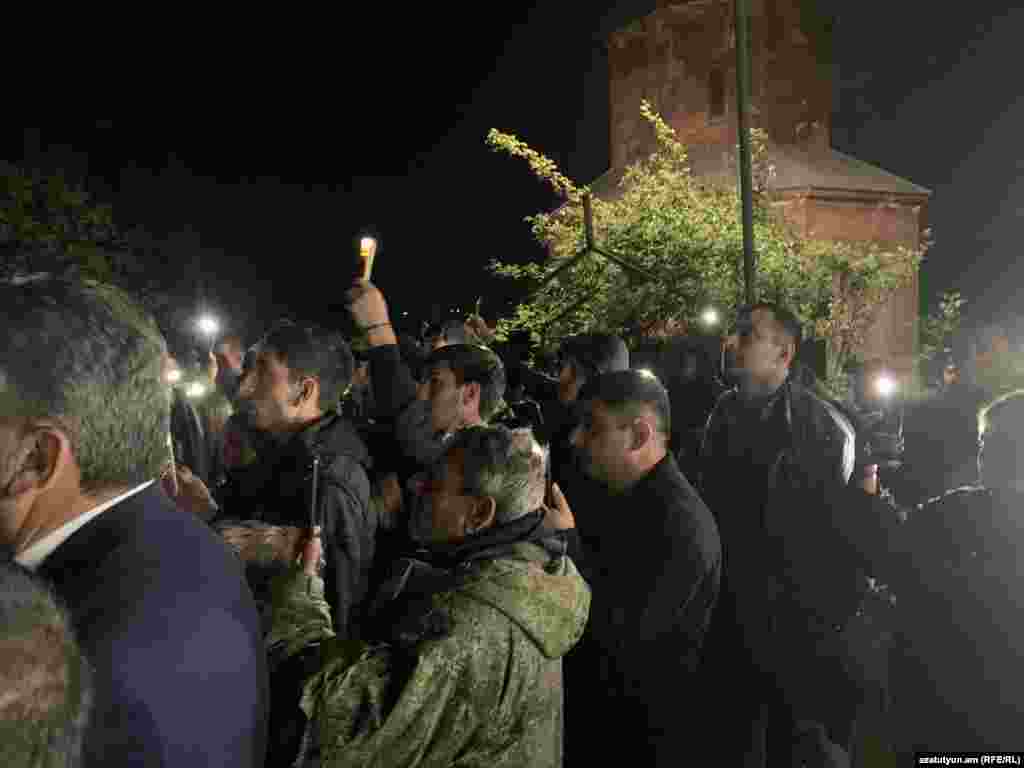
Though April 24 marks the Day of Remembrance, Armenians, such as these villagers in Tavush in the country&#39;s northeast, took part in somber ceremonies the evening before.&nbsp;<br />
<br />
<br />
<br />
<br />
&nbsp;
2/9 Though April 24 marks the Day of Remembrance, Armenians, such as these villagers in Tavush in the country's northeast, took part in somber ceremonies the evening before. 


Somber commemorations for the victims of the 1915 mass killings of Armenians were held on April 24 at Armenia’s Genocide Museum complex in Yerevan.
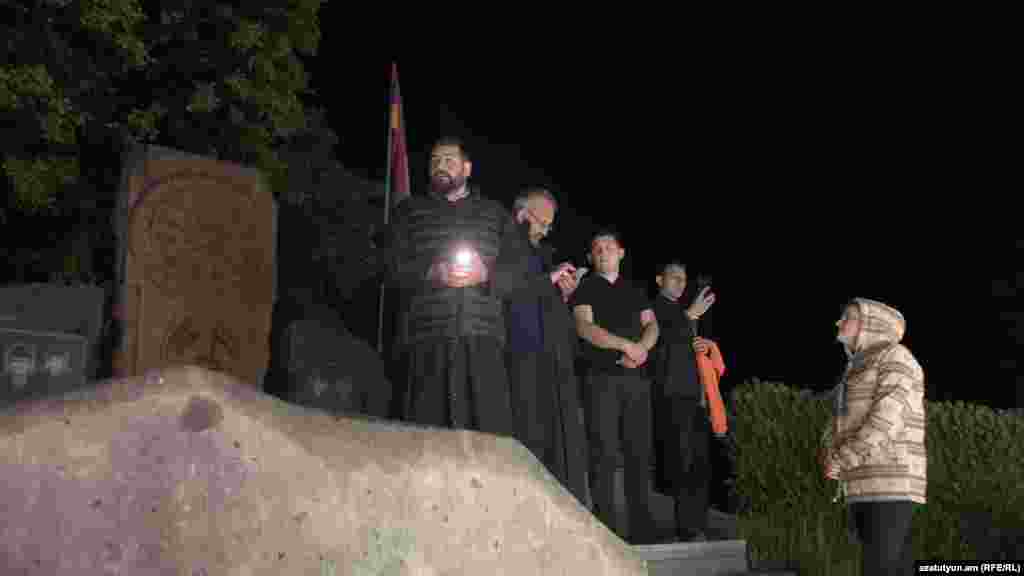
Villagers look on during a ceremony in Tavush.<br />
<br />
During the murderous yearslong campaign that took place during World War I, a majority of the Ottoman Empire&rsquo;s prewar Armenian population was either expelled or killed.<br />
<br />
<br />
&nbsp;
3/9 Villagers look on during a ceremony in Tavush.

During the murderous yearslong campaign that took place during World War I, a majority of the Ottoman Empire’s prewar Armenian population was either expelled or killed.


Somber commemorations for the victims of the 1915 mass killings of Armenians were held on April 24 at Armenia’s Genocide Museum complex in Yerevan.
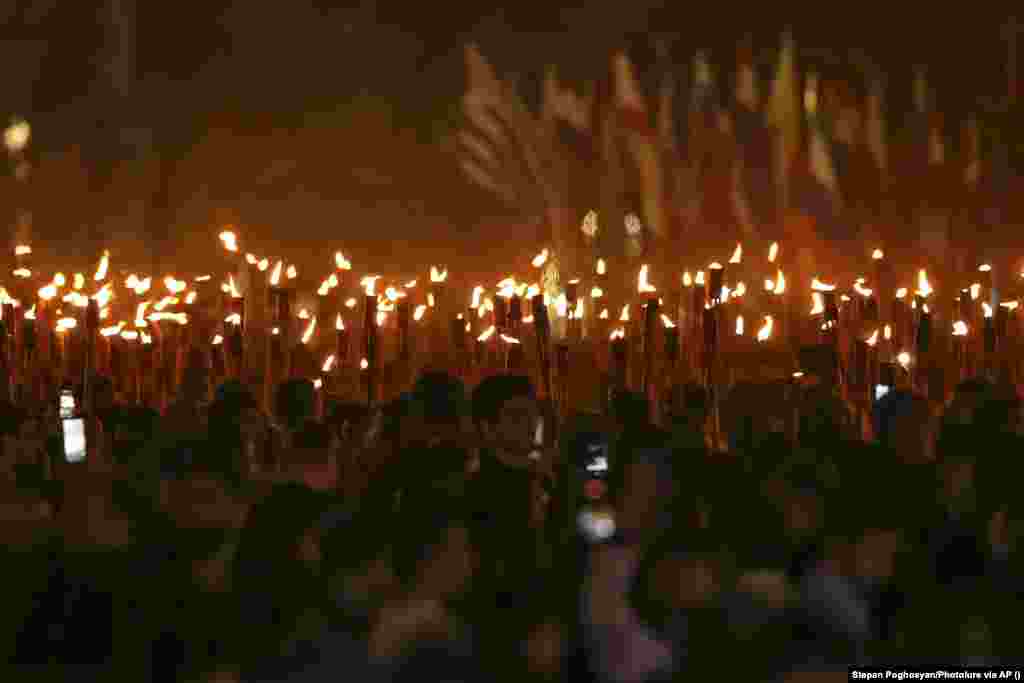
Thousands of Armenians participate in a<strong> <a href="https://www.facebook.com/azatutyun/videos/1103033907616811" target="_blank">torchlit procession</a></strong> in the nation&#39;s capital, Yerevan, on April 23.<br />
<br />
&nbsp;
4/9 Thousands of Armenians participate in a torchlit procession in the nation's capital, Yerevan, on April 23.

 
Somber commemorations for the victims of the 1915 mass killings of Armenians were held on April 24 at Armenia’s Genocide Museum complex in Yerevan.
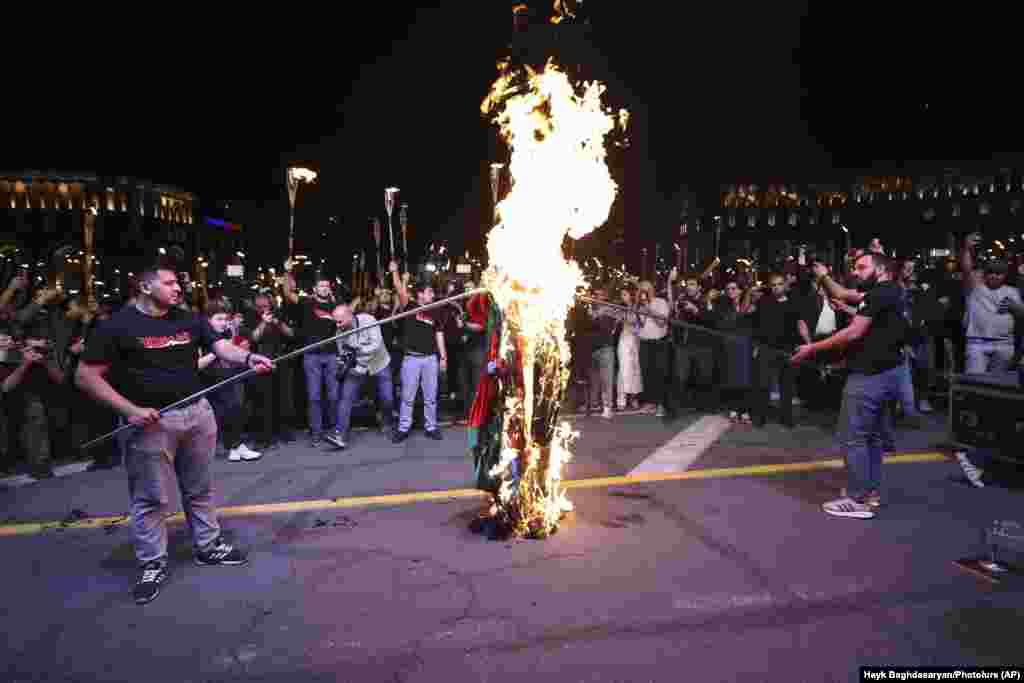
Turkish and Azerbaijani flags were set alight in the nation&#39;s capital.<br />
<br />
A century later, recognition of the<strong> <a href="https://www.rferl.org/a/armenia-genocide-turkey-biden-recognition-history/31215974.html" target="_blank">killings</a></strong> as genocide is still a divisive diplomatic issue, with Turkey and Azerbaijan -- who share strong ethnic and cultural ties -- officially denying genocide took place.&nbsp;<br />
<br />
&nbsp;
5/9 Turkish and Azerbaijani flags were set alight in the nation's capital.

A century later, recognition of the killings as genocide is still a divisive diplomatic issue, with Turkey and Azerbaijan -- who share strong ethnic and cultural ties -- officially denying genocide took place. 

 
Somber commemorations for the victims of the 1915 mass killings of Armenians were held on April 24 at Armenia’s Genocide Museum complex in Yerevan.
Torch-carrying participants march through the streets of Yerevan.<br />
<br />
On April 24, 2021, U.S. President Joe Biden officially recognized the mass killings as genocide. It was a move that had also been promised by President Barack Obama but failed to materialize.
6/9 Torch-carrying participants march through the streets of Yerevan.

On April 24, 2021, U.S. President Joe Biden officially recognized the mass killings as genocide. It was a move that had also been promised by President Barack Obama but failed to materialize.
Somber commemorations for the victims of the 1915 mass killings of Armenians were held on April 24 at Armenia’s Genocide Museum complex in Yerevan.
A drone captures early arrivals at the Armenian Genocide Museum complex in Yerevan on April 24, the Day of Remembrance.
7/9 A drone captures early arrivals at the Armenian Genocide Museum complex in Yerevan on April 24, the Day of Remembrance.
Somber commemorations for the victims of the 1915 mass killings of Armenians were held on April 24 at Armenia’s Genocide Museum complex in Yerevan.
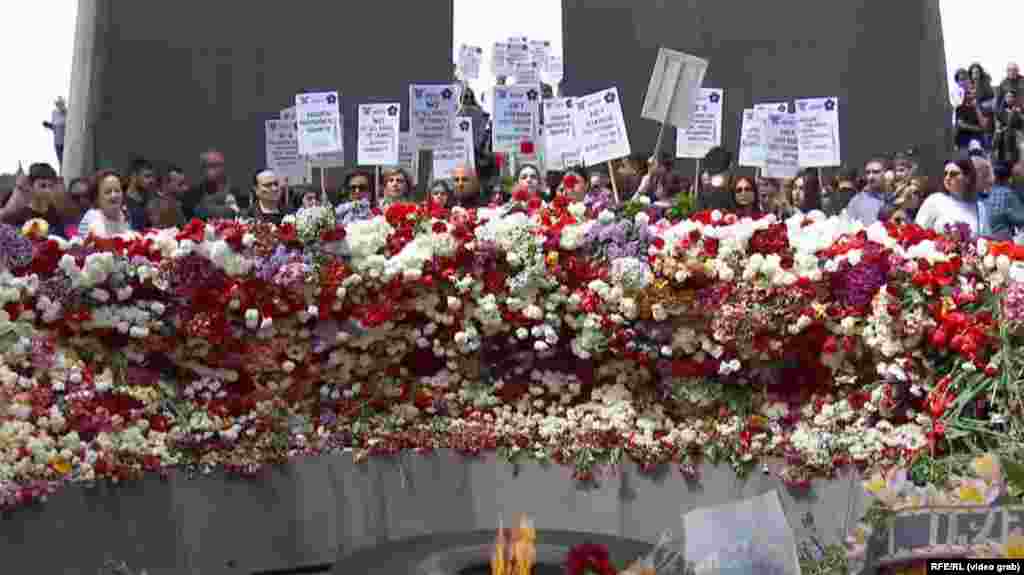
A video grab of the thousands of <a href="https://www.youtube.com/watch?v=iYy6_kLbmiA&amp;ab_channel=%D4%B1%D5%A6%D5%A1%D5%BF%D5%B8%D6%82%D5%A9%D5%B5%D5%B8%D6%82%D5%B6" target="_blank">people</a> who paid their respects, with many laying flowers at the Eternal Flame.<br />
<br />
&nbsp;
8/9 A video grab of the thousands of people who paid their respects, with many laying flowers at the Eternal Flame.

 
Somber commemorations for the victims of the 1915 mass killings of Armenians were held on April 24 at Armenia’s Genocide Museum complex in Yerevan.
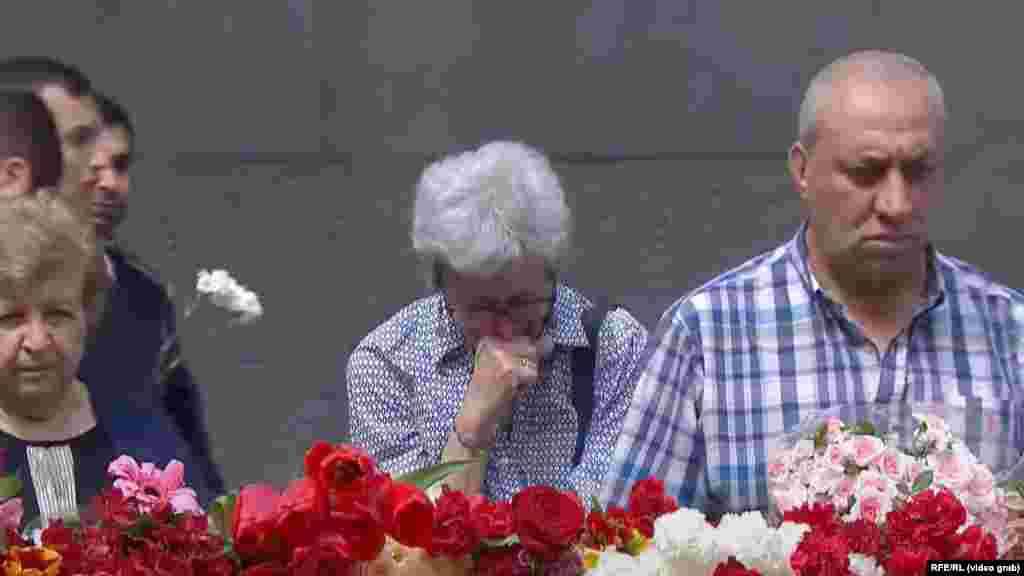
A woman cries after laying a handful of red roses.<br />
<br />
As of 2023, 31 UN member states recognize the 1915 events as genocide. Turkey claims that the number of deaths has been inflated and that those killed were victims of civil war and unrest.&nbsp;However, many scholars view the mass killings as the&nbsp;first genocide of the 20th century.<br />
<br />
<br />
<br />
<br />
<br />
&nbsp;
9/9 A woman cries after laying a handful of red roses.

As of 2023, 31 UN member states recognize the 1915 events as genocide. Turkey claims that the number of deaths has been inflated and that those killed were victims of civil war and unrest. However, many scholars view the mass killings as the first genocide of the 20th century.


Somber commemorations for the victims of the 1915 mass killings of Armenians were held on April 24 at Armenia’s Genocide Museum complex in Yerevan.
Previous slide
Next slide

The genocide began on April 24, 1915 with mass arrests of Armenian intellectuals and activists in Constantinople, now Istanbul. An estimated 1.5 million Armenian subjects of the Ottoman Empire were massacred or died from starvation in the following months and years. About three dozen nations, including Russia, France, Germany, and the United States, have recognized it as genocide.

Pashinian’s statement came amid Yerevan’s ongoing rapprochement with Ankara. Armenia recently said Yerevan seeks full normalization of relations with Ankara, including the opening of their border and the establishment of diplomatic ties. Their strained relationship stems from their differences over whether the killings were a genocide, a distinction Turkey has vehemently rejected.

Pashinian’s choice of words could risk more opposition allegations that he is helping Turkey deny that the 1915 events were genocide. He frequently used the Armenian phrase Meds Yeghern (Great Crime) in reference to the events of 1915 and did not condemn the regime of the so-called Young Turks that ruled the Ottoman Empire during World War I. He said instead that Ottoman Armenians “became victims of geopolitical intrigues and false promises.”

The commemoration of the genocide “should symbolize not the lost homeland but the found and real homeland, the Republic of Armenia, whose competitive, legitimate, thoughtful and creative policies can preclude a repeat [of the genocide,]” Pashinian said.

Armenians should speak the phrase “never again” only to themselves, not as an accusation but as a point of view that puts Armenians “in charge of our own destiny,” he added.

Earlier this month, a senior Armenian pro-government lawmaker allied with Pashinian, Andranik Kocharian, called for “verifying” the number of the genocide victims, saying Pashinian wants to “make the entire list of compatriots subjected to genocide more objective.”

The remarks sparked uproar from Armenian government critics, civil society figures, and genocide scholars. They accused Kocharian of echoing the Turkish narrative that the number of Armenians who died was lower than the 1.5 million estimated and that the cause was not a premediated Ottoman government policy.

Kocharian said the following day that it was his personal opinion rather than the Pashinian government’s position and denied casting doubt on the Armenian genocide. Opposition leaders dismissed the explanation, continuing to accuse Pashinian of planning another far-reaching concession to Ankara.

Pashinian’s wife, Anna Hakobian, was jeered by several dozen people when she visited the Tsitsernakaberd memorial later on April 24. The hecklers, who apparently included opposition supporters, chanted “Genocidal Nikol!” and “Nikol the Turk!” as Hakobian and one of her daughters surrounded by bodyguards laid flowers by the memorial’s eternal flame.

  • 16x9 Image

    RFE/RL's Armenian Service

    RFE/RL’s Armenian Service, operating out of a bureau in Yerevan, is a leading source of trusted reporting and technical innovation, reaching outsized audiences when developments demand authoritative, up-to-the-minute news most.

This item is part of
XS
SM
MD
LG