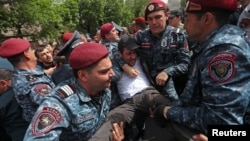
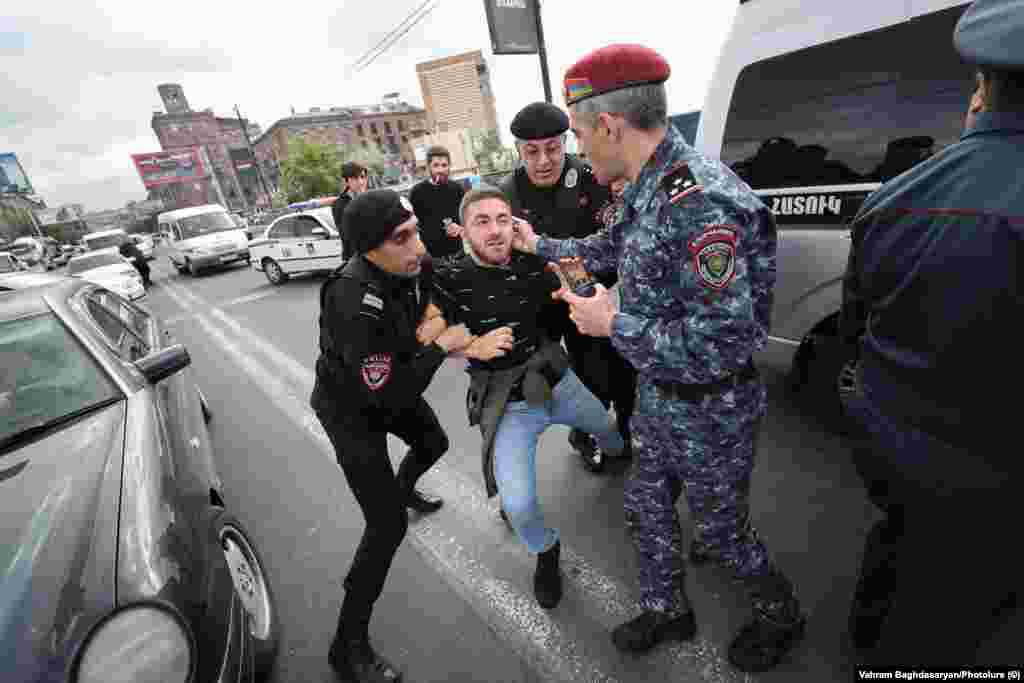
Armenian police officers detain a protester at an anti-government demonstration in Yerevan on May 5,
Armenian police have detained dozens of demonstrators calling for Prime Minister Nikol Pashinian's resignation because of what they said were unacceptable concessions made by him during negotiations with Azerbaijan over the disputed region of Nagorno-Karabakh.
Anti-government demonstrations have taken place since last month. Protesters on May 1 announced the beginning of a "decisive phase of the struggle" and large-scale civil disobedience actions this week.
In recent days, anti-Pashinian protesters have taken to the streets to block major roads in the capital Yerevan and call on the population to commit acts of civil disobedience.
Protests Continue In Armenia Over Nagorno-Karabakh 'Concession' Fears
1/12Armenian police forcibly detain a protester in Yerevan on May 4.
Ongoing anti-government protests began on May 1 in the Armenian capital over fears that Prime Minister Nikol Pashinian is poised to make major concessions to Azerbaijan over the disputed Nagorno-Karabakh region.
Thousands take to the streets of Yerevan and hundreds are arrested after Armenia's prime minister appears to hint at a handover of long-disputed land to Azerbaijan. Armenia and Azerbaijan have long been at odds over the Nagorno-Karabakh region. In 2020, Azerbaijan's military recaptured several regions that had been under control of ethnic Armenian forces since the 1990s.
2/12Police surround protesters in Yerevan on May 3.
On April 13, Pashinian told parliament: "I am guilty that in 2018-19 I did not stand before our society and relay that all of our -- I repeat, all of our -- friends near and far expect us to hand over seven famous [disputed regions in and around Nagorno-Karabakh] to Azerbaijan in one way or another..."
Thousands take to the streets of Yerevan and hundreds are arrested after Armenia's prime minister appears to hint at a handover of long-disputed land to Azerbaijan. Armenia and Azerbaijan have long been at odds over the Nagorno-Karabakh region. In 2020, Azerbaijan's military recaptured several regions that had been under control of ethnic Armenian forces since the 1990s.
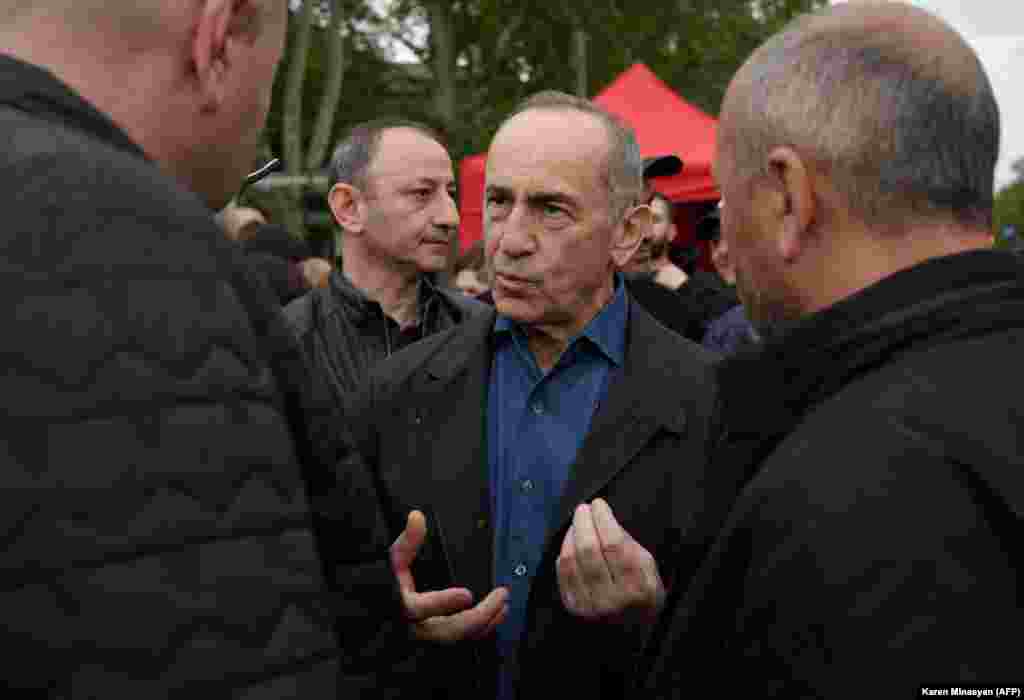
3/12Former Armenian President Robert Kocharian speaks with protesters in Yerevan on May 3.
Opposition figures that organized the protests accuse Pashinian of planning to let Azerbaijan take full control over Nagorno-Karabakh and demand the prime minister's resignation.
Thousands take to the streets of Yerevan and hundreds are arrested after Armenia's prime minister appears to hint at a handover of long-disputed land to Azerbaijan. Armenia and Azerbaijan have long been at odds over the Nagorno-Karabakh region. In 2020, Azerbaijan's military recaptured several regions that had been under control of ethnic Armenian forces since the 1990s.
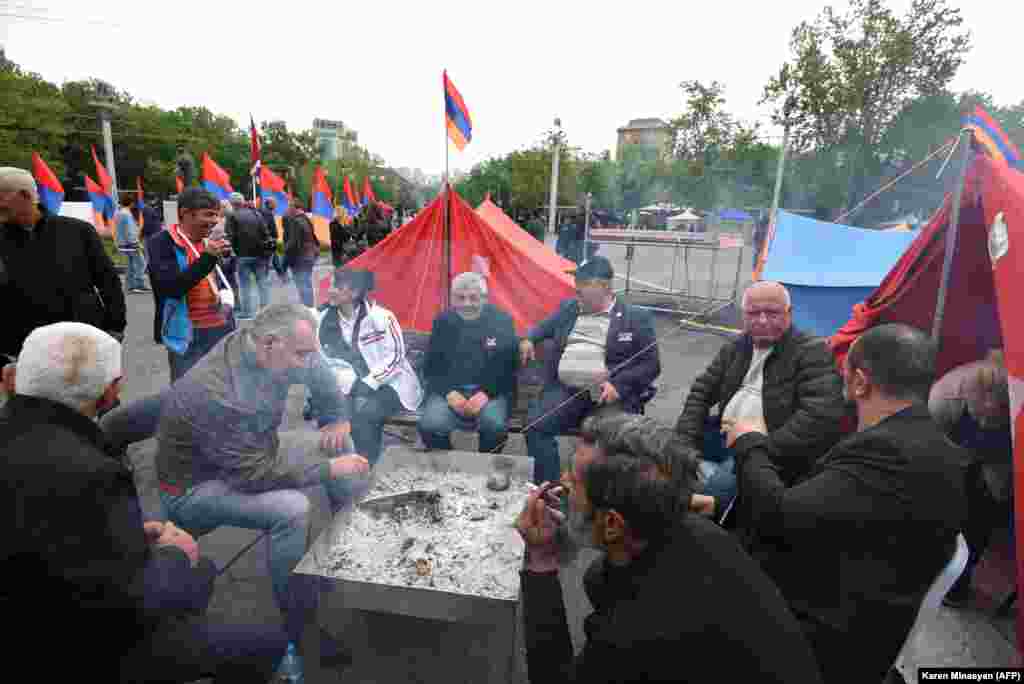
4/12Demonstrators encamped in central Yerevan on May 3.
Thousands take to the streets of Yerevan and hundreds are arrested after Armenia's prime minister appears to hint at a handover of long-disputed land to Azerbaijan. Armenia and Azerbaijan have long been at odds over the Nagorno-Karabakh region. In 2020, Azerbaijan's military recaptured several regions that had been under control of ethnic Armenian forces since the 1990s.
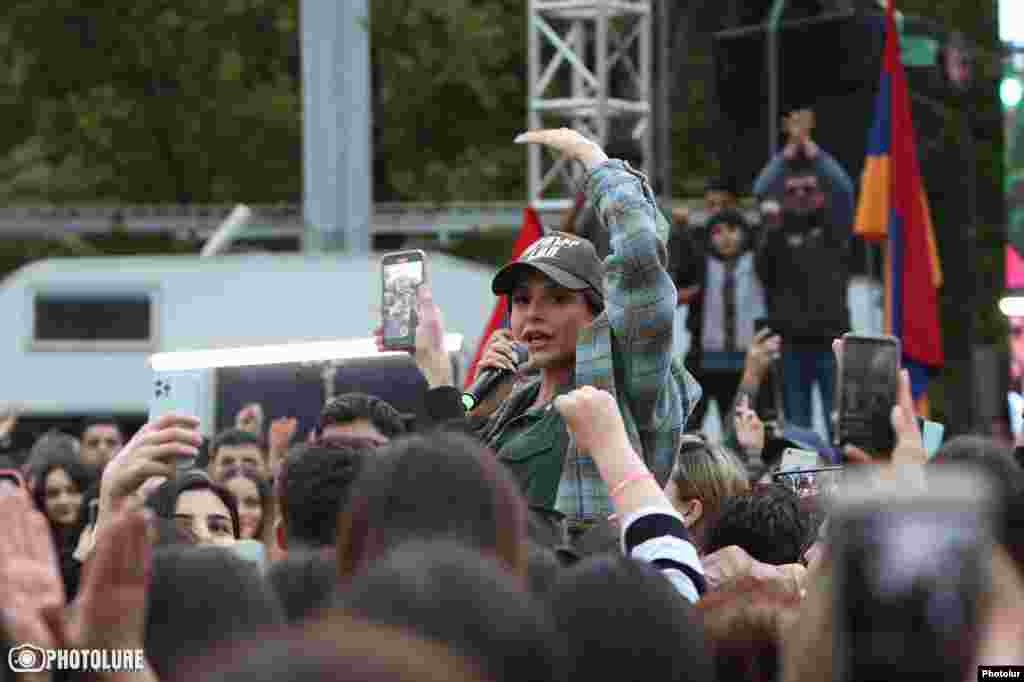
5/12Armenian singer Sirusho performs during a demonstration in Yerevan calling for the resignation of Pashinian.
More than 200 people were detained by police on May 3, the day this photo was taken.
Thousands take to the streets of Yerevan and hundreds are arrested after Armenia's prime minister appears to hint at a handover of long-disputed land to Azerbaijan. Armenia and Azerbaijan have long been at odds over the Nagorno-Karabakh region. In 2020, Azerbaijan's military recaptured several regions that had been under control of ethnic Armenian forces since the 1990s.
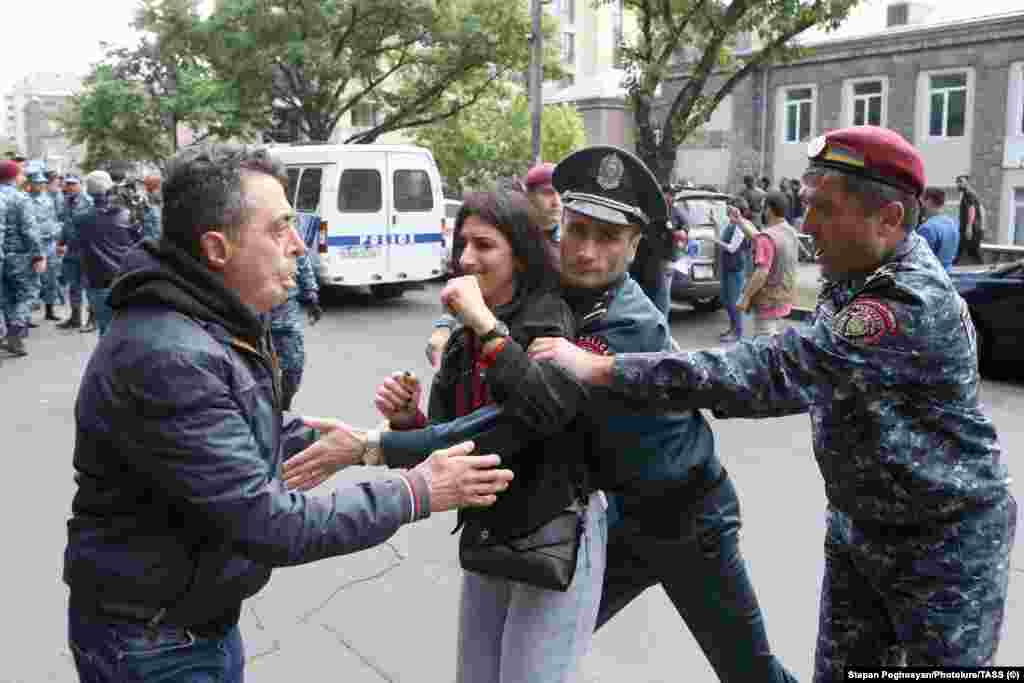
6/12A woman is detained by police in Yerevan on May 3.
The prime minister's political allies accuse the opposition of exploiting the Karabakh issue in a bid to seize power. They point to recent elections that reinstated the ruling party after the large-scale conflict with Azerbaijan in 2020.
Thousands take to the streets of Yerevan and hundreds are arrested after Armenia's prime minister appears to hint at a handover of long-disputed land to Azerbaijan. Armenia and Azerbaijan have long been at odds over the Nagorno-Karabakh region. In 2020, Azerbaijan's military recaptured several regions that had been under control of ethnic Armenian forces since the 1990s.
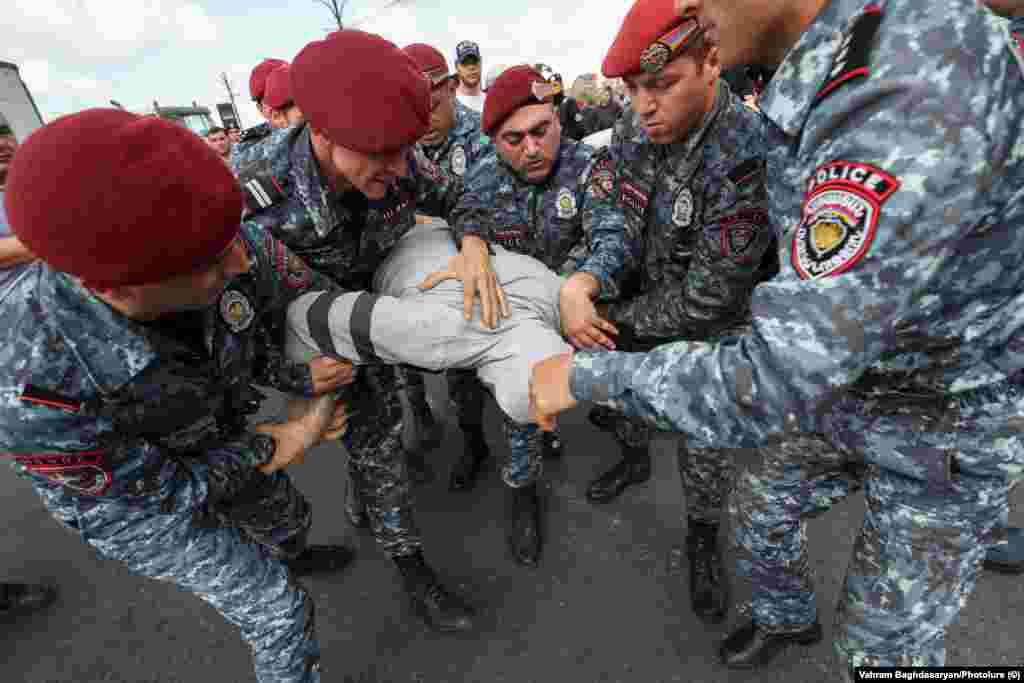
7/12A protester is detained in Yerevan on May 4.
Pashinian's Civil Contract party holds 71 of the legislature's 101 seats since snap elections were called in June 2021.
Thousands take to the streets of Yerevan and hundreds are arrested after Armenia's prime minister appears to hint at a handover of long-disputed land to Azerbaijan. Armenia and Azerbaijan have long been at odds over the Nagorno-Karabakh region. In 2020, Azerbaijan's military recaptured several regions that had been under control of ethnic Armenian forces since the 1990s.
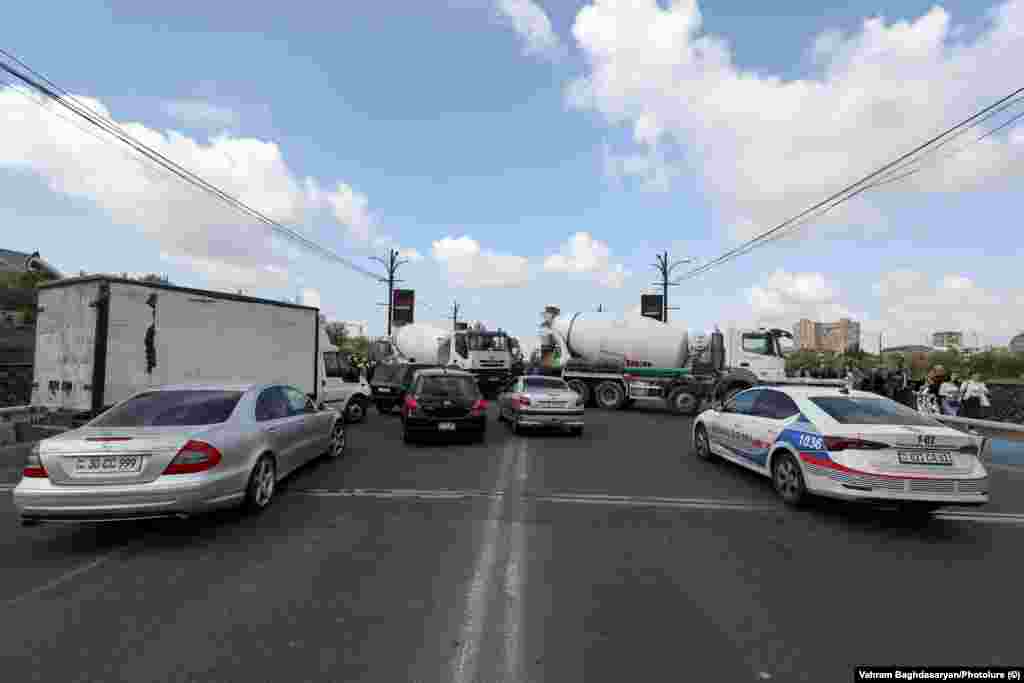
8/12Trucks block a bridge in central Yerevan on the morning of May 4. The truckers claimed to police that their vehicles had broken down.
Thousands take to the streets of Yerevan and hundreds are arrested after Armenia's prime minister appears to hint at a handover of long-disputed land to Azerbaijan. Armenia and Azerbaijan have long been at odds over the Nagorno-Karabakh region. In 2020, Azerbaijan's military recaptured several regions that had been under control of ethnic Armenian forces since the 1990s.
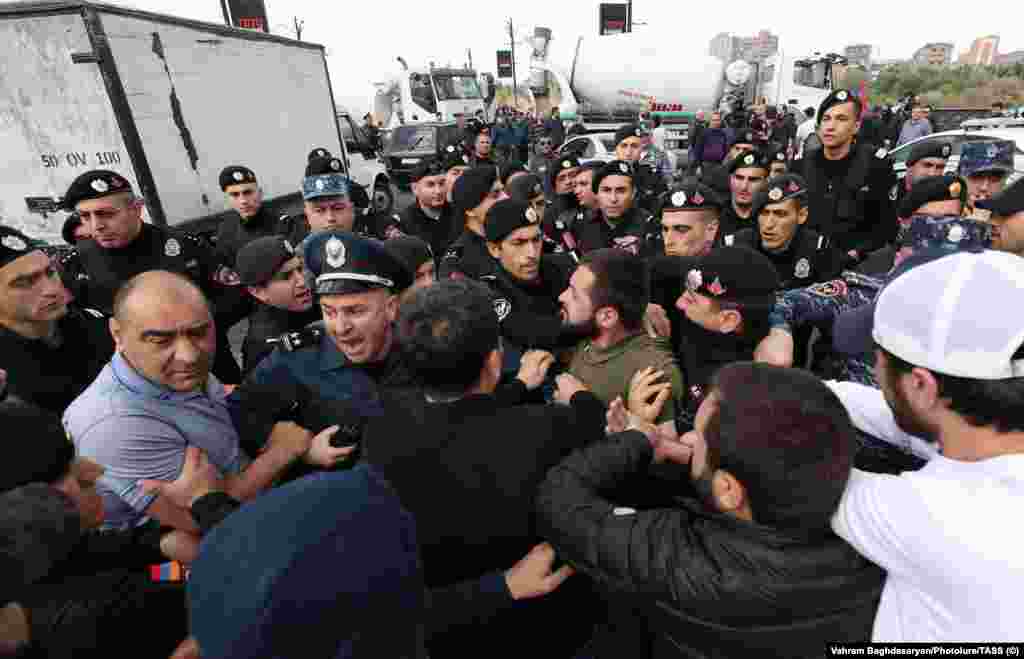
9/12A scuffle breaks out near the trucks on Yerevan's Kievyan Bridge on May 4.
Roadblocks were a key part of the protests that brought Prime Minister Nikol Pashinian to power in the spring of 2018.
Thousands take to the streets of Yerevan and hundreds are arrested after Armenia's prime minister appears to hint at a handover of long-disputed land to Azerbaijan. Armenia and Azerbaijan have long been at odds over the Nagorno-Karabakh region. In 2020, Azerbaijan's military recaptured several regions that had been under control of ethnic Armenian forces since the 1990s.
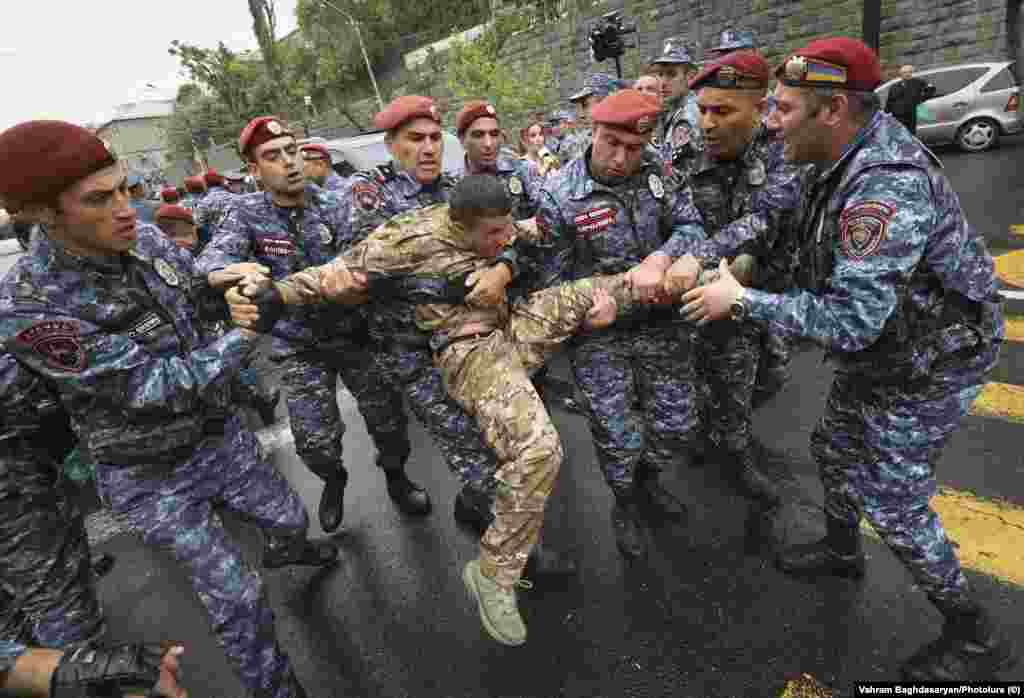
10/12A man in military clothing grapples with police in Yerevan on May 2.
Yerevan residents that RFE/RL's Armenian Service spoke to on May 3 expressed mixed feelings about the unrest, with one saying, "In democratic countries, governments are formed through elections. Period."
Thousands take to the streets of Yerevan and hundreds are arrested after Armenia's prime minister appears to hint at a handover of long-disputed land to Azerbaijan. Armenia and Azerbaijan have long been at odds over the Nagorno-Karabakh region. In 2020, Azerbaijan's military recaptured several regions that had been under control of ethnic Armenian forces since the 1990s.
11/12A dog is seen during the arrest of a protester on May 4.
Another Yerevan resident said, “I'm not a big fan of Mr. Pashinian, but these [protesters] need to specify their first, second, and third steps [after toppling the government]."
Thousands take to the streets of Yerevan and hundreds are arrested after Armenia's prime minister appears to hint at a handover of long-disputed land to Azerbaijan. Armenia and Azerbaijan have long been at odds over the Nagorno-Karabakh region. In 2020, Azerbaijan's military recaptured several regions that had been under control of ethnic Armenian forces since the 1990s.
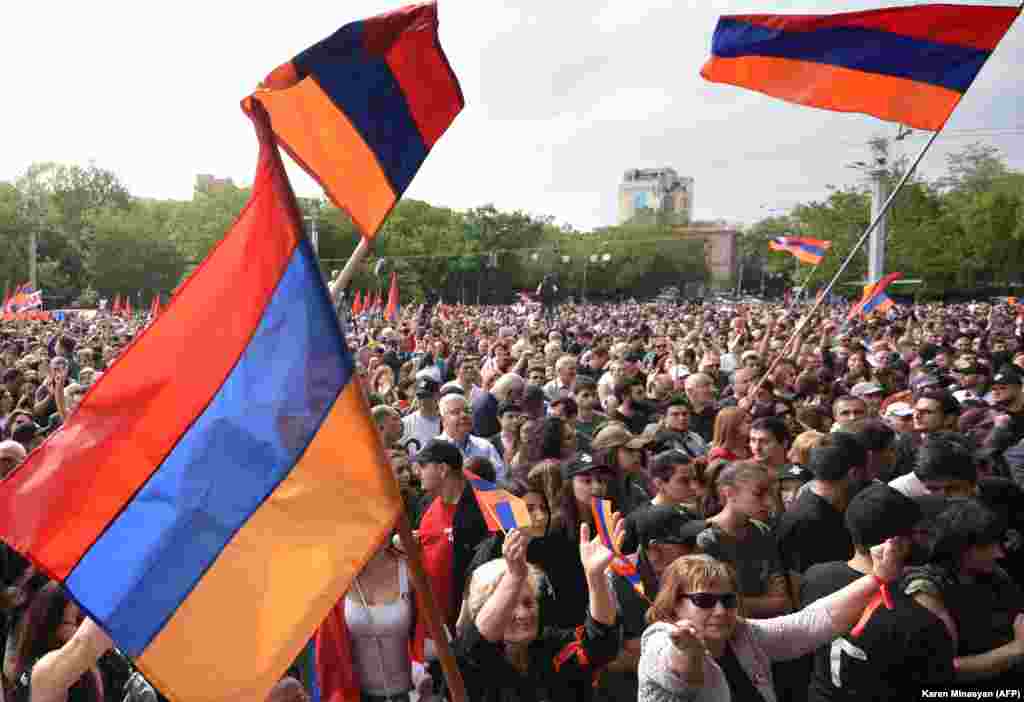
12/12Thousands of protesters gather in central Yerevan on May 1, when a massive demonstration warned the government not to concede further territory to Baku.
Thousands take to the streets of Yerevan and hundreds are arrested after Armenia's prime minister appears to hint at a handover of long-disputed land to Azerbaijan. Armenia and Azerbaijan have long been at odds over the Nagorno-Karabakh region. In 2020, Azerbaijan's military recaptured several regions that had been under control of ethnic Armenian forces since the 1990s.
Previous slide
Next slide
The situation near the parliament building in Yerevan remained tense after protesters scuffled with police late on May 4.
The parliament building was cordoned off by hundreds of police in riot gear.
Pashinian has faced heavy criticism after he and Azerbaijani President Ilham Aliyev agreed last month to start drafting a bilateral peace treaty to resolve the Nagorno-Karabakh conflict and set up a joint commission on demarcating their common border during talks in Brussels.
Azerbaijan wants the peace deal to be based on five elements, including a mutual recognition of each other’s territorial integrity. Pashinian has publicly stated that the elements are acceptable to Yerevan in principle, fueling Armenian opposition claims that he is ready to recognize Azerbaijani sovereignty over Nagorno-Karabakh.
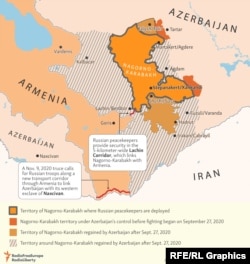
Armenia lost control over parts of the breakaway region in a 2020 war that ended with a Russian-brokered cease-fire.
Some 2,000 Russian troops have been deployed to monitor the observance of this agreement.
Nagorno-Karabakh, which had been under ethnic Armenian control for nearly three decades, is internationally recognized as part of Azerbaijan.
Pashinian -- who said he had agreed to the 2020 cease-fire to avoid further losses -- said he would not sign any peace deal with Azerbaijan without consulting ethnic Armenians in Nagorno-Karabakh.
RFE/RL’s Armenian Service, operating out of a bureau in Yerevan, is a leading source of trusted reporting and technical innovation, reaching outsized audiences when developments demand authoritative, up-to-the-minute news most.





![Police surround protesters in Yerevan on May 3.<br />
<br />
On April 13, Pashinian told parliament: "I am guilty that in 2018-19 I did not stand before our society and relay that all of our -- I repeat, all of our -- friends near and far expect us to hand over seven famous [disputed regions in and around Nagorno-Karabakh] to Azerbaijan in one way or another..."](https://gdb.rferl.org/08c10000-0a00-0242-5a1f-08da2da6e334_w1024_q10_s.jpg)
![A dog is seen during the arrest of a protester on May 4.<br />
<br />
Another Yerevan resident said, “I'm not a big fan of Mr. Pashinian, but these [protesters] need to specify their first, second, and third steps [after toppling the government]." ](https://gdb.rferl.org/08c10000-0a00-0242-0544-08da2da6edd8_w1024_q10_s.jpg)