


Accessibility links

Breaking News

Ukraine Hopes Soldiers Evacuated From Mariupol Can Be Part Of Prisoner Exchange

Updated
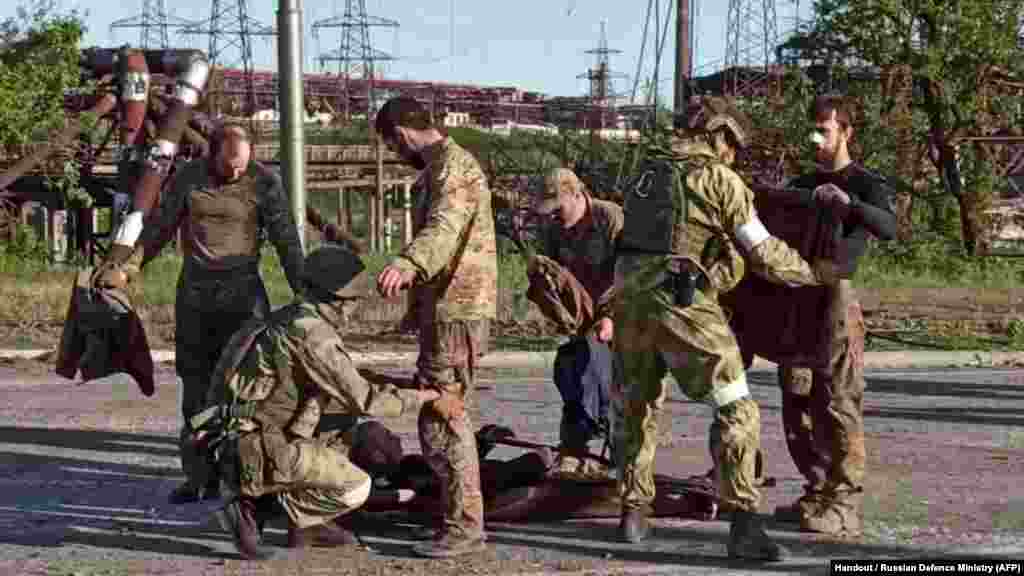
A video released by the Russian Defense Ministry on May 17 shows Ukrainian soldiers as they are searched by separatist military personnel after leaving the besieged Azovstal steel plant in the port city of Mariupol.

Ukraine's deputy defense minister has expressed hope that the 264 Ukrainian fighters evacuated from the Azovstal steelworks in Mariupol will be exchanged for Russian prisoners of war.

Hanna Malyar's comment at a briefing came after Russian State Duma speaker Vyacheslav Volodin called the evacuated soldiers "criminals" who must be "brought to justice." Volodin said the Azovstal fighters should be excluded from any future exchanges, according to Interfax.

Malyar said Volodin's comments were a political statement "conceived as internal propaganda." She said that from Ukraine's perspective both the operation to evacuate more soldiers from the steelworks and the process of negotiating the fate of those already out are ongoing.

Ukraine's Defense Ministry said earlier that the Ukrainian fighters -- including 53 who were "seriously wounded" -- were ferried out of the plant on May 16 and taken to Russia-controlled territory and that efforts were under way to evacuate those still inside.
Hundreds Of Ukrainian Fighters From Taken From Azovstal Steelworks
please wait

No media source currently available

0:00 0:01:00 0:00

Russia's Defense Ministry said 256 Ukrainian fighters had "laid down their arms and surrendered," including 51 gravely wounded.

Malyar said the badly wounded soldiers were taken to a hospital in Novoazovsk, while another 211 were evacuated through a humanitarian corridor to the town of Olenivka. Both areas are controlled by Kremlin-backed separatists.

Months of Russian bombardment reduced Mariupol to rubble and killed thousands of civilians before Ukraine ceded control of the strategic Sea of Azov port, where hundreds of troops and civilians had been holed up for weeks in underground bunkers in the sprawling Azovstal industrial complex.

While Russia called it a surrender, Ukraine said the plant’s garrison had successfully completed its mission to tie down Russian forces and called the defenders heroes.

"The 'Mariupol' garrison has fulfilled its combat mission," the General Staff of Ukraine's armed forces said in a statement on May 17.

"The supreme military command ordered the commanders of the units stationed at Azovstal to save the lives of the personnel.... Defenders of Mariupol are the heroes of our time," the statement added.

In his nightly video address, Ukrainian President Volodymyr Zelensky said late on May 16 that Ukrainian military and intelligence negotiators as well as the Red Cross and the United Nations orchestrated the evacuation.

"Ukraine needs its heroes alive," Zelenskiy said.

However, he warned that the Ukrainian fighters may not be freed immediately, adding that negotiations over their release will require "delicacy and time."

Ukrainian Troops Taken From Azovstal Steelworks, Yielding Strategic City Of Mariupol To Russia
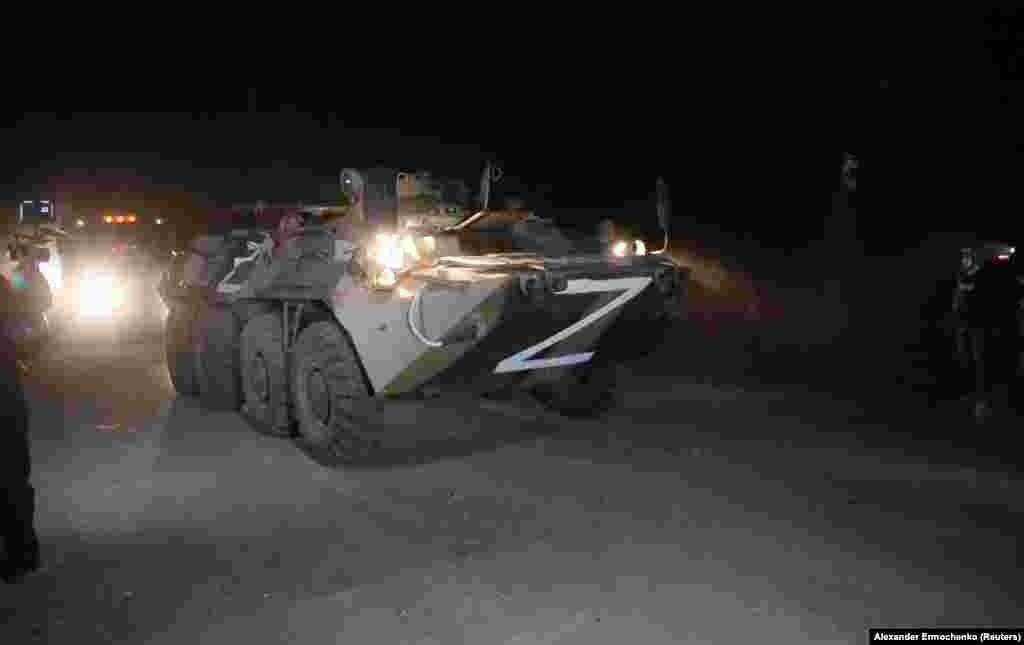
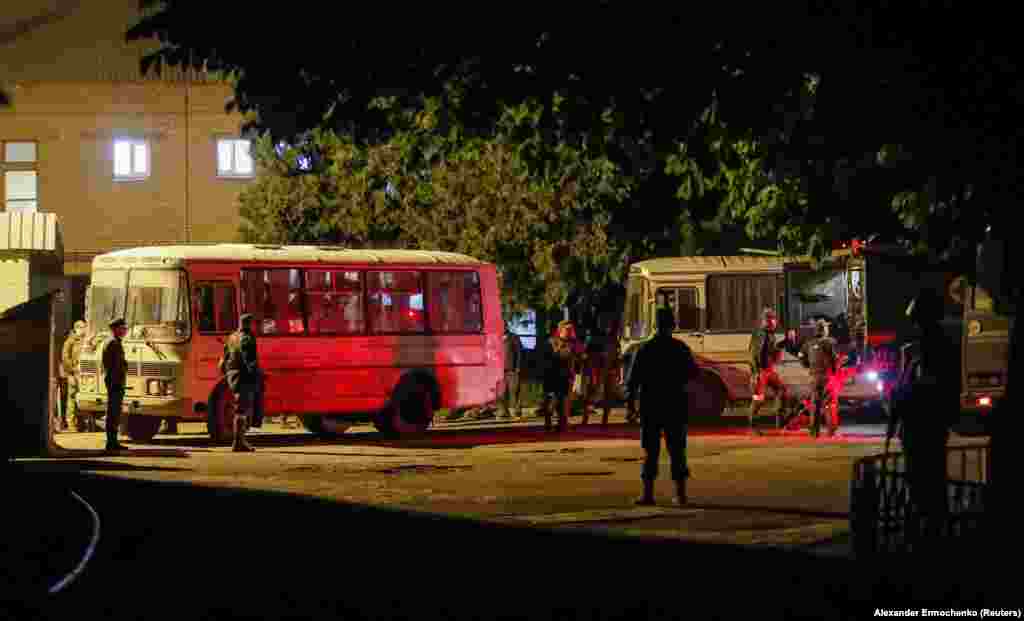
A convoy of Kremlin-backed separatists escorts buses transporting Ukrainian soldiers from the besieged Azovstal steel plant in Mariupol late on May 16. Deputy Defense Minister Hanna Malyar said 53 badly wounded soldiers were taken to a hospital in separatist-held Novoazovsk, while another 211 were evacuated through a humanitarian corridor to another site.
1/11 A convoy of Kremlin-backed separatists escorts buses transporting Ukrainian soldiers from the besieged Azovstal steel plant in Mariupol late on May 16. Deputy Defense Minister Hanna Malyar said 53 badly wounded soldiers were taken to a hospital in separatist-held Novoazovsk, while another 211 were evacuated through a humanitarian corridor to another site.
After enduring 82 days of bombardment an estimated 264 Ukrainian soldiers from the Azovstal steel plant have been transferred to Russian custody. Hundreds of troops and civilians had been holed up for weeks in underground bunkers in the sprawling industrial complex enduring fierce bombardment.
In his nightly video address, President Volodymyr Zelenskiy said that Ukrainian military and intelligence negotiators as well as the Red Cross and the United Nations orchestrated the evacuation. "Ukraine needs its heroes alive," Zelenskiy said.
2/11 In his nightly video address, President Volodymyr Zelenskiy said that Ukrainian military and intelligence negotiators as well as the Red Cross and the United Nations orchestrated the evacuation. "Ukraine needs its heroes alive," Zelenskiy said.
After enduring 82 days of bombardment an estimated 264 Ukrainian soldiers from the Azovstal steel plant have been transferred to Russian custody. Hundreds of troops and civilians had been holed up for weeks in underground bunkers in the sprawling industrial complex enduring fierce bombardment.
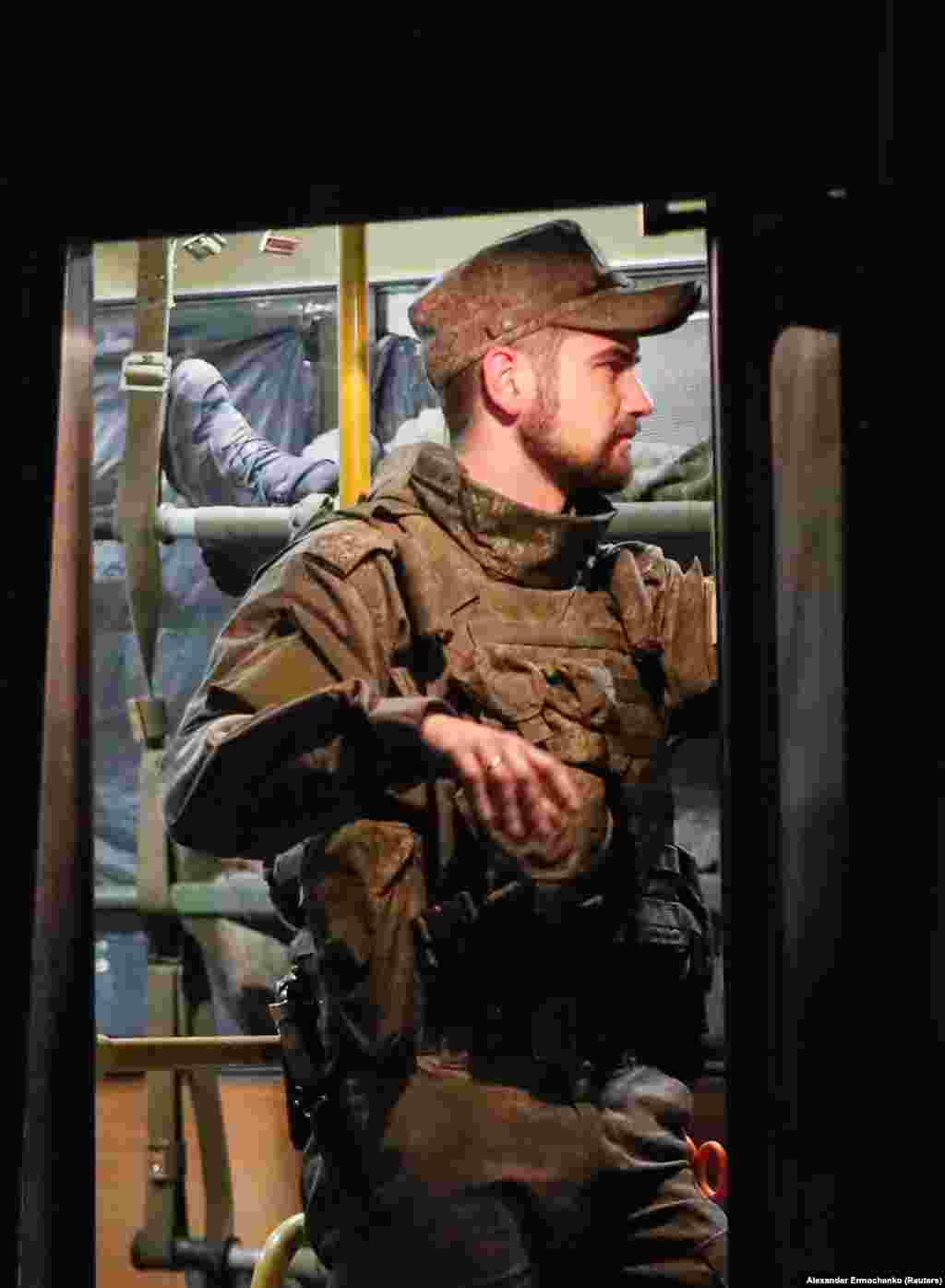
A separatist soldier watches as a bus carrying Ukrainian forces from the besieged Azovstal steel plant in Mariupol arrives in Novoazovsk on May 16.
3/11 A separatist soldier watches as a bus carrying Ukrainian forces from the besieged Azovstal steel plant in Mariupol arrives in Novoazovsk on May 16.
After enduring 82 days of bombardment an estimated 264 Ukrainian soldiers from the Azovstal steel plant have been transferred to Russian custody. Hundreds of troops and civilians had been holed up for weeks in underground bunkers in the sprawling industrial complex enduring fierce bombardment.
Separatist troops stand guard as buses carrying wounded Ukrainian soldiers from Mariupol arrive in Novoazovsk.
4/11 Separatist troops stand guard as buses carrying wounded Ukrainian soldiers from Mariupol arrive in Novoazovsk.
After enduring 82 days of bombardment an estimated 264 Ukrainian soldiers from the Azovstal steel plant have been transferred to Russian custody. Hundreds of troops and civilians had been holed up for weeks in underground bunkers in the sprawling industrial complex enduring fierce bombardment.
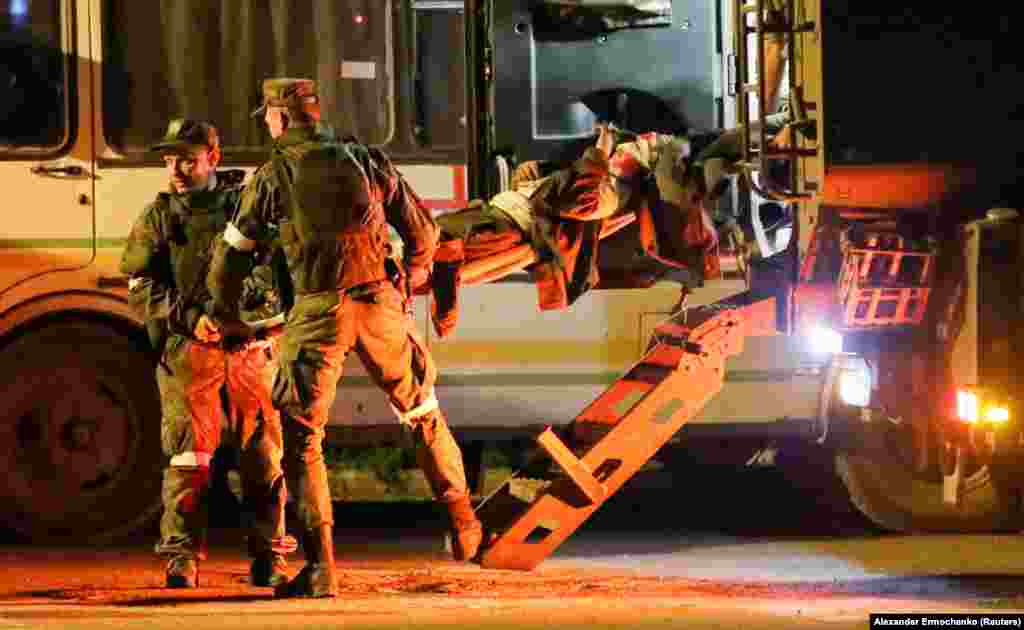
A wounded Ukrainian soldier from Azovstal arrives in Novoazovsk, where he is to receive treatment for his injuries.
5/11 A wounded Ukrainian soldier from Azovstal arrives in Novoazovsk, where he is to receive treatment for his injuries.
After enduring 82 days of bombardment an estimated 264 Ukrainian soldiers from the Azovstal steel plant have been transferred to Russian custody. Hundreds of troops and civilians had been holed up for weeks in underground bunkers in the sprawling industrial complex enduring fierce bombardment.
A separatist fighter stands guard over a bus carrying wounded Ukrainian soldiers from Mariupol. 
6/11 A separatist fighter stands guard over a bus carrying wounded Ukrainian soldiers from Mariupol. 
After enduring 82 days of bombardment an estimated 264 Ukrainian soldiers from the Azovstal steel plant have been transferred to Russian custody. Hundreds of troops and civilians had been holed up for weeks in underground bunkers in the sprawling industrial complex enduring fierce bombardment.
Wounded Ukrainian soldiers from Mariupol arrive in Novoazovsk under separatist military escort. There was no word on whether the wounded would be considered prisoners of war.
7/11 Wounded Ukrainian soldiers from Mariupol arrive in Novoazovsk under separatist military escort. There was no word on whether the wounded would be considered prisoners of war.
After enduring 82 days of bombardment an estimated 264 Ukrainian soldiers from the Azovstal steel plant have been transferred to Russian custody. Hundreds of troops and civilians had been holed up for weeks in underground bunkers in the sprawling industrial complex enduring fierce bombardment.
The Ukrainian military's General Staff said some fighters remained trapped at Azovstal and efforts to rescue them were ongoing.
8/11 The Ukrainian military's General Staff said some fighters remained trapped at Azovstal and efforts to rescue them were ongoing.
After enduring 82 days of bombardment an estimated 264 Ukrainian soldiers from the Azovstal steel plant have been transferred to Russian custody. Hundreds of troops and civilians had been holed up for weeks in underground bunkers in the sprawling industrial complex enduring fierce bombardment.
A video released by the Russian Defense Ministry shows Ukrainian soldiers being checked by separatist troops after being moved from the besieged Azovstal steel plant.
9/11 A video released by the Russian Defense Ministry shows Ukrainian soldiers being checked by separatist troops after being moved from the besieged Azovstal steel plant.
After enduring 82 days of bombardment an estimated 264 Ukrainian soldiers from the Azovstal steel plant have been transferred to Russian custody. Hundreds of troops and civilians had been holed up for weeks in underground bunkers in the sprawling industrial complex enduring fierce bombardment.
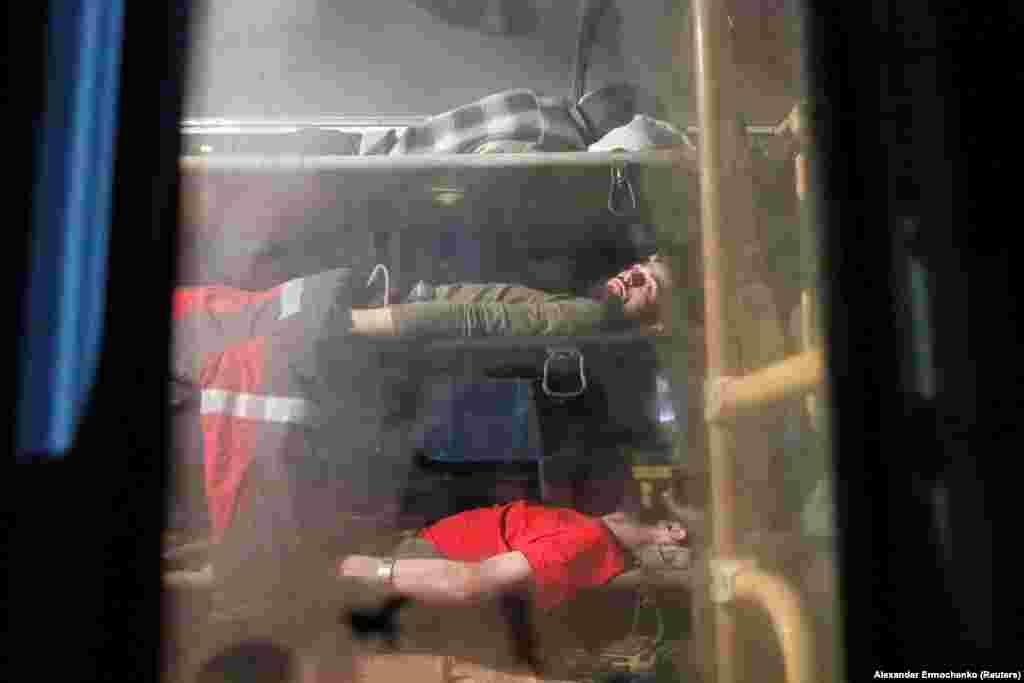
A video released by the Russian Defense Ministry shows a wounded Ukrainian soldier receiving treatment in a bus after being moved from the Azovstal steel plant.
10/11 A video released by the Russian Defense Ministry shows a wounded Ukrainian soldier receiving treatment in a bus after being moved from the Azovstal steel plant.
After enduring 82 days of bombardment an estimated 264 Ukrainian soldiers from the Azovstal steel plant have been transferred to Russian custody. Hundreds of troops and civilians had been holed up for weeks in underground bunkers in the sprawling industrial complex enduring fierce bombardment.
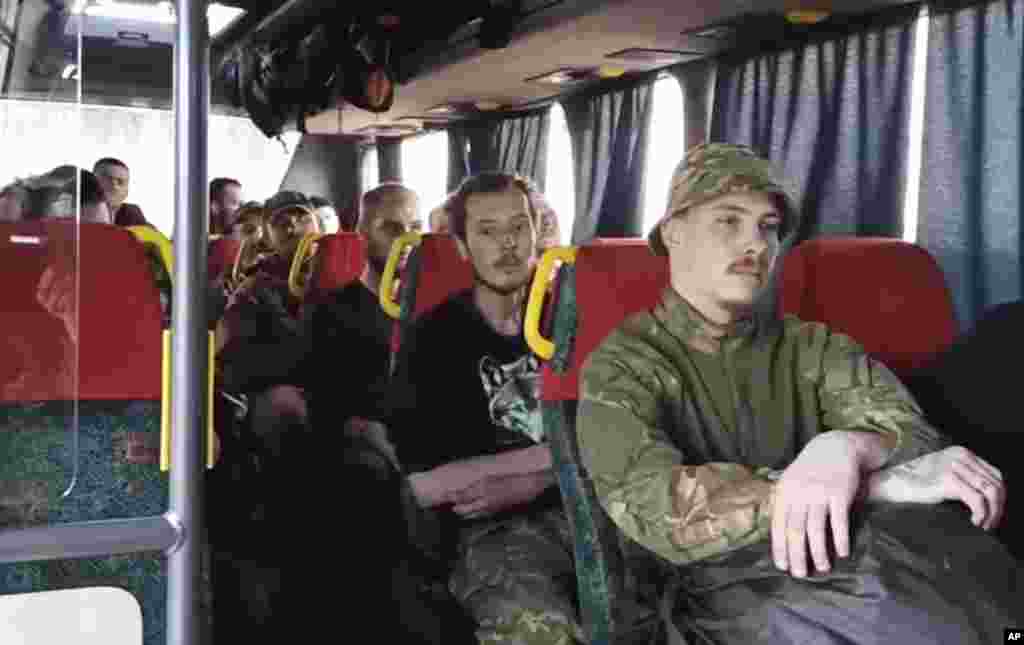
A video released from the Russian Defense Ministry shows Ukrainian servicemen waiting in a bus. The Ukrainian government said it was continuing efforts to complete what it called was the "evacuation" of its fighters from the Azovstal steel plant. It was the last holdout in the southern port city of Mariupol, after around 260 soldiers, some of them wounded, were able to get out of the sprawling complex.
11/11 A video released from the Russian Defense Ministry shows Ukrainian servicemen waiting in a bus. The Ukrainian government said it was continuing efforts to complete what it called was the "evacuation" of its fighters from the Azovstal steel plant. It was the last holdout in the southern port city of Mariupol, after around 260 soldiers, some of them wounded, were able to get out of the sprawling complex.
After enduring 82 days of bombardment an estimated 264 Ukrainian soldiers from the Azovstal steel plant have been transferred to Russian custody. Hundreds of troops and civilians had been holed up for weeks in underground bunkers in the sprawling industrial complex enduring fierce bombardment.
Previous slide
Next slide

In Moscow, Kremlin spokesman Dmitry Peskov said on May 17 that Ukrainian fighters who "surrendered" would be treated "in accordance with international standards," and that Russian President Vladimir Putin had guaranteed this.

The Russian Defense Ministry earlier announced an agreement for the wounded to leave the steelworks for treatment in a town held by separatists, while Kyiv said the Ukrainian fighters would be exchanged for captured Russian soldiers.

The Ukrainian military leadership said the Azovstal defenders forced Moscow to station some 20,000 troops in Mariupol, preventing them from rapidly capturing other parts of the country.

While the evacuation of the last Ukrainian defenders of Mariupol marked a defeat for Ukraine, Russia's bombardment turned the port with a prewar population of some 400,000 into rubble and rendered it unusable.

British military intelligence said in its daily bulletin on May 17 that Russia's growing reliance on indiscriminate artillery bombardment in the conflict betrayed a limited capacity to accurately identify targets and "an unwillingness to risk flying combat aircraft routinely beyond its own front lines."

The bulletin posted on Twitter said that in another operational theater, the Chernihiv region north of Kyiv, Russia's heavy use of artillery destroyed or damaged an estimated 3,500 buildings during its failed advance toward the Ukrainian capital.

Some 80 percent of the damage has been caused to residential buildings, the U.K. bulletin said, cautioning that Russia will likely continue to rely heavily on massive artillery bombardment in its attempt to regain momentum in eastern Ukraine.

The Ukrainian military said Russia was "continuing its offensive" in the east of the country, adding "the enemy focused its main efforts on Donetsk" in the east.

Russia is drawing forces to Lysychansk and Severodonetsk in the Luhansk region, an analyst told RFE/RL's Donbas.Realities.

"We are now receiving indirect evidence that forces are concentrated in the area of the Severodonetsk-Lysychansk...which Russian forces are likely to try to surround," analyst Kirill Mikhailov of the Conflict Intelligence Team said.

Ukrainian authorities said Russian shelling struck a hospital in Severodonetsk.

"Massive artillery shelling, including from tanks, continues in Severodonetsk. The hospital in Severodonetsk came under artillery fire. The building is almost completely destroyed. The number of victims is currently being determined," police said.

The report could not be independently verified.

Ukrainian Defense Minister Oleksiy Reznikov said on May 17 in a speech to European Union defense ministers and NATO Secretary-General Jens Stoltenberg that Russia was preparing for a long-term military operation as its forces try to take full control of the east and south of Ukraine.

The Kremlin's main efforts are now focused on "encircling and destroying groups of the armed forces of Ukraine in the Donetsk and Luhansk regions, creating and maintaining a land corridor from Russia to Crimea, and completing the occupation of southern Ukraine," Reznikov said.

He implored the ministers not to let Russia prolong the conflict and called on them to coordinate arms deliveries to Ukraine.

"We want to defeat the enemy and liberate our territories as soon as possible,” he said. "That is why we are very interested in receiving international aid, buying weapons as quickly as possible, and in the right quantities. We need tanks, armored vehicles, long-range weapons."

EU foreign policy chief Josep Borrell said after the meeting that the European Union “will not let Ukraine run out of equipment."

In Kyiv, Zelenskiy said he had a "long and meaningful" phone conversation on May 17 with French President Emmanuel Macron about the war.

The two leaders spoke about "the course of hostilities, the operation to rescue the military from Azovstal, and the vision of the prospects of the negotiation process," Zelenskiy said on Twitter. He said he also raised the issue of fuel supply to Ukraine.

Among the other topics discussed were more defense support from France, a sixth package of EU sanctions, and possible ways to export Ukrainian agricultural products.

Macron told Zelenskiy that arms supplies from Paris would "increase in intensity in the days and weeks to come," according to a statement from the French presidency. The supply of humanitarian equipment would also increase, the statement said.

The U.S. State Department on May 17 announced the launch of a new program to capture, analyze, and preserve evidence of war crimes and other atrocities.

The State Department said the Conflict Observatory will encompass the documentation, verification, and dissemination of open-source evidence of the actions of Russian forces in Ukraine.

The new program, which is being established with an initial $6 million investment, will include satellite imagery and information shared on social media.

"This new Conflict Observatory program is part of a range of U.S. government efforts at both national and international levels designed to ensure future accountability for Russia’s horrific actions," the State Department said in a statement.

Meanwhile, Sweden on May 17 signed a formal request to join NATO, a day after Stockholm said it would seek membership in the 30-member Western military alliance amid security concerns sparked by Russia's invasion of Ukraine.

The move came a day after Finland also announced that it was seeking to join the alliance.

With reporting by Reuters, AFP, AP, dpa, BBC, and TASS
  • 16x9 Image

    RFE/RL

    RFE/RL journalists report the news in 24 languages in 18 countries where a free press is banned by the government or not fully established. We provide what many people cannot get locally: uncensored news, responsible discussion, and open debate.

This item is part of
XS
SM
MD
LG