




With billions of dollars invested in Pakistan and rising concern about instability in Taliban-ruled Afghanistan, China has intensified diplomatic outreach to encourage Kabul and Islamabad to resolve disputes through dialogue.
Beijing’s special envoy for Afghan affairs, Yue Xiaoyong, visited Kabul, Doha, and Islamabad last month to advance talks that began in Urumqi, Xinjiang, between Pakistani and Taliban representatives in early April.
Pakistan’s special representative for Afghanistan, Mohammad Sadiq, said he welcomed Yue to Islamabad and that the sides discussed regional security and threats from Tehrik-e Taliban Pakistan (TTP) and the Eastern Turkistan Islamic Movement (ETIM), which reportedly operate from Afghan soil.
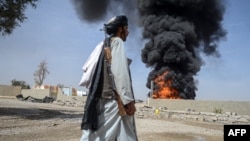
Tensions between Pakistan and the Afghan Taliban nearly escalated into all-out war last year after Pakistan carried out air strikes inside Afghanistan. Analysts say instability along the Afghanistan-Pakistan border threatens China’s long-term interests, particularly investments under the China-Pakistan Economic Corridor (CPEC), and risks enabling militant groups hostile to Beijing.
“Security is a paramount concern for Chinese investors, and ongoing conflict in the region severely hampers project development in Pakistan,” said Ramin Mansoori, a visiting scholar at the University of Pittsburgh.
He added that the presence of Uyghur militants under ETIM is a serious worry for China: sustained conflict could allow anti-China groups to threaten Beijing’s control over Xinjiang. Selecting Urumqi for the April talks, Mansoori said, was a deliberate signal that China’s mediation is driven by strategic interests.
“Against this backdrop, China has shown a genuine willingness to mediate between Afghanistan and Pakistan,” said Mansoori, who added that selecting Urumqi, the capital of Xinjiang, for talks between Taliban and Pakistani officials in April was a deliberate signal by China that “its mediation efforts are driven first and foremost by its own strategic interests in the region.”
China invited Pakistani and Taliban representatives to Urumqi for face-to-face talks from April 1 to April 7. Urumqi remains a sensitive site after ethnic unrest in 2009 and ongoing Uyghur grievances; ETIM members are believed to shelter in Afghanistan.
China’s economic stakes include the multibillion-dollar CPEC in Pakistan and Afghanistan’s mineral riches -- nickel, oil, gold and rare earths such as lithium. Experts say Beijing wants stability to protect investments and access resources.
Aaron Glasserman, a historian at the University of Pennsylvania, noted that insecurity in Afghanistan has enabled groups like ETIM and the Islamic State Khorasan Province (ISK-P) to target Chinese interests and stoke unrest in Xinjiang.
In January 2026, a suicide bombing at a Chinese cafe in Kabul killed six people, including one Chinese national; ISK-P claimed responsibility. ISK-P attacks target Chinese nationals partly in response to Beijing’s policies toward Uighurs and its links with the Afghan Taliban.


“Beijing does not want to see its investments threatened and would like to take advantages of the opportunities offered by a stable Afghanistan and Pakistan,” according to Glasserman, who called attacks on Chinese nationals a “red line issue for Beijing.”
Diplomatic Clout
Observers see China’s proactive mediation as both protective and prestige-seeking.
Europe-based analyst Eldaniz Gusseinov called the Pakistan-Taliban dispute a test of China’s diplomatic reach: a successful resolution would demonstrate Beijing’s ability to mediate complex regional conflicts. Security for Chinese personnel, he warned, is unlikely while Pakistan-Afghanistan border tensions persist; Chinese firms have suspended projects and laid off workers after attacks on Chinese nationals in northwestern Pakistan.
Masom Jan Masomy, a professor at Afghanistan’s Science Academy, said China’s lead role enhances its regional standing and secures national interests. Ahead of the Urumqi talks, China’s Foreign Ministry pledged to maintain communication, provide a dialogue platform and play a constructive role in improving Afghanistan-Pakistan relations.
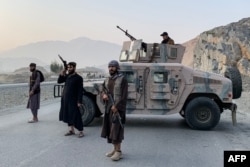
Once allies to varying degrees, Pakistan and the Afghan Taliban clashed in October last year after attacks on Pakistani forces. Pakistan’s air strikes targeted several Afghan cities, including Kabul, and the Taliban retaliated against Pakistani border posts along the Durand Line -- the frontier separating Afghanistan and Pakistan. Islamabad accuses the Afghan Taliban of sheltering TTP militants; the Taliban say they will not allow Afghan soil to be used against any country.

The fighting led both countries to close borders, halting formal and informal trade and disrupting cross-border movement -- harming Pashtun communities that straddle the roughly 2,600-kilometer porous boundary.
Before China stepped in, Qatar and Turkey mediated cease-fires in Doha and Istanbul earlier this year, but those agreements did not hold. A cease-fire has been in place since April 7, after the China-mediated Urumqi talks.
Lahore-based economist Shakeel Ramay expressed optimism that China’s leverage -- and the Taliban’s interest in Chinese investment -- could sustain the cease-fire longer than previous attempts.
“I’m optimistic that the China-mediated cease-fire will continue primarily because of China’s leverage over the two sides. Also, the Taliban want the Chinese investment,” Ramay added.
China has about $65 billion invested in Pakistan under CPEC, and increasing interest in Afghanistan’s minerals after the US withdrawal in 2021.
Analysts say Beijing is compelled to mediate because regional instability nurtures anti-China groups such as ISK-P and ETIM.
“What we hear from Chinese is they seek regional stability,” said Ramay.
Beyond ETIM and ISK-P, Baluch separatists under the Balochistan Liberation Army (BLA) have targeted Chinese nationals in Pakistan, accusing Beijing of exploiting local resources.

In October 2025, a suicide attack near Karachi’s Jinnah International Airport struck Chinese citizens; the BLA claimed responsibility. Baluch militants are staging a low-level insurgency in Pakistan’s southwestern Balochistan Province, where China developed the Arabian Sea port of Gwadar.
The TTP is focused on overthrowing Pakistan’s order in favor of Shari'a law, aligning ideologically with the Afghan Taliban; the Baluch militants seek regional independence.
“Pakistan’s core concern is the TTP in Afghanistan and China’s core concern is the ETIM,” said Asif Khan Durrani, Pakistan’s former special representative for Afghanistan. China’s proximity to both countries makes the dispute a direct strategic concern.
What's At Stake?
China’s long-term Eurasian transportation ambitions and planned rail links through Central Asia to Pakistan’s Gwadar port depend on stability. Reports indicatet that Beijing is discussing railway and transport projects with Kyrgyzstan and Uzbekistan for potential extension through Afghanistan to Gwadar. Persistent Pakistan-Afghanistan tension strengthens militant groups -- including anti-China ETIM and ISK-P -- and threatens these infrastructure plans.
Chinese mediation reduced hostilities in April: despite Pakistani officials describing an “open war” with the Afghan Taliban, there have been no new Pakistani air strikes or drone strikes since April 1.
Masomy warns that China will act to prevent prolonged conflict from undermining China-Pakistan interests. Glasserman believes mediation is Beijing’s principal tool: China recognizes the security challenges but is reluctant to undertake direct military intervention, which could worsen the situation.
“Playing the role of mediator is about as much as Beijing is willing to do,” he said.

