




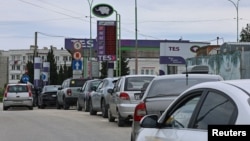
In a TikTok video, a Russian vacationer says she and her husband will have to stay in the Crimean resort city of Yalta indefinitely: They have only enough gas to drive 50 kilometers, and the closest filling station believed to have any is in Simferopol, about 80 kilometers away.
On Instagram, cell-phone footage shot from a moving car shows one roadside gas station after another, most of them with no fuel at all for sale or with limited options such as diesel or LPG. Above an Edvard Munch-inspired scream emoji, wording on the screen reads: "There's no gas in Crimea."
And in a video on Telegram, an actress from Sevastopol says she "waited for three hours, only to be told that there was no gasoline left for sale that day…. It's a nightmare."
Since Russia seized control of Crimea 12 years ago, occupation authorities on the Ukrainian Black Sea peninsula have always had difficulty keeping the region adequately supplied with everything that its 2 million residents need.
Water is a continual problem due to a welter of factors: the region's arid climate, Ukraine's efforts to choke off flows from the mainland, and mismanagement by the Russian officials in power on the peninsula.

Food, commodities, and durable goods like appliances or industrial supplies are brought in by one of two routes: the 700-kilometer coastal road that leads from the Russian border across a "land corridor" of occupied territory to the isthmus connecting Crimea to the mainland or the Crimea Bridge, the multibillion-dollar, Russian-built span across the Kerch Strait that is the only direct connection between Russia and Crimea.
This summer, more than four years into Russia's all-out war on Ukraine, things are different -- and particularly dire.
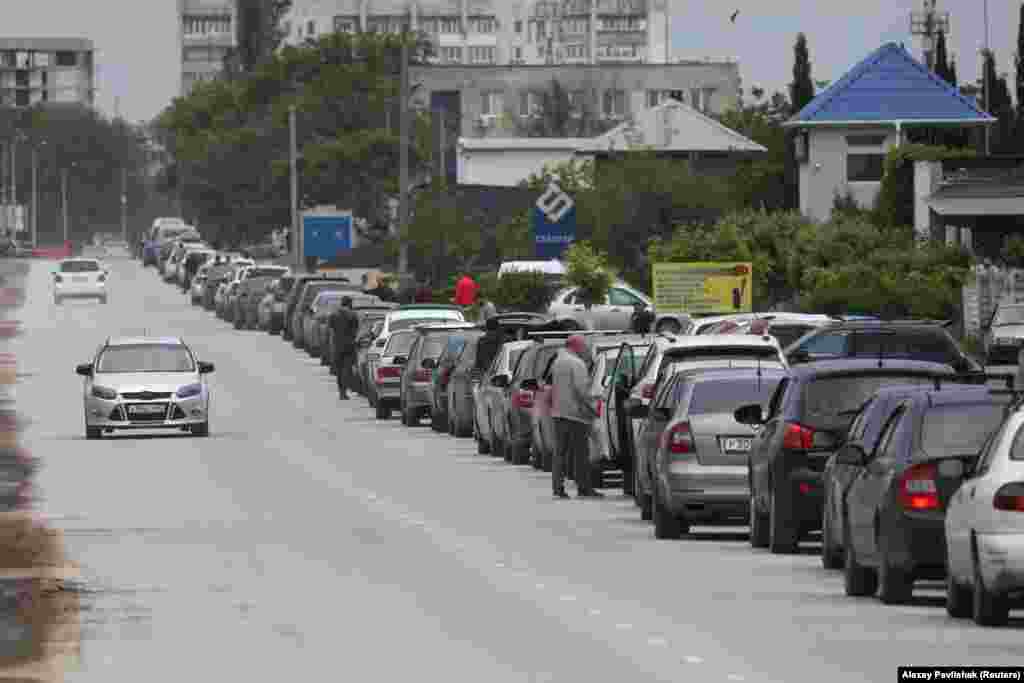
For residents and vacationers alike, the gasoline shortage in Crimea is putting a major damper on the holiday season, when tens of thousands of Russians normally travel great distances to enjoy the legendary beaches and calm waters of the peninsula Russia occupied and claimed to annex in 2014.
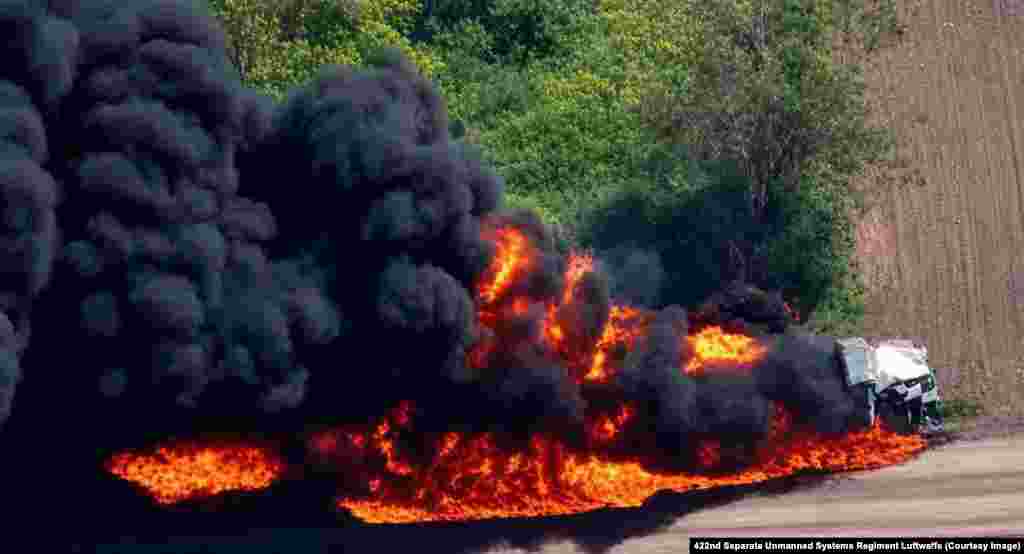
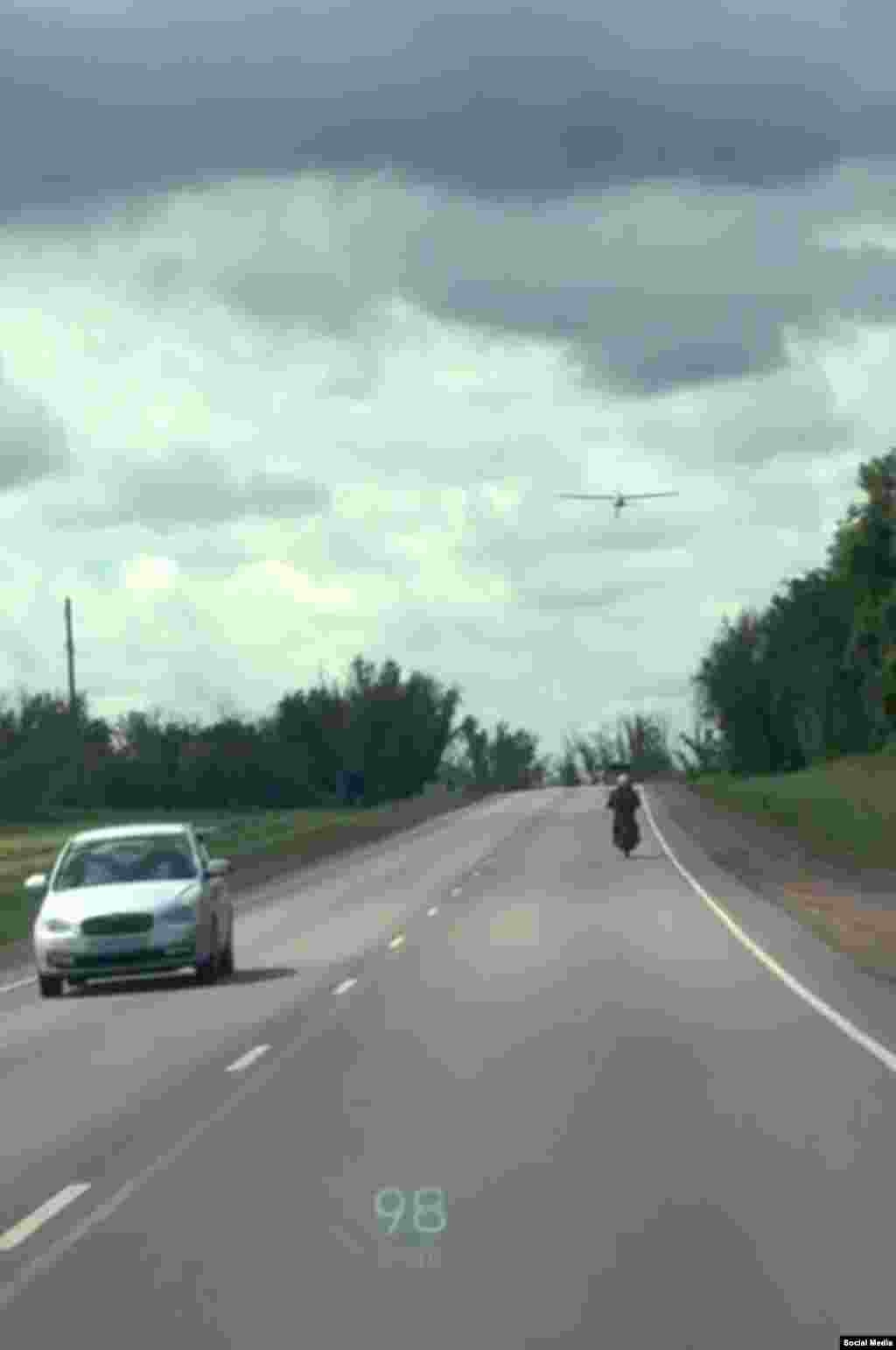
Thanks to Ukraine's plucky, burgeoning homegrown drone industry, Kyiv's military has threatened the coastal road -- even hitting fuel tanker trailers -- reducing that traffic to a relative trickle and forcing trucks to take the longer route south and west around the Sea of Azov.
The problem with that, for Russia, is that trucks carrying fuel and other hazardous cargoes are barred from driving across the Crimea Bridge, also known as the Kerch Bridge, a prohibition put in place when Ukrainian intelligence detonated a truck bomb on the span in October 2022.
The situation on the coastal road across occupied territory is "catastrophic," for Russia, with traffic "experiencing significant delays and disruptions due to strikes carried out by Ukrainian defense forces," Ukrainian military analyst Vladyslav Seleznyov told RFE/RL's Donbas.Realities on June 3. "Carriers are reportedly unwilling to send fuel tankers to the peninsula, even for significantly higher payments."
The other route is also problematic for Russia, he suggested, asserting that "the capacity of the Kerch Bridge is significantly constrained" and rail ferry service across the strait "is not operational."
Crisis In Crimea As Fuel Shortages Worsen Amid Ukrainian Drone Campaign
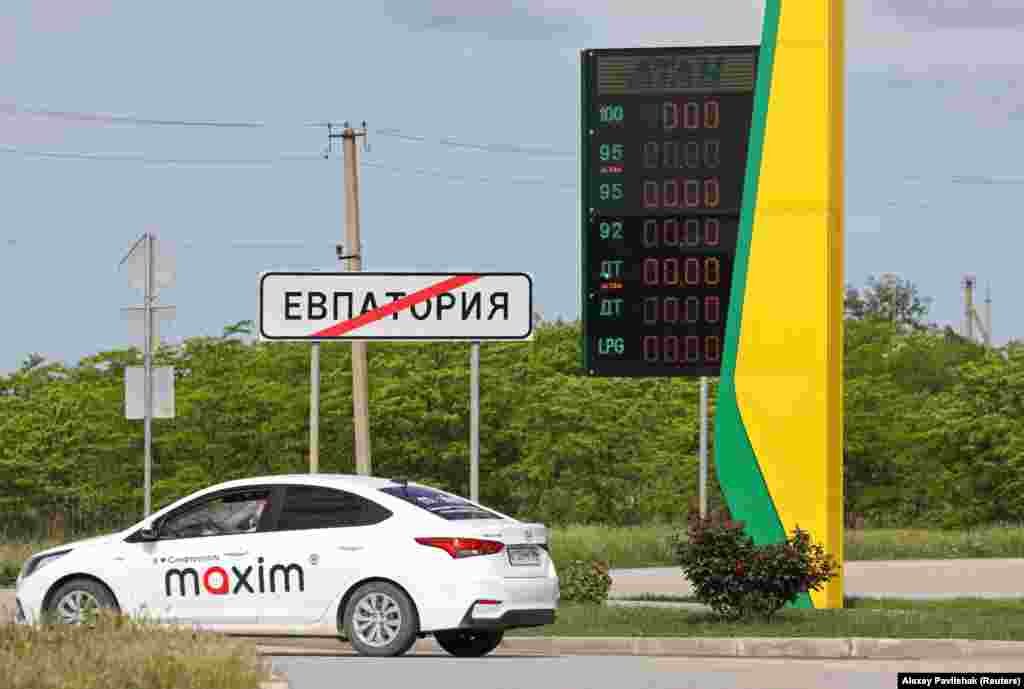
![A fuel price board in Yevpatoriya on June 3. "Standing in lines [for fuel] is now pointless," Razvozhayev said in the June 4 post, adding that "it is extremely important now to remain calm and not panic."](https://gdb.rferl.org/43cb7601-4059-419d-760d-08debadc3b87_w1024_q10_s.jpg)
Russian officials and tour operators have been downplaying the problems: "Crimea is ready, and so are the tourists. The peninsula has opened its warm embrace," one advertisement on state television says.
"The situation is now becoming somewhat worse. This is connected with external factors. Everyone understands everything; everyone is an adult; no one is tearing their hair out," a tourism expert says in a video report by state-run news agency RIA Novosti that declares: "The 2026 tourist season in Crimea will not be worse than in 2025."
But gasoline shortages affecting Crimea and, to a lesser degree, other Russian-occupied parts of Ukraine point to the effectiveness of a recent surge of middle-range drone strikes by Kyiv's forces that have hampered Russian logistics, a big new headache for the Kremlin.

They came as Moscow's forces struggle to make territorial gains and seize the whole of Ukraine's Donbas region, which Russian President Vladimir Putin has set out as a key goal. Ukrainian strikes on energy and military targets across the country prompted the Kremlin to scale back World War II victory commemorations last month and cast a shadow on Putin's showcase economic forum in his hometown this week.
Cautiously acknowledging the problem at a June 4 meeting with heads of international news agencies during the St. Petersburg International Economic Forum, Putin said Russia would improve its air defenses in response.
The Crimean gas crisis has provided fodder for both Russian bloggers who may support the war in Ukraine but frequently criticize the way Moscow is waging it and for Ukrainian commentators who point to the invading side's setbacks and struggles.
"It's necessary to start fortifying the land corridor to Crimea through Mariupol with [protective] nets or other similar engineering solutions right now, " a post on the prominent Russian pro-war Telegram channel Zapiski Veterana said on May 27, repeating for emphasis: "Right now."
"Come, tourists, in your own cars; we will be glad to welcome you. But how you will leave -- we do not know," a post on the pro-Ukraine channel Crimean Wind said.
How to leave the peninsula apparently became a real-life problem for a vacationer whose Tik-Tok channel identifies her as Galina Gorina.
"Tourists are left without any gasoline at all…. We, for example, have enough left for 50 kilometers" and "there is no opportunity for us to get gas," she said, sitting next to her husband in a video posted earlier this week.
"So for my husband and I, there's only one option left: To stay and live here," she said with a laugh. "We're staying."
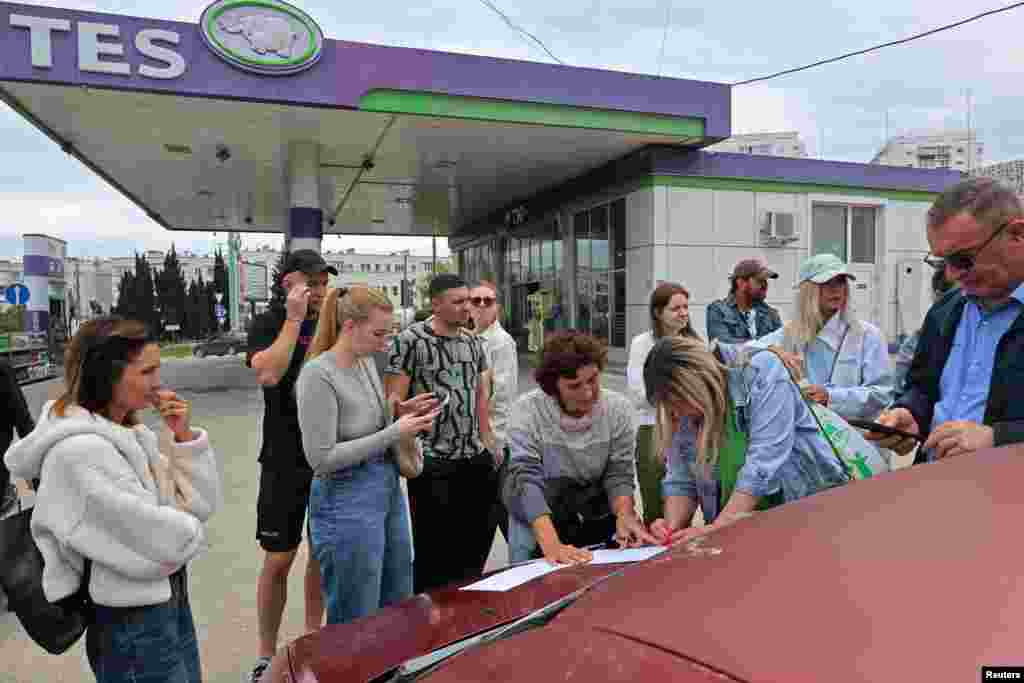
"I have to stand in line for gas starting at 5 a.m.," a Sevastopol resident named Ksenia said in a social media post this week. "We are eagerly waiting for the authorities to resolve the gasoline shortage because we don't like waking up at 4 or 5 a.m. to go to the gas station."
Another Crimea resident, Andrei, showed off what he said was "a luxury for Crimea" -- a gas gauge needle indicating a full tank. "This is a luxury now. The gas stations are all dry. How can we live? How can we get to work? It's unclear."