Accessibility links

Breaking News
Russia Invades Ukraine

Interview: Czech President Wants Putin Before War Crimes Court

Czech President Milos Zeman (left) and Russian President Vladimir Putin (illustrative photo)

Czech President Milos Zeman said Russia's invasion of Ukraine was "a cold shower" for him and many others who misjudged Moscow, and he argued that Russian President Vladimir Putin should face a "war [crimes] court" and Russian justice over his actions.

A longtime critic of international sanctions to punish Russia's unrecognized annexation of Crimea and its support for armed separatists in eastern Ukraine, the 77-year-old head of state said the intensified war on Ukraine "is truly and ultimately a war against the whole of the West and Western democracy."

"It is a war against the world order as we know it, and it affects us," Zeman said on June 2, in written responses to questions from RFE/RL's Ukrainian Service.

He added that "there is much more to Ukraine than 'just' Ukraine."

The Czech Republic, a NATO and EU member of around 10 million people, has emerged as one of the most active suppliers of weapons and diplomatic support for Kyiv since Russian tanks and troops rolled into Ukraine on February 24.
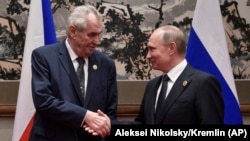
Zeman and Putin shake hands on the sidelines of a summit in Beijing in 2017. Zeman says Russia's aggression in Ukraine has been "a cold shower" for him in his approach to Moscow.

Ukrainian banners and flags are ubiquitous on trams and other public places as well as private balconies and windows in the capital, Prague.

More than 300,000 Ukrainians have entered the Czech Republic since the outbreak of war, according to the UNHCR, although there are current efforts to scale back some avenues of official support.

Zeman called the Czech public's response one of "unprecedented solidarity" and he said he was "in complete agreement" with Czech Prime Minister Petr Fiala "on a principled approach to Ukraine."

Fiala accompanied his Polish and Slovenian counterparts to Kyiv by train just three weeks into the war in a risky show of international support for President Volodymyr Zelenskiy and Ukraine's military and civilian defenders.

"While the historical parallel that 'Prague is being fought for in Kyiv,' which is often repeated these days in connection with the unfortunate events in Ukraine, has been somewhat exhausted and become an empty phrase…the war on Ukraine is truly and ultimately a war against the whole of the West and Western democracy," Zeman told RFE/RL.

Zeman's televised speech to the nation on the first day of the invasion surprised Czechs who had become accustomed to a more accommodating stance from the former dissident economist and his advisers urging unfettered diplomatic and economic ties with Russia.

Zeman suggested in the months after Moscow invaded and annexed Crimea and began supporting armed separatists in eastern Ukraine in 2014 that Ukraine was enduring a "civil war." Three years later he said Russia's annexation of Crimea was a "fait accompli."

On February 24, Zeman admitted he had been wrong in thinking that "Russians aren't crazy and won't attack Ukraine," calling it a "crime against peace."

In early March, Zeman awarded Zelenskiy with the Czech Republic's highest state honor, the Order of the White Lion, for "his bravery and courage in the face of Russia's invasion."

In his written responses to RFE/RL, Zeman compared his desire for good relations with Moscow with policies by the German and French governments, saying that treating Russia "like a normal country" was "completely natural and all the relevant European and world statesmen did it."
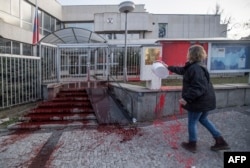
An activist pours red paint on the stairs of the Russian Embassy in Prague on March 26.

"However, the situation changed fundamentally the moment of the Russian aggression in Ukraine, and when the situation changes, so does your opinion," he said.

He called Putin's war "clear...aggression against a sovereign state."

"The attack on Ukraine was a cold shower for many people in Russia and elsewhere, and I'm one of them," Zeman admitted.

He likened his previous approach to Moscow to those of former German Chancellor Angela Merkel and French President Emmanuel Macron in trying to promote their countries' national interests, saying it is "simply absurd" to avoid dialogue with the leader of "a country that occupies one-sixth of the world."

But he was critical of Putin, who along with Russian commanders and troops has faced international accusations of war crimes against civilians and even "genocide" from some critics.

"Today, I think Putin truly belongs before a war [crimes] court, and at the same time before a Russian court for everything he has been willing to do with Russia," Zeman said. "Putin decided to invade Ukraine despite knowing what would follow -- that is, the unavoidable retaliatory measures in the form of economic and political sanctions that would hit Russia hard."

He said Putin had "decided to isolate Russia and Russians."
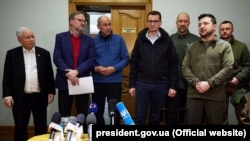
Czech PM Petr Fiala (second left) joined Polish PM Jaroslav Kaczynski (left) Slovenian PM Janez Janša (center), and Ukrainian President Volodymyr Zelenskiy (right) in Kyiv on March 15.

Zeman said his statement in Strasbourg in 2017 about Russian control of Crimea was an effort to address "the elephant in the room" at the time and added that "the question that I tried to open still persists: What will become of Crimea?"

But he acknowledged that "yes, it was somewhat undiplomatic and today I wouldn't speak so candidly about" the Crimea question.

An economist by training, Zeman has been a vocal opponent of economic sanctions in the past.

He and another economically oriented postcommunist Czech leader, Vaclav Klaus, spent decades clashing publicly with the face of then-Czechoslovakia's Velvet Revolution, Vaclav Havel, over the role of moral and rights imperatives in shaping foreign policy.

Now, Zeman told RFE/RL, the "resolute and unprecedented" imposition of more than 6,000 sanctions around the world against Russia is merited, "and the level of unity is admirable."

"You know, I've never been in favor of economic sanctions. But in this case, it's one of the functional tools that we as Europe still have. And they have an impact on the Russian economy, as evidenced by many economic indicators."

But he noted that the ruble has stabilized since an initial shock and Russia's ongoing sales of oil and gas allow Moscow to continue the war effort.

"Above all, the Russian leadership needs to be shown that such conduct is unacceptable," Zeman said. "Aggression has no place in 21st-century Europe."

Zeman said that in addition to other economic and financial measures, "we should...continue to open the European market to Ukraine and vice versa, of course."

Kyiv has formally applied for fast-tracked EU membership since the invasion began, a step similarly taken by nearby Georgia and Moldova, both of which have Russian troops on their territory against their governments' wishes.
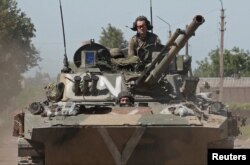
Pro-Russian troops ride an infantry fighting vehicle through the town of Popasna in Ukraine's Luhansk region on June 2.

Zelenskiy has consistently pressed NATO countries for greater military support and more advanced weaponry. Prague has already provided more than 3 billion crowns ($130 million) in military supplies to Ukraine, Zeman said.

He said that while "you can't fight the aggressor without weapons," he understands that the supply of some kinds of weapons and military equipment is unacceptable to some NATO allies.

"In short, I believe weapons to Ukraine, yes, but certainly with a dose of common sense," Zeman said.

He was cautious about any effort to add Ukraine to the current list of 30 NATO member states, a possibility that Putin last year described as a "red line" for Moscow.

Zeman said the topic is likely to arise again, since it has reportedly come up in discussions between the Ukrainian and Russian sides.

In Photos: 100 Days Of War In Ukraine
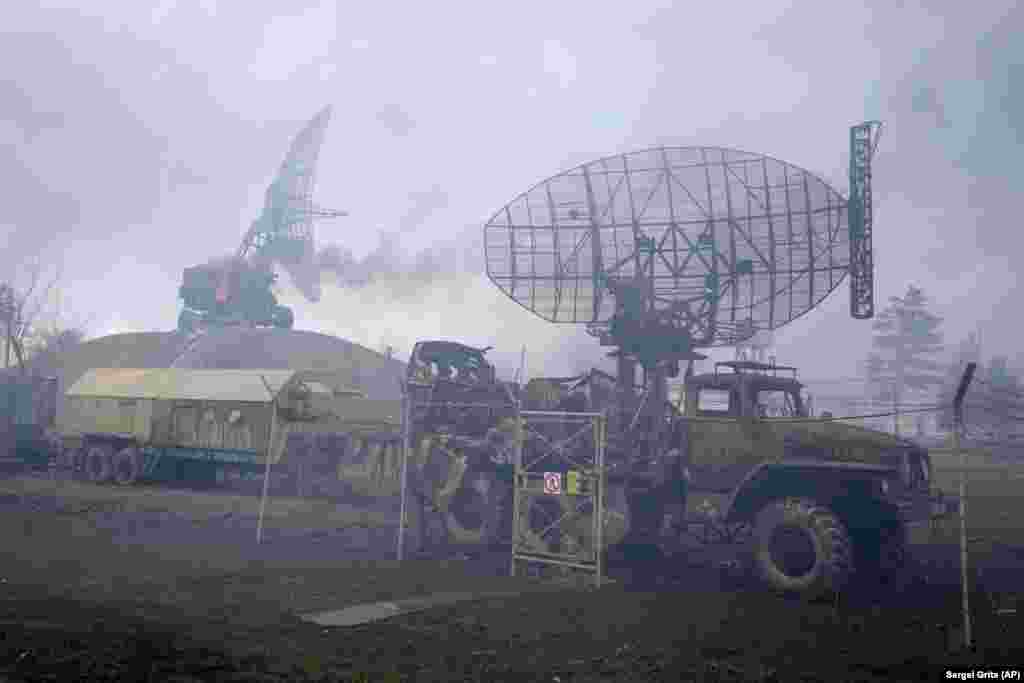
A destroyed radar system in the southern port city of Mariupol on February 24, the day Russia launched its full-scale invasion of Ukraine. 
1/36 A destroyed radar system in the southern port city of Mariupol on February 24, the day Russia launched its full-scale invasion of Ukraine. 
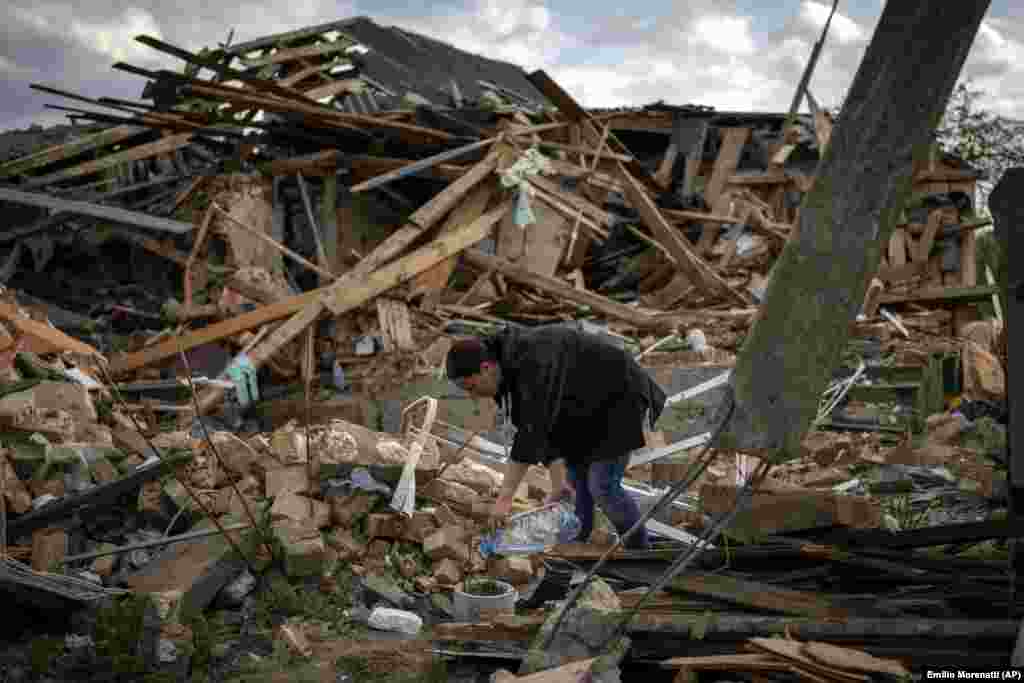
The horror and devastation seen through 100 days of war in Ukraine that began when Russia launched a full-scale invasion on February 24.
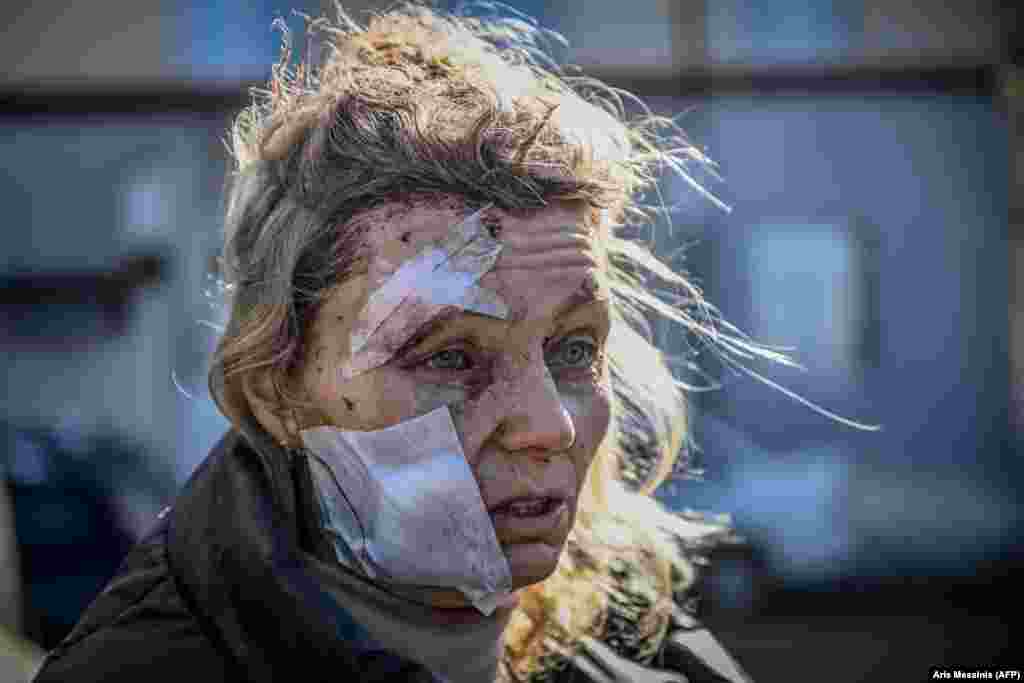
Olena is a 53-year old teacher from the eastern town of Chuhuiv who was wounded by an explosion as Russia launched its invasion on February 24. She later told a British media outlet that she had been following the news but, like many people, &quot;never believed a war would really start.&quot;&nbsp;<br />
&nbsp;
2/36 Olena is a 53-year old teacher from the eastern town of Chuhuiv who was wounded by an explosion as Russia launched its invasion on February 24. She later told a British media outlet that she had been following the news but, like many people, "never believed a war would really start." 
 
The horror and devastation seen through 100 days of war in Ukraine that began when Russia launched a full-scale invasion on February 24.
Destroyed and abandoned Russian vehicles on the outskirts of Kyiv on February 27.&nbsp;
3/36 Destroyed and abandoned Russian vehicles on the outskirts of Kyiv on February 27. 
The horror and devastation seen through 100 days of war in Ukraine that began when Russia launched a full-scale invasion on February 24.
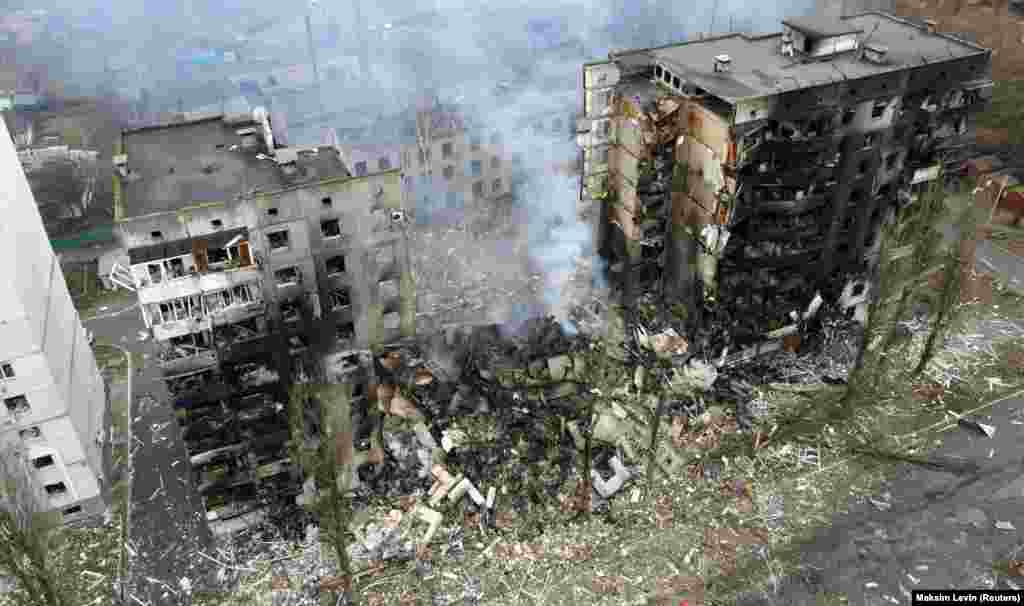
A destroyed apartment block in Borodyanka, northeast of Kyiv, on March 3.&nbsp;
4/36 A destroyed apartment block in Borodyanka, northeast of Kyiv, on March 3. 
The horror and devastation seen through 100 days of war in Ukraine that began when Russia launched a full-scale invasion on February 24.
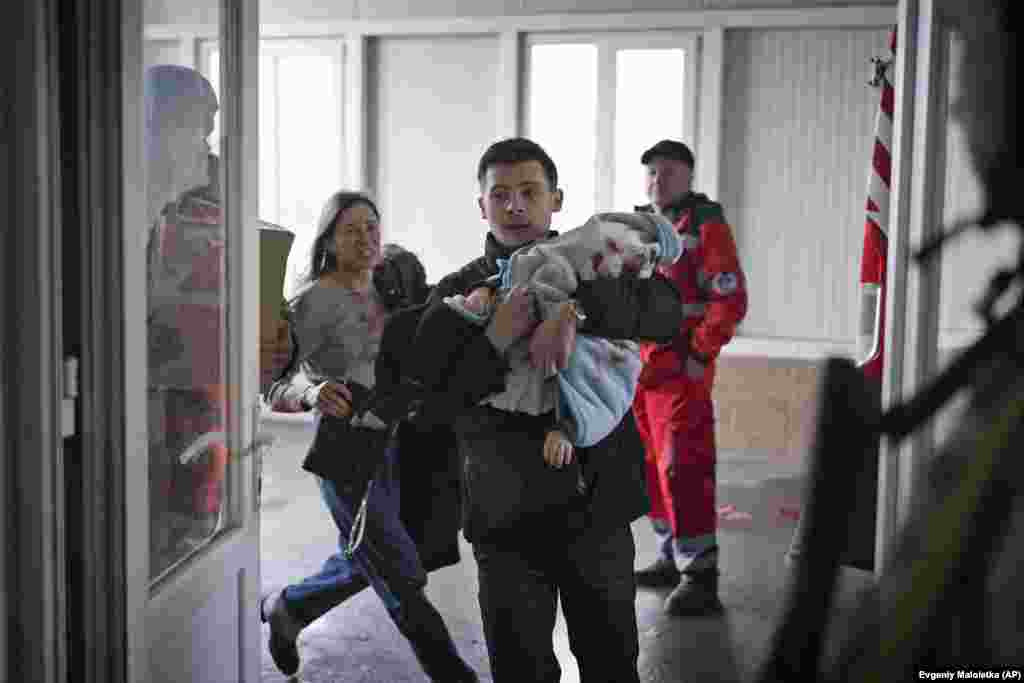
Maryna Yatsko (left) and her boyfriend, Fedir, run into a Mariupol hospital carrying Yatsko&#39;s injured 18 month-old son, Kyrylo, on March 4.&nbsp;
5/36 Maryna Yatsko (left) and her boyfriend, Fedir, run into a Mariupol hospital carrying Yatsko's injured 18 month-old son, Kyrylo, on March 4. 
The horror and devastation seen through 100 days of war in Ukraine that began when Russia launched a full-scale invasion on February 24.
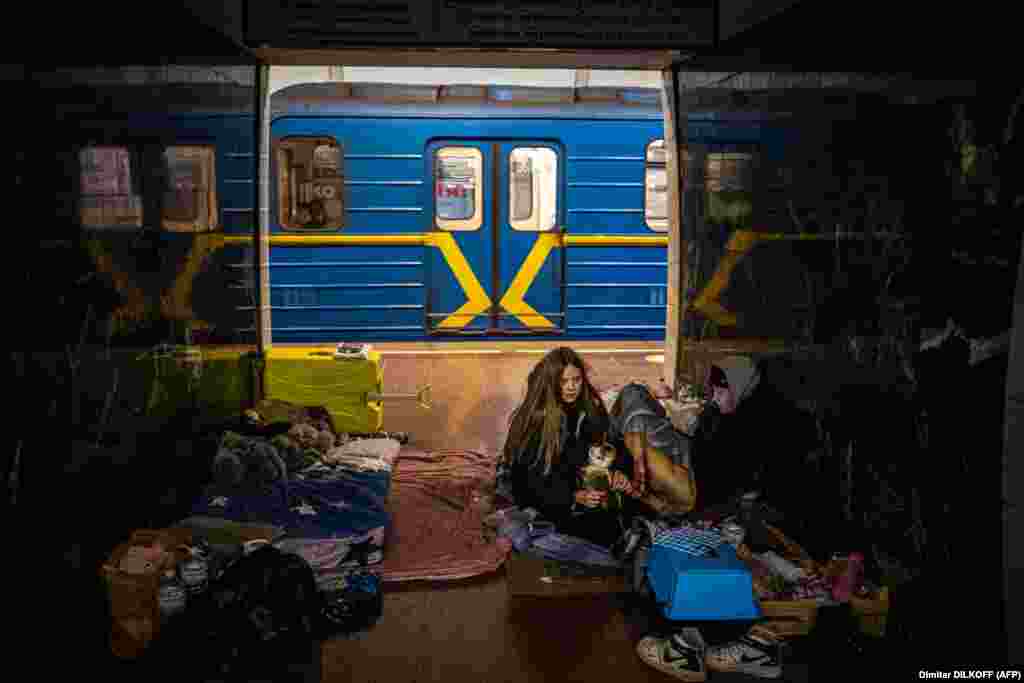
A woman holds her cat in a metro station in Kyiv on March 8. Scenes reminiscent of World War II shocked the world in early March as Ukrainian civilians moved underground for safety while Russia launched missiles and rockets into several major cities.&nbsp;
6/36 A woman holds her cat in a metro station in Kyiv on March 8. Scenes reminiscent of World War II shocked the world in early March as Ukrainian civilians moved underground for safety while Russia launched missiles and rockets into several major cities. 
The horror and devastation seen through 100 days of war in Ukraine that began when Russia launched a full-scale invasion on February 24.
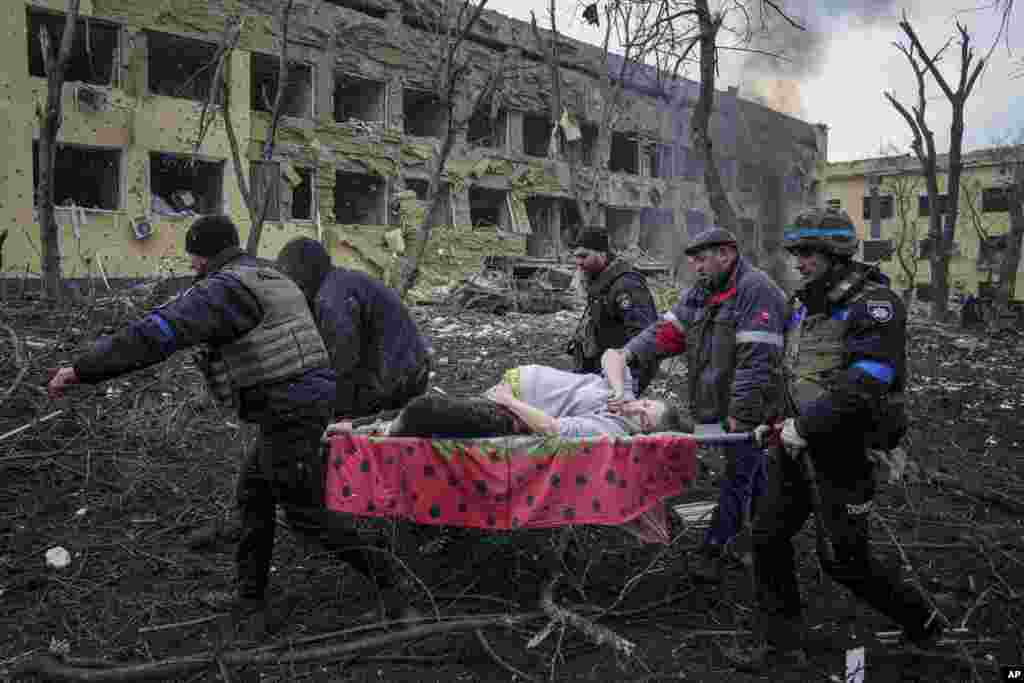
A wounded, heavily pregnant woman is carried on a stretcher from a Mariupol maternity hospital that was hit by an apparent missile explosion on March 9. Both the woman and the baby later died.
7/36 A wounded, heavily pregnant woman is carried on a stretcher from a Mariupol maternity hospital that was hit by an apparent missile explosion on March 9. Both the woman and the baby later died.
The horror and devastation seen through 100 days of war in Ukraine that began when Russia launched a full-scale invasion on February 24.
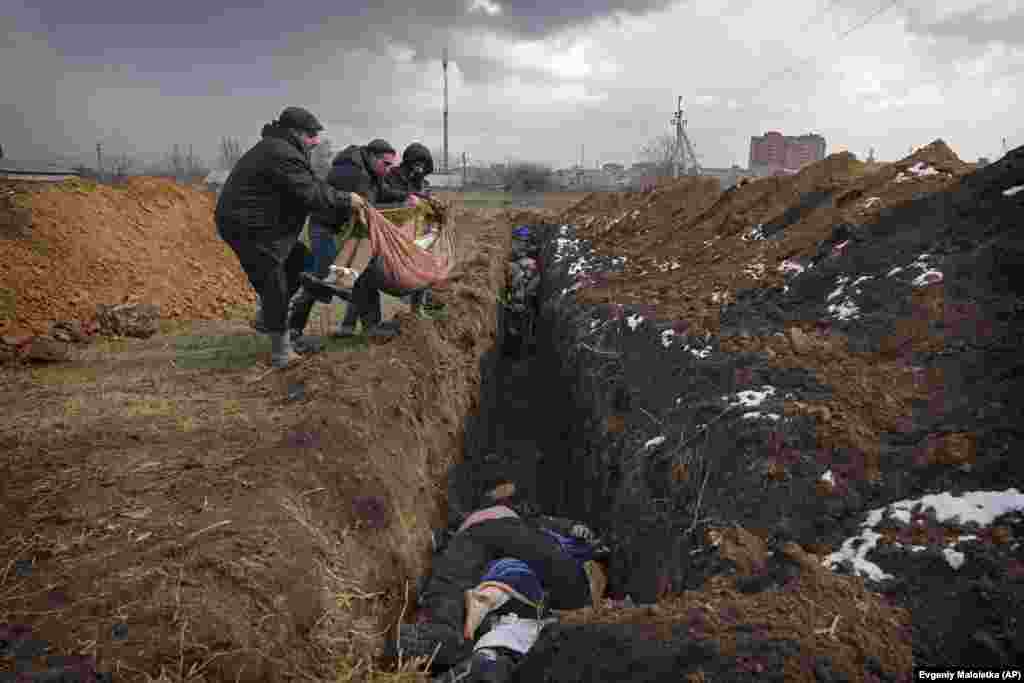
Bodies are placed in a mass grave on the outskirts of Mariupol on March 9.&nbsp;The port city suffered widespread destruction during a nearly three-month siege in which thousands of civilians were killed.
8/36 Bodies are placed in a mass grave on the outskirts of Mariupol on March 9. The port city suffered widespread destruction during a nearly three-month siege in which thousands of civilians were killed.
The horror and devastation seen through 100 days of war in Ukraine that began when Russia launched a full-scale invasion on February 24.
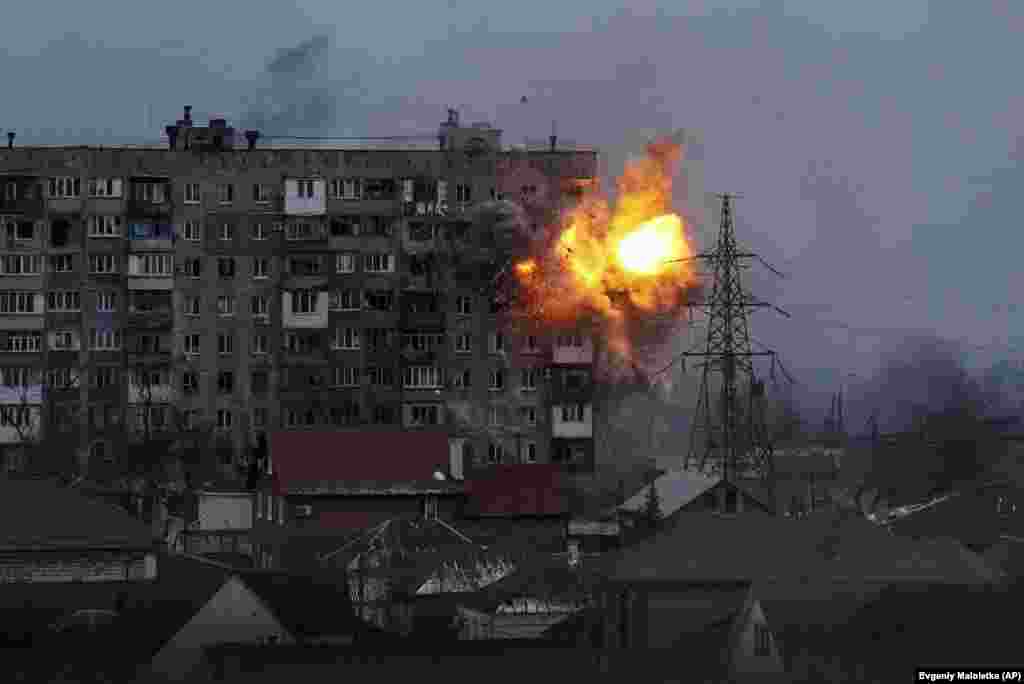
An apartment building in Mariupol is hit with a Russian tank shell on March 11.
9/36 An apartment building in Mariupol is hit with a Russian tank shell on March 11.
The horror and devastation seen through 100 days of war in Ukraine that began when Russia launched a full-scale invasion on February 24.
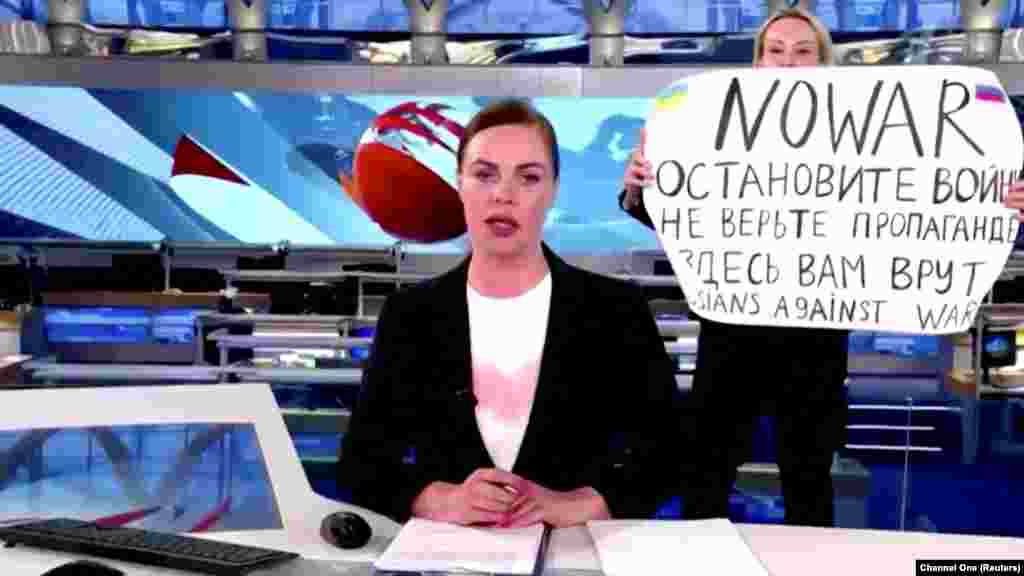
Russian TV editor Marina Ovsyannikova interrupts a live broadcast of the Russian First Channel on March 14 with a poster stating, &ldquo;Stop the war. Don&#39;t believe the propaganda. They lie to you here.&quot; Ovsyannikova was fined 30,000 rubles ($250) and she moved to Germany, where she later received the Havel Dissent Prize for her protest.
10/36 Russian TV editor Marina Ovsyannikova interrupts a live broadcast of the Russian First Channel on March 14 with a poster stating, “Stop the war. Don't believe the propaganda. They lie to you here." Ovsyannikova was fined 30,000 rubles ($250) and she moved to Germany, where she later received the Havel Dissent Prize for her protest.
The horror and devastation seen through 100 days of war in Ukraine that began when Russia launched a full-scale invasion on February 24.
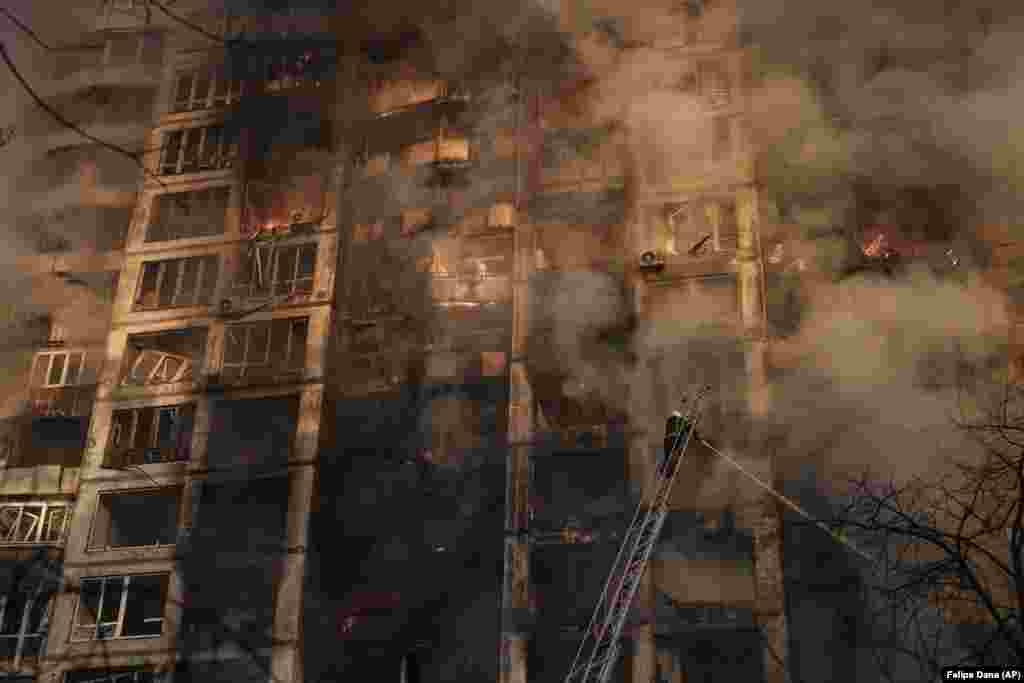
Ukrainian firefighters work at a bombed apartment building in Kyiv on March 15.
11/36 Ukrainian firefighters work at a bombed apartment building in Kyiv on March 15.
The horror and devastation seen through 100 days of war in Ukraine that began when Russia launched a full-scale invasion on February 24.
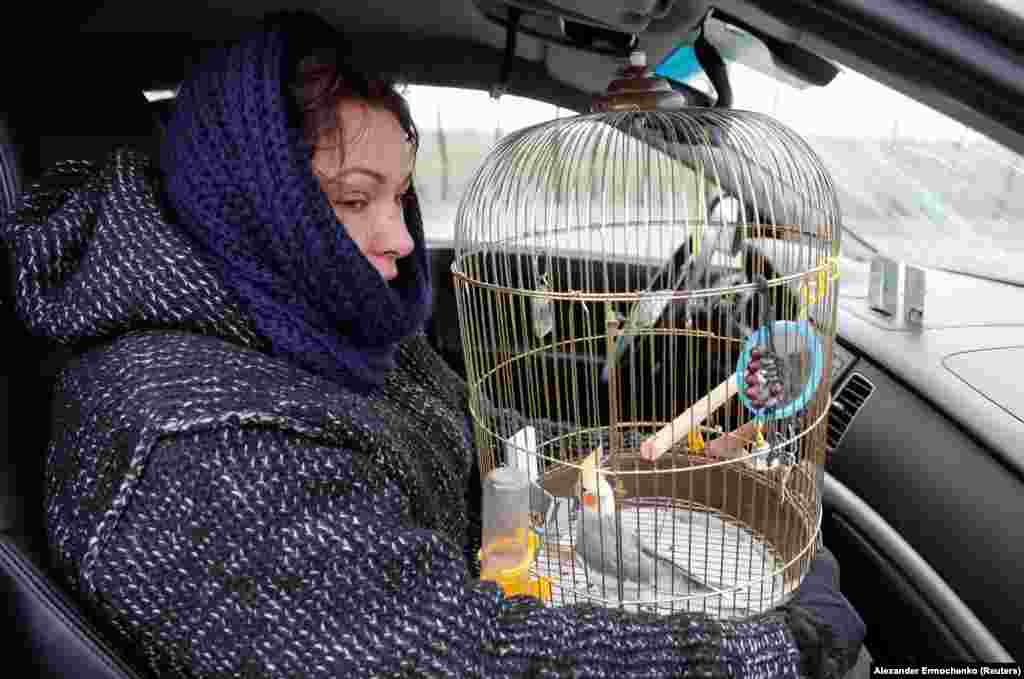
A woman and her pet cockatiel pass through a Russian military checkpoint as they attempt to flee Mariupol on April 17.
12/36 A woman and her pet cockatiel pass through a Russian military checkpoint as they attempt to flee Mariupol on April 17.
The horror and devastation seen through 100 days of war in Ukraine that began when Russia launched a full-scale invasion on February 24.
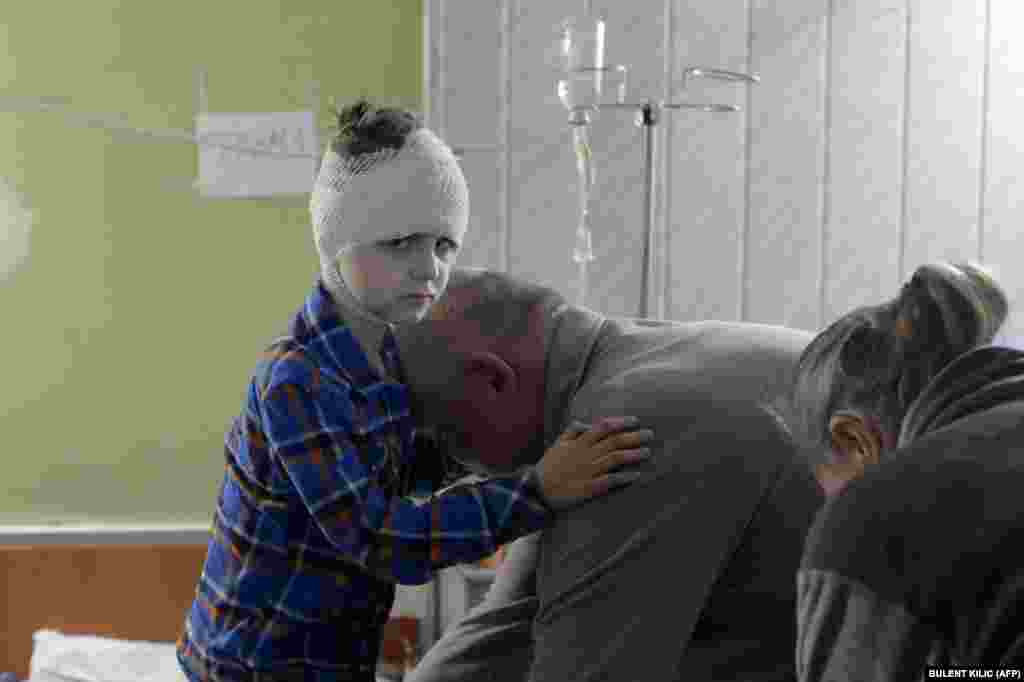
Misha, 5, gets help from his grandfather to get dressed at a hospital in the southern city of Mykolayiv on March 26. Misha was injured during a Russian air strike.<br />
&nbsp;
13/36 Misha, 5, gets help from his grandfather to get dressed at a hospital in the southern city of Mykolayiv on March 26. Misha was injured during a Russian air strike.
 
The horror and devastation seen through 100 days of war in Ukraine that began when Russia launched a full-scale invasion on February 24.
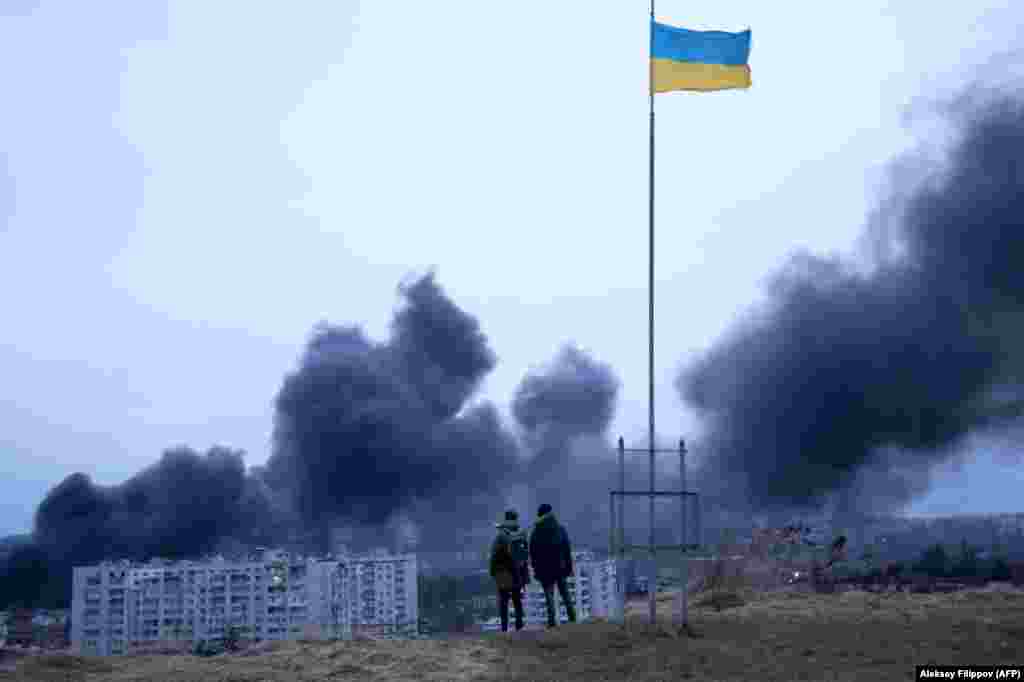
The aftermath of a missile strike on the western city of Lviv on March 26. Russia employed scores of Kalibr cruise missiles in the early days of the war that could hit targets hundreds of kilometers from the front lines. RFE/RL journalist&nbsp;Vira Hyrych was killed by such a missile while inside her Kyiv apartment on April 28.&nbsp;
14/36 The aftermath of a missile strike on the western city of Lviv on March 26. Russia employed scores of Kalibr cruise missiles in the early days of the war that could hit targets hundreds of kilometers from the front lines. RFE/RL journalist Vira Hyrych was killed by such a missile while inside her Kyiv apartment on April 28. 
The horror and devastation seen through 100 days of war in Ukraine that began when Russia launched a full-scale invasion on February 24.
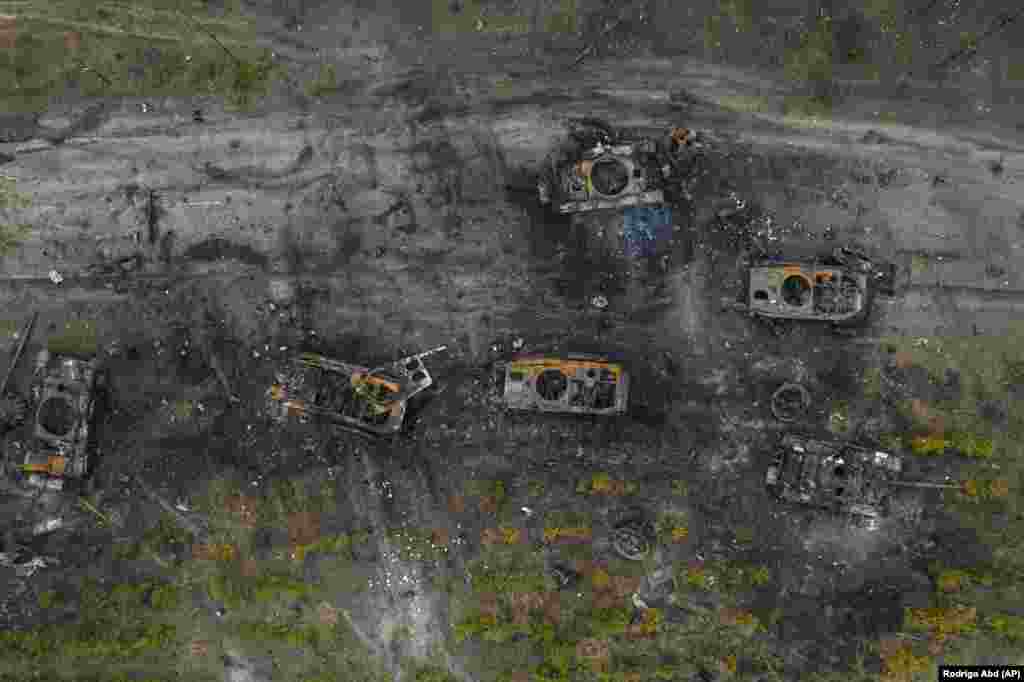
Destroyed Russian armored vehicles near Kyiv on March 31.
15/36 Destroyed Russian armored vehicles near Kyiv on March 31.
The horror and devastation seen through 100 days of war in Ukraine that began when Russia launched a full-scale invasion on February 24.
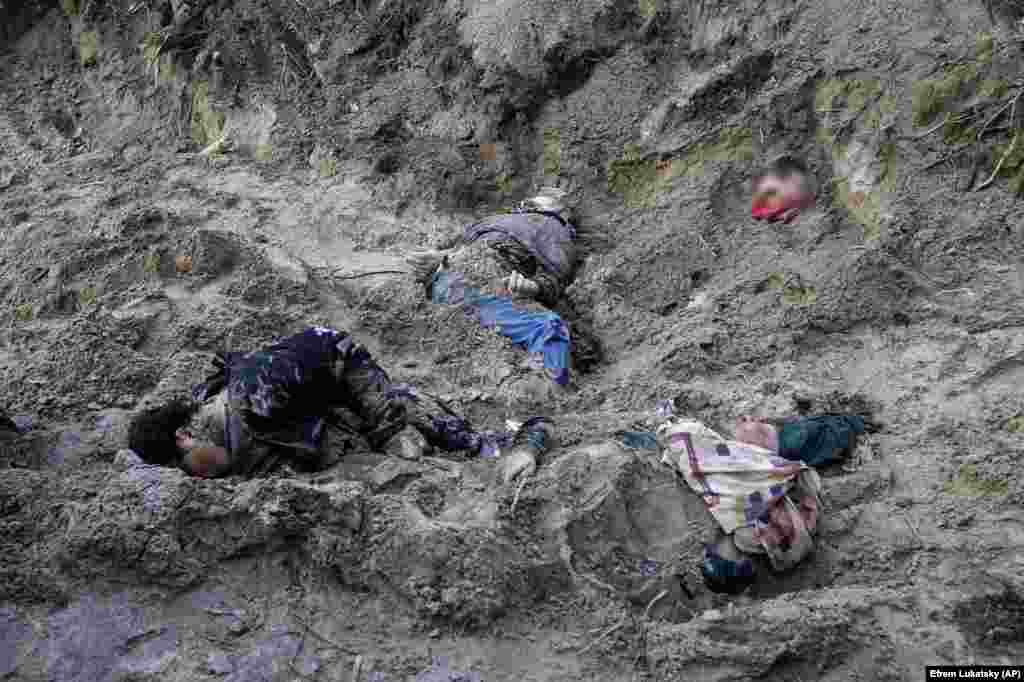
The&nbsp;bodies of the mayor of Motyzhyn and her family lie in a mass grave on April 4 after being uncovered following the withdrawal of Russian forces from an encirclement of Kyiv. Members of the family had their hands bound before being executed.
16/36 The bodies of the mayor of Motyzhyn and her family lie in a mass grave on April 4 after being uncovered following the withdrawal of Russian forces from an encirclement of Kyiv. Members of the family had their hands bound before being executed.
The horror and devastation seen through 100 days of war in Ukraine that began when Russia launched a full-scale invasion on February 24.
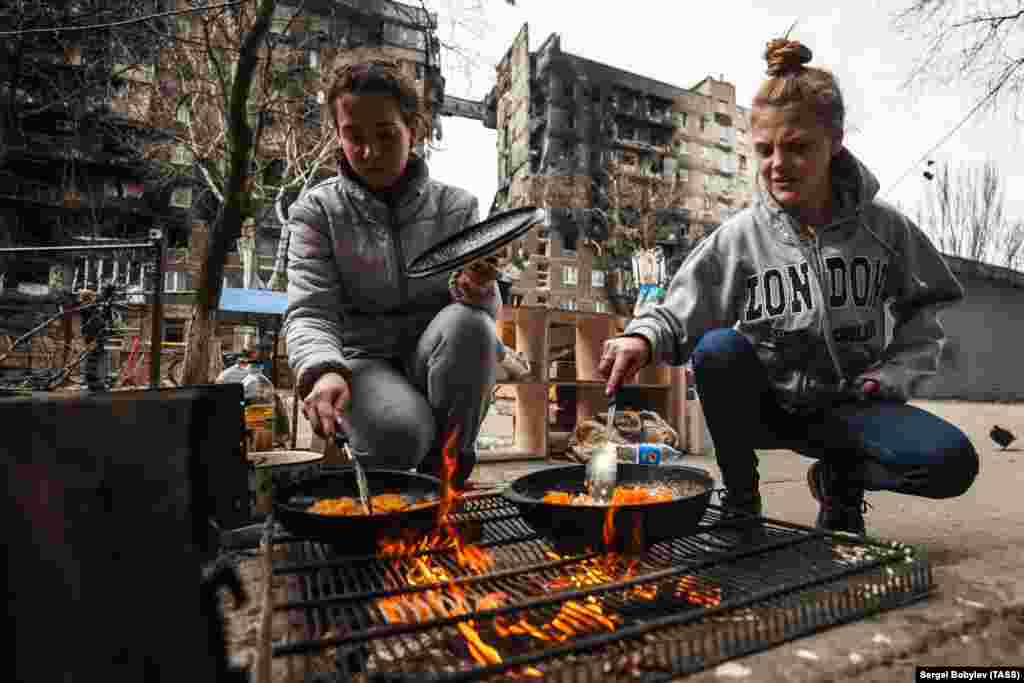
Women cook food over an open fire in Mariupol on April 3. Gas, electricity, and water were cut off as Russian forces pushed into the city.&nbsp;
17/36 Women cook food over an open fire in Mariupol on April 3. Gas, electricity, and water were cut off as Russian forces pushed into the city. 
The horror and devastation seen through 100 days of war in Ukraine that began when Russia launched a full-scale invasion on February 24.
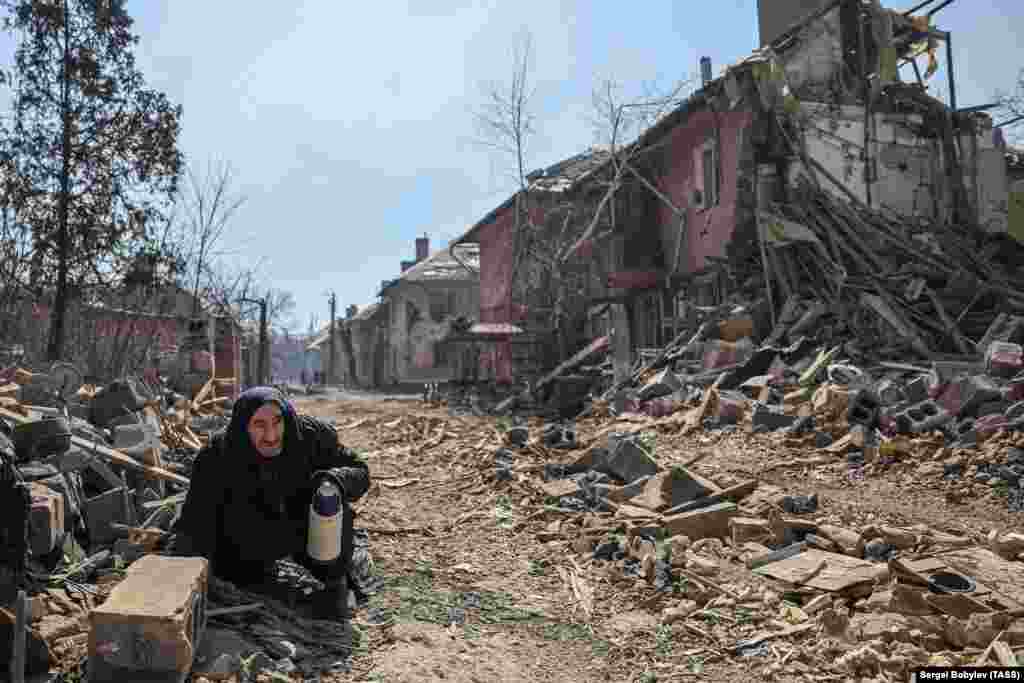
A local man in one of the devastated streets of Mariupol on April 7.&nbsp;
18/36 A local man in one of the devastated streets of Mariupol on April 7. 
The horror and devastation seen through 100 days of war in Ukraine that began when Russia launched a full-scale invasion on February 24.
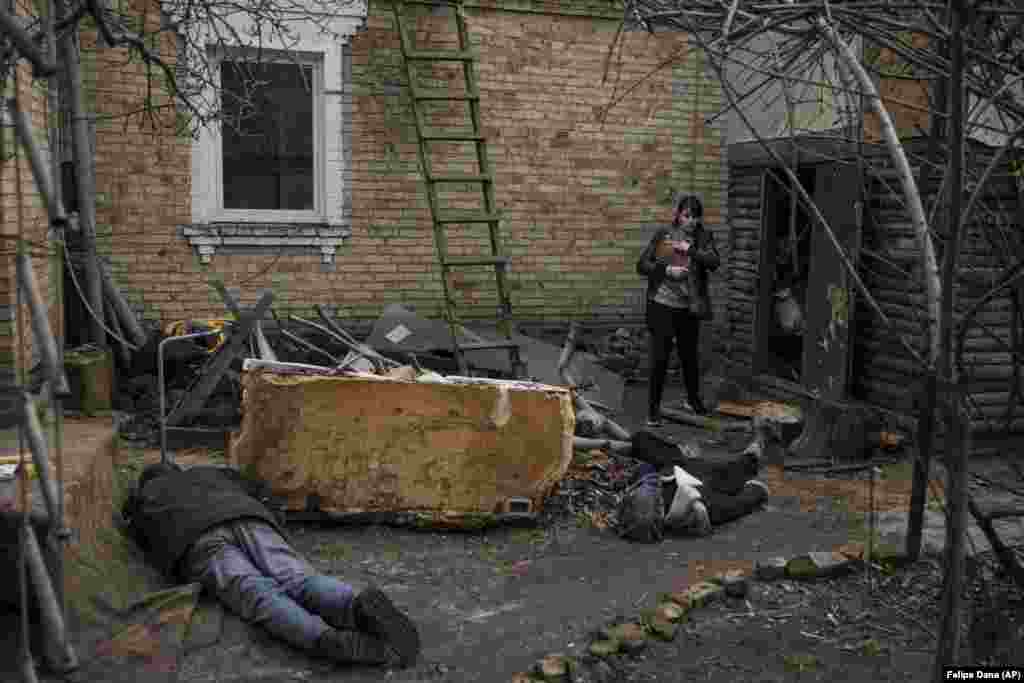
Ira Gavriluk holds her cat on April 4 as she stands over the bodies of her husband, brother, and another man who were killed outside her home in Bucha, on the outskirts of Kyiv.
19/36 Ira Gavriluk holds her cat on April 4 as she stands over the bodies of her husband, brother, and another man who were killed outside her home in Bucha, on the outskirts of Kyiv.
The horror and devastation seen through 100 days of war in Ukraine that began when Russia launched a full-scale invasion on February 24.
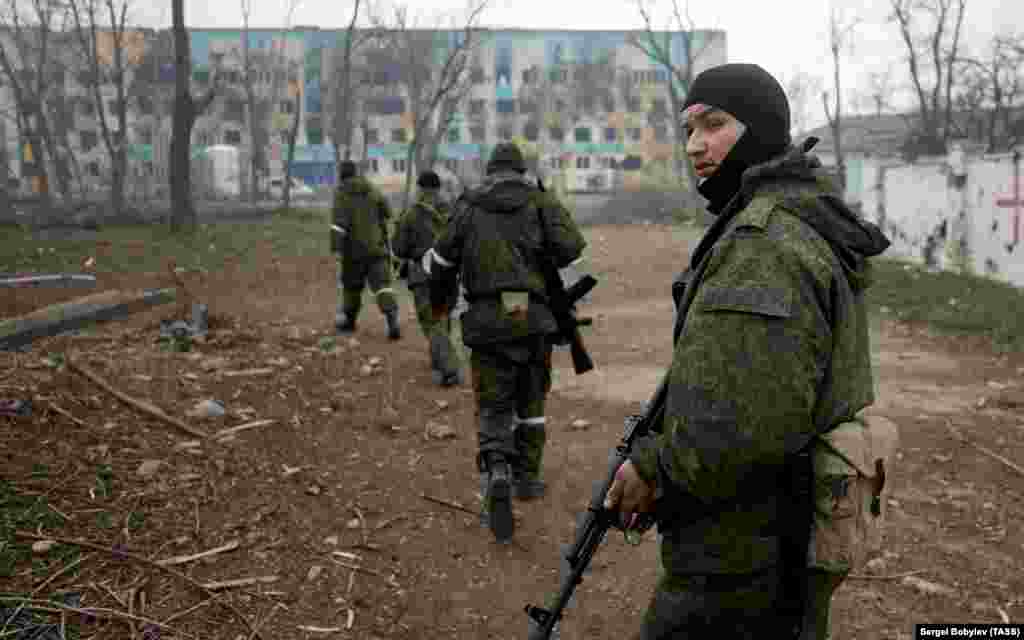
Pro-Russian militants in a suburb of Mariupol on April 9.&nbsp;
20/36 Pro-Russian militants in a suburb of Mariupol on April 9. 
The horror and devastation seen through 100 days of war in Ukraine that began when Russia launched a full-scale invasion on February 24.
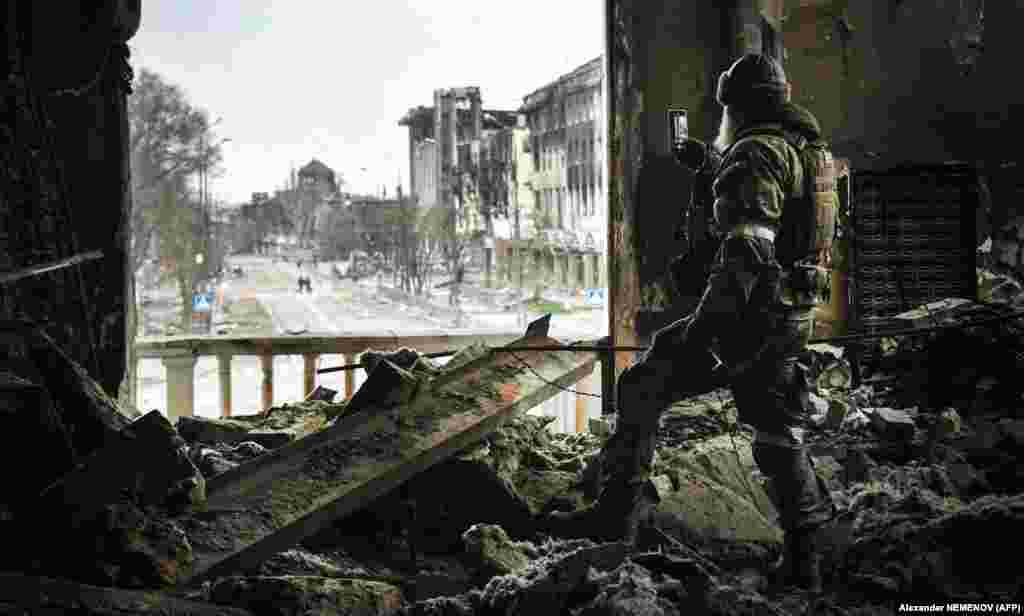
A Russian soldier takes a photo down the main street of Mariupol from the city&#39;s destroyed performing arts theater on April 12.<br />
&nbsp;
21/36 A Russian soldier takes a photo down the main street of Mariupol from the city's destroyed performing arts theater on April 12.
 
The horror and devastation seen through 100 days of war in Ukraine that began when Russia launched a full-scale invasion on February 24.
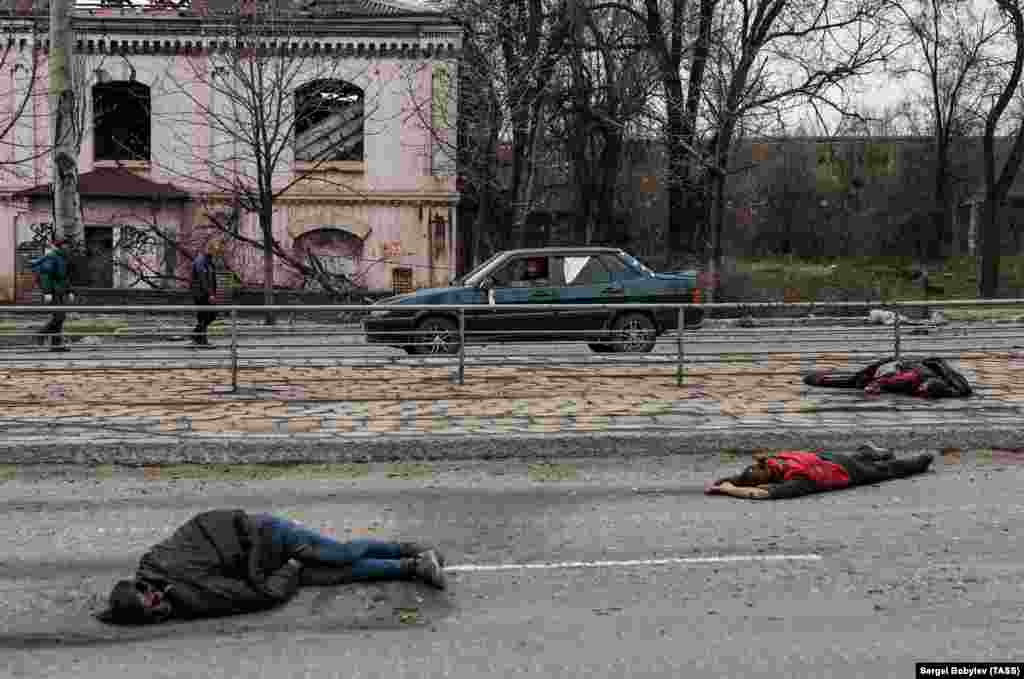
The bodies of people dressed in civilian clothing lie on a road in Mariupol on April 16.&nbsp;
22/36 The bodies of people dressed in civilian clothing lie on a road in Mariupol on April 16. 
The horror and devastation seen through 100 days of war in Ukraine that began when Russia launched a full-scale invasion on February 24.
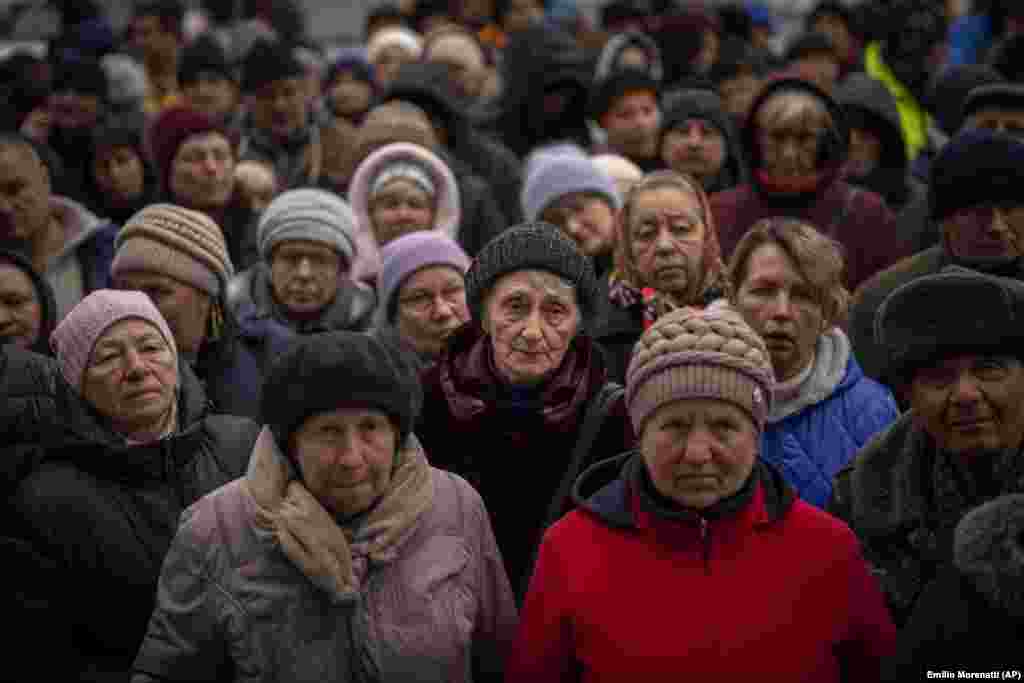
Residents of Bucha wait for a food handout organized by the Red Cross on April 18.
23/36 Residents of Bucha wait for a food handout organized by the Red Cross on April 18.
The horror and devastation seen through 100 days of war in Ukraine that began when Russia launched a full-scale invasion on February 24.
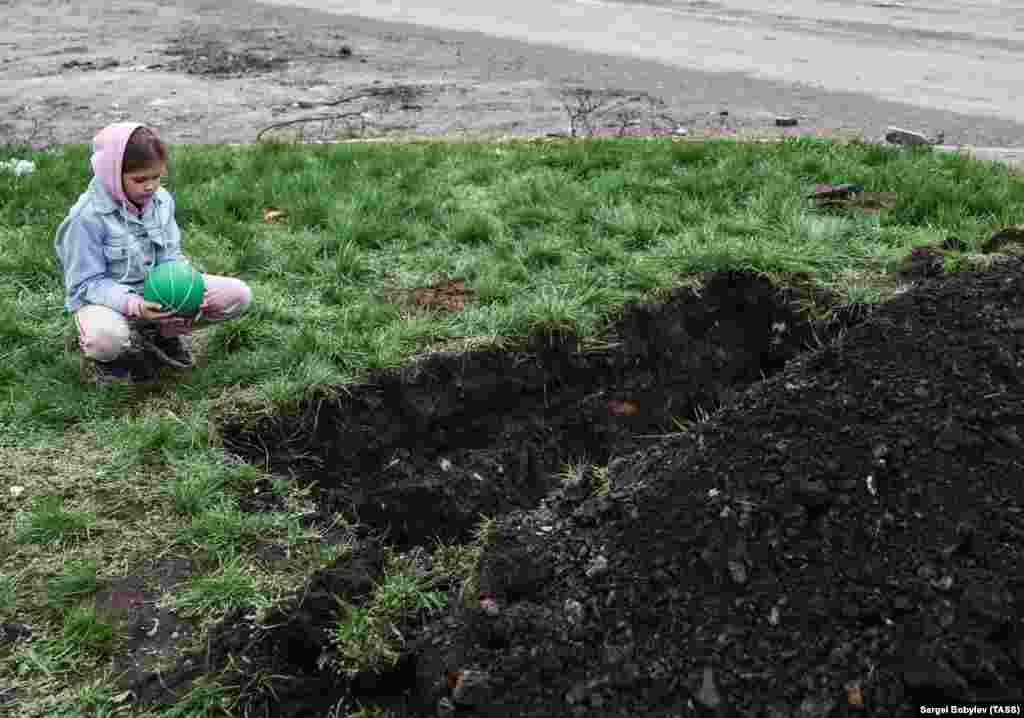
A girl crouches by a grave in Mariupol on April 19. As shells and rockets rained down on the city and the death toll mounted, patches of earth including parks and roadsides became makeshift cemeteries.&nbsp;
24/36 A girl crouches by a grave in Mariupol on April 19. As shells and rockets rained down on the city and the death toll mounted, patches of earth including parks and roadsides became makeshift cemeteries. 
The horror and devastation seen through 100 days of war in Ukraine that began when Russia launched a full-scale invasion on February 24.
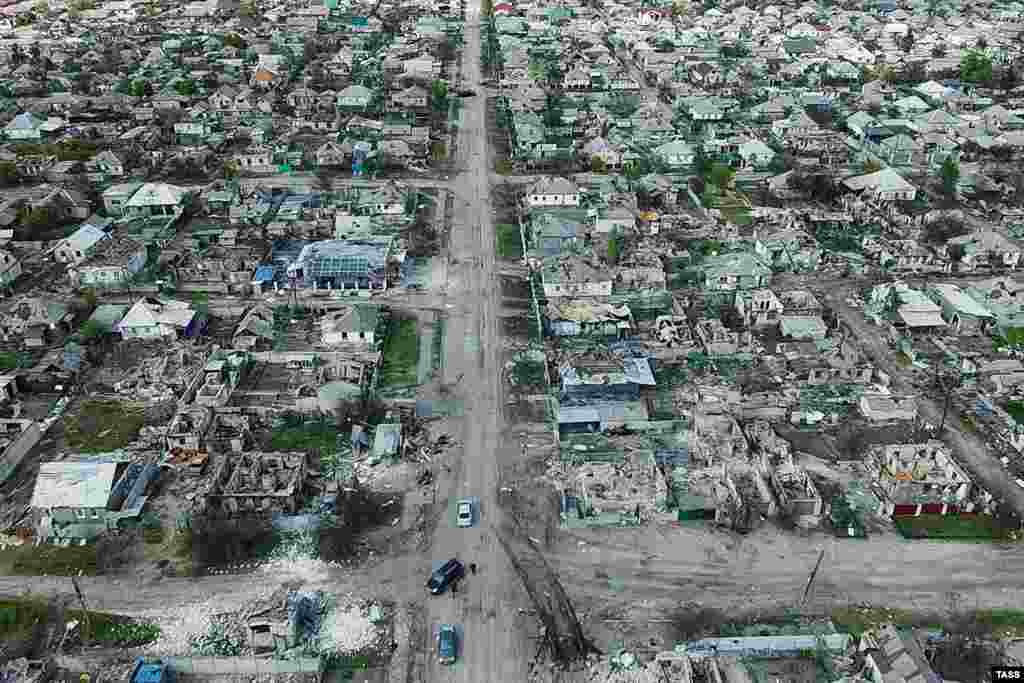
A May 1 photo shot with a drone shows the suburb of Rubizhne, in Ukraine&#39;s eastern Luhansk region, which was heavily damaged by fighting.&nbsp;
25/36 A May 1 photo shot with a drone shows the suburb of Rubizhne, in Ukraine's eastern Luhansk region, which was heavily damaged by fighting. 
The horror and devastation seen through 100 days of war in Ukraine that began when Russia launched a full-scale invasion on February 24.
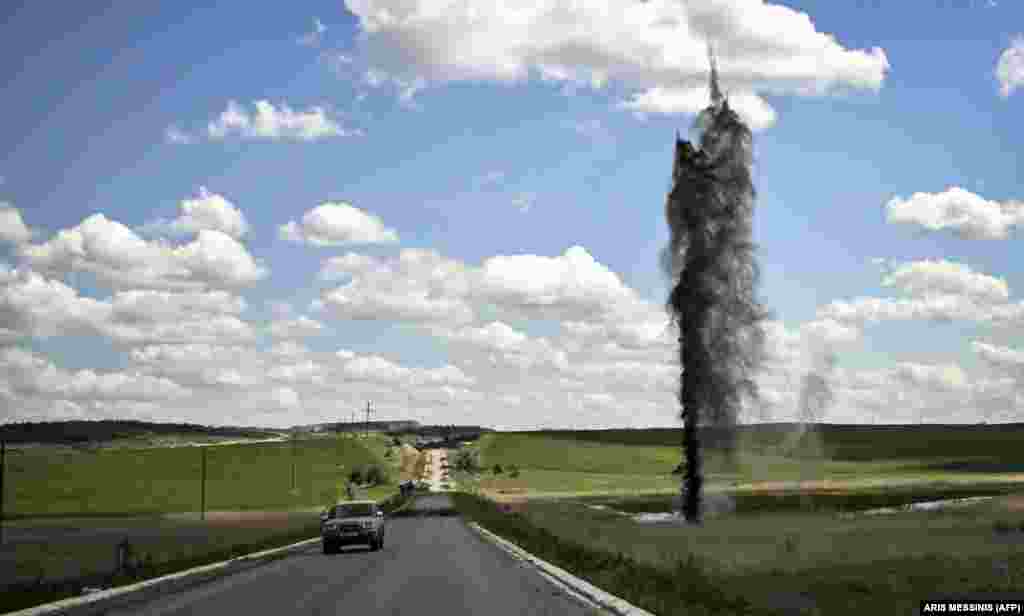
A mortar explodes close to a road leading to the city of Lysychansk in the Luhansk region on May 2.
26/36 A mortar explodes close to a road leading to the city of Lysychansk in the Luhansk region on May 2.
The horror and devastation seen through 100 days of war in Ukraine that began when Russia launched a full-scale invasion on February 24.
Hanna Shevchenko waters the flowers that survived the bombing of her home in a photo taken on May 3. The house was built by Shevchenko&#39;s grandparents. In her flowerbed roses, lilies, peonies, and daffodils survived.&nbsp;
27/36 Hanna Shevchenko waters the flowers that survived the bombing of her home in a photo taken on May 3. The house was built by Shevchenko's grandparents. In her flowerbed roses, lilies, peonies, and daffodils survived. 
The horror and devastation seen through 100 days of war in Ukraine that began when Russia launched a full-scale invasion on February 24.
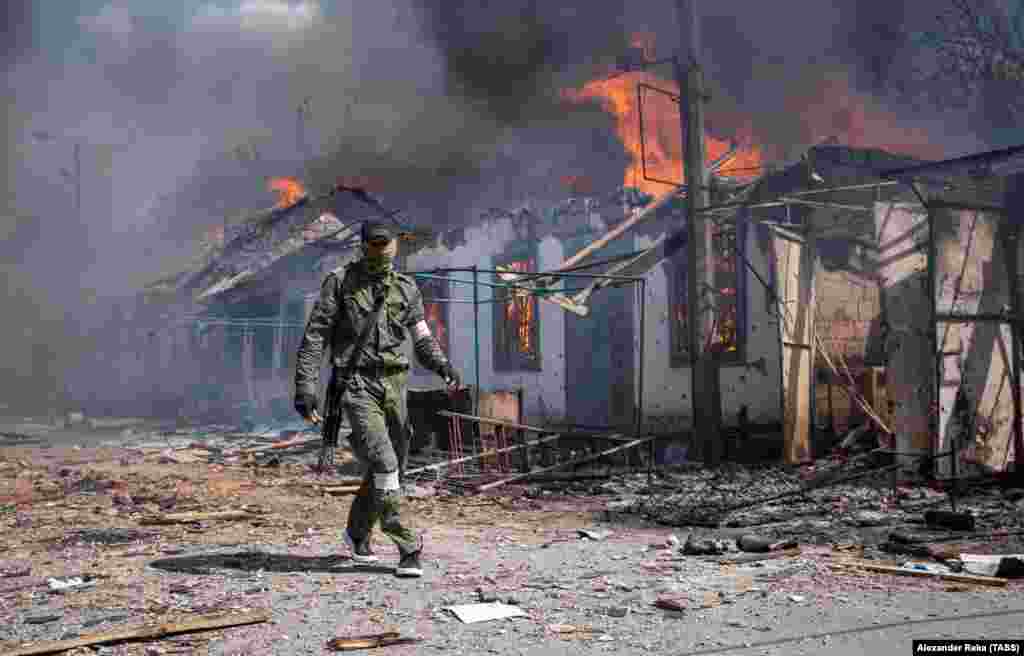
A pro-Russian fighter walks through a destroyed residential street in the eastern town of Popasna on May 8.&nbsp;
28/36 A pro-Russian fighter walks through a destroyed residential street in the eastern town of Popasna on May 8. 
The horror and devastation seen through 100 days of war in Ukraine that began when Russia launched a full-scale invasion on February 24.
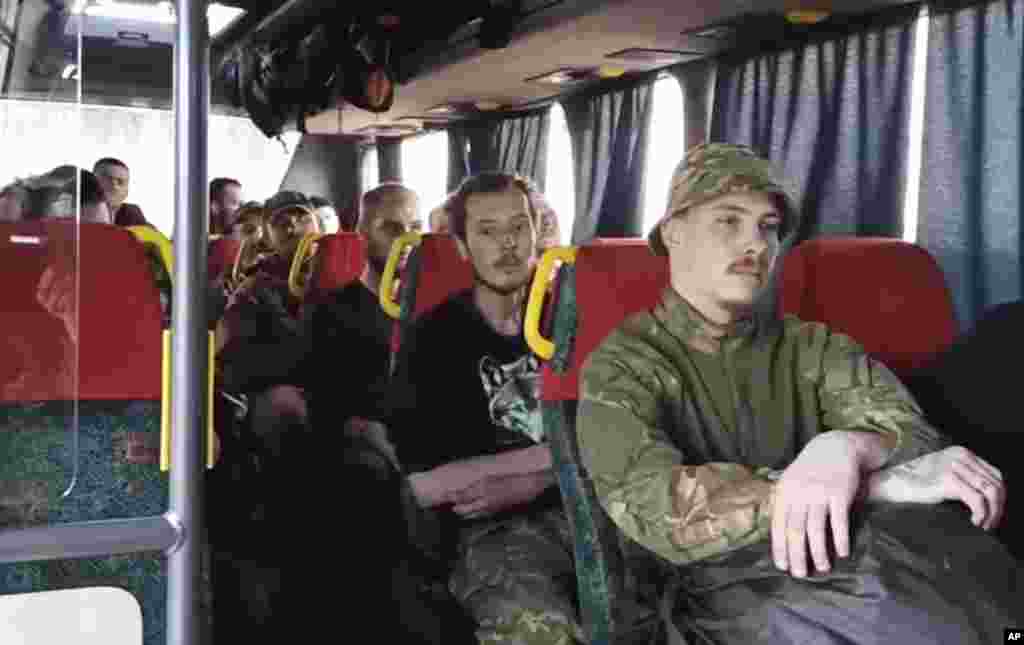
Ukrainian servicemen who were defending Mariupol&#39;s Azovstal steel plant sit in a bus after surrendering to pro-Russian forces on May 17.&nbsp;
29/36 Ukrainian servicemen who were defending Mariupol's Azovstal steel plant sit in a bus after surrendering to pro-Russian forces on May 17. 
The horror and devastation seen through 100 days of war in Ukraine that began when Russia launched a full-scale invasion on February 24.
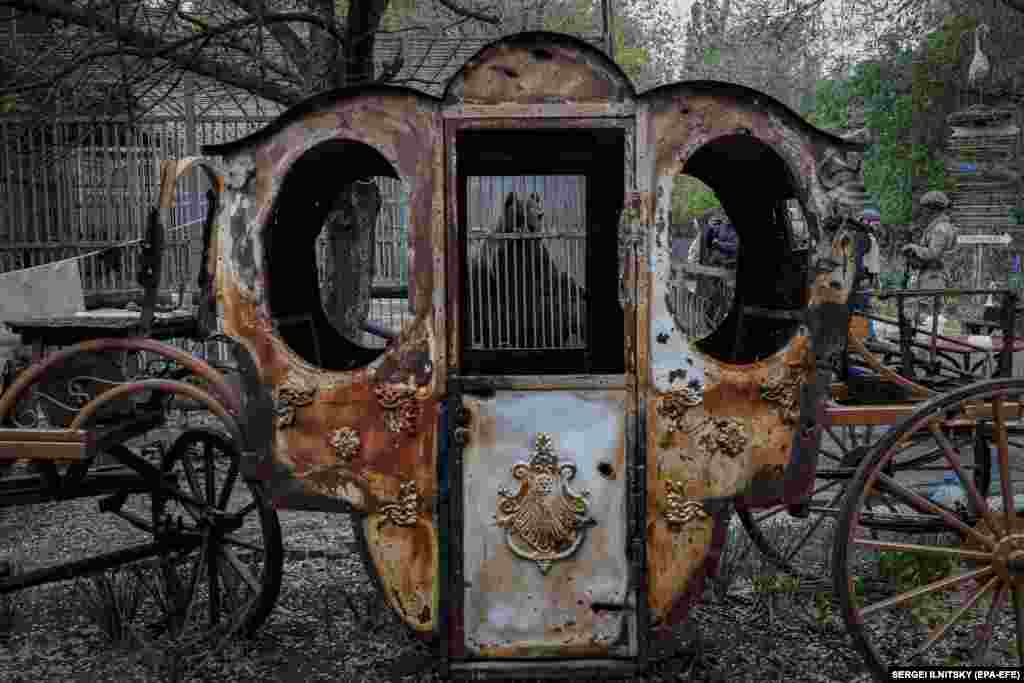
Bears who survived the shelling of the Mariupol Zoo are seen during a media tour organized by the Russian military on May 18.
30/36 Bears who survived the shelling of the Mariupol Zoo are seen during a media tour organized by the Russian military on May 18.
The horror and devastation seen through 100 days of war in Ukraine that began when Russia launched a full-scale invasion on February 24.
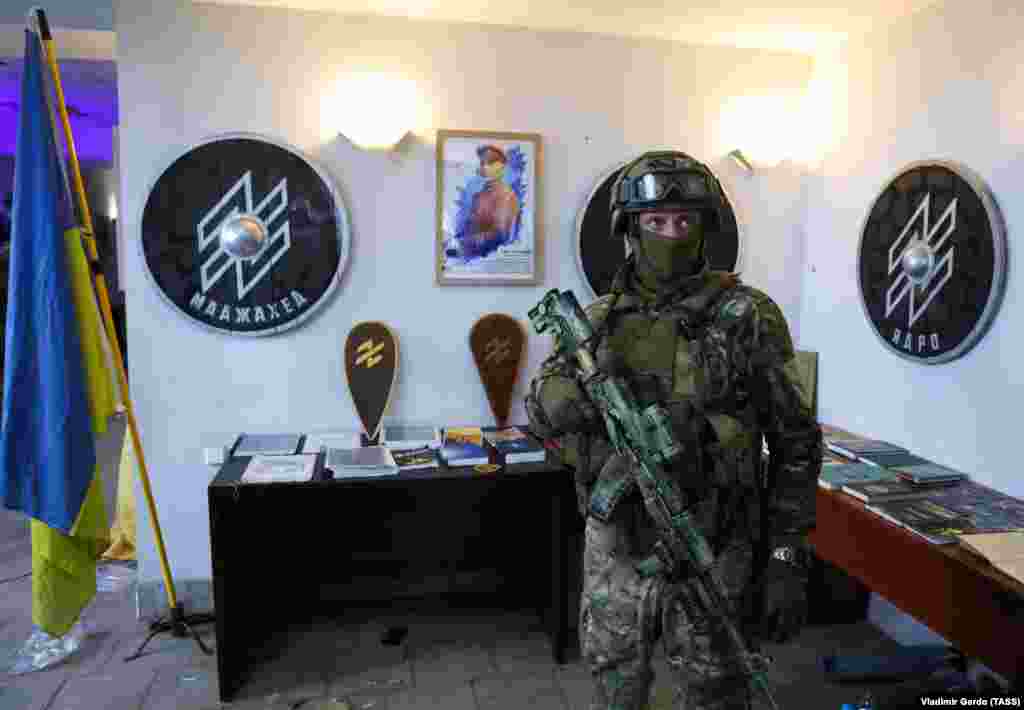
A Russian serviceman inside what the TASS news agency describes as the &quot;abandoned base&quot; of Ukraine&#39;s Azov Battalion in Mariupol on May 18.&nbsp;
31/36 A Russian serviceman inside what the TASS news agency describes as the "abandoned base" of Ukraine's Azov Battalion in Mariupol on May 18. 
The horror and devastation seen through 100 days of war in Ukraine that began when Russia launched a full-scale invasion on February 24.
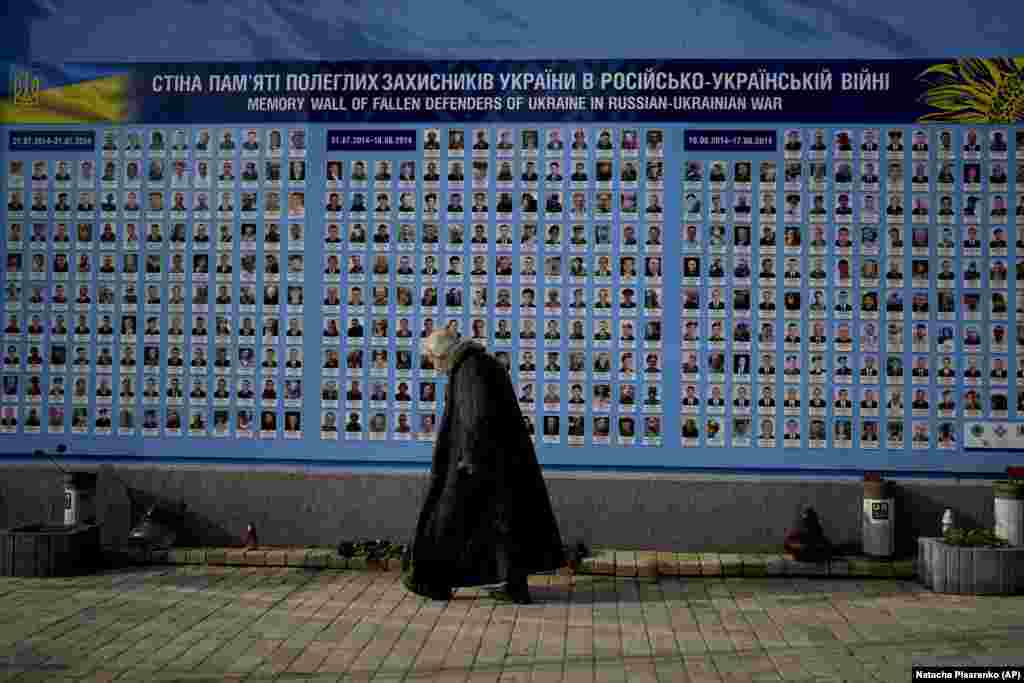
A wall of portraits of fallen Ukrainian soldiers in Kyiv on May 23.
32/36 A wall of portraits of fallen Ukrainian soldiers in Kyiv on May 23.
The horror and devastation seen through 100 days of war in Ukraine that began when Russia launched a full-scale invasion on February 24.
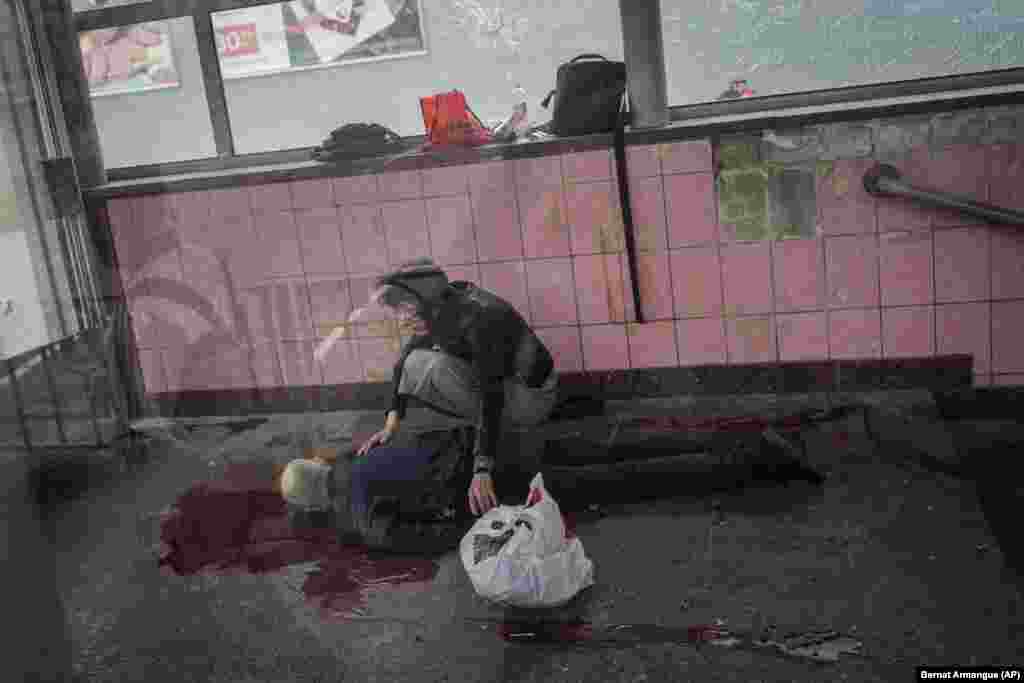
A woman kneels next to the body of her husband, Oleksiy, who was killed during shelling of the eastern city of Kharkiv on May 26.&nbsp;
33/36 A woman kneels next to the body of her husband, Oleksiy, who was killed during shelling of the eastern city of Kharkiv on May 26. 
The horror and devastation seen through 100 days of war in Ukraine that began when Russia launched a full-scale invasion on February 24.
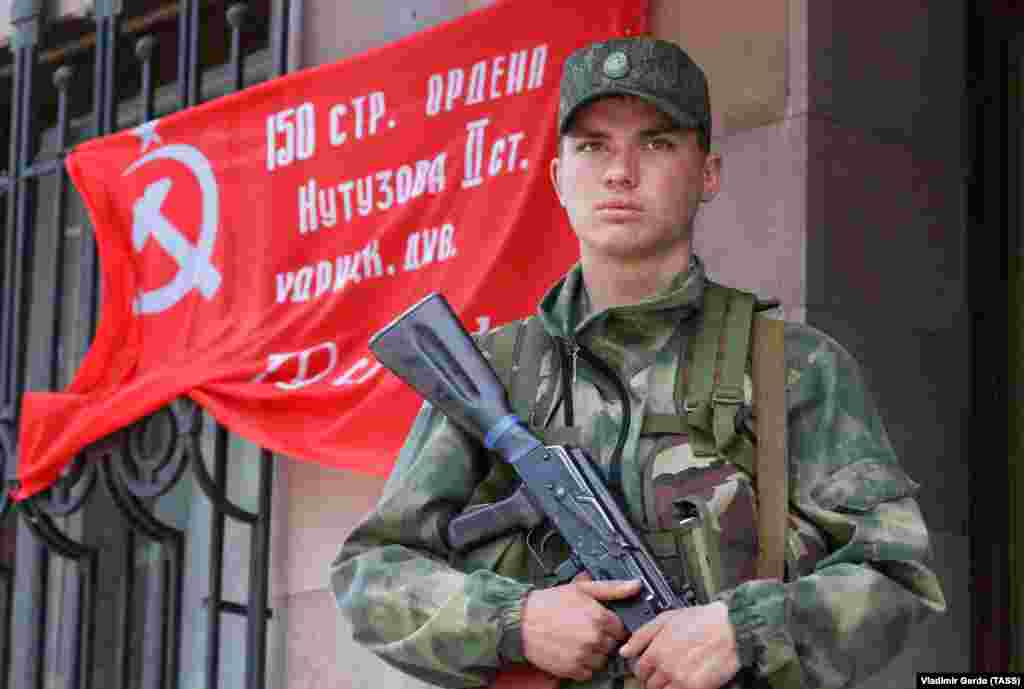
A pro-Russian fighter stands in front of a Communist-era banner that was used to mark Soviet victories over Nazi Germany in World War II. The photo was taken in the eastern Ukrainian town of Svitlodarsk on May 28.&nbsp;
34/36 A pro-Russian fighter stands in front of a Communist-era banner that was used to mark Soviet victories over Nazi Germany in World War II. The photo was taken in the eastern Ukrainian town of Svitlodarsk on May 28. 
The horror and devastation seen through 100 days of war in Ukraine that began when Russia launched a full-scale invasion on February 24.
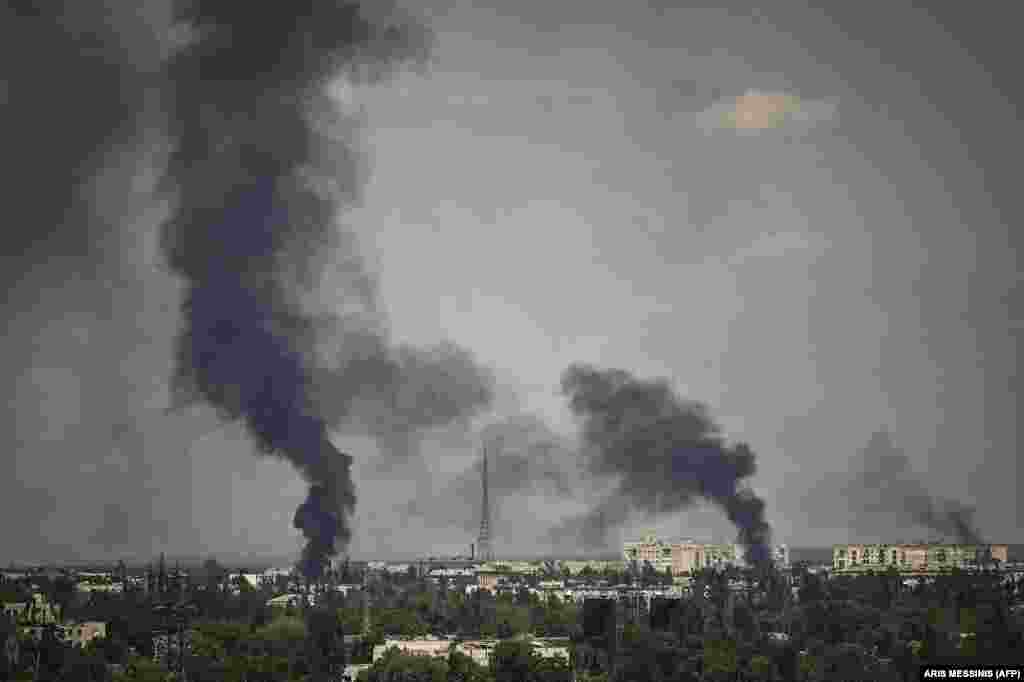
Smoke rises above Syevyerodonetsk during heavy fighting on May 30 as Russian troops inched closer to seizing the key eastern city.
35/36 Smoke rises above Syevyerodonetsk during heavy fighting on May 30 as Russian troops inched closer to seizing the key eastern city.
The horror and devastation seen through 100 days of war in Ukraine that began when Russia launched a full-scale invasion on February 24.
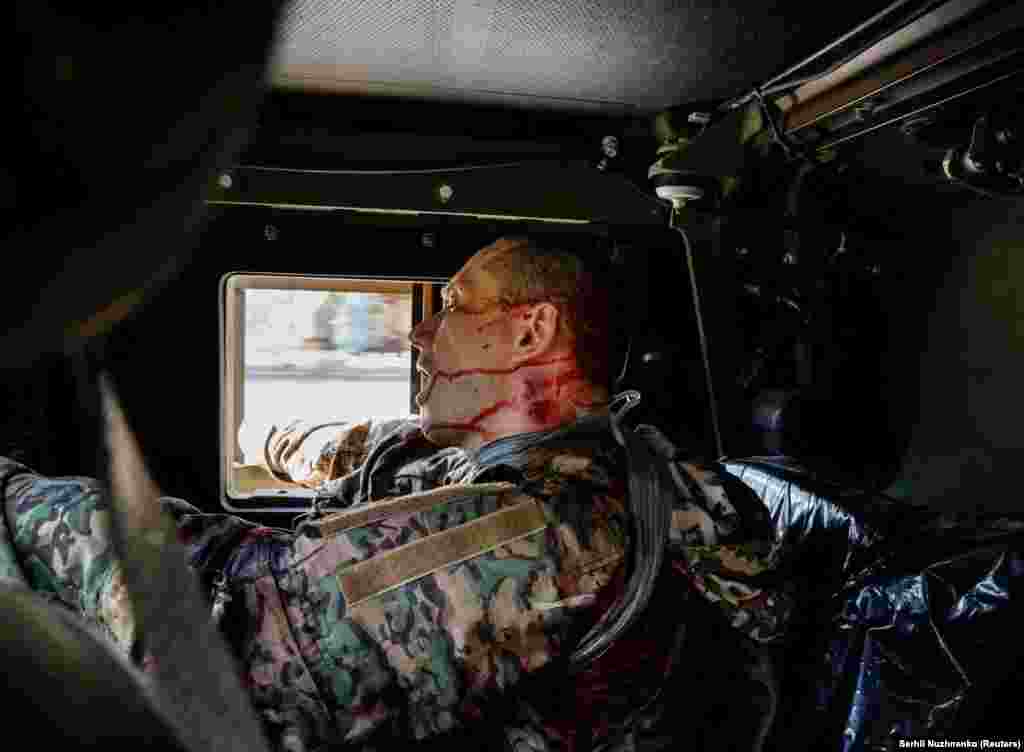
A wounded Ukrainian serviceman is evacuated from the front lines in Syevyerodonetsk on June 2.&nbsp;<br />
<br />
As of&nbsp;June 3 bitter fighting in eastern Ukraine is ongoing as Russian forces continue their assult. Ukraine&#39;s President&nbsp;Volodymyr Zelenskiy says &quot;60 to 100&quot; Ukrainian soldiers are dying in battle every day.&nbsp;
36/36 A wounded Ukrainian serviceman is evacuated from the front lines in Syevyerodonetsk on June 2. 

As of June 3 bitter fighting in eastern Ukraine is ongoing as Russian forces continue their assult. Ukraine's President Volodymyr Zelenskiy says "60 to 100" Ukrainian soldiers are dying in battle every day. 
The horror and devastation seen through 100 days of war in Ukraine that began when Russia launched a full-scale invasion on February 24.
Previous slide
Next slide

"Generally speaking, it's clear that any enlargement of NATO takes place within a geopolitical context that it's necessary to take into consideration in a sober and in-depth way," Zeman said. "We have to think in a broader context and with a long-term perspective in mind."

Historically neutral Sweden and Finland have vowed to join NATO since Putin's invasion of Ukraine, although their bids have met with an unexpected obstacle from member Turkey's leadership.

Zeman said predictions about the Ukrainian conflict are difficult and expressed pessimism at the current course of the war, saying, "It seems that we're still pretty far from any diplomatic reconciliation."

"I fear that the most likely scenario currently appears to be the so-called war of attrition," he said.

He also acknowledged it is difficult to know whether Russian military strategists envisage any attack on states west of the Ukrainian border.

"But I know one thing: If Russia were to attack a NATO member state, that would mean surrendering its own existence," Zeman said. "This would most certainly be followed by a retaliatory strike by the North Atlantic alliance and, unfortunately, nuclear war. Russia would thus have unleashed a tragedy not only for itself but for the whole world."

  • 16x9 Image

    RFE/RL's Ukrainian Service

    RFE/RL's Ukrainian Service has seen its audience grow significantly since Russia's full-scale invasion in February 2022 and is among the most cited media outlets in the country. Its bold, in-depth reporting from the front lines has won many accolades and awards. Its comprehensive coverage also includes award-winning reporting by the Donbas.Realities and Crimea.Realities projects and the Schemes investigative unit.

This item is part of
XS
SM
MD
LG