U.K. Foreign Secretary David Lammy blasted Georgia's move away from "democratic norms." (file photo)
Britain has said it is severely restricting its contacts with the Georgia government and blasted its "shocking" crackdown on journalists and pro-Western demonstrators, reflecting earlier moves by the United States and European Union.
Foreign Secretary David Lammy on December 9 said the "shocking scenes of violence toward protesters and journalists by the Georgian authorities are unacceptable and must stop."
"In light of ongoing events, the U.K. will immediately suspend all program support to the Georgian government, restrict defense cooperation, and limit engagement with representatives of Georgian Dream government until there is a halt to this move away from European democratic norms and freedoms."
Rustaveli: Georgia’s Road Of Protest
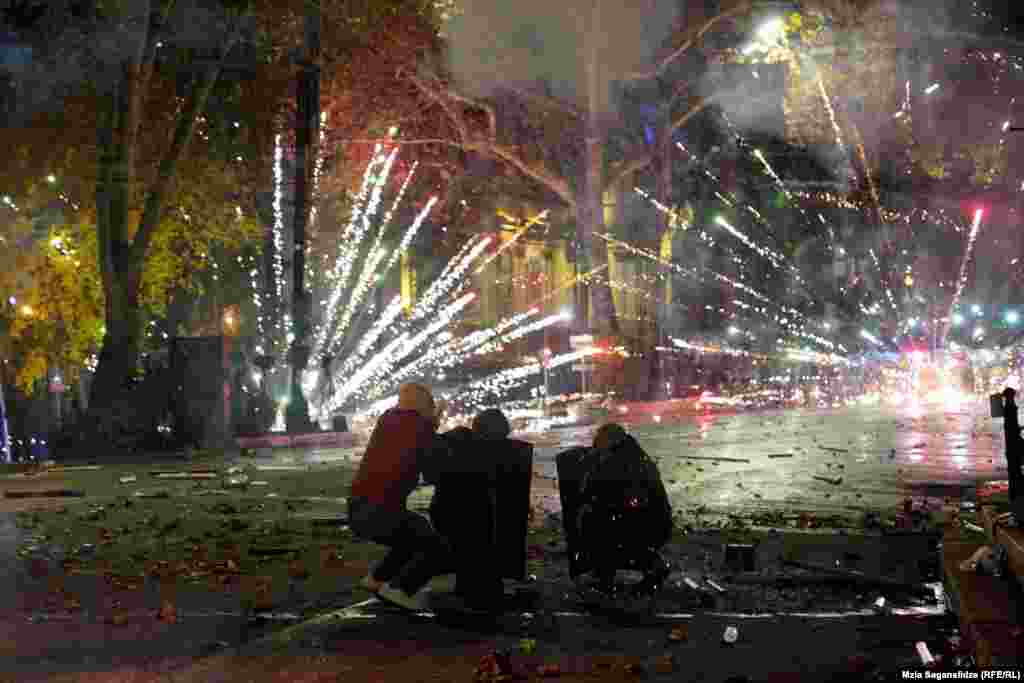
1/13Protestors shoot fireworks toward police on December 4 amid protests along Tbilisi’s Rustaveli Avenue.
The current unrest over the Georgian government’s decision to halt EU accession talks has centered around this thoroughfare in Tbilisi. It is the latest in a long list of political upheavals the street has endured.
Protests that have rocked Tbilisi in recent days broke out on a historic street that has become the “political heart” of modern Georgia.
Show moreShow less
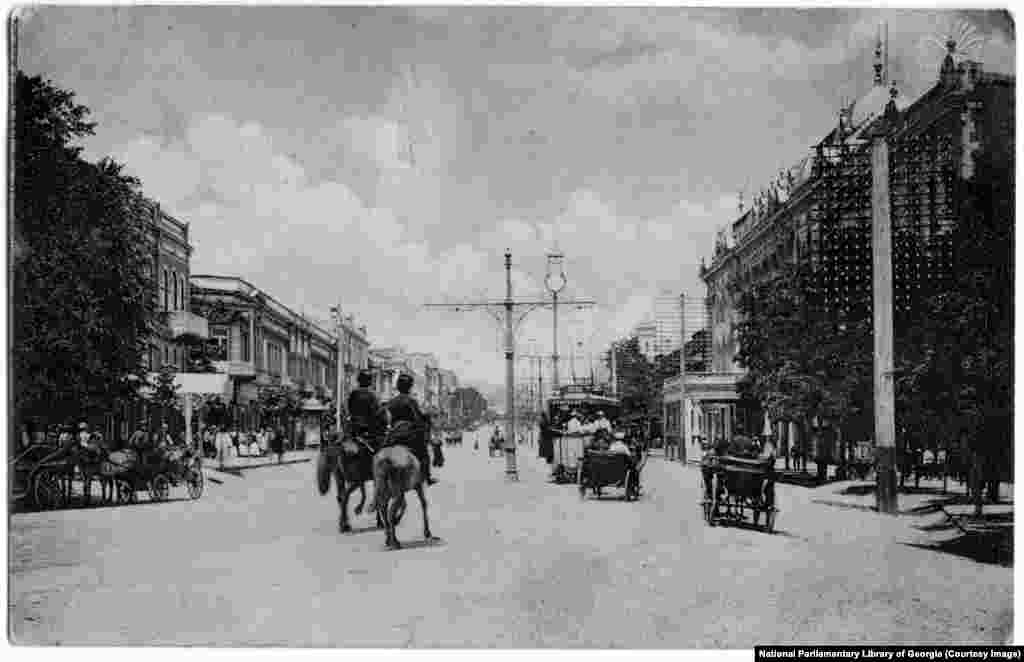
2/13Today’s Rustaveli Avenue photographed in the 1910s when it was named Golovin Prospect after a Russian general.
The thoroughfare was built in the 1840s by Russia’s viceroy to the Caucasus when Georgia was part of the Russian Empire. The tsarist authorities sought to transform the Georgian capital “from a Persian-style city into a new European metropolis.”
Protests that have rocked Tbilisi in recent days broke out on a historic street that has become the “political heart” of modern Georgia.
Show moreShow less
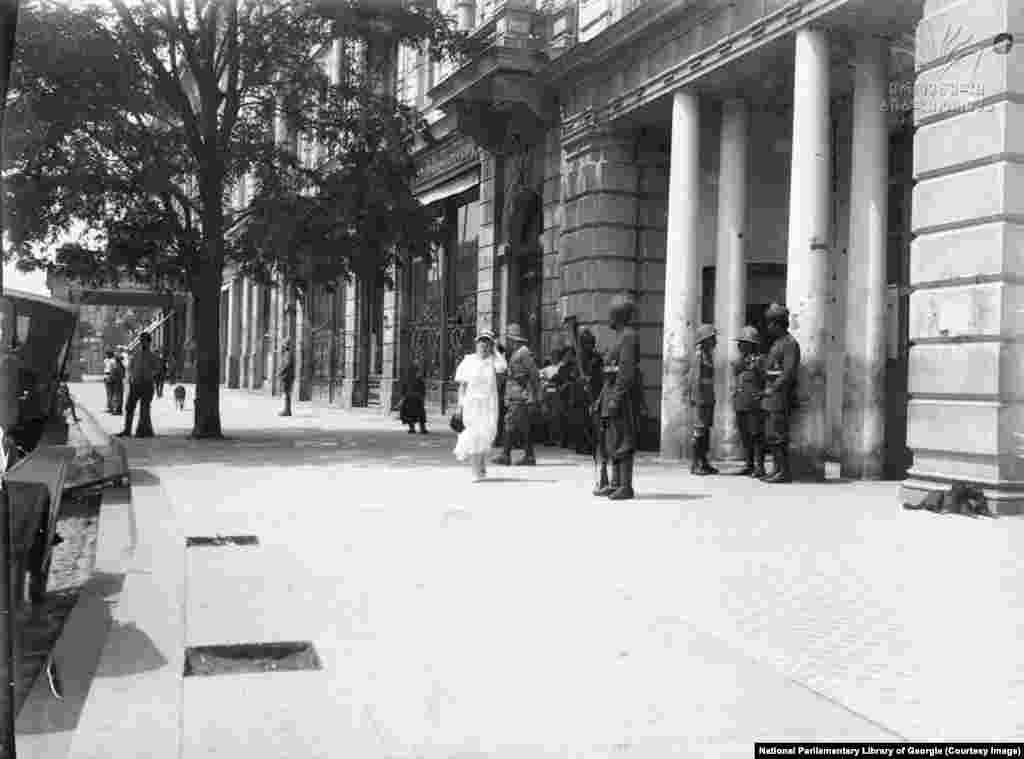
3/13A sidewalk on Rustaveli Avenue photographed in the early 1900s.
The avenue was named after Georgia’s 12th-century poet Shota Rustaveli and was distinctive for its fine hotels and wide footpaths that showcased the fashions of the day.
Protests that have rocked Tbilisi in recent days broke out on a historic street that has become the “political heart” of modern Georgia.
Show moreShow less
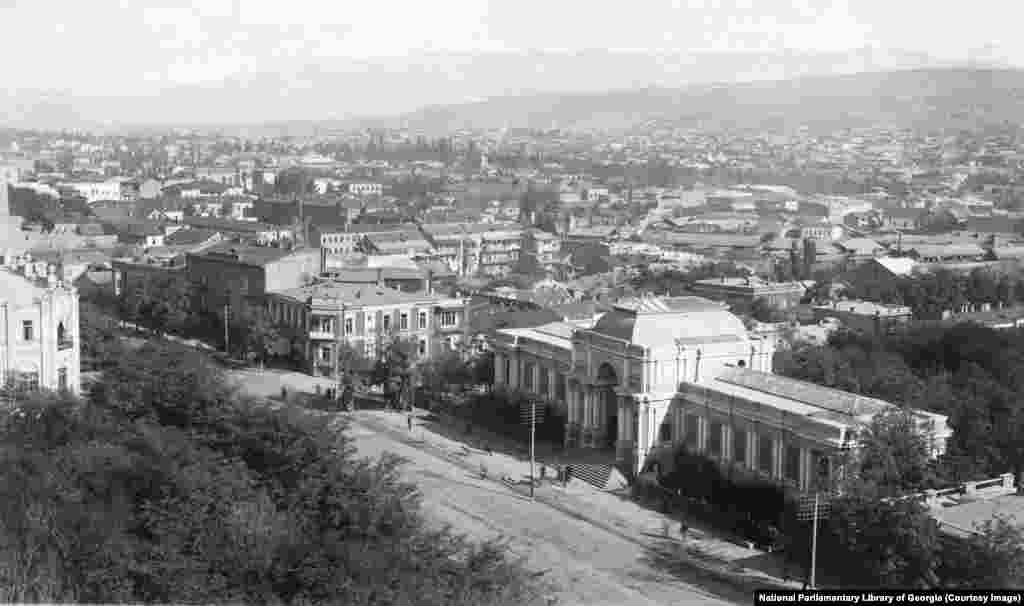
4/13Rustaveli Avenue, with Georgia’s National Gallery, photographed around the turn of the 20th century.
Rustaveli’s role in modern politics began when exiled Azerbaijani nationalists declared the independence of their country, which was then occupied by Bolshevik forces, from the Hotel Orient on today’s Rustaveli Avenue, in May 1918.
Protests that have rocked Tbilisi in recent days broke out on a historic street that has become the “political heart” of modern Georgia.
Show moreShow less
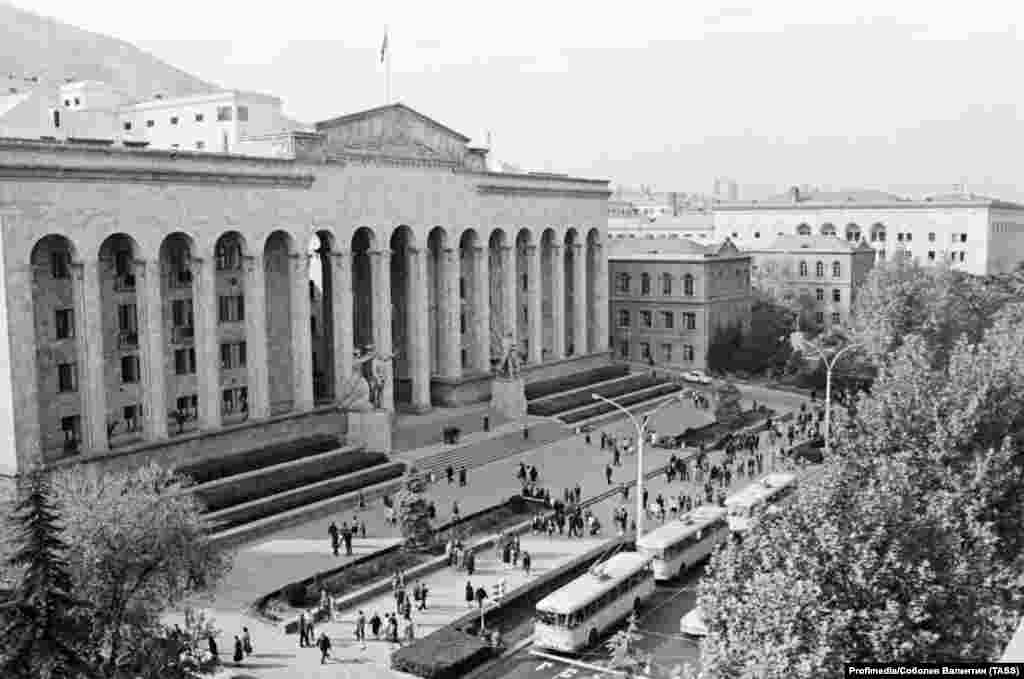
5/13Rustaveli Avenue’s place as the focal point for protest was assured when anOrthodox Cathedral on the street was demolished by the Bolsheviks in 1930, and Georgia’s parliament building (pictured here in 1966) was built in its place.
Georgian historian Gabriel Chubinidze told RFE/RL “for the past 200 years, Rustaveli Avenue has been the political heart of Georgia.”
Protests that have rocked Tbilisi in recent days broke out on a historic street that has become the “political heart” of modern Georgia.
Show moreShow less
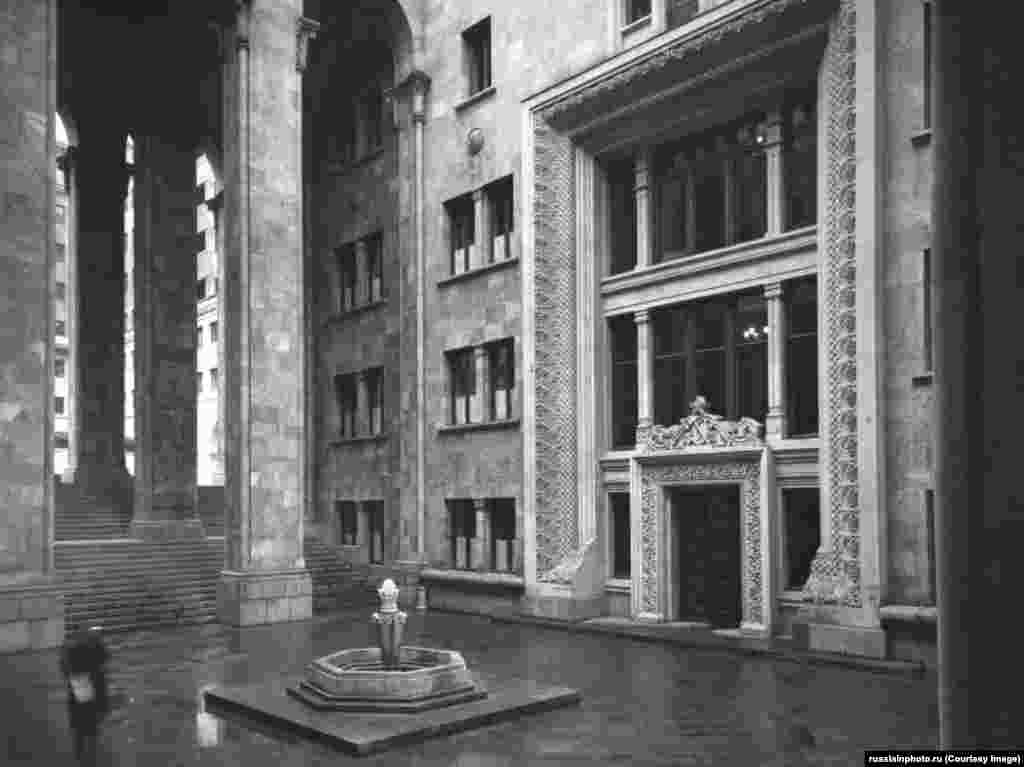
6/13An inner courtyard of Georgia’s parliament building photographed in the 1950s when it was known as the House of the Government of the Georgian Soviet Socialist Republic.
Protests that have rocked Tbilisi in recent days broke out on a historic street that has become the “political heart” of modern Georgia.
Show moreShow less
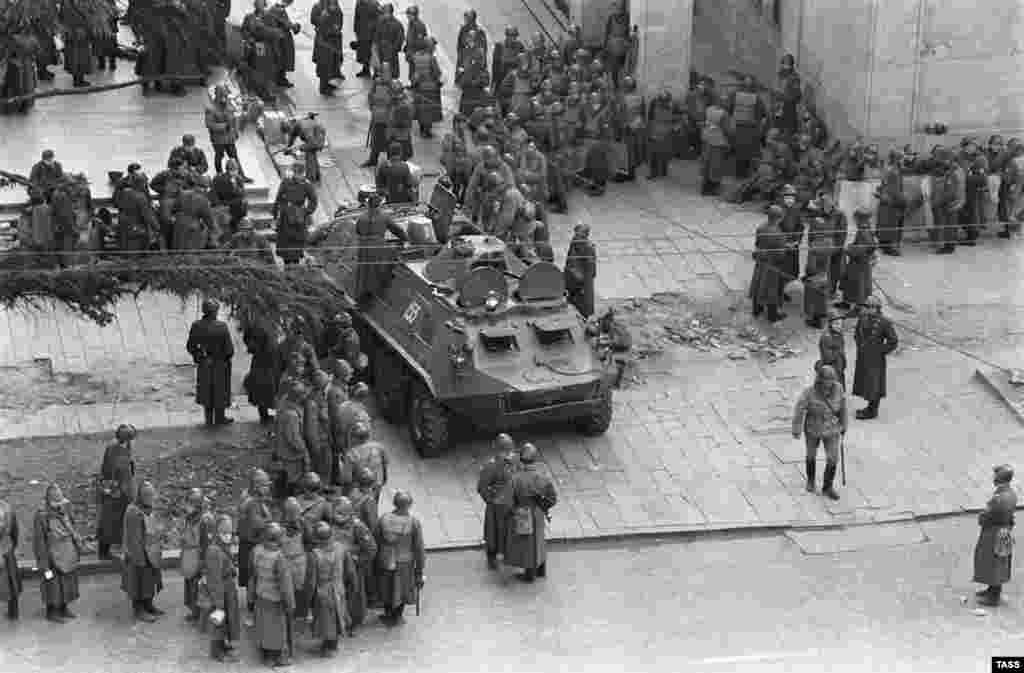
7/13Soviet troops gathered on Rustaveli Avenue in a show of force on April 11, 1989.
Rustaveli Avenue was the site of one of the most infamous acts of the late Soviet empire on April 9, 1989. In the early hours of that morning,independence protestors in front of the parliament were attacked by Soviet troops. Twenty-one people were killed, including several who were beaten to death with shovels.
Protests that have rocked Tbilisi in recent days broke out on a historic street that has become the “political heart” of modern Georgia.
Show moreShow less
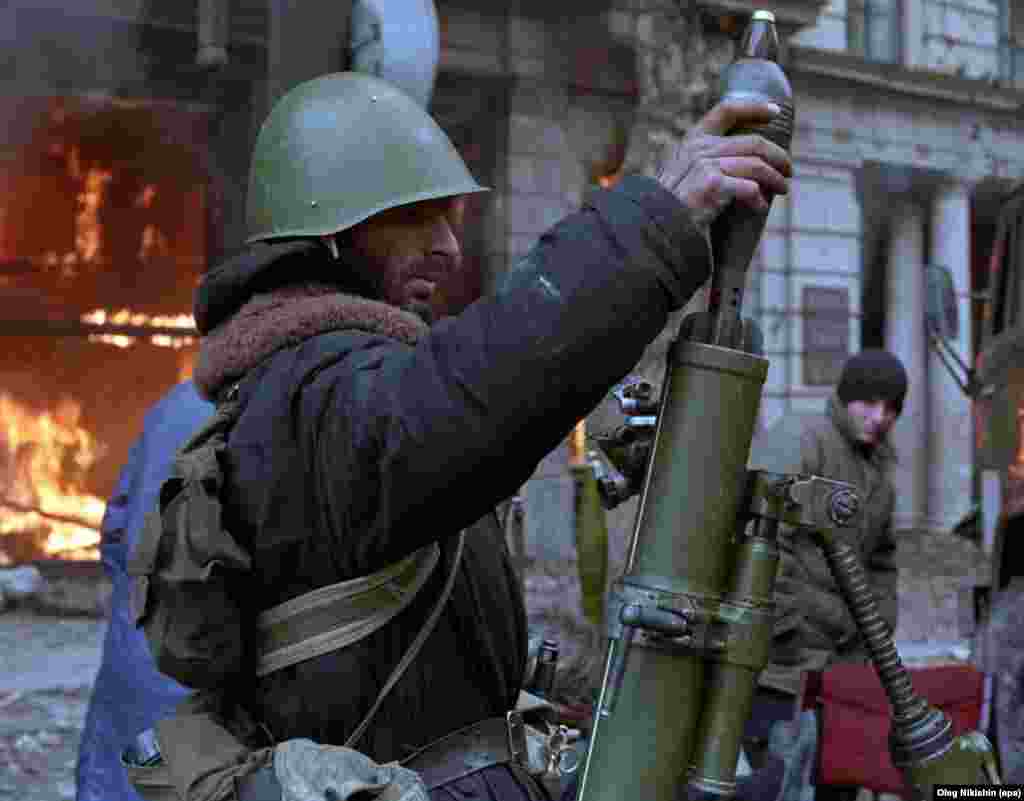
8/13An anti-government fighter loads a mortar on Rustaveli Avenueduring theTbilisi War.
In December 1991 amid the breakup of the U.S.S.R., Rustaveli became a literal war zone as anti-government fighters deployed mortars, tanks, and heavy artillery on Rustaveli Avenue in an attempt to storm the parliament.
Protests that have rocked Tbilisi in recent days broke out on a historic street that has become the “political heart” of modern Georgia.
Show moreShow less
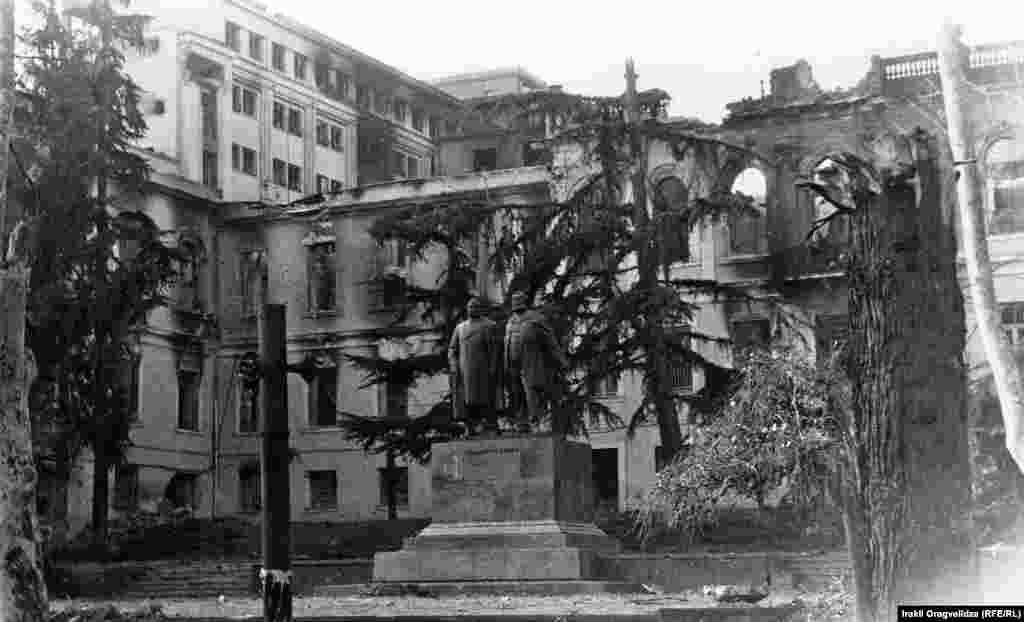
9/13Tbilisi’s Public School No. 1, on Rustaveli Avenue in ruins after the Tbilisi War.
The conflict of 1991-1992 destroyed several of Rustaveli’s historic buildings and resulted in Georgia’s first elected president being ousted from power.
Protests that have rocked Tbilisi in recent days broke out on a historic street that has become the “political heart” of modern Georgia.
Show moreShow less
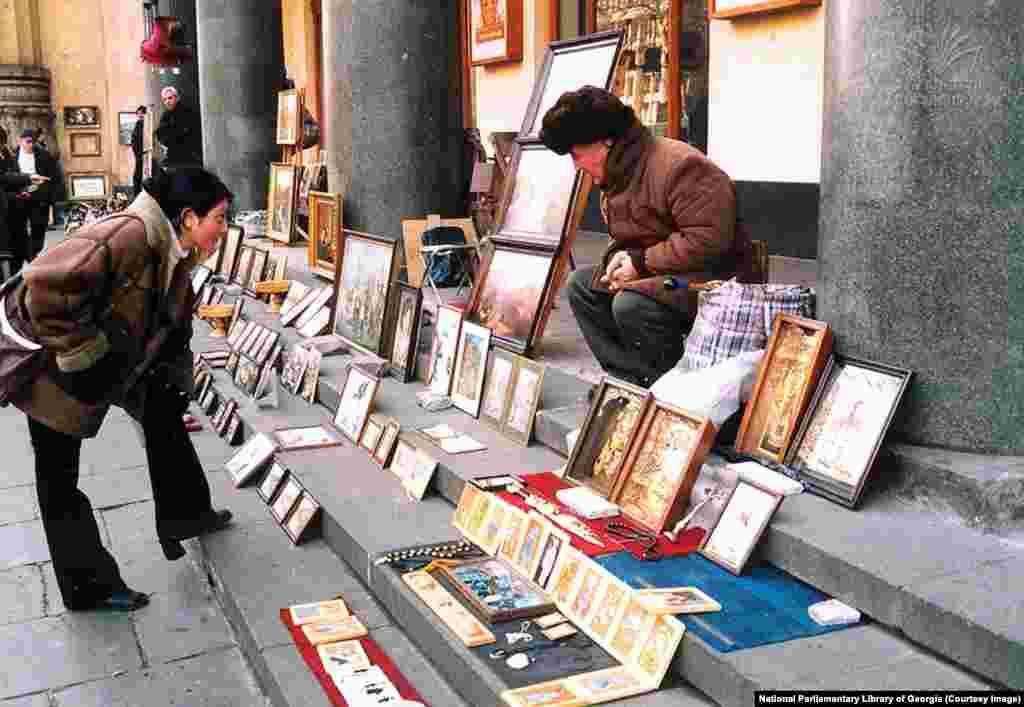
10/13An undated photo of a street vendor selling artwork on Rustaveli Avenue.
In independent Georgia, Rustaveli Avenue became a center of shopping and culture, where locals could stroll in the shade of plane trees away from the touristy old town. But with its position in front of the parliament and its potential to effectively shut down Tbilisi's traffic, “all protests, regardless of where they begin,” ultimately converge on Rustaveli, Chubinidze says.
Protests that have rocked Tbilisi in recent days broke out on a historic street that has become the “political heart” of modern Georgia.
Show moreShow less
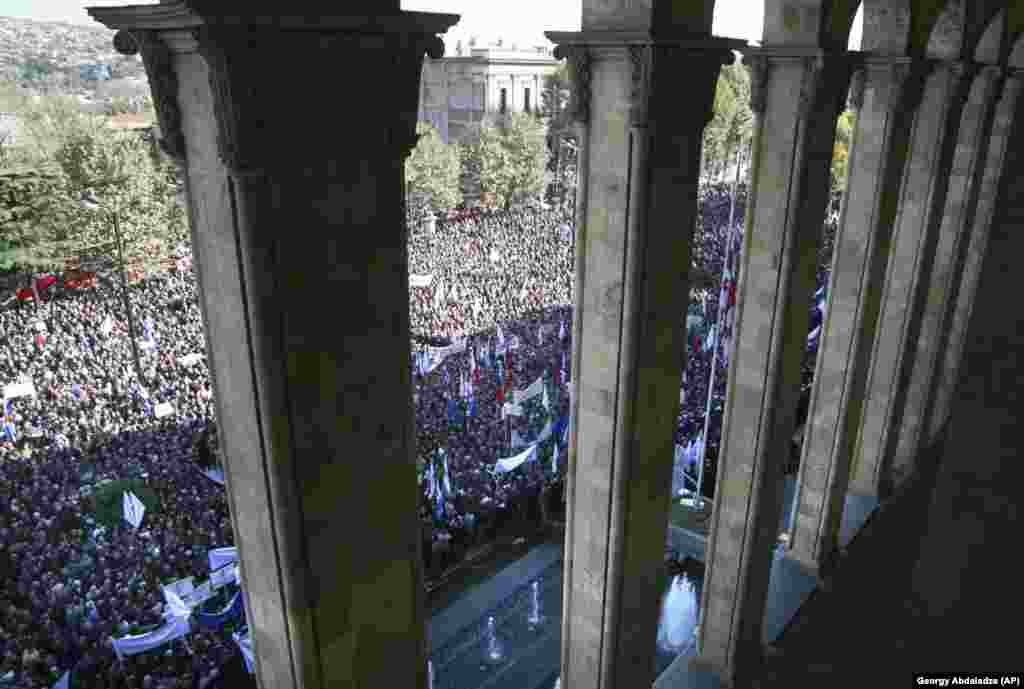
11/13Georgians gather on Rustaveli Avenue in front of the parliament in November 2007, calling for the resignation of President Mikheil Saakashvili.
Many protests have taken place along Rustaveli in the 21st century including the “Rose Revolution" that swept Mikheil Saakashvili to power in 2003, and the anti-Saakashvili protests in 2007 (pictured) that were violently put down by the controversial pro-Western leader.
Protests that have rocked Tbilisi in recent days broke out on a historic street that has become the “political heart” of modern Georgia.
Show moreShow less
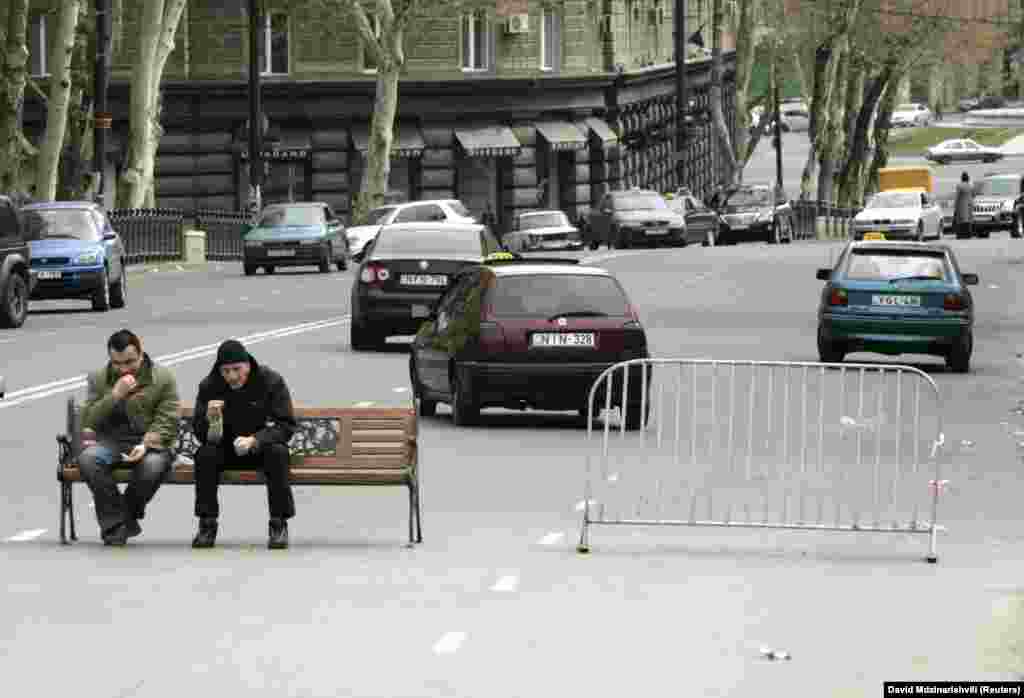
12/13Demonstrators man a makeshift roadblock on Rustaveli Avenue during anti-government protests in 2009.
In 2008, Georgian writer Guram Odisharia predicted that, "without a harmonic relationship between the authorities and society, the people’s hopes will always be deceived and the main player in our country’s political history will be Rustaveli Avenue, and not Georgian politicians.”
Protests that have rocked Tbilisi in recent days broke out on a historic street that has become the “political heart” of modern Georgia.
Show moreShow less
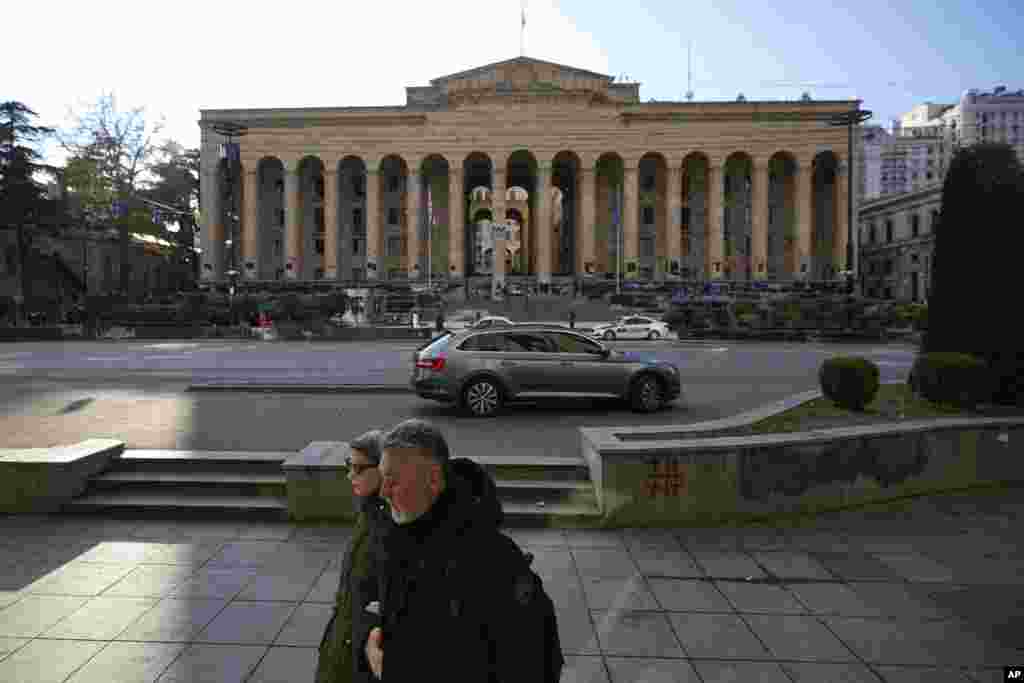
13/13People walk along Rustaveli Avenue on December 3, 2024.
Amid the current unrest, historian Chubinidze says daily efforts are being made to clean up Rustaveli Avenue. “The government is trying to hide the signs of the protests so during the day everything is working normally, even the graffiti is cleaned off." But he told RFE/RL, "from 7 p.m. the street starts to change, it becomes a battlefield.”
Protests that have rocked Tbilisi in recent days broke out on a historic street that has become the “political heart” of modern Georgia.
Show moreShow less
Previous slide
Next slide
Tensions have been high in Georgia since the ruling Georgian Dream party won an election on October 26 that the pro-Western opposition and Georgian President Salome Zurabishvili say was rigged with the help of Moscow.
Protests intensified after the Tbilisi government said it was suspending until 2028 talks with Brussels on Georgia's bid to join the European Union.
Protesters gathered again late on December 9 for the 12th consecutive night of rallies in the capital, with many calling for a rerun of the October election, the release of those arrested during previous demonstrations, and the resumption of EU membership talks.
The U.S. Embassy in Tbilisi on December 9 urged that those "responsible for the brutal and unjustified violence -- including against protesters, members of the media, and opposition figures -- must be held to account."
"Those detained for exercising their human rights to peaceful assembly and freedom of expression must be released immediately."
The United States on December 4 urged the government to treat protesters with dignity after several days of a brutal crackdown in Tbilisi and accusation of excessive use of force and even torture by riot police.
"In addition to continuing our previously announced comprehensive review of bilateral cooperation, the United States is now preparing to use the tools at our disposal, including additional sanctions," the U.S. State Department said.
This summer, Secretary of State Antony Blinken said Washington was pausing more than $95 million in assistance to the Georgian government, due to its "anti-democratic actions and false statements" that were "incompatible with membership norms in the EU and NATO."
In October, the EU reiterated "its serious concern regarding the course of action in Georgia which runs contrary to the values and principles upon which the European Union is founded."
Zurabishvili, a fervent critic of the ruling Georgian Dream party, condemned the "brutal and disproportionate attacks on the Georgian people and media," comparing the crackdown to "Russian-style repression."
Despite the growing protests, Prime Minister Irakli Kobakhidze has refused to back down and threatened to punish political opponents, whom he accuses of being behind violence that has occurred at the protests.
According to surveys, a majority of Georgians support EU membership, and efforts to join the bloc are mandated in the Georgian Constitution.
Georgia received EU candidate status in December 2023, but relations with Brussels have soured in recent months, beginning with the adoption of a Russian-style "foreign agent" law that critics say threatens media and civil society groups by accusing them of "serving" outside powers.
RFE/RL's Georgian Service is a trusted source of politically and financially independent journalism in a country where much of the media is aligned with the government or the opposition.