


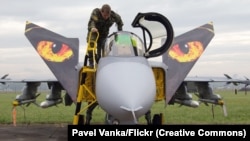

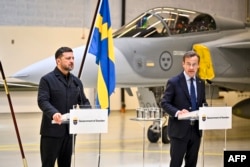
Following the May 28 announcement that Sweden will donate 16 older-generation Gripen fighter jets to Ukraine, industry experts say one key detail of the transfer will determine the aircraft's immediate impact on the war with Russia.
The aircraft donation “may consist of” advanced ammunition including Meteor missiles, according to the Swedish government.
Those long-range air-to-air missiles, “would be needed to hold Russian fighter jets like the Su-34 at risk,” Christoph Bergs, an airpower analyst at the UK's Royal United Services Institute told RFE/RL.
Russian Su-34 fighter bombers routinely launch glide bombs that sail 60-100 kilometers to hit Ukrainian territory. The cheap aerial weapons have proven difficult to stop and immensely destructive.
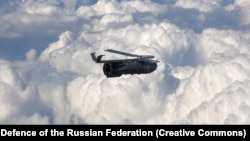
Missiles in Ukraine’s current aerial arsenal do not have the range to target Russian bombers without venturing into “dangerous layers of long-range [Russian] air defense around the front lines,” Bergs says.
Meteor missiles, which have a range of more than 100 kilometers may give Ukraine the ability to push the risk boundary for Russian pilots back beyond the range of glide bombs.
Whether or not Meteor missiles are supplied with the Gripens, it is assumed the aircraft will also be used to track and shoot down Russian missiles and drones such as Iranian-designed Shaheds. Stockholm says the jets will be delivered by early 2027.
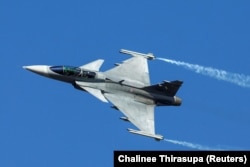
Swedish-made Gripens are viewed by many as the ideal aircraft for Ukraine’s air war given their relatively cheap operating costs -- the lowest among a group of comparable Western fighters -- and simplicity.
Gripen proponents say an experienced fighter pilot who speaks English could be readied for combat missions in a Gripen with just three to four months training. In contrast, prospective F-16 pilots require at least six months preparation in the American jet.
But Gripens have been criticized in the past, including in a leaked 2008 report in which Swiss testers concluded the aircraft was “unsatisfactory” in air-to-air missions. The jets are yet to record an air-to-air combat kill through decades of service in air forces throughout the world.
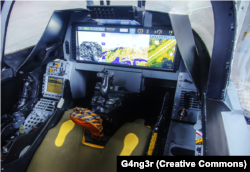
The Gripen -- the Swedish word for griffin, the mythical lion-eagle hybrid -- was developed during the Cold War for “dispersed operations,” throughout Sweden that allow the jet to operate from makeshift bases on most highways in the previously neutral country.
Sweden’s military planners assumed major air bases would be targeted at the outset of any prospective conflict. Gripens were therefore designed to “be concealed at road bases, launched from sections of highway, rapidly refueled and rearmed by small maintenance teams,” according to SAAB, the company that produces the jet.
The aircraft are unique for their ability to take off and land from rugged runways as little as 400 meters long, and for their swift turnaround time. A Gripen returning from a combat mission can refueled and rearmed by a crew of just five people within “10-15 minutes” according to its producer.
Once the Gripens donated to Ukraine are integrated into the country's air force, Kyiv has pledged to purchase a further 20 Gripen of the latest E/F iteration at a cost of some $2.9 billion by 2030.