



Tehran Mayor Mohammad Baqer Qalibaf says Iran has about 11 million people living in the outskirts of big cities. He says Iran needs a long-term plan and one for the near future.
President Hassan Rohani is the third candidate to answer the moderator's question about poor people living in the outskirts of big cities. He says unemployment is a major factor.
Mostafa Hashemitaba is next. He ran in 2001 and finished 10th, winning a paltry 28,000 votes.
Mirsalim was asked about what to do about poor people living in the margins of big cities.
Mostafa Mirsalim,former culture minister, was drawn to be the first to speak in today's debate.
A few hours before the debate, Tehran’s Friday prayers Leader hard-line Ayatollah Khatami said that candidates should have the interests of the establishment in mind while debating. He added that comments that weaken the establishment are considered haram.
Here are some of the social and economic issues that are likely to arise in the April 28 debate and throughout the campaign.
Talking Points: Social, Economic Issues Focus Of First Iran Debate
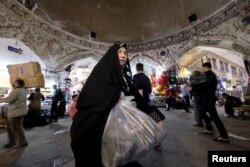
The moderator says the debate will focus on social issues. The state TV had originally said that the focus would be on socioeconomic issues.
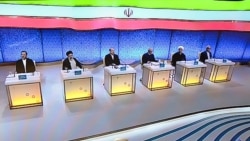
The candidates are: incumbent President Hassan Rohani, a reformist; conservative cleric and former prosecutor Ebrahim Raisi; Tehran Mayor and former police chief Mohammad Baqer Qalibaf; reformist First Vice President Eshaq Jahangiri, a Rohani ally; conservative former Culture Minister Mostafa Mirsalim; and former Iranian National Olympic Committee head Mostafa Hashemitaba, a centrist.
Here is a picture of the stage with the six candidates.