




Trump Says Vance Sent Letter To Iran To 'Help' With Medicine
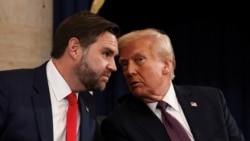
US Vice President JD Vance's letter to Tehran concerned efforts to help Iran get medical supplies, President Donald Trump said, denying US media reports that it had been sent to an Iranian security official to revive peace talks.
"They need help with medical supplies and various things," Trump told reporters on October 28, adding that Vance "asked me what I thought. I said, if you want to do that, that's okay. Basically, it's getting supplies in to help people that are not well."
There was no immediate comment from Tehran, but Iranian media reported on October 29 that Tehran had received the letter and was yet to respond.
Trump's remark came on the same day The Wall Street Journal and The New York Times reportedthat the US president had directed Vance to send the letter to Iranian security chief. Mohsen Rezaei, in an effort to resume negotiations and avert new US strikes on Iran.
For the past few months, peace efforts to end the protracted conflict between the United States and Iran have effectively stalled.
The two countries remained apart on the negotiating terms, with Washington imposing more sanctions against Iran and resuming its maritime blockade of the country's ports. Tehran, for its part, has continued to disrupt shipping through the key Strait of Hormuz, keeping global oil prices soaring.
Asked if Vance's letter was actually sent to Iran to give a fresh start to the talks, Trump said: "No."
On October 28, Iranian Foreign Minister Abbas Araqchi said his country was discussing a seven-day plan to end the war with mediators, a framework previously rejected by Trump that included demands for the removal of sanctions on Iran's oil sector and other easing measures.
Iranian media reported that Tehran viewed any position that undermined its proposed framework as unacceptable to the country.
With reporting by AFP and Reuters
Saudis Report Intercepting Ballistic Missile Fired by Iran-Backed Houthis
The Saudi-led coalition battling Yemen's Iran-allied Houthi rebels on October 29 said it had intercepted a ballistic missile fired by the group into the kingdom.
"Air defenses intercepted and destroyed a ballistic missile launched by the terrorist Houthi militia toward the Eastern Province," coalition spokesman Turki al-Malki posted on X.
Saudi authorities issued two alerts warning of potential danger in Najran, in southwestern Saudi Arabia, and in the Eastern Province, before announcing minutes later that the danger had passed in both areas
Saudi Arabia has in recent weeks come under intensified attack from the Houthis, including a deadly missile strike on Riyadh's international airport.
Following a fragile four-year cease-fire, fighting resumed in Yemen in July as an offshoot of the US-Iran conflict.
The Houthis are battling the internationally recognized government in Yemen, which is allied with Saudi Arabia.
With reporting by AFP and Reuters
Iran Pushes Rejected 7-Day Peace Plan, Warns Against New Israeli Strikes
Iran said it was discussing with mediators the possibility of implementing a plan to end the Middle East conflict and reopen the important Strait of Hormuz, but it also warned of "devastating" economic consequences if Israel should attack the country following this week's week's Israeli election.
Iranian Foreign Minister Abbas Araqchi on October 28 claimed that Tehran was giving "diplomacy a chance to succeed," as it discussed a seven-day plan to end the war and reopen the crucial waterway.
"While our Brave Armed Forces are fully prepared to defend the Homeland, Iran continues to give diplomacy a chance to succeed," he said in a post on X.
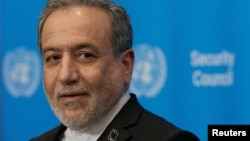
"We remain in close and ongoing contact with intermediaries to review ideas that can ensure implementation of our 7-Day Plan in even less than a week."
Araqchi said at the time that under the plan, the strait would reopen within seven days if "necessary conditions," including a cease-fire across the Middle East, were met. Iran also demanded the unfreezing of its assets held abroad, the removal of sanctions on its oil sector, and an end to the US naval blockade.
US President Donald Trump has previously rejected the plan, which Iran initially proposed last month.
Earlier on October 28, a senior Iranian official denied that Qatar presented Tehran with a new peace proposal, contradicting an account from an official briefed on negotiations.
The Iranian official told Reuters that Qatar had instead put forward ideas that were unacceptable to Tehran, adding that Iran would show no flexibility on the nuclear issue.
The remarks come amid mounting US and Israeli threats of renewed attacks against Iran after a lull following the launch of the war in February.
Meanwhile, Benjamin Netanyahu looked set to remain Israel's caretaker prime minister after surprisingly strong support among voters left his opponents little apparent prospect of unseating him, despite his right-wing bloc losing its parliamentary majority.
Netanyahu would remain caretaker during any coalition negotiations and possibly until another election next year. A caretaker government generally faces some restraints, but experts have said it retains the power to launch a fresh attack on Iran.
Araqchi warned against any such strikes.
"Devastating impact on int'l markets of any Israel-instigated military misadventure in Persian Gulf region remains major concern for both gas suppliers and consumers," he said in a post on X.
With reporting by AFP and Reuters
Kuwait Summons Iranian Envoy Over 'Interference' In Assassination Plot Case
Kuwait summoned Iran's ambassador on October 28 to protest against a statement by Tehran's embassy denying that an Iranian national was involved in an alleged plot to assassinate a senior Kuwaiti official.
The move came after Kuwaiti judicial sources told AFP that three Shi'ite men had been sentenced to death on charges of plotting to kill Deputy Prime Minister and Interior Minister Fahad al-Yousef, collaborating with Iran, and belonging to Hezbollah, which the United States designates as a terrorist organization.
Iran's embassy rejected the allegations, saying the Iranian national implicated in the case had been outside Kuwait for 10 years.
Kuwait's Foreign Ministry said the embassy's statement constituted interference in its internal affairs and undermined the independence of its judiciary.
It also called on Iran to respect international law and the UN Charter, particularly the principle of good-neighborliness.
Gulf states have arrested dozens of suspected members of Iran-linked cells since the regional war began in February.
With reporting by AFP and Reuters
Iran Says Qatar's Peace Ideas Unacceptable, Says Official
A senior Iranian official has denied that Qatar presented Tehran with a new peace proposal, contradicting an earlier account from an official briefed on negotiations to end the war with the United States and Israel.
The Iranian official told Reuters on October 28 that Qatar had instead put forward ideas that were unacceptable to Tehran, adding that Iran would show no flexibility on the nuclear issue.
Earlier, citing an official briefed on the negotiations, Reuters reported that Qatari mediators had presented Iran with a new draft agreement aimed at ending the war with the United States and Israel, with Tehran expected to respond by the end of the week.
According to that official, the proposal envisages a seven-day implementation period, potentially beginning early next week, during which both sides would take daily confidence-building steps. Several countries would act as guarantors of the agreement, the official said, without identifying them.
Qatar and Pakistan have led mediation efforts to end the war launched by the United States and Israel in February, which has disrupted global shipping and oil supplies and spread across the Middle East.
An interim peace agreement reached in June quickly unraveled.


The latest diplomatic push comes amid fears of renewed hostilities. US President Donald Trump threatened further strikes against Iran on October 23, while Iranian security officials told Reuters that Tehran had drawn up plans to attack undersea cables in the Gulf if US and Israeli attacks resumed.
With reporting by Reuters. This blog entry has been updated.
Russian, Iranian Presidents Meet In Moscow
Vladimir Putin reiterated Kremlin’s policy that the so-called Islamabad Memorandum of Understanding signed by Iran and the US in June, 2026, must be considered the basis for the resolution of their conflict.
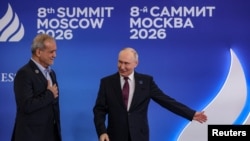
Russian President spoke during his meetings with Iranian President Masud Pezeshkian and Qatari Emir Tamim bin Hamad bin Khalifa Al Thani held on the sidelines of a summit of leaders of the gas-exporting countries in Moscow on October 27.
In Putin’s words, "the Islamabad agreement, which was signed in June with the mediation of Qatar and Pakistan, remains valid as a basis for advancing the negotiation process." The agreement has been seen as stalling since within days after signature.
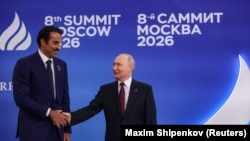
Moscow is ready to take whatever steps it can to help resolve this "complex and acute" crisis, Putin added.
Pezeshkian took the opportunity to repeat Tehran’s official line that regional countries are able to resolve their issues without being dependent on the United States, and called for expanding cooperation with Russia.
The meetings in Moscow took place at the backdrop of mediation efforts by Qatar and Pakistan to reach an agreement between Iran and the United States and prevent the resumption of the hot phase of their military confrontation currently on pause.
The joint US–Israeli military campaign against Iran, codenamed Operation Epic Fury by the United States, began on February 28, 2026.
The opening wave involved large-scale strikes on Iranian military command structures, air defenses, and leadership targets, including the strike, in which Supreme Leader Ali Khamenei and a number of close associates were killed, initiating a broader conflict, which had Iran block the Strait of Hormuz – a major sea route of regional oil exports to the global market.
Since, the US maintains the blockade of Iranian ports with an aim of increasing Iran’s economic isolation and deepening its domestic crisis to force the current country’s leadership to accept Washington’s demands of de-nuclearization.
Russia And Iran Expand Nuclear Cooperation As International Oversight Weakens
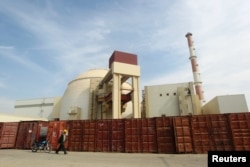
Russia and Iran are expanding their nuclear cooperation as both countries face Western sanctions and international isolation. Their partnership includes the construction of nuclear power plants, fuel supplies, and broader technological cooperation.
While Bushehr, Iran’s first operating nuclear power station, has long been the centerpiece of their relationship, Moscow and Tehran are planning new nuclear facilities and cooperation in other areas of technology, raising questions about the ability of international agencies to monitor Iran’s nuclear activities.
Russia’s state nuclear corporation Rosatom has played a key role in completing and operating Bushehr, on Iran’s southern coast. A contract to complete the plant’s first reactor was signed in 1995, but the unit did not begin full commercial electricity generation until 2013.
Rosatom has continued work at the site despite the military escalation in the Middle East. After the start of the US-Iran war in February, Rosatom evacuated most of its workers from Iran. But many of the personnel have since returned; by October 11, the Russian nuclear body reported that 135 engineering and technical specialists were back working at the site.
Read more here
Pakistan-Iran Border Closure Causes 'Unprecedented' Increase In LPG Prices
The Pakistan-Iran border crossings remain closed, triggering an “unprecedented” surge in liquefied petroleum gas (LPG) prices in Pakistan, despite the much-hyped Mecca Defense Alliance meeting in Tehran, underscoring continued tensions among the participating countries.
The impact of rising LPG prices was felt in Pakistan’s National Assembly, the lower house of parliament, on October 26, when lawmakers described the price hike as “unprecedented” in a call-attention notice to the government.
Pakistan’s Petroleum Minister admitted the Pakistan-Iran border closure was one of the main reasons for the increase in LPG prices.
Pakistan has kept its Gabd-Rimdan and Taftan border crossings with Iran closed since October 17 for “technical reasons,” drawing criticism from pro-regime media outlets and social media accounts in Tehran. Since then, hundreds of trucks have remained stranded on both sides of the border.
Pakistan is fulfilling 50 to 60 percent of its LPG demand from Iran while the rest is imported from Qatar using the sea route. The LPG supply from Qatar has already been suspended due to the US-Iran conflict in the region, which has bitterly affected the maritime traffic through the Strait of Hormuz.
Reports suggest over 100 percent increase in LPG prices, especially in the remote and mountainous areas of Pakistan since October 17.
According to Reuters, Pakistan imports roughly 7,000 metric tons of LPG per day from Iran. Apart from closing the border, Pakistan has also introduced changes in its E-form procedure, a digital declaration authorizing the tracking of foreign currency remittances, for Iranian exports coming into the country.
In a social media post on October 25, Tehran envoy to Islamabad Reza Amiri Moghadam said that consultations with the Pakistani side are under way to address the issue of cross-border trade.
Moghadam said several hundred trucks carrying LPG have crossed the Rimdan border into Gabd on the Pakistani side. However, despite having remained there for several weeks, these trucks have yet to be unloaded or cleared up, further complicating the movement of goods and the smooth flow of bilateral trade.
Saudi, Turkish, Pakistani Officials Set For Iran Talks Amid Houthi Attacks
Top representatives from Saudi Arabia, Turkey, and Pakistan, members of the so-called Mecca alliance, were set to meet in Iran's capital, Tehran, on October 26, according to media reports.
Saudi Arabia was to be represented by Defense Minister Prince Khalid bin Salman, Pakistan by Army Chief Field Marshal Asim Munir, and Turkey by intelligence chief Ibrahim Kalin, Reuters reported, citing sources.
The deputy secretary of Iran's top security body, Ali Baqeri Kani, told the state television that senior Saudi, Pakistani, and Turkish officials would visit Tehran for regional security talks.
Saudi Deputy Minister for Public Diplomacy Dr. Rayed Krimly confirmed that the meeting will take place on October 26 in Tehran, adding that representatives of Saudi Arabia, Turkey, and Pakistan will meet with Iranian President Masud Pezeshkian and Mohsen Rezaei, secretary of Iran's Supreme National Security Council.
"The visit comes as part of the continued efforts by the Makkah Joint Defense Agreement countries for de-escalation between parties involved in the ongoing crisis, and promoting dialogue and diplomatic solutions," Krimly wrote in a post on X.

The planned talks would mark the first high-level contact between Iran and representatives of all three countries since Saudi Arabia came under intensifying attacks by Yemen's Iran-aligned Houthi rebels.
The Mecca Joint Defense Agreement, signed in the Saudi city of Mecca on August 7 by Turkish President Recep Tayyip Erdogan, Saudi Crown Prince Mohammed bin Salman, and Pakistani Prime Minister Shehbaz Sharif, stipulates that an armed attack against any one of the three countries shall be regarded as an attack against all three.
Turkey's parliament has yet to ratify the agreement, while Pakistan approved the pact last week.
With reporting from Reuters. This live blog entry has been updated.
CENTCOM Says 1.5 Billion Barrels Of Oil Shipped Via Hormuz
The commander of US Central Command (CENTCOM), Adm. Brad Cooper, visited the Strait of Hormuz on October 25, as US forces marked a milestone by helping Gulf countries export 1.5 billion barrels of oil through the waterway since the summer, CENTCOM said in a statement.
"More than 3,000 commercial vessels have successfully transited the Strait of Hormuz with support from CENTCOM forces over the last six months," according to the statement.
"Today, primary transit routes in the Strait of Hormuz remain free and clear of Iranian sea mines thanks to incredible efforts by our people," Cooper said.
"We remain intensely focused on keeping commercial traffic flowing as we work with our teammates in the US interagency, Gulf Cooperation Council, and shipping industry," he added.
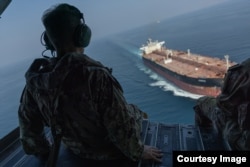
The Strait of Hormuz is a vital waterway that Tehran has effectively closed since the war in the Middle East began with US-Israeli strikes on Iran on February 28.
Iran has demanded that ships obtain permission to transit the strait, through which about one-fifth of global oil supplies normally pass.
In response to Iran's effective closure of the Strait of Hormuz, the United States imposed a naval blockade on Iranian ports and vessels on April 13.

"The Strait of Hormuz is open. There's almost as much oil flowing out now as there was before this conflict began," US Secretary of State Marco Rubio said earlier this month, adding that Iran has "lost complete control" of the Strait of Hormuz.
Maritime tracking firm Kpler reported that crude oil exports reached pre-war levels in September, with at least 16.5 million barrels shipped from the region, excluding Iran.
With reporting by AFP