




Iranian MP Says Pezeshkian-Trump Meeting 'Likely'
- By RFE/RL
Ahmad Bakhshayesh Ardestani, an Iranian lawmaker and member of parliament's National Security Commission, said he thinks it is "likely" that Iranian President Masud Pezeshkian and US President Donald Trump will meet in New York during this week's United Nations General Assembly.
"It would not be bad if the Iranian president had a meeting with him [Trump], but the nature of the relationship between the two countries is much more complicated than solving problems with a meeting," he said in an interview with the Iranian news outlet Didban.
Ardestani added that while a meeting between the two failed to materialize last year during the UNGA even though Pezeshkian was prepared to hold talks, "I think it is likely that their meeting will take place this time."
White House officials have given no indication that Trump will meet with his Iranian counterpart in New York, though the president himself said last week he would "probably" meet with Pezeshkian.
Trump's special envoy Steve Witkoff and his son-in-law Jared Kushner held talks with Iranian Foreign Minister Abbas Araqchi and his delegation on September 22 at the General Assembly -- the first direct contact between the two sides since June -- that the US leader called "very productive."
Prior to that, Trump said during a speech to the UNGA that he would either strike a deal with Iran or “annihilate” it.
The possibility of a Trump-Pezeshkian meeting has already drawn criticism from hard-line figures in Iran.
Iran Cancels Some International Flights As US Sanctions Bite
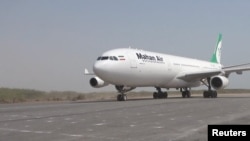
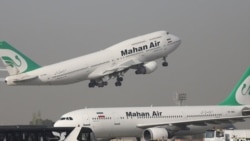
Iranian airlines canceled some international flights on September 23 after the United States tightened sanctions on Iran’s aviation industry as part of efforts to increase economic pressure on Tehran.
Flights from Iran to Baghdad, Muscat, Qatar, Georgia, and Azerbaijan were suspended, a Tehran travel agent told AFP, while services to destinations such as China and Turkey continued despite some cancelations.
US Treasury Secretary Scott Bessent announced the measures on September 21, vowing to “shut down” Iranian carriers and threatening penalties against countries and companies that provide them with services.
The full impact remained unclear. Mahan Air, one of Iran’s largest carriers, operated a flight to Guangzhou after the sanctions took effect, while China said it opposed the measures.
Iraq has not publicly announced whether it will enforce the restrictions, although officials told AFP that Baghdad would comply. Iranian authorities were in talks to reroute Baghdad services to Najaf, a major destination for Shi'a pilgrims.
Meanwhile, Iranian President Masud Pezeshkian flew to New York on September 22 for the UN General Assembly aboard Ashianeh, a little-known Iranian airline that does not appear to be under US or EU sanctions.
With reporting by AFP
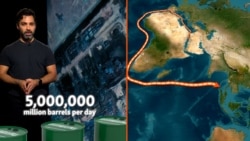
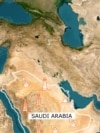
Why Saudi Arabia’s Oil Is Getting Harder To Ship
The crises in the Middle East are creating a growing challenge for Saudi Arabia: how it gets its oil to global markets. Shipping costs are rising, oil recently topped $105 a barrel, and global inventories are being rapidly drained. (Video by Kian Sharifi and Kenan Cerimagic)

Iranian Hard-Liners Up In Arms After Araqchi-Witkoff Meeting In New York
- By Kian Sharifi
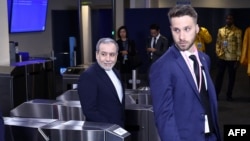
For days, both Iranian and US officials were signaling that some level of interaction between the two sides would take place in New York on the sidelines of the UN General Assembly.
So, it came as little surprise when news broke that White House Special Representative Steve Witkoff and Iranian Foreign Minister Abbas Araqchi had met on September 22.
But that did not stop hard-liners inside Iran from railing against the government of Masud Pezeshkian, with some going as far as demanding impeachment proceedings.
Read more here
Oil Falls Below $100 Per Barrel After US-Iran Talks
Oil prices fell on September 23 after US President Donald Trump said American and Iranian representatives had held “very good” and “very productive” talks at the United Nations, raising hopes of progress towards easing the seven-month Middle East conflict.
Brent crude fell to $98.41 a barrel in afternoon Asian trading, while US West Texas Intermediate dropped to $89.23, putting both benchmarks below $100.
Trump said the three-hour meeting with Iranian mediators on September 22 would be followed by another “in the very near future,” hours after telling the UN he faced a “big decision” on whether to reach a deal with Tehran or “annihilate the Islamic republic and do it quickly.”
The conflict has disrupted regional energy flows, with Iran keeping the Strait of Hormuz closed and fighting in Yemen squeezing Red Sea exports.
Prices also eased as Saudi Arabia reportedly restarted its East-West Pipeline, with exports expected to resume later this week.
With reporting by AFP
Iran Says Araqchi Met Witkoff At UN
Iranian Foreign Minister Abbas Araqchi met US special envoy Steve Witkoff on the sidelines of the UN General Assembly in New York on September 22 and outlined Tehran's conditions for reopening the Strait of Hormuz, Iranian state media reported.
Iran's state broadcaster IRIB, citing an unnamed source, said the meeting took place at Witkoff's request and that Tehran agreed to it in order to convey its conditions for reopening the strategically important waterway.
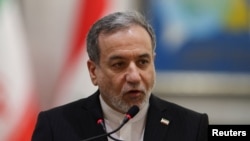
According to IRIB, those conditions include the immediate lifting of the US naval blockade of Iranian ports, the release of frozen Iranian assets, and an end to fighting on what Tehran calls the “resistance” fronts -- a reference to conflicts involving Iran-aligned groups in the region.
There was no immediate public confirmation of the meeting from the United States.
The reported encounter comes as Tehran and Washington explore a possible return to diplomacy amid their months-long conflict and tensions over the Strait of Hormuz, a key route for global oil and gas shipments.
A senior Iranian official told Reuters earlier on September 22 that Iran could reopen the strait to Gulf shipping within seven days if Washington eased military pressure and lifted its blockade on Iranian ports.
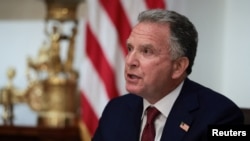
Tehran had previously communicated its latest proposal to Washington through mediators, a senior
Iranian official told Reuters. The Araghchi-Witkoff encounter, if confirmed, would mark a shift to direct contact between senior US and Iranian officials as world leaders gather in New York for the UN General Assembly.
US President Donald Trump, however, struck a hard line in his UN address on September 22, "warning that he could “annihilate the Islamic republic" if no deal was reached to end the conflict. Trump nevertheless said he believed Washington and Tehran would reach an agreement after the US midterm elections in November.
US Senators Call On Rubio To Prioritize Release Of Ex-RFE/RL Journalist Held In Iran
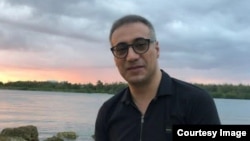
A bipartisan group of four US senators has written to Secretary of State Marco Rubio urging him to make the release of former RFE/RL journalist Reza Valizadeh, who has been imprisoned in Iran since September 2024, an “urgent priority.”
The letter was signed by Democratic Senators Brian Schatz of Hawaii and Jacky Rosen of Nevada and Republican Senators Marsha Blackburn of Tennessee and David H. McCormick of Pennsylvania.
“We ask that his freedom and welfare be an urgent priority through all available diplomatic channels with Iranian officials,” the senators wrote in a letter published on September 22, the second anniversary of Valizadeh being placed in pretrial detention while visiting family in Iran.
Valizadeh, a US-Iranian dual citizen, is serving a 10-year sentence on charges of “collaborating with a hostile government.” The US State Department has condemned his imprisonment and designated him as wrongfully detained.
Valizadeh worked for RFE/RL’s Persian-language service, Radio Farda, from 2012 to 2022. The senators said the charges against him stem from his US citizenship and his work for Radio Farda, where he reported on corruption and repression in Iran.

The appeal comes as world leaders gather in New York for the UN General Assembly, which Iranian President Masud Pezeshkian is attending. Trump said earlier this week that he would “probably be open” to meeting Pezeshkian on the sidelines of the gathering.
The senators said Valizadeh’s health had “significantly deteriorated” at Tehran’s Evin Prison and that he had been denied medical care, including an inhaler needed for his asthma.
“With every day of continued detention, Mr. Valizadeh’s life is in danger,” they wrote.
Trump Expects Peace Deal With Iran After US November Elections
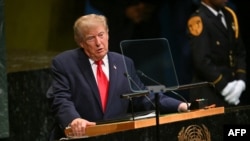
US President Donald Trump said he expects his administration will strike a peace agreement with Iran after voters in the United States head to the polls in November for midterm elections.
Speaking at the United Nations General Assembly on September 22, Trump warned he could "annihilate the Islamic republic" if no deal is reached to end the conflict, though he remains confident of an agreement.
"I have a big decision to make. Will a deal be made with Iran that lets them rebuild and create a far greater country than it ever was before?" Trump said.
"Or do I annihilate the Islamic republic and do it quickly, never giving them a chance to kill and destroy people and countries again?"
He added in his speech: "Do I drive them into hell with no chance of survival and no hope of future greatness or generations? But I believe we'll make a deal right after the election."
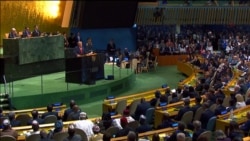
Trump has often threatened major attacks on Iran only to call them off, claiming an agreement between Washington and Tehran was imminent. Until now, a lasting peace agreement has been elusive, with tit-for-tat strikes by both sides resuming.
In June a memorandum of understanding was reached that aimed to give the two sides 60 days to negotiate a broad peace deal. But that fell apart quickly with fighting resuming mainly around the Strait of Hormuz, a key global transit route for energy and consumer products.
Pezeshkian Flies To US Aboard Obscure, Unsanctioned Airline
- By Kian Sharifi
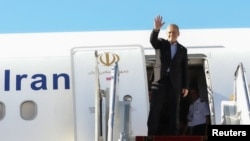
Iran’s President Masud Pezeshkian is on his way to New York to attend the 81st UN General Assembly, but he’s flying on a plane operated by a little-known airline called Ashianeh.
The United States on September 8 expanded its sanctions on Iran’s aviation industry to include all 27 remaining airlines that offered commercial flights and carried officials.
But Ashianeh does not operate scheduled passenger flights or sell tickets. It also is not normally used to carry officials. That responsibility falls to the US-blacklisted Meraj Airlines.
Ashianeh does not appear to have been sanctioned by the United States or the European Union, making it probably the only Iranian airline that can carry Pezeshkian and his delegation to New York.
According to information obtained from FlightRadar24, Ashianeh’s Airbus A340 plane landed in Algiers for what is likely a refueling stop en route to New York.
Pezeshkian’s US trip has been strongly criticized by hard-liners at home, who insist traveling to the United States while at war is “humiliating” and will only help to reduce oil prices. High oil prices caused by the conflict have increased economic pressure on the United States and other oil-importing countries, giving Tehran a potential source of leverage.
US President Donald Trump said last week that he was “probably open” to meeting Pezeshkian on the sidelines of the General Assembly.
Meanwhile, Reuters on September 22 quoted a senior Iranian official as saying that Tehran “welcomes revival of diplomacy” if the United States “takes tangible steps” to ease military pressure.
US Treasury Chief: All Iranian Airlines Will Be Shut Down From September 23
All Iranian airlines will be shut down around the world from September 23, US Treasury Secretary Scott Bessent said.
Speaking to CNBC on September 21, Bessent outlined measures related to sanctions against Iranian airlines imposed earlier this month.
He said airports and companies that continue to provide services to sanctioned Iranian airlines could face exclusion from the US dollar financial system.
"If they land, you cannot provide them with fuel. You cannot provide them with landing services, you cannot sell them tickets, or you will be knocked out of the dollar system," Bessent told CNBC.
Bessent also said the US government is targeting banks accused of funneling billions of dollars to Iran's government. He said three banks have already been sanctioned and warned that their relevant operations would be shut down.
"We have had now three banks that we have sanctioned, the second largest bank in Egypt, the Dubai Branch funneled more than $1.8 billion into the regime. They will be closed down. The 30th largest Turkish bank, same thing. They will be closed down. Second largest Russian bank, their external branches doing the same thing," he said.
"I can't tell you whether it's one week, one month, or six months, but I will tell you that we are pressuring them like never before," Bessent added.