



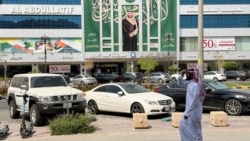

US Forces Blast 3 Iranian Oil Tankers In Response To IRGC Missile Launch
US forces destroyed three oil tankers belonging to Iran's Islamic Revolutionary Guards Corps (IRGC) after the hard-line military entity fired missiles at US Navy vessels, the Pentagon said on September 5.
A statement by US Central Command (CENTCOM) said its forces struck the three crude oil carriers after the IRGC launched ballistic missiles toward two US warships patrolling regional waters.
CENTCOM said that a US aircraft carrier and guided-missile destroyer successfully evaded "multiple unprovoked" IRGC attacks and that no American personnel were injured.
The IRGC later said it had retaliated for the US strikes, claiming they had attacked several vessels, including some linked to the United States, in the Strait of Hormuz. The US did not immediately comment on the claim and details were scarce.
In its statement, CENTCOM did not specify what US assets were used in the strike on the IRGC vessels but said its forces "permanently disabled" the tankers in three locations -- off the coast of Kharg Island, near the port city of Jask, and in the Gulf of Oman.
The statement said the vessel hit in the Gulf of Oman, the unladen crude oil carrier M/T Kylo, was struck in multiple critical locations to render it inoperable after the crew was directed to abandon ship.
A CENTCOM video posted online showed explosions and fireballs after what it said were the strikes on the three Iranian vessels.
“Let the message to the IRGC be clear: If you shoot at two of our ships, we will impose an even higher economic cost -- taking out three of yours,” CENTCOM commander Admiral Brad Cooper said in the statement.
Earlier, Iranian media had reported explosions near Kharg Island, the country’s main oil export hub in the Persian Gulf.
The Tasnim news agency, which is closely affiliated with the IRGC, reported that an Iranian tanker had been struck by four US projectiles in the Kharg Island anchorage area, while other Iranian outlets also reported a strike on a tanker.
The activity comes amid military exchanges that resumed after US strikes on Iran on August 30, prompting retaliatory Iranian attacks on US targets in the Middle East.
This blog entry has been updated.
Saudi Arabia Postpones UN Forum Until 2027 Amid Regional Tensions
Saudi Arabia has postponed the United Nations World Data Forum and the Second Saudi Statistical Forum, originally scheduled for November 9–12 in Riyadh, until 2027.
The country's General Authority for Statistics announced the decision on October 23. It said the postponement was intended to ensure broad international participation by speakers, experts, and partners and to deliver an event that meets the expectations of the global data and statistics community.
The announcement follows Saudi Arabia's decision earlier in the week to postpone its flagship Future Investment Initiative conference, commonly known as Davos in the Desert, until next year. That event had been scheduled for October 26–29.
The postponements come amid escalating regional conflict and attacks by Yemen's Iran-aligned Houthis that have disrupted business activity and raised security concerns.
Other events have also been affected. The Six Kings Slam tennis tournament in Riyadh was moved from October to December 27–30, citing organizational and logistical challenges. Saudi Arabia's round of the World Rally Championship was removed from the 2026 calendar, although the separate Middle East Rally Championship event remained scheduled.
Questions have also been raised about the 2027 AFC Asian Cup, due to take place in Saudi Arabia from January 7 to February 5. The Asian Football Confederation has discussed the possibility of postponement, but Saudi organizers have said preparations are continuing as planned.
New dates for the two statistical forums have not yet been announced.
Trump Considering Renewed Strikes On Iran After Midterms, Says Atlantic
US President Donald Trump is considering resuming military operations against Iran with several days of strikes, potentially shortly after the November 3 midterm elections, The Atlantic reported on October 22, citing US officials.
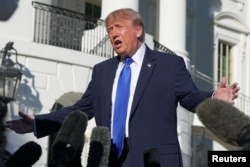
The magazine said Trump has received competing proposals from Treasury Secretary Scott Bessent and Israeli Prime Minister Benjamin Netanyahu. Bessent reportedly argues that sanctions and a US blockade of the Strait of Hormuz could force Tehran to make concessions in negotiations. Netanyahu, meanwhile, has advocated another round of US-Israeli strikes aimed at overthrowing Iran's government.
According to The Atlantic, the administration appears to be considering a combination of economic pressure and military action. Potential targets include Iran's missile and drone arsenals, energy infrastructure, and nuclear facilities.
An outside adviser told the magazine that "the economic pressure is working, and we believe Iran is getting close to the edge." The adviser added that new strikes "would push them over."
However, The Atlantic questioned whether the strategy would succeed, noting that Iran's negotiating position has changed little despite severe economic pressure. The magazine warned that renewed attacks could trigger wider regional escalation without forcing Tehran to surrender.
US officials stressed that no decision had been made about resuming strikes after the elections. The report described ongoing discussions and military preparations, not an approved attack plan.
The uncertainty comes amid high energy prices and stalled negotiations. Trump has publicly ruled out new attacks before the midterms, leaving open the possibility of a later decision.
ABC News: US, Israel Draw Up Plans For Renewed Strikes On Iran
The US and Israeli militaries have developed plans for possible renewed joint attacks on Iran in the coming weeks, with operations expected after the November 3 US midterm elections, ABC News reported on October 22, citing two Israeli sources familiar with the plans.
The sources said US President Donald Trump was reluctant to destabilize oil markets further during the final days of the election campaign. The reported plans include attacks on Iranian petrochemical facilities and nuclear sites, including the facility known as Pickaxe Mountain.
One source said the plans did not include attacks on civilian infrastructure such as power plants. The sources also said Israeli Prime Minister Benjamin Netanyahu favors renewed military action, although the decision to resume joint strikes rests with Trump. One source did not rule out unilateral Israeli action but said it would still require Washington's consent.
The White House confirmed the United States would not attack Iran before the election. Spokeswoman Anna Kelly told ABC News that "the United States will not be attacking Iran at any time prior to the midterm elections."
A separate White House official said the administration does not comment on "sensitive military plans that may or may not exist." The official added that Trump "keeps all options on the table" to prevent Iran from acquiring a nuclear weapon.
ABC reported that the plans were discussed during Defense Secretary Pete Hegseth's visit to Israel earlier that week. The Pentagon declined to comment.
US Relocates Personnel In Middle East As Iran Tensions Push Oil prices Higher
The United States has been reducing or relocating some military personnel stationed at bases in the Middle East amid regional security threats, US media reported on October 21 and 22.
NBC News, followed by CBS News, reported that some US personnel had been moved from bases in Jordan, Qatar, and Kuwait. The State Department also ordered nonessential personnel and family members to leave Saudi Arabia, citing security risks that included attacks by Iran-allied Houthi forces in Yemen.
US Central Command spokesman Captain Tim Hawkins said: "We regularly move US service members and assets to optimize mission readiness. We do not discuss related movements for operational security reasons." He added that US forces remained ready to protect American personnel and interests.
The movements came as The New York Times, ABC News, and The Atlantic reported that Washington and Jerusalem were considering options for renewed attacks on Iran after the November 3 US midterm elections. However, officials have not established publicly that the personnel changes were preparations for a specific attack. Some measures were explicitly linked to Houthi threats.
Separately, Axios reported that dozens of Israeli fighter jets and refueling aircraft conducted a long-range sortie toward Iran's border on October 19, before turning back. US and Israeli officials described the operation as a demonstration of military capability and a deterrent, although the circumstances raised concerns about possible miscalculation.
Oil prices also rose amid renewed tensions. CBS News reported that Brent crude reached approximately $112–$113 a barrel on October 22, after Iran's Islamic Revolutionary Guards Corps claimed attacks on vessels near the Strait of Hormuz. The claims had not all been independently verified.
Iran-Pakistan Border Trade Suspended As Trucks Stranded
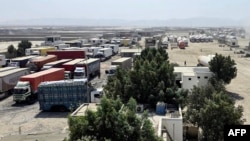
Commercial trade between Iran and Pakistan remained suspended at the Gabd–Rimdan and Taftan crossings this week, leaving hundreds of trucks stranded, according to Pakistani media and AFP on October 21.
Iranian lawmaker Fadah Hossein Maliki said Pakistan’s army chief, Field Marshal Asim Munir, had ordered the border reopened during his Tehran visit on October 20. Maliki said Iranian officials later told him reopening was one-way: Pakistani trucks could enter Iran, but Iranian trucks could not enter Pakistan. This account has not been independently confirmed.
AFP reporters saw trucks waiting at Gabd–Rimdan, with drivers reporting delays and inadequate access to food and drinking water. Pakistani officials and trade representatives confirmed that bilateral commercial traffic had stopped, although some vehicles carrying transit goods to Central Asia or Turkey were allowed through. Passenger movement reportedly continued at the Rimdan-Gabd border crossing.
The reasons remain disputed. Pakistani officials described the suspension as a temporary measure to improve security, strengthen border management, and curb smuggling. Iranian trade representatives, meanwhile, said sanctions-related banking problems were preventing Pakistani importers from completing procedures for goods purchased from Iran.
US sanctions can expose foreign financial institutions to penalties for dealings with sanctioned Iranian entities, but the available evidence does not establish that Washington directly ordered Pakistan’s restrictions.
Maliki warned that Iran could close its own border if restrictions persist.
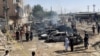
Bessent Cites Satellite Images Showing No Crude Tankers At Iran's Kharg Terminal
US Treasury Secretary Scott Bessent posted satellite images of Iran's Kharg Island oil terminal on October 22, saying no crude-oil tankers were visible at the facility.
"Kharg Island is now nothing more than a monument to the only thing the Iranian regime can still produce: failure," Bessent wrote on X. He said the US government's Operation Economic Outcast was cutting off Iran's oil revenues and restricting funds used to support terrorism, its nuclear program, and senior officials from the Islamic Revolutionary Guards Corps.

The post followed Bessent's remarks on October 20 that no oil loading had been observed at Kharg since August and that Iran had no remaining oil cargoes at sea.
A Bloomberg analysis published on October 19, based on European Union satellite imagery and vessel-tracking data, found that no crude-oil tankers had docked at Kharg's main export terminals since late August. The analysis also found no tanker activity at Iran's smaller Jask export terminal during the period examined.
Separate reports citing Bloomberg, Kpler, and Vortexa data indicated that Iran loaded no crude oil onto tankers in September, following a sharp decline in shipments after the US naval blockade was reinstated.
However, reports have also documented limited Iranian exports of other petroleum products despite the blockade.
US Regulator Investigates Suspicious Oil Trades Linked To Trump's Iran Decision
The US Commodity Futures Trading Commission (CFTC) is investigating suspicious oil-market trading linked to President Donald Trump's March decision to back away from threatened strikes on Iranian power plants, Reuters has reported.
CFTC Enforcement Director David Miller confirmed at a conference in New York on October 22 that the investigation remains open.
The investigation follows concerns about unusually well-timed trades before Trump's announcement. Bloomberg previously reported that substantial positions anticipating lower oil prices and higher stock prices were placed shortly before the president announced his decision on March 23, raising questions about whether some traders had access to advance information.
Bloomberg also reported in October that a political appointee at the CFTC had instructed market-surveillance staff to retract an internal analysis or referral concerning the suspicious trading.
The identities of the traders under investigation and whether any laws were violated have not been established in the cited reporting. Unusual trading patterns can warrant scrutiny but do not, on their own, prove insider trading or other misconduct.
Miller also discussed the agency's scrutiny of prediction markets, where participants trade contracts tied to events such as elections and sporting outcomes. He said CFTC staff had investigated, and might still be investigating, candidates who traded contracts based on their own election results. He declined to comment on specific investigations related to the upcoming midterm elections.
Saudi Arabian Oil Giant Evacuates Headquarters Amid Houthi Attacks, Sources Say
Saudi state-owned oil company Aramco has told its remaining staff to evacuate its headquarters in the country's east amid continuous attacks by Yemen's Houthi rebels, sources told Reuters and AFP.
The reports on October 22 come hours after the Saudi-led coalition and the country's military forces fighting the Iran-aligned Houthis said that their air defenses had intercepted and destroyed at least nine drones.
According to Saudi authorities, one of the drones was targeting an Aramco facility at the Shaybah oil field. Falling debris from the drone killed two people and injured two others.
The Houthis had already targeted the company's headquarters earlier this month. An air strike had caused extensive damage to the building, with fire spreading across several floors.
The developments come amid escalating hostilities between Saudi Arabia and the Houthis.
Yemen descended into civil war in 2014 when the Houthis seized the capital, Sanaa, ousting the internationally recognized, Saudi-backed government. A 2022 truce had mostly held until recently.
This summer, a spate of attacks began after the Houthis welcomed an Iranian plane in Sanaa. They later announced a maritime blockade of Saudi Arabia and launched attacks targeting Saudi ships, airports, and oil facilities.
With reporting by Reuters and AFP
IRGC Says 7 Ships Hit Amid Reports Of New Attack Plans
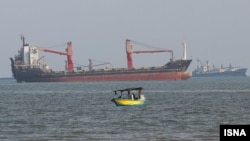
Iran's Islamic Revolutionary Guard Corps (IRGC) Navy said on October 22 that seven vessels had been hit in the Persian Gulf region, as reports emerged that the United States and Israel were preparing plans for renewed strikes against Iran.
The IRGC said four ships involved in transferring oil cargoes in the northern Persian Gulf had been struck simultaneously and caught fire. Three other vessels had reportedly hit naval mines west of the Strait of Hormuz, according to Reuters. The claims have not been independently verified.
The announcement came amid heightened tensions over the ongoing conflict and shipping through the strategically important waterway.
On October 21, The New York Times reported that the US and Israeli militaries had developed specific plans for renewed strikes against Iran following the US midterm elections on November 3.
Citing US officials and others briefed on the deliberations, the newspaper said the two militaries had stepped up exercises, including flights over Iraq to practice strike maneuvers. Potential targets could include Iran's energy infrastructure, nuclear facilities, and missile and drone arsenals.
The report said another major round of attacks could further damage Iran's economy and pressure its government to make diplomatic concessions. However, the reported plans do not establish that an attack has been authorized.
US Defense Secretary Pete Hegseth also met with Israeli Prime Minister Benjamin Netanyahu during an unannounced visit to Israel on October 19, according to Axios. The meeting took place at Ovda Air Base in southern Israel, amid discussions about potentially resuming major military operations against Iran.
President Donald Trump said on October 8 that the United States would not attack Iran before the midterm elections, while indicating that discussions with Tehran were under way. The latest reports suggest that military planning is continuing despite his public commitment.
US Sanctions Shipping Networks Over Iranian Cargoes
The US Treasury Department on October 21 imposed sanctions on a law firm operating in Panama and Greece, a shipping management company, shipping agents, and five individuals over their alleged roles in transporting Iranian goods and helping conceal vessel ownership.
The measures, announced under Operation Economic Outcast, target the Karnakis & Karnakis law firm, which Treasury says established shell companies to obscure the owners of vessels carrying hundreds of millions of dollars' worth of Iranian oil, petrochemicals, and steel.
The department also sanctioned the firm's five associated individuals and Roxette Maritime Shipping and Trading, which manages seven Panama-flagged cargo vessels identified as blocked property.
Two shipping agents were also targeted: Singapore-based Amigoz Singapore and Dubai-based Whales Shipping Line. Treasury said Amigoz helped arrange a shipment of Iranian crude oil, while Whales acted as an agent for a company involved in purchasing Iranian petrochemicals. Two vessels owned by Whales were also designated.
"Whether you are conducting illegal oil transfers at sea or sitting in the corner office of a law firm, if you are supporting the Iranian regime, we will find you and sanction you," Treasury Secretary Scott Bessent said.
Separately, the Treasury Department's Financial Crimes Enforcement Network (FinCEN) issued an administrative subpoena as part of an investigation into a Greek bank's potential ties to Iran and its proxies. The bank was not named. FinCEN also requested information from six other European banks about their relationships with Iranian financial institutions subject to US sanctions.
The sanctions generally block the designated parties' property under US jurisdiction and prohibit US persons from conducting transactions with them, subject to applicable exceptions and authorizations.