




Pakistan-Iran Border Closure Causes 'Unprecedented' Increase In LPG Prices
The Pakistan-Iran border crossings remain closed, triggering an “unprecedented” surge in liquefied petroleum gas (LPG) prices in Pakistan, despite the much-hyped Mecca Defense Alliance meeting in Tehran, underscoring continued tensions among the participating countries.
The impact of rising LPG prices was felt in Pakistan’s National Assembly, the lower house of parliament, on October 26, when lawmakers described the price hike as “unprecedented” in a call-attention notice to the government.
Pakistan’s Petroleum Minister admitted the Pakistan-Iran border closure was one of the main reasons for the increase in LPG prices.
Pakistan has kept its Gabd-Rimdan and Taftan border crossings with Iran closed since October 17 for “technical reasons,” drawing criticism from pro-regime media outlets and social media accounts in Tehran. Since then, hundreds of trucks have remained stranded on both sides of the border.
Pakistan is fulfilling 50 to 60 percent of its LPG demand from Iran while the rest is imported from Qatar using the sea route. The LPG supply from Qatar has already been suspended due to the US-Iran conflict in the region, which has bitterly affected the maritime traffic through the Strait of Hormuz.
Reports suggest over 100 percent increase in LPG prices, especially in the remote and mountainous areas of Pakistan since October 17.
According to Reuters, Pakistan imports roughly 7,000 metric tons of LPG per day from Iran. Apart from closing the border, Pakistan has also introduced changes in its E-form procedure, a digital declaration authorizing the tracking of foreign currency remittances, for Iranian exports coming into the country.
In a social media post on October 25, Tehran envoy to Islamabad Reza Amiri Moghadam said that consultations with the Pakistani side are under way to address the issue of cross-border trade.
Moghadam said several hundred trucks carrying LPG have crossed the Rimdan border into Gabd on the Pakistani side. However, despite having remained there for several weeks, these trucks have yet to be unloaded or cleared up, further complicating the movement of goods and the smooth flow of bilateral trade.
Saudi, Turkish, Pakistani Officials Set For Iran Talks Amid Houthi Attacks
Top representatives from Saudi Arabia, Turkey, and Pakistan, members of the so-called Mecca alliance, were set to meet in Iran's capital, Tehran, on October 26, according to media reports.
Saudi Arabia was to be represented by Defense Minister Prince Khalid bin Salman, Pakistan by Army Chief Field Marshal Asim Munir, and Turkey by intelligence chief Ibrahim Kalin, Reuters reported, citing sources.
The deputy secretary of Iran's top security body, Ali Baqeri Kani, told the state television that senior Saudi, Pakistani, and Turkish officials would visit Tehran for regional security talks.
Saudi Deputy Minister for Public Diplomacy Dr. Rayed Krimly confirmed that the meeting will take place on October 26 in Tehran, adding that representatives of Saudi Arabia, Turkey, and Pakistan will meet with Iranian President Masud Pezeshkian and Mohsen Rezaei, secretary of Iran's Supreme National Security Council.
"The visit comes as part of the continued efforts by the Makkah Joint Defense Agreement countries for de-escalation between parties involved in the ongoing crisis, and promoting dialogue and diplomatic solutions," Krimly wrote in a post on X.

The planned talks would mark the first high-level contact between Iran and representatives of all three countries since Saudi Arabia came under intensifying attacks by Yemen's Iran-aligned Houthi rebels.
The Mecca Joint Defense Agreement, signed in the Saudi city of Mecca on August 7 by Turkish President Recep Tayyip Erdogan, Saudi Crown Prince Mohammed bin Salman, and Pakistani Prime Minister Shehbaz Sharif, stipulates that an armed attack against any one of the three countries shall be regarded as an attack against all three.
Turkey's parliament has yet to ratify the agreement, while Pakistan approved the pact last week.
With reporting from Reuters. This live blog entry has been updated.
CENTCOM Says 1.5 Billion Barrels Of Oil Shipped Via Hormuz
The commander of US Central Command (CENTCOM), Adm. Brad Cooper, visited the Strait of Hormuz on October 25, as US forces marked a milestone by helping Gulf countries export 1.5 billion barrels of oil through the waterway since the summer, CENTCOM said in a statement.
"More than 3,000 commercial vessels have successfully transited the Strait of Hormuz with support from CENTCOM forces over the last six months," according to the statement.
"Today, primary transit routes in the Strait of Hormuz remain free and clear of Iranian sea mines thanks to incredible efforts by our people," Cooper said.
"We remain intensely focused on keeping commercial traffic flowing as we work with our teammates in the US interagency, Gulf Cooperation Council, and shipping industry," he added.
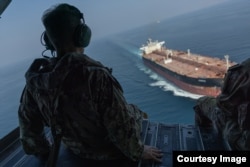
The Strait of Hormuz is a vital waterway that Tehran has effectively closed since the war in the Middle East began with US-Israeli strikes on Iran on February 28.
Iran has demanded that ships obtain permission to transit the strait, through which about one-fifth of global oil supplies normally pass.
In response to Iran's effective closure of the Strait of Hormuz, the United States imposed a naval blockade on Iranian ports and vessels on April 13.

"The Strait of Hormuz is open. There's almost as much oil flowing out now as there was before this conflict began," US Secretary of State Marco Rubio said earlier this month, adding that Iran has "lost complete control" of the Strait of Hormuz.
Maritime tracking firm Kpler reported that crude oil exports reached pre-war levels in September, with at least 16.5 million barrels shipped from the region, excluding Iran.
With reporting by AFP
Netanyahu Says Iran Could Seek To Disrupt Israeli Elections, Warns Tehran
Israeli Prime Minister Benjamin Netanyahu warned that Tehran and its proxy groups could try to disrupt Israel's October 27 elections.
Netanyahu has campaigned heavily on his security credentials, citing the war he launched along with the United States against Iran in February.
"We have intelligence signs that our enemies, Iran, and its proxies, could challenge us with attacks in order to disrupt the elections," Netanyahu said in a video released by his office on October 25.
"Don't test us. You will suffer disproportionate blows," he warned Tehran.
US President Donald Trump has urged Israelis to vote for Netanyahu, calling him an "outstanding warrior" in remarks on October 25.
Iran's Parliament Speaker Urges 10% Cut In Gas Consumption As Winter Approaches
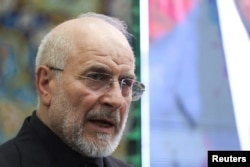
Iran's parliament speaker, Mohammad Baqer Qalibaf, has called for a nationwide campaign to cut natural gas consumption by at least a tenth as the country braces for winter shortages worsened by its war with the United States and Israel.
"To get through the approaching winter, a nationwide effort is essential...to reduce gas consumption by at least 10 percent," Qalibaf said, adding that consumers would receive payments directly into their bank accounts for gas saved.
Iran, a major gas producer, has long struggled with domestic shortages, exacerbated by US-Israeli strikes on energy infrastructure, including gas refineries, during nearly 40 days of intense fighting when war broke out between the countries in February.
First Vice-President Mohammad Reza Aref warned earlier in October of a daily winter gas shortfall of 100 million to 250 million cubic meters due to war damage, but said he hoped to restore around 100 million cubic meters of supply before winter.
An April cease-fire ended intense bombardment, but tensions persist over the Strait of Hormuz.
With reporting by AFP
Revolutionary Guards Strike Kurdish Group In Iraq, Iranian Media Reports
Iran’s Islamic Revolutionary Guards Corps IRGC) carried out drone strikes against positions held by the Iranian Kurdish opposition group Komala in northern Iraq, the Mehr news agency reported on October 25.
"As part of a drone operation carried out by the Revolutionary Guards' ground forces, the headquarters of the terrorist and separatist group Komala, located in the Balisan region, was targeted last night," Mehr reported.
There were no immediate reports of casualties, and the IRGC has not confirmed the attack.
Iran has repeatedly targeted Iranian Kurdish opposition groups based in Iraq’s semi-autonomous Kurdistan region since conflict broke out in the Middle East in February.
With reporting by dpa and AFP
Explosions Rock Riyadh As Saudi Airport Set To Reopen
Explosions could be heard in Saudi Arabia’s capital, Riyadh, early on October 25 as authorities prepared to reopen the city’s international airport after a two-week closure caused by repeated attacks by Yemen’s Iran-aligned Houthi rebels.
The Saudi-led military coalition said it had intercepted a ballistic missile targeting Riyadh and two drones in the capital area. It later reported intercepting a cruise missile aimed at the southern city of Khamis Mushait, while air raid warnings were issued in other southern areas.
An AFP journalist heard three explosions in Riyadh, where residents received warnings of a hostile aerial threat.
King Khalid International Airport was scheduled to resume flights on October 25, although the extent of its operations remained unclear. A Houthi military spokesman had warned that the airport remained "unsafe" and a "military target".
A Houthi attack on the airport earlier this month killed 13 people and wounded more than 300.
Saudi Arabia and the internationally recognized government in Yemen, which Riyadh supports, have come under increasing attacks in recent weeks from the Houthis as a years-long cease-fire collapsed during the summer as an offshoot to the US-Iran war that erupted in February.
Meanwhile, the Saudi civil defense agency said it had responded to falling debris in the Mecca and Medina regions on October 24 after intercepting two Houthi missiles.
The Houthis denied targeting the cities, the two holiest in Islam, labeling Riyadh's claim a "huge lie."
With reporting by AFP. This live blog entry has been updated.
Saudi Arabia Says It Intercepted 2 Ballistic Missiles
Saudi Arabia said on October 24 that it had intercepted two ballistic missiles fired by Yemen’s Iran-aligned Houthi rebels toward the western cities of Taif and Yanbu.
Earlier, the kingdom’s Civil Defense Directorate briefly issued “potential danger” warnings for Taif, Yanbu, the holy city of Mecca, and the Red Sea port of Jeddah. The alerts were lifted minutes later after authorities announced that the danger had passed.
Saudi Arabia has faced repeated Iranian missile and drone attacks since the US-Israeli war against Iran began on February 28. In recent weeks, the Houthis have also intensified attacks on the kingdom, targeting airports and oil infrastructure.
A Houthi attack on Riyadh’s King Khalid International Airport on October 10 killed 13 people and wounded more than 300. The Yemeni rebels have also warned airlines against using Saudi airspace.
The Saudi-led coalition backs Yemen’s internationally recognized government against the Houthis, who control the capital, Sanaa. A UN-brokered truce in 2022 had largely halted fighting between the two sides, but hostilities resumed earlier this year amid the wider Middle East conflict.
With reporting by Reuters and AFP
Iranian President Set To Meet Putin Next Week, Iranian Media Reports
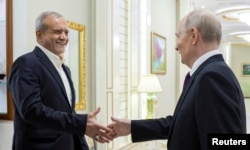
Iranian President Masud Pezeshkian is set to meet his Russian counterpart, Vladimir Putin, during a visit to Moscow next week, according to Iranian media.
Pezeshkian will be attending a meeting of gas-exporting countries, which will take place in the Russian capital on October 27.
Quoting Iran’s ambassador to Russia, Kazem Jalali, Iran’s semiofficial Tasnim news agency said that the two leaders will discuss economic cooperation and geopolitics.
Pezeshkian is undertaking his Moscow visit amid mounting US and Israeli threats of renewed attacks against Iran.
On October 23, US Ambassador to Turkey Tom Barrack warned that Washington could strike Iran as soon as this weekend.
Earlier this week, Russian Foreign Minister Sergei Lavrov visited Iran for the first time since the start of the Iran war in late February.
The eighth Gas Exporting Countries Forum summit will discuss global gas market developments, cooperation among gas exporters, and promoting natural gas’s role in the global economy.
Saudi Arabia Postpones UN Forum Until 2027 Amid Regional Tensions
Saudi Arabia has postponed the United Nations World Data Forum and the Second Saudi Statistical Forum, originally scheduled for November 9–12 in Riyadh, until 2027.
The country's General Authority for Statistics announced the decision on October 23. It said the postponement was intended to ensure broad international participation by speakers, experts, and partners and to deliver an event that meets the expectations of the global data and statistics community.
The announcement follows Saudi Arabia's decision earlier in the week to postpone its flagship Future Investment Initiative conference, commonly known as Davos in the Desert, until next year. That event had been scheduled for October 26–29.
The postponements come amid escalating regional conflict and attacks by Yemen's Iran-aligned Houthis that have disrupted business activity and raised security concerns.
Other events have also been affected. The Six Kings Slam tennis tournament in Riyadh was moved from October to December 27–30, citing organizational and logistical challenges. Saudi Arabia's round of the World Rally Championship was removed from the 2026 calendar, although the separate Middle East Rally Championship event remained scheduled.
Questions have also been raised about the 2027 AFC Asian Cup, due to take place in Saudi Arabia from January 7 to February 5. The Asian Football Confederation has discussed the possibility of postponement, but Saudi organizers have said preparations are continuing as planned.
New dates for the two statistical forums have not yet been announced.