



Hegseth Says Iran War Cost Estimated at $37.5 Billion
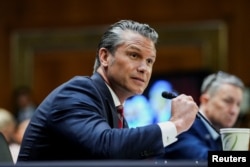
US Defense Secretary Pete Hegseth told the US Congress that the war with Iran has cost the United States an estimated $37.5 billion so far, up from nearly $29 billion in mid-May, as he defended the Pentagon's request for about $67 billion in supplemental funding.
Testifying before the Senate Appropriations Committee on July 21, Hegseth and General Dan Caine, chairman of the Joint Chiefs of Staff, said the funding was "urgent" and "necessary" to cover military operations through the end of September.
Democratic Senator Jeanne Shaheen questioned the request, saying the Pentagon still had $75 billion in unspent funding and asking why it was seeking additional money "instead of asking for transfer authority."
Hegseth replied the funds were "otherwise allocated" for priorities including the "Golden Dome for America" missile defense project.
Both Republican and Democratic lawmakers also pressed the administration for greater clarity on its strategy in the Middle East.
With reporting by AFP
Iran Says It Carried Out Drone Attack on US Base In Kuwait
The Iranian Army claimed in a statement on July 22 that it had carried out an attack on a US base in Kuwait.
The army's public relations office said that it "launched a drone strike hours ago against ammunition depots and logistical equipment at the headquarters of the US Army's ground forces at Camp Doha, located in western Kuwait in retaliation for the continued US attacks on Iran."
There was no immediate comment from the US military on the Iranian claim.
US Says 11th Consecutive Night Of Strikes Targets Iranian Military Infrastructure
The US military's Central Command (CENTCOM) said it "successfully completed" an 11th consecutive night of strikes on July 21, targeting "Iranian operations centers, maritime capabilities, aircraft hangars, drone storage facilities and military logistics infrastructure."
CENTCOM said the strikes were intended to further degrade Iran's ability to threaten commercial shipping in the Strait of Hormuz after more than 30 attacks on merchant vessels over the past three months.
It said the waterway remained open and reiterated its assertion that US forces had helped facilitate the transit of about 900 commercial ships and 450 barrels of crude oil through the strait since early May.
Trump Calls Iranian Officials 'Savages' After Latest Executions Of Protesters
- By RFE/RL
President Donald Trump condemned Iran's leadership after the execution of two protesters over the weekend, calling officials "savages" amid a widening crackdown on dissent during the war with the United States.
Iran's judiciary announced on July 19 that two men were executed over their alleged involvement in violence linked to anti-government protests that began in December and intensified in January amid widespread economic discontent.
Trump reposted several messages on his Truth Social platform about the executions of Erfan Esfandiari and Gol Mohammad Mohammadi, including one where he reposted a message about Mohammadi's execution while adding: "The latest one of 52,000, plus, innocent protesters. Savages!!!"
Trump's claim that 52,000 protesters were killed by authorities in the uprising early this year, has not been independently verified.
According to human rights groups, at least 7,000 people were killed during the nationwide protests, although the real death toll is believed to be significantly higher.
To read the entire story, click here.
CENTCOM Says It Diverted 8 Ships Since Iran Naval Blockade Resumed
US Central Command (CENTCOM) announced on July 21 that its forces had diverted eight commercial ships in the past week since the naval blockade of Iran resumed.
According to CENTCOM's post on X, US forces also disabled a ship in what it said was "full enforcement" of the blockade of Iran.
The US military resumed its blockade of Iranian ports on July 14, at the order of US President Donald Trump, in response to attacks by Iran's Islamic Revolutionary Guards Corps on ships at the mouth of the Strait of Hormuz.
The first blockade, implemented in April, lasted two months and led to a sharp decline in Iran's oil exports.
Iran Warns Bulgaria Against Allowing US To Use Its Bases
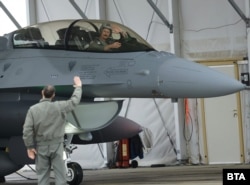
The spokesman for Iran's Foreign Ministry warned Bulgaria against allowing the United States to use its bases for military operations against Iran.
Esmail Baqaei said on July 21 that any participation and cooperation in the preparation and execution of US attacks "will be tantamount to complicity in committing the crime of aggression and war crimes."
Bulgarian Prime Minister Roman Radev had announced he would seek parliamentary approval to station up to eight US tanker aircraft at an air base in the country, a member of NATO and the European Union.
Baqaei said he was surprised by Radev's statements and said, "Providing the territory of one state for the use of another state in order to commit an act of aggression against a third state is considered an act of aggression."
He expressed hope that the Bulgarian parliament would oppose the request to grant the United States permission to use the country's air base.
Trump Says US Will Target Iran Again, Warns 'We're Not Done Yet'
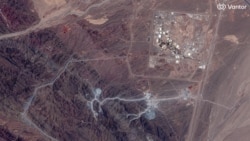
US President Donald Trump said on July 21 that the United States was not finished with Iran and warned that the US military could soon target a deeply buried nuclear site near Natanz known as Kuh-e Kolang.
"We will be hitting that area very soon and very hard," Trump said, adding that he normally does not reveal targets in advance but that "there's nothing they can do about it."
Kuh-e Kolang , also known as Pickaxe Mountain, is a deeply buried nuclear facility near Natanz that Western intelligence agencies have said Iran may be developing for an undeclared enrichment operation. Experts have said the site could be beyond the reach of some conventional weapons, including the most powerful bunker-busting bombs in the US arsenal.

Speaking during a meeting with Lebanese President Joseph Aoun at the White House, Trump said he believed Iran would need decades to recover from the damage caused by the current conflict.
"If we leave now, it will take Iran 20 to 25 years to rebuild," Trump said. "Well, we're not leaving right now. We're not done yet."
Asked by a reporter about the possibility of negotiations with Tehran, Trump said: "They desperately want negotiations to end this affair."
When the reporter said there was no indication Iran was ready to stop the war and asked about Washington's plan, Trump replied: "How do you know there's no sign? Do you know something I don't?"
After the reporter said Iran continued to attack US allies and kill Americans, Trump responded: "When you listen to your fake media, you don't understand this. You don't know anything."
Trump also said the United States would respond if Yemen's Iran-backed Houthi rebels carried out a threat to blockade Saudi ports.
"If that happens, we'll deal with it," Trump said. "You know, we dealt with the Houthis before, and we haven’t heard from them since we did that initially."
The Houthis announced a naval blockade of Saudi Arabia on July 20, a move that could open another front in the conflict with Iran and threaten regional energy supplies and trade routes beyond the Persian Gulf.
Trump Calls Iranian Leaders 'Savages' After Execution Of Protesters
US President Donald Trump on July 21 condemned Iran's leadership after the execution of two protesters, reposting several messages on his Truth Social platform about the executions of Erfan Esfandiari and Gol Mohammad Mohammadi.
In one post, Trump reposted a message about Mohammadi's execution and wrote: "The latest one of 52,000, plus, innocent protesters. Savages!!! When will the Democrats wake up??? President DJT."
In another post, Trump shared a message featuring a photograph of Esfandiari alongside the appeal: "Please help. Please be their voice." He also reposted an image of a woman crying in front of a burning Iranian flag while holding a sign reading: "DON'T KILL US."
Esfandiari, 19, and Gol Mohammad Mohammadi were among the defendants in the Alikhani Square case in Isfahan. Iran's judiciary announced their executions on July 19.
A day earlier, Trump had also reposted a Truth Social message by Iranian journalist and activist Masih Alinejad calling attention to Esfandiari's execution.
Kuwait Summons Iranian Ambassador After Kuwaiti Tanker Targeted
Kuwait's Foreign Ministry summoned the Iranian ambassador to the country on July 21 to express its protest over the targeting of an Iranian oil tanker in the Strait of Hormuz.
The tanker, called Kayfan, was targeted in the strait on July 20.
Kuwait's Foreign Ministry says several crew members of the tanker were injured in the attack.
An hour before the Kuwaiti Foreign Ministry's announcement, the country's military announced its air defenses were ready to confront Iranian air strikes.
Kuwait also said Iran had again attacked a power plant and desalination facility in the country on July 21.
Kuwait has been one of the main targets of Iranian retaliatory attacks since the beginning of the renewed US attacks.
France Summons Iranian Diplomat Over Detention Of Embassy Staff
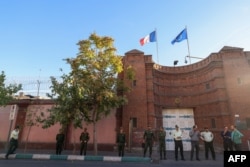
France's Foreign Ministry summoned Iran's charge d'affaires on July 21 after two French Embassy staff members were detained by Iranian security services in Tehran, with one allegedly physically assaulted.
"France expects the Iranian authorities to shed full light on this incident, to bring those responsible to justice, and to guarantee the security of our premises and personnel, in accordance with their international obligations," the ministry said.
Foreign Minister Jean-Noel Barrot said on July 20 that "two agents of the French Embassy in Iran were the target of an extremely serious act of intimidation by the Iranian security services, in blatant violation of the diplomatic immunities from which they benefit."
Barrot said the two staff members were "detained without reason for several hours" and "questioned," while "one of them was physically assaulted," before they were able to return to the French Embassy.
"This extremely serious and unacceptable violation of the integrity of our agents cannot remain without consequences," Barrot said, adding that he had conveyed the message to his Iranian counterpart, Abbas Araqchi.