




Oil Tanker Transit Through Strait of Hormuz At Virtual Standstill
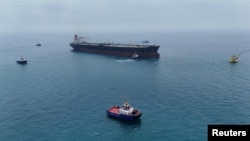
The number of oil tankers passing through the Strait of Hormuz on July 23 reached the lowest level in nearly seven weeks, according to data from oil tanker traffic monitoring companies.
Only one giant oil tanker, called the New Giant and carrying 2 million barrels of Iraqi crude oil, left the Strait of Hormuz and headed for China on July 23.
No oil tanker entered the vital waterway on this day.
On July 21 and 22, three and eight oil tankers passed through the Strait of Hormuz, respectively.
Before the US-Iran war began, up to 150 vessels passed through the strait per day.
Rubio Vows Iran, Russia Crises Won't Weaken US Commitment To Asia
MANILA -- As US Secretary of State Marco Rubio concluded his first Southeast Asia trip as America's top diplomat, he sought to reassure regional partners that the war in Iran and Russia's invasion of Ukraine would not weaken Washington's commitment to the region.
The message came as Washington confronts an escalating standoff with Iran, stalled diplomacy over Russia's war in Ukraine, and intensifying competition with China across the Indo-Pacific. Yet Rubio's visit also underscored a widening gap between US strategic priorities and Southeast Asia's increasingly economic view of security.
While Rubio went to the Philippine capital for the three-day meeting of Association of Southeast Asian Nations (ASEAN) foreign ministers, much of the focus was on the situation in the Gulf as the US military intensified attacks on Iran.
To read the full analysis, click here.

UN Urges Action For Stranded Seafarers In Strait of Hormuz
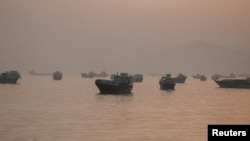
UN Human Rights Chief Volker Turk has called for urgent action to address the humanitarian and human rights crisis facing thousands of stranded seafarers in the Strait of Hormuz.
According to Shabia Mantoo, spokeswoman for the UN High Commissioner for Human Rights, at least 6,000 seafarers aboard some 400 vessels remain stranded in the Strait of Hormuz, citing figures from the International Maritime Organization, with the estimate described as not exhaustive.
"This number is not exhaustive as many others are unaccounted for, believed to be stuck in the Persian Gulf on a range of smaller vessels or have otherwise not been located," Mantoo said in briefing notes released on July 24.
Mantoo said the UN Human Rights Office has received information indicating that some seafarers have been abandoned at sea by shipowners, leaving them without support, repatriation, or even their owed wages.
According to the statement, the affected seafarers have been left aboard their vessels without food, water, fuel, medical care, electricity, or any means of communicating with their families.
"They face prolonged isolation and confinement in a conflict zone, with uncertainty about their safety and disembarkation, risking a severe toll on their mental and physical well-being," the UN Human Rights Office said.
US Military Completes 13th Night Of Strikes, Says Strait Of Hormuz Remains Open
The US Central Command (CENTCOM) said its forces had completed the 13th consecutive night of strikes against Iran, adding that the Strait of Hormuz remains open to maritime transit.
"CENTCOM targeted Iranian military command centers, drone storage facilities, communication networks, coastal surveillance sites, and maritime capabilities to further diminish the threat Iran poses to civilian mariners and commercial vessels transiting the Strait of Hormuz," the US Central Command said in a post on X on July 24.
"The international waterway remains open for transit despite recent attacks by Iran's Islamic Revolutionary Guard Corps. Commercial vessels continue to navigate the strait freely with US military support," CENTCOM stated.
Meanwhile, data supplier Kpler said in a July 23 statement that tanker traffic through the Strait of Hormuz has fallen 70 percent since the conflict in the Middle East resumed, with average daily crossings dropping to about 13 as vessels increasingly use the Iranian route and Brent crude oil rising above $100 a barrel.
Trump Threatens To Use Iranian Assets To Pay For Shipping Damage Amid Tensions In The Strait of Hormuz
US President Donald Trump has warned that any damage to ships or cargo amid ongoing tensions in the Strait of Hormuz would be compensated using Iranian assets held under US control, prompting a swift reaction from Tehran.
"From this point forth, any and all damages done to Ships, Cargo, or anything related thereto, will be paid for by Iranian Money that the United States has in its possession, and controls," Trump wrote on his Truth Social platform on July 24.
Tehran condemned Trump's remarks, with Iranian Foreign Minister Abbas Araqchi calling the proposal an "incendiary precedent."
"Seizing another nation's assets to pay for unrelated future claims is an incendiary precedent," Araqchi wrote in a post on X.
He warned that "those who celebrate or profit from such funds should remember: once governments normalize confiscation, no one's assets are safe," adding that the resulting "chaos will not be pretty or peaceful."
US Central Command Says 12 Ships Redirected, 1 Disabled To Prevent Access To Iranian Ports
US Central Command (CENTCOM) said on July 23 that its forces had redirected 12 commercial ships and disabled one to prevent vessels from entering or leaving Iranian ports.
CENTCOM said the actions were carried out in line with the naval blockade that Washington had reimposed on Iran on July 15.
The statement came as shipping in the Strait of Hormuz remained disrupted amid escalating tensions in the Middle East, with Tehran and Washington exchanging air strikes.
The White House has repeatedly said that substantial negotiations between the two countries to end the conflict cannot move forward while Iran threatens traffic through the strait.
Speaking at the Environmental Protection Agency (EPA) headquarters, President Donald Trump said the United States was "doing very well" against Iran, adding that he believed Tehran was "not ready yet" to make a deal to end the protracted conflict in the Middle East.
"They need more of the same," Trump said on July 23.
With reporting by CNN.
Trump Threatens 'Major Military Punishment' For Iran, Houthis After Red Sea Tanker Attacks
US President Donald Trump has threatened to attack Iran and the Iran-backed Houthi rebels in Yemen, hours after the group struck two Saudi oil tankers in the Red Sea.
Trump said Iran would be held responsible for any future Houthi attacks.
"If they do this again, the US will hold Iran responsible, in that the Houthis are a Surrogate and/or Proxy of Iran, and major military punishment will be inflicted upon Iran and, of course, the Houthis," he wrote in a Truth Social post on July 23.
Earlier the same day, the Houthis claimed that their strikes on the vessels were part of a naval blockade on Saudi Arabia announced by the group on July 20.
As US and European leaders urged the Houthis to refrain from further military action, the attacks heightened fears of a second disruption to global oil supplies. While Iran continues to threaten shipping through the Strait of Hormuz, Houthi attacks in the Red Sea risk disrupting traffic through the Bab al-Mandab Strait.
"A year ago the United States of America attacked, very powerfully, the Houthis, for their interference with commerce and trade, by shooting at ships. Since that time, and during our conflict with Iran, they have acted very responsibly," Trump said.
The president added that now he was "very disappointed with in that they have, until now, acted very professionally and smart."
Separately, US Central Command said its forces completed a 12th consecutive night of strikes on Iranian targets as Washington looks o ensure freedom of navigation through the Strait of Hormuz.
EU's Top Diplomat Kallas Calls Houthi Ship Attack 'Unacceptable'
- By RFE/RL
Kaja Kallas, the European Union's top diplomat, says threats by Yemen's Iranian-backed Houthi rebels to block shipping on the Red Sea and its attack on a Saudi Arabian-flagged tanker overnight pose a "direct threat" to regional stability and constitute "a dangerous escalation" in the Middle East conflict between Iran and the United States.
Kallas said in a statement on July 23, hours after the Houthis claimed the attack, that the rebels must "cease all actions that endanger international shipping and the lives of seafarers" and abide by international law.
"The attack on an oil tanker in the Red Sea is unacceptable, illegal, and further inflames an already volatile situation in the region. Navigation must be unimpeded, in the Strait of Hormuz as well as in the Red Sea," she said.
The Houthis earlier this week threatened to blockade Saudi Red Sea ports and disrupt transit through the Bab al-Mandab Strait, a move that could compound the fallout from the effective closure of the Strait of Hormuz that was sparked by the US-Iran war.
Oil Prices Pass $100 A Barrel After Attacks In Middle East
Brent crude oil rose above $100 a barrel on July 23 for the first time in two months as renewed fighting between Iran and the United States stoked fears of prolonged supply disruptions.
The benchmark touched $100.36, up nearly 7 percent from the previous session, after a mid-June cease-fire collapsed and clashes resumed around the Strait of Hormuz, a vital route for global oil shipments that remains effectively closed.
The US carried out a 12th consecutive night of strikes on Iranian military targets, while Tehran continued attacks on US allies and assets across the region.
Prices, which had eased to about $70 after June cease-fire talks, rose further after the Iran-backed Houthis claimed they had attacked two Saudi oil tankers in the Red Sea, raising fresh concerns over maritime security and energy supplies.
With reporting by dpa. This blog entry has been updated.
Beijing 'Deeply Concerned' By Escalation In Iran
- By Colin Hood
China’s Foreign Ministry said Beijing is “deeply concerned” by the escalation of fighting in the war in Iran.
Lin Jian, a ministry spokesperson, told reporters on July 23 that “the resumption of fighting does not serve the interests of either side,” adding that the relevant parties should “cease hostilities” and “resume contact” to de-escalate the conflict.
China has consistently called for a cease-fire and a negotiated settlement since the conflict began with US-Israeli strikes on Iran on February 28, while urging all parties to avoid further escalation and safeguard freedom of navigation through the Strait of Hormuz.
Beijing has maintained a consistent public stance on the war in the Middle East since it began with US-Israeli strikes on Iran on February 28, calling for all parties to avoid open hostilities and reopen the Strait of Hormuz to commercial shipping.
China’s top diplomat, Wang Yi, and his Pakistani counterpart, Ishaq Dar, said in a joint statement on July 17 that Washington and Tehran should “strive to reach a comprehensive peace agreement through negotiations.”
A previous framework peace agreement between Iran and the United States fell apart after US President Donald Trump said the deal was “over” at the NATO summit in Ankara on July 8.