


Pakistan Says Sharif, Munir To Join Talks In Switzerland
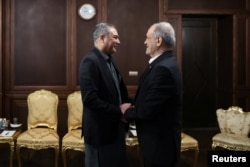
Pakistani Prime Minister Shehbaz Sharif and powerful army chief Field Marshal Syed Asim Munir will participate in the technical-level talks being held in Burgenstock, Switzerland, between the US and Iran, Sharif's office said on June 20.
Pakistan's Foreign Ministry earlier said US and Iranian representatives would participate in the meeting starting on June 21, along with mediators from Pakistan and Qatar.
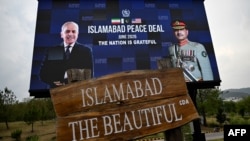
US officials said President Donald Trump's envoy, Steve Witkoff, will participate in the talks, along with the president's son-in-law, Jared Kushner. Vice President JD Vance could also join the talks.
Iran has said that its foreign minister, Abbas Araqchi, will lead Tehran's delegation.
We are now closing the live blog for the day. We'll be back tomorrow at 9:30 a.m. Central European time to cover the latest events across the Middle East.
Vance Departs For Switzerland Following One-Day Delay
US Vice President JD Vance has departed for Switzerland for talks with Iranian officials, the VP's spokesperson said in the late afternoon of June 20.
In comments to reporters before he left, Vance said: “I can only be there for a day or two."

"I think we're going to hopefully make progress on the nuclear issue, make progress on the Lebanon cease-fire issue. Those are the two big things that I think we're to be focused on. I'm sure the Iranians are going to have issues they'd like to discuss as well,” Vance said.
Vance is expected to join US envoy Stephen Witkoff and Jared Kushner -- President Donald Trump's son-in-law -- for direct talks with Iranian officials, including Foreign Minister Abbas Araqchi in the Swiss resort town of Burgenstock.
He was originally due to depart a day earlier but his trip was delayed, reportedly after Iran postponed the Swiss talks due to Israel's continued attacks in Lebanon.
Pakistan Says Sharif, Munir To Join Talks In Switzerland
Pakistani Prime Minister Shehbaz Sharif and powerful army chief Field Marshal Syed Asim Munir will participate in the technical-level talks being held in Burgenstock, Switzerland, between the US and Iran, Sharif's office said on June 20.
Pakistan's Foreign Ministry earlier said US and Iranian representatives would participate in the meeting starting on June 21, along with mediators from Pakistan and Qatar.
US officials said President Donald Trump's envoy, Steve Witkoff, will participate in the talks, along with the president's son-in-law, Jared Kushner. Vice President JD Vance could also join the talks.
Iran has said that its foreign minister, Abbas Araqchi, will lead Tehran's delegation.
Trump Insists No Tolls For Hormuz Passage -- Unless Imposed By The US
US President Donald Trump said there will be no tolls charged for transit through the key Strait of Hormuz during or after the cease-fire being negotiated by Washington and Tehran -- unless the tolls "are imposed by and for the United States of America."
"There will be NO TOLLS in the Hormuz Strait for 60 days during the Cease Fire Period, and there will be NO TOLLS after the 60 day period has expired, unless they are imposed by and for the United States of America, should the deal not be completed," Trump wrote on Truth Social on June 20.
He added that any US fees would be "for services rendered as the Guardian Angel to the countries of the Middle East for purposes of both past, present, and future reimbursement of costs."
The comments come a day before US and Iranian negotiators are expected to meet for talks in Switzerland as the 60-period set out in a framework signed by Trump and the Iranian president earlier in the week begins.
Tehran for months insisted it had a right to charge a toll for ships crossing the strait -- through which some 20 percent of the world's oil and gas supplies flowed before the war was launched on February 28.
Iran's toll plan received near universal condemnation from other nations, who said the strait was an international waterway and did not belong to Iran.
More recently, Tehran has avoided using the word "toll" and said it would charge fees for services rendered in removing mines or guiding ships through the waterway.
It has reportedly imposed a mandatory insurance requirement on all vessels transiting the strait in what maritime industry observers said was the possible first step toward a broader regime of fees and regulatory controls over shipping through the waterway.
Trump's post on Truth Social came as the key waterway once again was in the spotlight following conflicting reports from US Central Command and Iranian military officials regarding shipping traffic, with Tehran claiming it was closing the route due in response to continued Israeli attacks on Lebanon.
US Military: Dozens Of Ships Transited Strait Of Hormuz
US Central Command (CENTCOM) said that dozens of merchant ships had transited the Strait of Hormuz on June 20, following an announcement by Iran's military command of the waterway's closure.
"Safe passage through the international waterway remained intact today as 55 merchant ships transited, moving large amounts of cargo and more than 17 million barrels of oil to global markets," CENTCOM wrote on X.
"US forces remain present and vigilant to ensure all aspects of the agreement with Iran are adhered to, obeyed, and in full force and effect," it added.
The statement was posted as Iran's Khatam al-Anbiya Central Headquarters said the decision had been taken to close the Strait of Hormuz once again in response to Israeli attacks on southern Lebanon despite the truce announced earlier.
The conflicting reports came a day after the United States and Lebanon announced that the next round of Lebanese-Israeli talks would be held next week in Washington after US Secretary of State Marco Rubio spoke with Lebanese President Joseph Aoun.
US President Donald Trump earlier said Washington would be able to keep Israel from renewing attacks inside Lebanon, citing his "good" relations with Israeli Prime Minister Benjamin Netanyahu and saying that he believed the United States could keep him "sane."
Iran Announces Closure Of Strait Of Hormuz
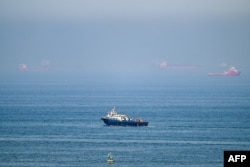
Iran's military command says it is closing the Strait of Hormuz to commercial traffic in response to continued Israeli attacks on southern Lebanon.
In a June 20 statement carried by the state broadcaster IRIB, Iran's Khatam al-Anbiya Central Headquarters said the decision was taken in response to "blatant bad faith and breach of agreement by the United States" in implementing the first article of the US-Iran memorandum of understanding, as well as "Israel's continued violation of the cease-fire in southern Lebanon."
The statement also pointed to the continued presence of Israeli forces in southern Lebanon, describing the closure of the Strait of Hormuz as the "first step" in Iran's response to what it called "the enemy's breach of the agreement."
The military command also warned that further measures to compel the other side to fulfill its commitments would be put on the agenda should what it termed "aggression" continue.
Speaking to Fox News, US Vice President JD Vance said "there's no proof" Iran has closed Strait of Hormuz in response to cease-fire violations in Lebanon.
Hours before the statement was issued, Tasnim news agency, which is affiliated with the Islamic Revolutionary Guards Corps (IRGC), ran a front-page commentary addressing Foreign Minister Abbas Araqchi in response to reports that he might travel to Switzerland to meet with an American delegation. Given the ongoing fighting in Lebanon, the piece argued, "a meeting with Witkoff is not justified" and that Hormuz "must be closed."
US President Donald Trump's envoy Steve Witkoff is reportedly traveling to Switzerland to meet Araqchi as part of a 60-day process to clinch a permanent deal to end the war.
Vance said he expects to travel to Switzerland himself for the talks. If he does, Iranian parliament speaker and lead negotiator Mohammad Baqer Qalibaf will also likely head to Switzerland.
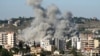
Israeli strikes on various parts of Lebanon on June 20 -- just hours after a cease-fire between Israel and Hezbollah was declared -- left at least 10 people dead, and the continued fighting has cast doubt over the announced truce.
Switzerland Says Iran-US Talks Continue
The Swiss Foreign Ministry announced that talks on the implementation of the memorandum of understanding between Iran and the United States are continuing in Burgenstock.
The ministry announced on June 20 that Switzerland continues to provide a "confidential and trustworthy space" to facilitate these talks, and that no further information will be released due to the confidentiality of the negotiations.
In the brief statement, Switzerland declined to provide details about the participants or the content of the talks.
Early on June 20, Axios reported that Steve Witkoff, Donald Trump's special envoy, and Iranian Foreign Minister Abbas Araqchi had departed for Switzerland.
It was previously reported that the escalation of clashes between Israel and Hezbollah in recent days had caused the cancellation of a planned trip to Switzerland by US Vice President J.D. Vance, raising doubts about the future of the talks.
The Axios website reported on June 20 that Witkoff is traveling to Switzerland to join Trump's son-in-law Jared Kushner, who is currently in the country, and that Araqchi is also scheduled to arrive in Switzerland on June 20. Developments could indicate that the two sides are ready to begin technical talks aimed at reaching a more lasting agreement.
A senior US official told the news agency that the ceasefire between Israel and Hezbollah was brokered by the US and Qatar, with the help of Iran.
Meanwhile, Israeli attacks on Lebanon resumed on June 20, just hours after a cease-fire with Hezbollah took effect, killing at least 10 people. Israel claims the attacks were in response to rocket and missile launches by Hezbollah.
Hezbollah is both a militant group and political party that controls much of southern Lebanon. It is considered a terrorist organization by the United States, although the European Union has only blacklisted its armed wing.
Tasnim news agency, which is close to the Islamic Revolutionary Guards Corps, responded to these reports by publishing an unsigned note as its headline, addressing Araqchi: "Given the ongoing conflicts in Lebanon, the meeting with Witkoff is not justified; you must close the Strait of Hormuz."
Iran Under Pressure To Act As Fighting In Lebanon Continues
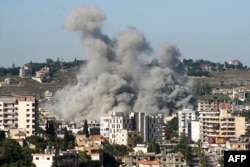
A wave of Israeli strikes that killed dozens of people in southern Lebanon this week has exposed a deepening rift inside Iran's political establishment, with hard-liners demanding that Tehran respond to what they call a blatant violation of the US-Iran memorandum of understanding (MOU).
The interim agreement was announced on June 15 after it was signed electronically following talks mediated by Pakistan. It was then signed, remotely, by US President Donald Trump and his Iranian counterpart, Masud Pezeshkian, on June 17.
The agreement's first clause calls for an end to the fighting "on all fronts, including Lebanon." Instead, Israeli air strikes killed at least 47 people, including a soldier, according to Lebanese health authorities, while Hezbollah said its fighters killed four Israeli soldiers in clashes near the Ali Taher hill, claiming to have destroyed three tanks.
Iran-backed Hezbollah, a militant group and political party that controls much of southern Lebanon, is considered a terrorist organization by the United States, while the European Union has blacklisted its armed wing but not its political branch.
Israel retaliated with strikes on the Bekaa Valley, with far-right National Security Minister Itamar Ben Gvir declaring that "all of Lebanon must burn."
The violence forced the postponement of a high-level Iran-US meeting in Switzerland on June 19 to begin talks on a permanent deal, and prompted France to publicly urge Washington to "exert all necessary pressure" on Israel to respect the agreement.
To read the full report, click here.
Iran Imposes Insurance Requirement On Vessels In Strait Of Hormuz
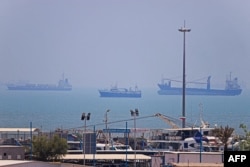
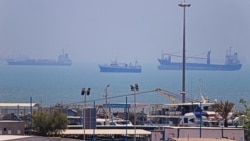
Iran has reportedly imposed a mandatory insurance requirement on all vessels transiting the Strait of Hormuz, in what maritime industry observers see as the first step toward a broader regime of fees and regulatory controls over shipping through the strategic waterway.
According to Lloyd's List Intelligence -- a leading provider of maritime shipping data and vessel-tracking intelligence -- vessels entering the strait must now obtain coverage through an Iranian-approved insurance scheme administered by the newly established Persian Gulf Strait Authority.
Lloyd's List reported on June 19 that the insurance is currently being provided without charge during the 60-day implementation period linked to the recent Iran-US memorandum of understanding, but industry sources expect transit-related charges to follow.
The report said the measure forms part of Iran's effort to establish a new framework for managing navigation through Hormuz after the recent conflict disrupted shipping and left parts of the waterway subject to restrictions and safety concerns.
Maritime lawyers and shipping executives told Lloyd's List that the insurance requirement raises questions about compliance with international maritime law and could effectively function as a transit levy if fees are introduced later.
Shipowners and insurers are closely monitoring developments because any additional costs or regulatory burdens in the Strait of Hormuz could have significant implications for global trade and energy markets.
"Fees are likely to follow," Lloyd's List reported, citing industry expectations regarding the new regime.
Pakistani Interior Minister En Route To Tehran For Talks
Pakistani Interior Minister Mohsin Naqvi is traveling to Tehran today for meetings with high-level officials, according to Iranian state media.
The official news agency IRNA reported that Naqvi would be holding talks as part of ongoing attempts to resolve the US-Iran war.
"The Pakistani Interior Minister's visit to Tehran comes as part of Islamabad's ongoing diplomatic efforts regarding Iran-US talks. Naqvi is scheduled to meet and hold talks with his Iranian counterpart as well as our country's Foreign Minister," Iran's Foreign Affairs Ministry spokesman Esmail Baqaei was quoted by IRNA as saying.