




Trump Says US ‘Very Close’ to Iran Deal But Warns Military Option Remains
WASHINGTON -- US President Donald Trump said Washington was nearing a "very good deal" with Iran but warned that military action remained an option if negotiations fail, according to an interview recorded at the White House on May 28 and aired on May 30 on Fox News host Lara Trump's program My View.
The interview aired a day after Trump emerged from a two-hour Situation Room meeting on Iran without announcing a decision on the status of negotiations, despite earlier saying a "final determination" was expected.
As of late May 30, Trump had not publicly disclosed any outcome from the meeting.
Lara Trump, who conducted the Fox News interview, is married to the president's son, Eric.
In the interview, Trump struck an optimistic tone about diplomacy while making clear he was prepared to escalate if talks break down.
"It's really a win already. We've defeated their military, essentially defeated their military," Trump said. "I would rather get a deal, because we can open the strait [of Hormuz] immediately upon signing."
Trump said preventing Iran from obtaining a nuclear weapon remained his non-negotiable condition.
"The one guarantee that I have to have is that there will be no nuclear weapons," he said, adding that Iranian negotiators had expanded their commitment from not developing a nuclear weapon to also not purchasing one.
"That's a big difference," Trump said. "So we're getting what we want slowly."
Calling Iranian officials "very tough negotiators," Trump said he was willing to let talks proceed at their current pace.
"I'm in no hurry," he said. "I'd like to say I'm in a hurry, because gasoline prices are going to come tumbling down, but if you're going to be in a hurry, you're not going to make a good deal."
"Slowly but surely, we're getting, I think, what we want," Trump added. "And if we don't get what we want, we're going to end it a different way."
US Restraint
Trump also argued that US military operations had not been aimed at destroying Iran's conventional armed forces, despite his repeated claims that Tehran had been effectively defeated militarily.
"We've actually left their military alone. People would be surprised to hear that," Trump said, apparently referring to Iran's ground forces as opposed to other branches.
"Their navy is totally gone, 100 percent. Their air force is totally gone, 100 percent. Their military, we sort of left it alone because we think that their military is somewhat moderate," he said.
Trump said the US had targeted other elements of Iran's leadership instead. "They have other people that aren't moderate. We've taken them out. We've taken different forms of leadership out," he said.
Trump framed the approach as a lesson learned from past US interventions in the Middle East.
"Mistakes have been made in wars where you wipe out everybody, and then you have a country that for 40 years can never rebuild," he said, citing Iraq as an example.
The president again defended US strikes on Iranian nuclear facilities carried out nine months ago, saying they prevented Tehran from obtaining a nuclear weapon.
"If we didn't hit them with the B-2 bombers nine months ago, they would have a nuclear weapon right now, and it would be a whole different story," Trump said.
Cease-Fire Framework Taking Shape
The interview aired as attention remained focused on an emerging US-Iran agreement that could extend the current cease-fire and reopen the Strait of Hormuz, a critical global energy shipping route through which about one-fifth of the world's oil supply passes each day.
Trump earlier this week said the US and Iran were closing in on a deal that had been "largely negotiated" and could be unveiled soon.
According to US officials, the proposed framework would extend the current cease-fire by 60 days, restore unrestricted navigation through the Strait of Hormuz, and create a window for further negotiations over Tehran's nuclear program.
The negotiations represent the most significant diplomatic opening since hostilities erupted more than three months ago.
Iran suspended talks with Washington last June following Israeli strikes on Iranian nuclear and military targets, after which the US carried out attacks on three nuclear sites inside the country.
Neither Trump nor Iranian Supreme Leader Mojtaba Khamenei has formally approved the latest draft agreement.
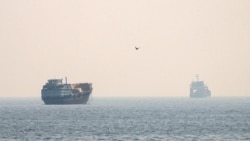
The fate of the Strait of Hormuz has become a central issue in the conflict. Iran's restrictions on traffic through the waterway and the US naval response have disrupted global energy markets and fueled concerns about inflation.
Signs of diplomatic progress this week helped push oil prices lower, easing some pressure on the Trump administration as US voters remain concerned about the economy and rising consumer costs.
US Central Command Disabled Ship Sailing To Iranian Port
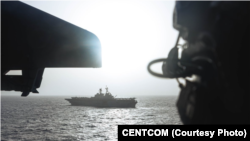
US Central Command (CENTCOM) said on May 29 that its forces operating in the Gulf of Oman had enforced blockade measures by disabling a Gambia-flagged ship that was attempting to sail to an Iranian port.
"A US aircraft disabled the vessel by firing a Hellfire missile into the ship's engine room," a CENTCOM statement said, adding that US forces had issued more than 20 warnings before taking military action.
According to the statement, US forces have disabled five commercial ships and redirected more than a hundred others "to fully enforce the blockade while a cease-fire with Iran remains in effect."
Israel Issues New Evacuation Orders in Southern Lebanon
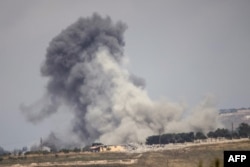
Israeli military operations in southern Lebanon intensified on May 30 as the army issued evacuation warnings for residents of seven villages after Prime Minister Benjamin Netanyahu said Israeli forces had advanced beyond the Litani River despite a cease-fire that officially took effect on April 17.
Netanyahu said on May 29 that Israeli forces "have crossed the Litani" River and moved onto higher ground while "striking Hezbollah hard."
Israeli officials said the military aims to establish a wider security zone in southern Lebanon to push Hezbollah farther from the border.
The Israel Defense Forces said it was acting against Hezbollah in response to alleged violations of the cease-fire and warned residents to leave areas near the group's positions.
Later on May 30, an Israeli strike hit a Lebanese Armed Forces position in the south, wounding two soldiers.
Iran-backed Hezbollah, which is considered a terrorist organization by the United States, claimed it launched rockets at the northern Israeli town of Kiryat Shmona, ambushed Israeli troops near Ghandouriyeh and attacked Israeli positions near the Beaufort fortress and a military base in northern Israel.
The Israeli military said some projectiles were intercepted after being fired from Lebanon, with one hitting near Kiryat Shmona.
The escalation came a day after Israeli and Lebanese military delegations held talks at the Pentagon within the framework of of a new US-backed "security track" between the two countries.
The Pentagon described the discussions as "productive" and said they would feed into a State Department-led political track next week.
In a May 29 call with US Secretary of State Marco Rubio, Lebanese President Joseph Aoun stressed "the need to exert all efforts to reach a cease-fire."
Lebanon's Health Ministry said Israeli strikes killed 11 people in Tyre on May 29 and that at least 3,355 people have been killed since March 2.
Oman Warns Of Suspected Naval Mine In Hormuz Strait
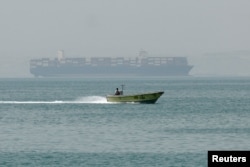
Oman has warned mariners to exercise caution after a floating object believed to be a naval mine was spotted in its territorial waters near the Strait of Hormuz.
Oman's Maritime Security Center said on May 30 that the suspected mine was observed west of a coastal shipping route in the Strait of Hormuz and urged fishermen, ships, and other sailors to keep a safe distance from suspicious objects and report them to authorities.
The agency did not identify the source of the device.
The warning comes amid security concerns in the crucial waterway following the US-Israeli war with Iran and reports that Tehran has placed mines in the strait.
On May 29, US President Donald Trump said Iran must remove all naval mines from the Strait of Hormuz as part of a broader agreement with Washington.
"The Hormuz Strait must be immediately open, no tolls, for unrestricted shipping traffic, in both directions," he said in a Truth Social post.
Separately, Qatar said it opposes permanent transit fees for vessels using the strait but would consider temporary charges if they were used for security-related purposes, such as mine-clearing operations.
Speaking at the Shangri-La Dialogue security forum in Singapore on May 30, Qatari Deputy Prime Minister and Defense Minister Sheikh Saoud bin Abdulrahman Al Thani said Persian Gulf states oppose long-term tolls because they would raise costs for consumers. However, he said temporary fees linked to restoring safe navigation "is something that is negotiable."
Khamenei Adviser Accuses Trump Of 'Betraying Diplomacy'
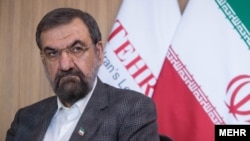
An adviser to Iranian Supreme Leader Mojtaba Khamenei has accused US President Donald Trump of "betraying diplomacy for the third time" by continuing a naval blockade imposed on Iranian ports and making what called "excessive demands" in negotiations.
In an X post on May 30, Mohsen Rezaei said Trump's stance at the negotiating table showed "that he is not inclined toward negotiation and is pursuing other objectives."
Rezaei's comments came a day after Trump met with top aides in the White House Situation Room to make a "final determination" about a framework for extending the cease-fire with Iran, but it ended without a clear decision being announced.
Before the meeting, Trump said on Truth Social that Iran must permanently forgo nuclear weapons, reopen the Strait of Hormuz without tolls, clear naval mines, and cooperate with the United States and the International Atomic Energy Agency in eliminating its stockpiles of highly enriched uranium.
Kazakhstan Open To Hosting Iran’s Enriched Uranium Stockpile, FT Reports

Kazakhstan has indicated it is open to hosting Iran’s stockpile of uranium enriched to 60 percent if a future agreement is reached between Tehran and Washington, according to a report by the Financial Times citing International Atomic Energy Agency (IAEA) chief Rafael Grossi.
The proposal is being discussed as a potential confidence-building measure to support efforts to revive nuclear diplomacy between Iran and the United States.
Grossi raised the issue during a visit to Kazakhstan, where he met President Qasym-Dzhomart Toqaev on May 26.
Kazakhstan is viewed as a credible candidate due to its strong non-proliferation credentials, including its decision to dismantle the Soviet-era nuclear arsenal it inherited after independence and its hosting of the IAEA’s Low-Enriched Uranium Bank in Oskemen.
Any transfer of Iran’s uranium would require a broader political agreement and detailed safeguards under IAEA supervision. Grossi has said discussions remain preliminary and no final deal has been reached.
Hegseth Says US Ready to Resume Iran Strikes If Talks Fail
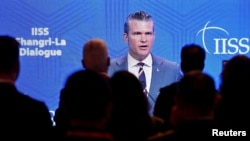
US Defense Secretary Pete Hegseth has said that Washington is prepared to resume military action against Iran if ongoing negotiations fail to produce an agreement, stressing that US forces remain ready despite efforts to reach a diplomatic solution.
Speaking at the Shangri-La Dialogue defense and security forum in Singapore on May 30, Hegseth said that the United States was “more than capable” of renewing attacks if necessary and that its stockpiles were “more than suited” for such operations.
The Pentagon chief said Trump was showing "patience" and was “only going to get a great deal” to prevent Iran from acquiring a nuclear weapon as talks continue over a proposed extension of the current fragile cease-fire.
Hegseth's comments came hours after Trump held a meeting with top aides on May 29 to make a "final determination" about a framework for extending the cease-fire with Iran, but it ended without a clear decision being announced.
While in Singapore, Hegseth also rejected suggestions that the conflict with Iran had distracted Washington from the Asia-Pacific region, saying the US could “do two things at one time.”
With reporting by Reuters
'Grand' Funeral Planned For Slain Supreme Leader Ali Khamenei, Timing Uncertain
A "grand" funeral for slain supreme leader Ayatollah Ali Khamenei is being planned by Iranian authorities, although the timing remains uncertain, official media reported on May 29.

The funeral for the country's former leader -- who was killed on the first day of US-Israeli air strikes on February 28 -- has been delayed amid security fears, even with the current cease-fire in place.
"A special headquarters has been formed to prepare for the funeral ceremony, and various agencies are currently planning and making arrangements," state TV reported, citing Mohsen Mahmoudi, head of the Tehran Coordination Council for Islamic Propaganda.
The 86-year-old Ali Khamenei's son and successor, Mojtaba Khamenei, 56, was also wounded in the attacks and has not been seen in public since assuming office.
With reporting by AFP
Fresh Iran Sanctions Land Even As White House Weighs Latest Cease-Fire Proposal
WASHINGTON -- The Trump administration on May 29 imposed fresh sanctions on an Iranian procurement network accused of defrauding US companies to obtain restricted technology for Tehran’s military, in a move that came just hours after a high-level White House meeting on a possible interim deal with Iran ended without a public decision.
The Treasury Department said the network used fake identities and front companies in the United Arab Emirates and Europe to acquire sensitive US-origin technology, including encryption and network security equipment, for Iran’s Ministry of Defense and Armed Forces Logistics (MODAFL).

Washington framed the measures as part of its Economic Fury campaign aimed at tightening pressure on Tehran. Treasury Secretary Scott Bessent accused Iran of using “brazen efforts” to deceive American firms and said the administration would continue using “all available authorities” to isolate the Iranian government financially.
The timing of the sanctions is notable. The measures were announced shortly after a White House Situation Room meeting where President Donald Trump and senior aides reportedly discussed whether to approve an interim arrangement with Iran that could extend a cease-fire and reopen the Strait of Hormuz.
Hours after Trump said he was entering the meeting to make a “final determination,” no official decision had been announced.
The new sanctions targeted several Iranian nationals and companies, including Sorena Hushmand Samaneh Company, accused of impersonating US businesses to illegally procure restricted goods. Treasury also designated entities in Dubai allegedly used to reroute shipments to Iran.
Brett Erickson, a sanctions expert at Obsidian Risk Advisors, told RFE/RL the move appeared aimed as much at domestic political messaging as at increasing pressure on Tehran.
“These sanctions feel less like economic warfare and more like reputation management,” Erickson said.
“Their greatest value may not be the pressure they place on Tehran, but the cover they provide Washington. They allow the administration to try to look tough on Iran at a moment when many see the broader direction of travel pointing the other way,” added.
The sanctions freeze any US-based assets linked to the designated individuals and entities and expose foreign financial institutions dealing with them to possible secondary sanctions.
Trump Concludes Situation Room Meeting On Possible Iran Deal
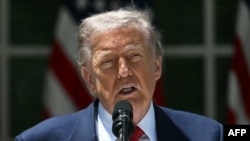
WASHINGTON -- US President Donald Trump has concluded a White House Situation Room meeting on a possible agreement with Iran aimed at extending a cease-fire and advancing negotiations over Tehran’s nuclear program.
A White House official confirmed that the meeting on May 29 had ended but declined to say whether Trump approved the proposed framework.
According to media reports, the tentative agreement would extend the current cease-fire by 60 days while negotiations continue on Iran’s nuclear activities.
Before the meeting, Trump said on Truth Social that Iran must permanently forgo nuclear weapons, reopen the Strait of Hormuz without tolls, clear naval mines, and cooperate with the United States and the International Atomic Energy Agency (IAEA) in eliminating highly enriched uranium stockpiles.
Trump also said the US would lift its naval blockade of Iran under the agreement.
There was no immediate response from Tehran.
-