





US Conducts New Round Of 'Self-Defense' Attacks On Iran; Tehran Fires Back At Kuwait
Violence flared again in the Middle East, with the US military saying it had conducted a third round of “self-defense” strikes against Iranian sites, while Tehran retaliated with missile and drone attacks on US Gulf ally Kuwait early on June 1.
“US Central Command (CENTCOM) conducted self-defense strikes on Iranian radar and command and control sites for drones in Goruk, Iran, and Qeshm Island this weekend,” the US military entity responsible for American forces in the Middle East said in a statement.
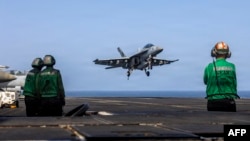
The operation marks at least the third publicly announced US "self-defense" strike against Iranian targets since the cease-fire took effect in early April.
It comes as US and Iranian officials are exchanging a series of proposals for a framework to extend the current cease-fire for 60 days and also potentially open the Strait of Hormuz and lift a US blockade of Iranian ports, among other issues being discussed.
The White House declined to comment and referred an RFE/RL reporter to CENTCOM.
CENTCOM said in a statement that the strikes were at least partially in response to the shooting down of a drone by Iranian forces.
CENTCOM called the strikes “measured and deliberate strikes occurred on Saturday and Sunday in response to aggressive Iranian actions that included the shootdown of a US MQ-1 drone that was operating over international waters.”
It said that US fighter jets responded by “eliminating Iranian air defenses, a ground control station, and two one-way attack drones that posed clear threats to ships transiting regional waters.”
It said no US service members were injured in the operation.
Iran's hard-line Islamic Revolutionary Guards Corps (IRGC) was quoted by Iranian state media as saying its forces targeted an air base used by US forces to launch the latest attacks, without specifying the country.
But, at the same time, the Kuwaiti military said its air defenses were confronting “hostile missile attacks and drones” attacks as air raid sirens blared throughout the small Gulf nation and US ally.
In a posting on X, the military said “that if explosion sounds are heard, they are of air defense systems intercepting the hostile attacks. Everyone is requested to adhere to the security and safety instructions issued by the competent authorities.”
It did not immediately identify the incoming projectiles as coming from Iran, but the small Gulf nation has often been the target of retaliatory launches by Tehran, which has claimed that US attacks have been launched from its territory.
US forces conducted strikes on May 7 after attacks involving Iranian missiles, drones, and small boats targeting US naval vessels, and carried out additional strikes on May 25 and May 27-28 against missile sites, mine-laying boats, and other military targets that Washington said threatened US forces and commercial shipping in the Strait of Hormuz.
RFE/RL’s senior Washington correspondent Alex Raufoglu contributed to this report.
Trump Again Insists That Cease-Fire Deal Will Block Tehran’s Nuclear Ambitions
US President Donald Trump insisted again that Tehran will not have a nuclear weapon under his proposed cease-fire deal, suggesting that the main focus of the memorandum now being negotiated is on Iran’s nuclear program.
In a social media post on May 31, Trump said his deal “states, very clearly, that Iran will not have a Nuclear Weapon.”
"It then goes on, in very strong and lengthy detail, to discuss various other aspects of Nuclear. In fact, that’s what most of the agreement is about,” he wrote.

In a Fox News interview -- which was conducted on May 28 by his daughter-in-law, Lara Trump, and broadcast on May 30 -- Trump said Iran had agreed it would not have atomic weapons.
"The one guarantee that I have to have is that there will be no nuclear weapons. They've agreed to that, and it was very interesting," he said.
Tehran has consistently said that no agreement has been made regarding its nuclear program or its supply of highly enriched uranium, which can be used to build a nuclear bomb.
Tehran, which has enriched some of its uranium stocks to levels close to weapons quality, insists that its atomic efforts are for civilian purposes.
In a video broadcast on state television on May 31, Mohammad Qalibaf, Iran's lead negotiator, said Iranian negotiators "neither trust the enemy's words nor its promises."
"We will not approve any agreement until we are certain that the rights of the Iranian people have been upheld," said Qalibaf, who is Iranian parliament speaker.
Iranian Foreign Minister Abbas Araqchi confirmed on May 31 that talks were ongoing, but warned against "speculation," saying Tehran couldn't judge the negotiating process until there was a clear outcome.
US and Iranian negotiators have exchanged several proposals over recent weeks. The New York Times and the website Axios reported on May 30 that Trump had sent back to Tehran a new framework that contained "tougher" terms.
Europeans Express Concerns Over Israeli Offensive, Also Assail Hezbollah Ahead Of UN Session
French President Emmanuel Macron and top British and German officials on May 31 expressed concerns over Israel’s latest ground offensive in Lebanon, while also assailing the Hezbollah militant group's attacks across the border into Israel.
Iran-backed Hezbollah, a militant group and political party that controls much of southern Lebanon, is considered a terrorist organization by the US, while the European Union has blacklisted its armed wing but not its political branch.
Macron said that "nothing justifies the major escalation under way in south Lebanon" and he called for an end to fighting "for good."
“France will continue to support the Lebanese authorities in their efforts to restore the sovereignty of the state and the country’s territorial integrity,” he wrote on X.
British Foreign Minister Yvette Cooper said in a post on X that “Israel's military escalation in Lebanon has killed and displaced civilians, destroyed infrastructure, and eroded space for diplomacy."
"It must end. Hizballah must end attacks on Israel and disarm. All sides must respect the ceasefire and engage with negotiations in good faith,”
"All sides must respect the cease-fire and engage with negotiations in good faith," she added.
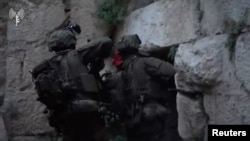
German Foreign Minister Johann Wadephul also called on Israel and Hezbollah to return to the cease-fire that was announced in April but has been on shaky ground since.
Wadephul said Israel’s "continued advance" into southern Lebanon was "a cause for great concern."
The UN Security Council will hold an emergency meeting on June 1 over Israel's expansion of its offensive in Lebanon, diplomatic sources told AFP.
The meeting, requested by France, and will take place immediately after an emergency session over the impact of a Russian drone into a Romanian apartment building. That meeting is scheduled for 3 p.m. in New York.
Lebanon's Health Ministry said an Israeli strike in the south of the country early on May 31 killed at least eight people as Israel intensifies its attacks and ground operations targeting Hezbollah.
"The massacre committed by the Israeli enemy in a raid on the town of Deir Zahrani, Nabatieh district, at dawn on [May 31]..resulted in eight martyrs, including three women, and 19 wounded, including five children and six women," the ministry said in a statement.
Israeli Prime Minister Benjamin Netanyahu vowed to push deeper into Lebanon following the military’s capture of the medieval castle of Beaufort, calling it a "dramatic shift" in the drive against Hezbollah.
Defense Minister Israel Katz said Israeli troops had raised the Israeli flag over the castle, which is also known as Qalaat al-Shaqif. He described the site as "one of the most important strategic points for defending communities of the Galilee" and ensuring the security of Israeli forces.
The castle has long held significant military value. Israeli forces used the fortress as a base during their 18-year occupation of southern Lebanon, which ended in 2000.
The militant group, meanwhile, said it targeted Israeli forces near the fortress and military positions and infrastructure in Shlomi and Nahariya in northern Israel, while air raid sirens sounded in the Acre area.
With reporting by Reuters and AFP
Iran Reopened Most Of Underground Missile Facilities Struck By US And Israel
CNN reported on May 31 that Iran has managed to unblock most of its underground missile facilities that were struck by US and Israeli forces since the beginning of the war on February 28.
The United States and Israel have sought to limit the Iran's access to its numerous underground bases, developed over the past decades, by destroying nearby roads, blocking tunnel entrances, and targeting digging equipment.
Iran worked to excavate the sites, but US-Israeli strikes on the facilities prevented Tehran from firing its missiles at full potential.
However, citing satellite images, CNN reported that a cease-fire that came into effect in early April has allowed Iran to accelerate efforts to excavate its underground bases, claiming that 50 of 69 tunnel entrances leading to 18 facilities have been reopened.
Iran's development of its missile program has been one of the central issues in the conflict, with both Washington and Tel Aviv seeking to limit Tehran's capabilities.
While President Donald Trump said on May 30 that the United States was nearing a "very good deal" to end the three-month-long war with Iran, it is not immediately clear whether negotiations between the two countries will succeed.
Iranian Foreign Minister Abbas Araqchi confirmed on May 31 that the talks were ongoing, but warned against "speculation," saying Tehran couldn't judge the negotiating process until there was a clear result.
Trump earlier threatened that the United States could renew its bombing campaign in Iran if there were no progress in talks. CNN reported that if hostilities were to resume, Iran would be in a position to renew its missile strikes as well.
With reporting by CNN.
Iran Claims 28 Ships Passed Through Hormuz Strait 'In Coordination With' Revolutionary Guards
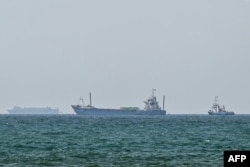
Iran's Islamic Revolutionary Guards Corps (IRGC) Navy said on May 31 that 28 vessels had passed through the Strait of Hormuz "in coordination" with the force over the previous 24 hours, accounting for all ship traffic through the strategic waterway during the past day.
The IRGC said in a statement that " oil tankers, container ships, and other commercial vessels" had passed through the strait "after obtaining authorization and in coordination with, and under the security protection of, the IRGC Navy."
Earlier on May 31, the Israeli newspaper Israel Hayom reported that dozens of tankers carrying oil and liquefied natural gas had passed through the Strait of Hormuz over the past week with US approval and after paying transit fees to Iran.
The report came despite repeated statements by the US government opposing the payment of fees to Iran for passage through the strait, which usually accounts for 20 of global oil and gas supplies.
With reporting by RFE/RL's Radio Farda
Iran's Top Negotiator Says No Deal With US Without 'Tangible Results'

Iranian parliament speaker Mohammad Baqer Qalibaf has said that Tehran would not accept any agreement with the United States unless it guaranteed the rights of the Iranian people, state media reported.
Speaking after being sworn in for another term as speaker on May 31, Qalibaf -- a former Revolutionary Guards commander and Iran's chief negotiator in talks with the United States -- said there was "no trust" in US promises, adding that Tehran would only fulfill its commitments after achieving "tangible results" and would judge any agreement based on concrete outcomes.
US President Donald Trump has said Washington was nearing a "very good deal" with Iran but warned that military action remained an option if negotiations failed.
At the May 31 parliamentary session, which was held at an undisclosed location, Qalibaf claimed that Iran was "pushing back the enemy in a historic war."
But he also warned that "we must not fall into the trap of a war of attrition," adding that by placing national interests and public demands above factional and regional considerations, we must design an effective shortcut to solve the country's problems."
Those remarks appeared to be directed at a radical hardline minority in parliament that has strongly opposed continued negotiations with the United States aimed at ending the war.
With reporting by Reuters and RFE/RL's Radio Farda
Israel Expands Lebanon Offensive, Seizes Beaufort Castle
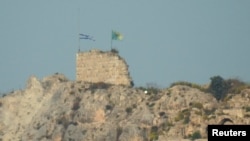
The Israeli military says that it has expanded its ground operations in southern Lebanon to additional areas and that its forces had crossed the Litani River to strengthen Israeli military positions in the region.
The Israeli military said "a significant number" of ground troops had begun offensive operations aimed at expanding what it called the "Forward Defense Line," adding that the operation was "currently expanding to additional areas."
The announcement on May 31 came two days after Israeli Prime Minister Benjamin Netanyahu said Israeli forces had crossed the Litani River, about 30 kilometers north of the Israel-Lebanon border.
The military said its forces had seized Beaufort Castle and the adjacent Beaufort Ridge, a strategic high ground overlooking large parts of southern Lebanon and northern Israel. It said one Israeli soldier was killed during the operation.
Defense Minister Israel Katz said Israeli troops had raised the Israeli flag over the castle, which is also known as Qalaat al-Shaqif. He described the site as "one of the most important strategic points for defending communities of the Galilee" and ensuring the security of Israeli forces.
The castle has long held significant military value. Israeli forces used the fortress as a base during their 18-year occupation of southern Lebanon, which ended in 2000.
The Israeli military also warned civilians south of the Zahrani River to move immediately to areas north of the river, saying it was intensifying operations against Hezbollah.
A cease-fire between Israel and the Iran-backed Hezbollah group, which is considered a terrorist organization by the United States, officially took effect on April 17, but has largely failed to hold, with both sides accusing each other of violations.
On May 30, Lebanese Prime Minister Nawaf Salam accused Israel of pursuing a "scorched earth policy" in southern Lebanon.
Lebanon's Health Ministry says that Israeli attacks have killed at least 3,371 people since March 2.
With reporting by AFP and Reuters
World Awaits Trump Decision On Negotiated Framework
The world continues to await US President Donald Trump’s reaction to a proposed framework to extend the current cease-fire with Iran, even as threats to resume US air strikes and American naval forces’ interdiction actions in the Persian Gulf region persist.
As of late May 30, there was no official word out of the White House, a day after Trump concluded a Situation Room meeting on a possible agreement with Tehran aimed at extending the shaky truce by 60 days, opening the Strait of Hormuz, and ending the US blockade of Iranian ports.
Under the framework, other difficult issues -- such as Iran’s right to enrich uranium and its overall nuclear program, along with potential easing of sanctions against Tehran -- would be negotiated during the 60-day period.
Several US media outlets on May 30 reported that Trump has sought a number of changes to the terms of the framework, indicating that much work remains to be done.
The New York Times and Axios, citing officials familiar with the discussions, separately reported that Trump's desired changes involved toughening the terms of the deal and that the US had transmitted the new details back to Tehran for consideration.
Read more here
Trump Says US ‘Very Close’ to Iran Deal But Warns Military Option Remains
WASHINGTON -- US President Donald Trump said Washington was nearing a "very good deal" with Iran but warned that military action remained an option if negotiations fail, according to an interview recorded at the White House on May 28 and aired on May 30 on Fox News host Lara Trump's program My View.
The interview aired a day after Trump emerged from a two-hour Situation Room meeting on Iran without announcing a decision on the status of negotiations, despite earlier saying a "final determination" was expected.
As of late May 30, Trump had not publicly disclosed any outcome from the meeting.
Lara Trump, who conducted the Fox News interview, is married to the president's son, Eric.
In the interview, Trump struck an optimistic tone about diplomacy while making clear he was prepared to escalate if talks break down.
"It's really a win already. We've defeated their military, essentially defeated their military," Trump said. "I would rather get a deal, because we can open the strait [of Hormuz] immediately upon signing."
Trump said preventing Iran from obtaining a nuclear weapon remained his non-negotiable condition.
"The one guarantee that I have to have is that there will be no nuclear weapons," he said, adding that Iranian negotiators had expanded their commitment from not developing a nuclear weapon to also not purchasing one.
"That's a big difference," Trump said. "So we're getting what we want slowly."
Calling Iranian officials "very tough negotiators," Trump said he was willing to let talks proceed at their current pace.
"I'm in no hurry," he said. "I'd like to say I'm in a hurry, because gasoline prices are going to come tumbling down, but if you're going to be in a hurry, you're not going to make a good deal."
"Slowly but surely, we're getting, I think, what we want," Trump added. "And if we don't get what we want, we're going to end it a different way."
US Restraint
Trump also argued that US military operations had not been aimed at destroying Iran's conventional armed forces, despite his repeated claims that Tehran had been effectively defeated militarily.
"We've actually left their military alone. People would be surprised to hear that," Trump said, apparently referring to Iran's ground forces as opposed to other branches.
"Their navy is totally gone, 100 percent. Their air force is totally gone, 100 percent. Their military, we sort of left it alone because we think that their military is somewhat moderate," he said.
Trump said the US had targeted other elements of Iran's leadership instead. "They have other people that aren't moderate. We've taken them out. We've taken different forms of leadership out," he said.
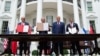
Trump framed the approach as a lesson learned from past US interventions in the Middle East.
"Mistakes have been made in wars where you wipe out everybody, and then you have a country that for 40 years can never rebuild," he said, citing Iraq as an example.
The president again defended US strikes on Iranian nuclear facilities carried out nine months ago, saying they prevented Tehran from obtaining a nuclear weapon.
"If we didn't hit them with the B-2 bombers nine months ago, they would have a nuclear weapon right now, and it would be a whole different story," Trump said.
Cease-Fire Framework Taking Shape
The interview aired as attention remained focused on an emerging US-Iran agreement that could extend the current cease-fire and reopen the Strait of Hormuz, a critical global energy shipping route through which about one-fifth of the world's oil supply passes each day.
Trump earlier this week said the US and Iran were closing in on a deal that had been "largely negotiated" and could be unveiled soon.
According to US officials, the proposed framework would extend the current cease-fire by 60 days, restore unrestricted navigation through the Strait of Hormuz, and create a window for further negotiations over Tehran's nuclear program.
The negotiations represent the most significant diplomatic opening since hostilities erupted more than three months ago.
Iran suspended talks with Washington last June following Israeli strikes on Iranian nuclear and military targets, after which the US carried out attacks on three nuclear sites inside the country.
Neither Trump nor Iranian Supreme Leader Mojtaba Khamenei has formally approved the latest draft agreement.
The fate of the Strait of Hormuz has become a central issue in the conflict. Iran's restrictions on traffic through the waterway and the US naval response have disrupted global energy markets and fueled concerns about inflation.
Signs of diplomatic progress this week helped push oil prices lower, easing some pressure on the Trump administration as US voters remain concerned about the economy and rising consumer costs.
US Central Command Disabled Ship Sailing To Iranian Port
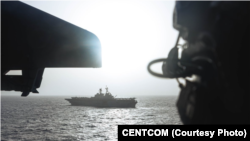
US Central Command (CENTCOM) said on May 29 that its forces operating in the Gulf of Oman had enforced blockade measures by disabling a Gambia-flagged ship that was attempting to sail to an Iranian port.
"A US aircraft disabled the vessel by firing a Hellfire missile into the ship's engine room," a CENTCOM statement said, adding that US forces had issued more than 20 warnings before taking military action.
According to the statement, US forces have disabled five commercial ships and redirected more than a hundred others "to fully enforce the blockade while a cease-fire with Iran remains in effect."