




Limited Strikes, Larger Signal: What The US Attack On Iran Reveals
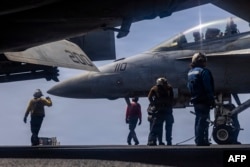
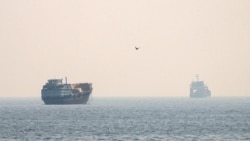
WASHINGTON -- The US strikes on Iranian air defense and radar systems appear intended as a limited warning to Tehran rather than the opening salvo of a broader military campaign, according to senior US officials and regional security experts.
The attacks targeted several Iranian air defense and radar systems, with another US official telling RFE/RL that the operation was "ongoing" and focused on air defenses and radar installations. Iranian state media reported explosions in several locations across Hormozgan Province, including Sirik, Bandar Abbas, Minab, and on Qeshm Island.
The strikes come at a delicate moment in US-Iran relations, as the Trump administration continues to pursue negotiations with Tehran despite rising military tensions in the Persian Gulf.
Multiple US officials briefing reporters emphasized that they do not expect the military action to derail ongoing diplomatic efforts.
One senior official said that President Donald Trump still believes a peace agreement with Iran remains achievable, saying that "nothing changes where the deal stands right now" and describing an agreement as "still close."
Read Alex Raufoglu's analysis here.
Iran Targets US Bases Across Gulf After American Strikes
Iran's Islamic Revolutionary Guards Corps said it had launched missile and drone attacks on a US military base in Jordan and other American-linked targets across the Persian Gulf on June 10 in retaliation for US strikes on Iranian military installations near the Strait of Hormuz.
Iranian media reported that the attacks targeted the US Al Azraq base in Jordan, as well as sites in Kuwait and Bahrain.
The Revolutionary Guards said they struck facilities including aircraft hangars and a command center and warned they were prepared to deliver a "crushing and decisive" response to any further US action.

The attacks followed a US operation against nearly 20 Iranian air-defense, radar, and surveillance sites near the Strait of Hormuz.
The strikes came after President Donald Trump said Iran was responsible for the downing of a US Apache helicopter a day earlier and vowed a "very powerful" response.
Jordan's military said it intercepted and destroyed five missiles headed toward Al-Azraq, while Bahrain and Kuwait reported engaging incoming aerial threats.
A US official said preliminary assessments indicated that nearly all Iranian missiles and drones had been intercepted, with no immediate reports of casualties or damage to American facilities.
The exchanges mark one of the most serious escalations since Washington and Tehran agreed to a cease-fire in April.
US Concludes Retaliatory Strikes On Iran, Says Nearly 20 Targets Hit
WASHINGTON -- The United States said it has concluded a wave of retaliatory strikes against Iran, targeting nearly 20 military sites after Tehran was blamed for the downing of a US Army Apache helicopter and a series of attacks on US forces and commercial shipping in the region.
US Central Command (CENTCOM) said late on June 9 that American fighter aircraft struck Iranian air defense systems, ground control stations, and surveillance radar facilities near the Strait of Hormuz in what it described as a "proportional response" ordered by President Donald Trump.
A senior US official told reporters that approximately 20 targets inside Iran were hit during the operation, which has now concluded.
The strikes prompted an Iranian response involving multiple missiles and drones, but a US official said "just about all" of the incoming projectiles were intercepted.
The official added that Washington had received no reports of US casualties or damage to American facilities, though assessments were continuing.
CENTCOM said US forces remain on alert and prepared to respond to any further attacks.
Iran has not yet publicly detailed the extent of any damage from the strikes.
US Launches 'Self Defense' Strikes On Iran In Response To Downing Of Apache Helicopter
- By RFE/RL
The United States said it launched "self-defense" strikes against Iran on June 9 just hours after President Donald Trump said Washington was compelled to respond to the downing of a US Army Apache helicopter over the Strait of Hormuz.
"US Central Command (CENTCOM) forces began launching self-defense strikes against Iran at 5 p.m. ET today at the Commander in Chief’s direction, in response to yesterday’s downing of a U.S. Army Apache helicopter," CENTCOM said in a statement on X.
"The mission is a proportional response to unjustified Iranian aggression."
It gave no further details.
The Iranian Fars news agency, which is linked to the Islamic Revolutionary Guards Corps (IRGC), said explosions were heard in the eastern regions of Hormozgan, while the Mehr news agency reported explosions in the area of Sirik Port.
It added that residents and local sources also reported hearing explosions in the area of Qeshm Island and Jask city.
In a post on Truth Social on June 9, Trump said he had been informed by the US military that "the Iranians shot down one of our highly sophisticated Apache Helicopters" and that "the United States must, of necessity, respond to this attack." He added that the two pilots aboard the aircraft were "safe and uninjured."
Earlier, US Central Command (CENTCOM) confirmed that two crew members had been rescued after an AH-64 Apache helicopter went down near the coast of Oman while patrolling regional waters.
The US military said the soldiers were recovered within about two hours and were in stable condition, but noted that the cause of the incident remained under investigation.
Before Trump's post, sources briefed on the matter had told reporters it was unclear whether the helicopter had been hit by Iranian fire, suffered a mechanical failure, or experienced another problem.
Israel Orders Evacuation Of Lebanese City After Deadly Air Strike
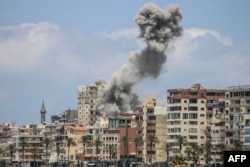
An Israeli air strike on the southern Lebanese city of Tyre killed at least eight people and wounded 32 others on June 9, Lebanon's Health Ministry said, as Israel expanded its campaign against Hezbollah despite Iranian warnings against further attacks on Lebanon.
Lebanon's state-run National News Agency reported strikes on more than a dozen locations across southern Lebanon.
The agency said the deadly strike on Tyre's outskirts came before the Israeli military issued an evacuation order covering the entire city, including its Christian quarter and nearby Palestinian refugee camps.
In a warning posted on X, a spokesman for the Israeli military urged residents to leave the area and move north of the Zahrani River, around 30 kilometers from Tyre.
Correspondents for the AFP news agency reported residents fleeing the city and heavy traffic heading north.
The latest escalation comes a day after Iran warned it would resume attacks on Israel if Israeli forces continued striking Lebanon.
Tehran has insisted that Lebanon be included in any broader agreement to end the regional conflict.
The war began after Hezbollah launched attacks on Israel in March in support of Iran.
Lebanese authorities say Israeli strikes have killed more than 3,600 people and displaced more than one million since then.
Both sides have continued fighting despite a cease-fire announced in mid-April.
With reporting by AFP and Reuters
Trump Says Iran Shot Down Apache Helicopter And That US Must Respond

US President Donald Trump has said that Iran shot down a US Army Apache helicopter while it was patrolling over the Strait of Hormuz, adding that Washington would be compelled to respond.
In a post on Truth Social on June 9, Trump said he had been informed by the US military that "the Iranians shot down one of our highly sophisticated Apache Helicopters" and that "the United States must, of necessity, respond to this attack." He added that the two pilots aboard the aircraft were "safe and uninjured."
Earlier, US Central Command (CENTCOM) confirmed that two crew members had been rescued after an AH-64 Apache helicopter went down near the coast of Oman while patrolling regional waters.
The US military said the soldiers were recovered within about two hours and were in stable condition, but noted that the cause of the incident remained under investigation.
Before Trump's post, sources briefed on the matter had told reporters it was unclear whether the helicopter had been hit by Iranian fire, suffered a mechanical failure, or experienced another problem.
US Embassy Lifts Shelter-In-Place Order In Israel
The US Embassy in Jerusalem says it has lifted its shelter-in-place order for American government employees and their families "as a result of changes to the current security situation in Israel."
The restrictions were imposed on June 8 after Iran launched missiles at Israel and fears grew that the confrontation between the two countries could escalate further.
As Israel eases civil-defense restrictions following the latest hostilities, the embassy said in a statement that its consular sections in Jerusalem and Tel Aviv would reopen for routine and emergency services on June 10.
The announcement on June 9 came after Iran halted missile attacks launched in response to Israeli strikes during the escalating confrontation between the two countries. Israel has also signaled a pause in operations, though both sides have warned they could resume military action if attacked again.
Despite the easing of restrictions, the embassy said travel limits remain in place for US personnel in parts of northern Israel, near the Gaza Strip and along sections of the Egyptian border, as well as in most of the West Bank.
Ben Gurion Airport remains operational, while US citizens were urged to continue monitoring security alerts and remain prepared for any renewed escalation.
Iranian Media: Funeral Held For Soldiers Killed In Israeli Attacks
The Tasnim news agency, close to the Islamic Revolutionary Guards Corps (IRGC), reported that funeral was held on June 9 for two members of the army's air defense forces who were killed in Israeli attacks on Iran the day before.
The two soldiers were named as Bahman Hosseini and Alireza Abiri.
Tasnim confirmed that both Hosseini and Biri were members of the Air Defense Force of the Iranian Army and that they were killed on June 8 while "carrying out a mission."
Iran has not routinely announced news of casualties among its military forces during Israeli or American strikes on Iran.
On June 8, the head of Tehran's emergency department had announced that no one was injured in the Israeli attacks on the province.
CENTCOM Confirms US Apache Goes Down Near Oman Coast, Crew Safely Rescued
US Central Command (CENTCOM) has confirmed an incident involving two pilots of a US Army Apache helicopter that crashed near the Strait of Hormuz.
"At 7:33 p.m. ET on June 8, two crew members from a US Army AH-64 Apache were rescued by American forces after their helicopter went down near the coast of Oman while patrolling regional waters." CENTCOM said in statement released on June 9.
"The Soldiers were safely rescued within approximately two hours and are in stable condition," the statement said, adding that the "cause of the incident is under investigation."
Iran Soccer Federation Says Quota For World Cup Tickets Eliminated

The Iranian soccer federation says that just a few days before the start of the World Cup, the ticket quota allocated to the federation has been "eliminated."
A statement issued by the sports body on June 9 that the move reflected the fact that "many Iranian football fans, relying on the officially announced process, had made the necessary plans in advance to attend the matches."
"Eight percent of the ticket capacity for each match will be allocated to the federations participating in the World Cup," said the federation, which "has accordingly begun the process of selling tickets for the national team's matches against New Zealand, Belgium, and Egypt through its official website."
The international soccer association, FIFA, and organizers of the 2026 World Cup -- which will be held in the United States, Mexico, and Canada starting this month -- have not yet reacted to this news.
The Iranian team's participation in this World Cup has been accompanied by multiple controversies.
Tom Barrack, the US ambassador to Turkey, finally confirmed on June 5 that visas had been issued to members of the Iranian national soccer team to participate in the World Cup in the United States.
The New York Times reported, citing four senior US government officials, that the applications of all 26 Iranian players had been accepted, but more than 10 members of the support staff and federation officials who were supposed to accompany the team were not allowed to enter the United States.
Earlier, US Secretary of State Marco Rubio said he was determined to prevent Iran from trying to "plant" individuals associated with Islamic Revolutionary Guards Corps in the national soccer team's convoy to participate in the World Cup.
In May, several officials from Iran's soccer federation, including its president, Mehdi Taj, who had traveled to Canada to attend the FIFA Congress, encountered problems at the Toronto airport and were not allowed to enter the country.