





Pakistani Prime Minister Says Peace Deal Expected Within 24 Hours
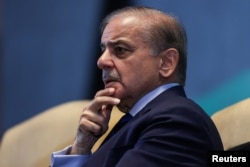
Pakistani Prime Minister Shehbaz Sharif has written on social media that a peace agreement between Washington and Tehran is expected within the next 24 hours.
Sharif, a key mediator in the negotiations, repeated his claim from June 12 that agreement was now closer than ever. The last 24 hours have also seen indications from senior US and Iranian officials that diplomatic progress has moved rapidly forward.
“We are closer to a peace deal than ever before. With finalization likely expected in the next 24 hours, Pakistan is preparing for the electronic signing of the peace deal immediately after, followed by technical level talks next week,” Sharif wrote on X on June 13.
“We are confident that this historic peace deal will form a strong foundation for lasting peace,” Sharif added.
Iranian officials have also indicated a deal would be signed digitally, while a White House official told RFE/RL on June 12 that mediators were still considering an in-person signing ceremony in Europe in the coming days.
Details of the deal have remained unclear, with leaders on each side presenting different elements.
Renewed Fighting In Lebanon Highlights Another Barrier To Peace Deal
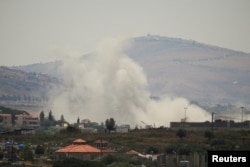
Israeli air strikes were reported in multiple locations in southern Lebanon on June 13, the latest in a series of flare-ups in the conflict between Israel and Iranian proxy Hezbollah that is complicating peace negotiations between Washington and Tehran.
Media reports highlighted Israeli attacks around Nabatieh, some 70 kilometers south of the Lebanese capital, Beirut. There were no immediate reports of casualties.
Earlier, the Israel Defense Forces (IDF) announced that rocket fire from Lebanon had caused sirens to be sounded in northern Israel.
“Following the sirens that sounded a short while ago regarding a hostile aircraft infiltration in the areas of Metula and Misgav Am, the Israeli Air Force intercepted a suspicious aerial target that crossed from Lebanon,” an IDF statement said.
Senior Iranian officials have repeatedly said that a deal with Washington must include a truce in Lebanon. Iranian Foreign Minister Abbas Araqchi repeated this position in a TV interview on July 12.
Hezbollah, regarded as a terrorist organization by both Israel and the United States, is not party to US-brokered talks between Israel and Lebanon -- and has denounced the meetings.
Hezbollah attacked Israel in early March, following the US and Israeli air strikes on Iran that began on February 28.
Iran Announces Funeral Plans For Khamenei
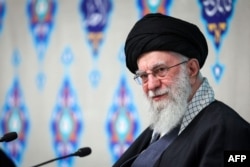
Iranian authorities have said farewell ceremonies for the late Supreme Leader Ali Khamenei will be held in Tehran on July 4-6 and in Qom on July 7, with burial scheduled for July 9 at the Imam Reza shrine in Mashhad, according to the semiofficial Tasnim news agency.
The announcement, issued by Khamenei's office on June 13, repeatedly referred to him as the "martyred leader" and addressed condolences to his successor, Mojtaba Khamenei, who assumed Iran's top post following his father's death in an Israeli air strike in February.
The statement said family members killed alongside Khamenei would also be honored during the ceremonies.
Iranian Media Announces More Property Seizures From 'Traitors'
A statement by the judiciary in Iran’s Isfahan Province has announced that the property of 100 people it describes as “traitors” will be confiscated, Iranian media reported.
The statement on June 13 claims the people have been supporting “enemies of Iran,” according to state-run IRIB broadcaster. It added that they were “disrupting” the economy, without providing details.
"The judicial system, alongside the supervisory institutions and the responsible agencies, will fulfill its legal duty and will deal decisively with the disruptors without any compromise," Provincial Chief Justice Hojjatoleslam Asadollah Jafari was quoted as saying.
For several weeks now, the Iranian authorities have announced similar measures against hundreds of people -- part of a wider crackdown that has seen thousands of arrests and dozens of executions of political prisoners.
The Norway-based Iran Human Rights group described it as an “unprecedented surge” on June 1, calling for “firm and effective international action” to stop further executions.
Meanwhile, also on June 13, Iran’s semiofficial Tasnim news agency reported a suspect had been arrested for being “in contact with foreign espionage elements.”
Another part of the crackdown has been the increasing use of a new law introduced following the 12-day war with Israel last year, expanding penalties for alleged espionage.
With reporting by RFE/RL's Radio Farda
Report: Iran Making It Harder To Access Buried Uranium
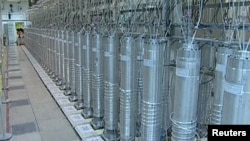
Iran has stepped up efforts to secure its stockpile of near bomb-grade uranium by collapsing tunnels and laying explosive mines around access points, according to five sources familiar with US intelligence, CNN reports.
The measures have made it significantly harder to reach around 440 kilograms of highly enriched uranium believed to be stored at the Isfahan nuclear complex and other sites.
This further complicates negotiations between the United States and Iran over a deal that would require Tehran to surrender its enriched uranium for destruction and removal.
A senior US administration official said the sides are moving closer to an agreement, though conflicting accounts from Washington and Tehran have left the terms unclear.
Experts warned the new fortifications could hinder verification and removal efforts.
Scott Roecker, former head of the National Nuclear Security Administration’s Office of Nuclear Material Removal, told CNN that the developments would “definitely complicate” retrieval of the uranium and could allow Iran to argue that part of the stockpile is “irretrievable.”
The stockpile was previously considered a potential target for a US military operation that was deemed too risky, according to the CNN report.
US President Donald Trump has emphasized the importance of securing the material, saying in May: “We know exactly what’s happening” with the buried uranium and that “nobody’s even gotten close to it.
Even if a deal is reached, removing the uranium could take weeks and require specialist equipment and demining operations.
US, Iran Edge Toward Deal As Region Awaits Breakthrough
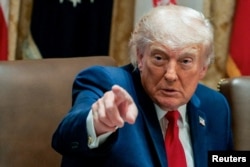
WASHINGTON -- After more than three months of conflict that has shaken the Middle East, disrupted energy markets, and heightened concerns about regional stability, the United States and Iran appear to be moving closer to a possible peace agreement.
Amid intensive diplomatic efforts brokered by Pakistan, officials in Washington, Tehran, and Islamabad indicated on June 12 that negotiations on a preliminary Memorandum of Understanding (MoU) had made significant progress.
The proposed agreement would focus on immediate de-escalation measures, including reopening the Strait of Hormuz, ending the US naval blockade of Iranian ports, and securing a commitment from Tehran not to develop or acquire nuclear weapons.
If signed, the MoU would open a 60-day period of technical negotiations aimed at addressing broader issues.
Analysts say the apparent progress reflects a shift in Washington’s negotiating strategy, with officials separating immediate security concerns from longer-term disputes.
Read more here
US Downs Iranian Attack Drones, Even As Momentum For Deal Builds
(This item has been updated to reflect CENTCOM confirmation)
US forces have shot down multiple Iranian attack drones flying toward the Strait of Hormuz, in another flare-up of violence even as Washington and Tehran are suggesting a peace deal is imminent.
"Iran launched multiple one-way attack drones in an attempt to strike commercial ships transiting the Strait of Hormuz," US Central Command (CENTCOM) said on June 13.
"US forces have downed all of them in recent hours as traffic flow through the strait continues unimpeded. The international trade corridor remains open for transit," it added.
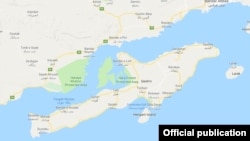
Earlier, Iranian state media reported that explosions were heard near the port of Sirik and on Qeshm island, but it said the cause of the blasts were not known. Some reports said the blasts were likely warning shots fired by Iranian forces at ships attempting to transit the strait without permission.
It came as a senior US administration official said the US and Iran were “very close” to sealing a deal that would reopen the critical shipping route and dismantle Tehran’s nuclear enrichment infrastructure.
US President Donald Trump on June 12 had expressed frustration with Tehran, threatening further strikes if it did not quickly sign a peace agreement.
A day earlier, a senior US defense official told RFE/RL that the US military shot down two Iranian attack drones in what it called a "self-defense" strike after Tehran's forces had targeted commercial vessels transiting the strait without its permission.
With reporting by Reuters
Indian FM Protests US Shipping Strike In Call With Rubio
India's foreign minister has called his US counterpart in a "strong protest" after US strikes hit three mainly Indian-crewed merchant ships off the coast of Oman, killing three sailors as part of the American blockade of Iranian ports.
The call to US Secretary of State Marco Rubio came after India summoned a senior US diplomat in the Indian capital, New Delhi, for a second time in two days over the incident.
"Spoke to US Secretary of State Marco Rubio this evening," Foreign Minister Subrahmanyam Jaishankar said early on June 13 on X.

"I reiterated India's strong protest at the attacks by the US Navy in the Gulf that killed three Indian mariners. Such lethal actions against commercial shipping are not justified."
On June 10, three Indian sailors were killed in a US strike on the Palau-flagged MT near Oman.
On June 11, a Guinea-Bissau-flagged tanker was hit in a US strike. New Delhi said its crew, including 20 Indian sailors, was rescued.
On June 8, a strike on the MT Marivex, another Palau-flagged tanker, forced the evacuation of 24 Indian sailors off the stricken vessel.
The US State Department did not immediately comment on the call between Jaishankar and Rubio. it earlier said it was in "direct contact" with the Indian government on the issue.
Indian sailors represented more than 320,000 active seafarers in 2025, according to the country's Shipping Ministry.
With reporting by AFP
France Urges US, Iran To 'Seize Opportunity' And Sign Peace Deal
France's foreign minister urged Washington and Tehran to seize the opportunity to end an untenable situation and sign a tentative peace deal that appears to be close, saying he passed the message on to his Iranian counterpart in a call.
"We call on both sides to seize this opportunity to end a situation that is clearly untenable and only creates losers... that is what I told my Iranian counterpart," Foreign Minister Jean-Noel Barrothe said told French TV channel LCI.

Barrot said he spoke with Iranian Foreign Minister Abbas Araqchi on June 12.
"I am cautious, but the positive signs are accumulating. I feel both sides have a will to reach this deal," Barrot said.
A senior US administration official has said the US and Iran were “very close” to sealing a deal that would reopen a critical shipping route and dismantle Tehran’s nuclear enrichment infrastructure, although some public differences remained between the two sides.
With reporting by Reuters
US Official Says 'High-Stakes' Iran Deal Nearly Finalized
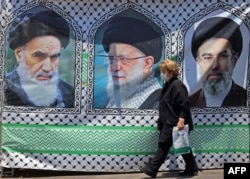
WASHINGTON -- A senior US administration official has said the United States and Iran were “very close” to sealing a deal that would reopen a critical shipping route and dismantle Tehran’s nuclear enrichment infrastructure.
Speaking on background to reporters after a closed-door briefing on June 12, the official outlined what he called a straightforward but “high-stakes” memorandum of understanding, stressing that the agreement remains unsigned but has moved significantly closer to completion.
“We’re not quite at the finish line yet, but we are very close,” the official said, adding that the likelihood of a final signing was around “80 to 85 percent.”
Read more here