

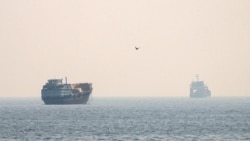

Commodity Carrier Traffic Through Hormuz Strait Hits Highest Level Since War Began.
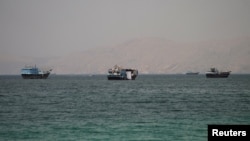
Commodity vessel traffic through the Strait of Hormuz reached its highest level since the start of the Middle East war, with at least 36 carriers transiting the waterway on June 22, according to maritime tracking firm Kpler.
The figure represents nearly a third of normal peacetime traffic through the strategic passage, which typically handles about a fifth of global oil and gas exports. The total is expected to rise further as additional ship movements are detected.
Traffic, including oil tankers, liquefied natural gas carriers, and dry bulk vessels carrying commodities such as fertilizers, has increased since Washington and Tehran signed a memorandum of understanding last week aimed at ending the conflict.
Before the June 14 agreement, fewer than 10 commodity vessels a day passed through the strait after Iran closed it on March 1 following US and Israeli strikes. Since June 15, average daily crossings have climbed to 21.
Amid ongoing negotiations, Iran's chief negotiator Mohammad Baqer Qalibaf said: "The Strait of Hormuz will never return to its pre-war conditions and will be administered by the Islamic Republic of Iran, in accordance with international law."
Whether Iran will ultimately administer the vital waterway remains one of the key questions in talks scheduled over the next two months.
Iran said on June 20 that it had again closed the strait in response to Israeli attacks on Lebanon, while the United States announced on June 22 a temporary easing of sanctions to allow Iran to produce, sell, and deliver crude oil and related products through August 21.
Iran Says No Plans to Allow Inspections Of Bombed Nuclear Sites
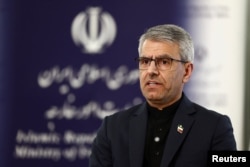
Iran says it has no plans to allow International Atomic Energy Agency (IAEA) inspectors to visit nuclear facilities damaged in US and Israeli strikes last year, contradicting claims by US Vice President JD Vance.
The denial came as diplomacy intensified following a memorandum of understanding between Tehran and Washington aimed at ending a war that destabilized the Middle East and triggered a 60-day process to address Iran's nuclear program and sanctions relief.
Speaking to reporters on June 23, Foreign ministry spokesman Esmaeil Baqaei said: "We have not had a meeting with the director general of the IAEA, nor do we have any plans for the agency to inspect Iran's nuclear facilities damaged by the US and Zionist military aggression."
Iran's UN ambassador, Ali Bahreini, also said "there hasn't been such a decision" to permit inspectors' return to the country.
Iranian Top Negotiator: Communication Line Set For Hormuz
Iran's top negotiator, Mohammad Baqer Qalibaf, has said that Tehran agreed to establish a communication hotline for ships transiting the Strait of Hormuz in order to reduce tensions and quickly address any incidents in the strategic waterway.
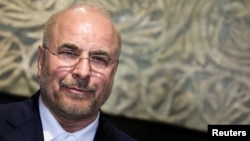
Speaking to reporters aboard a plane, Qalibaf said: "There may be problems in the Strait of Hormuz; therefore, we agreed to establish a center and a hotline so that, within a 30-day period, if any problems arise, we can resolve them more quickly."
"This hotline is not for granting permission; permission follows its own procedures. This hotline is solely for resolving problems involving ships or clarifying possible incidents," he said, adding that "the management of the Strait is with Iran, and we will address any problems."
Earlier, mediators Qatar and Pakistan announced that Iran and the United States had agreed to establish direct communication channels aimed at helping keep the Strait of Hormuz open and secure.
We are now closing the live blog for the day. We'll be back at 7:30 a.m. Central European time to cover the latest events across the Middle East.
Trump Warns Iran To Stick To Agreement Or Face Consequences
President Donald Trump warned Iran it will face consequences if it fails to live up to its agreement with the United States despite signs of progress in talks toward a peace deal between the two.
"If Iran doesn't live up to their agreement, or if they're not behaving, I will do what I have to do," Trump told reporters in Washington on June 22. He did not elaborate.
The statement came hours after Vice President JD Vance cited making "good progress" in talks over the weekend in Switzerland on a framework toward reaching a final peace deal within 60 days, including the guarantee of safe passage through the Strait of Hormuz, an end to fighting in Lebanon, and Tehran's acceptance of visits by international nuclear inspectors.
Iran also gave a positive assessment of the talks, with its top negotiator, parliamentary Speaker Mohammad Baqer Qalibaf told Iranian state television that Tehran has agreed to have a communication line regarding the passage of vessels through the Strait of Hormuz .
He added that the signing for the release of $12 billion in frozen Iranian assets has been finalized during the talks as well. He did not give any further details on the release of the funds.
Rubio Heads To Gulf As US Seeks To Cement Iran Framework, Allay Security Fears
WASHINGTON -- US Secretary of State Marco Rubio will travel to the United Arab Emirates, Kuwait, and Bahrain this week on his first official visit to the Gulf since the outbreak of the Iran war and just days after Washington and Tehran signed a framework agreement aimed at bring peace to the region.
The diplomatic mission to reassure regional allies of the Trump administration's strategic trajectory with Tehran will also look to reinforce security protocols around the volatile Strait of Hormuz.
The June 23–25 tour occurs at a critical juncture for US foreign policy: It follows intensive weekend negotiations in Switzerland that Vice President JD Vance described on June 22 as having established a "good foundation for a successful final deal" to conclude the Middle East conflict.
To read the full report, click here.
US Approves 60-Day Waiver For Iranian Oil Sales As Peace Talks Progress
The United States has allowed Iran to produce, deliver, and sell its oil on international markets as part of a framework agreement for peace talks reached between the two countries last week.
"In line with the ongoing productive talks in Switzerland, Iran has committed to free and open transit in the Strait of Hormuz and to permit International Atomic Energy Agency (IAEA) inspectors into their country," Treasury Secretary Scott Bessent said in a post on X on June 22.
"As part of the framework, Treasury has issued a temporary 60-day general license authorizing the production, delivery, and sale of Iranian oil."
As part of the memorandum of understanding signed last week, Washington said it would issue the sanctions waivers for Iranian crude.
Earlier on June 22, Vice President JD Vance said the United States and Iran had made "good progress" over the weekend on talks aimed at reaching a full peace agreement.
Vance Hails 'Milestone' Of Iran Allowing IAEA Inspectors
US Vice President JD Vance said that progress had been made in talks with Iran, including Tehran's agreement to allow inspectors from the International Atomic Energy Agency (IAEA) back into the country.
"The Iranians have agreed to invite IAEA inspectors back into their country," Vance told reporters at Switzerland's Burgenstock resort on June 22 following an initial round of US-Iran negotiations aimed at reducing tensions in the Middle East.

He described the development as "a major milestone" and "the first step toward permanently ending Iran's nuclear weapons program."
According to Vance, the parties worked on establishing a "coordination mechanism" for keeping the Strait of Hormuz open for energy shipments and to demine the area to avoid disruptions to global oil and gas flows.
In addition, he said a similar "mechanism for deconfliction" was set up to manage ongoing regional conflicts, including exchanges involving Israel and Hezbollah, aimed at ensuring that any incidents are handled through communication channels rather than escalation.
Hezbollah is both a militant group and political party that controls much of southern Lebanon. It is considered a terrorist organization by the United States, although the European Union has only blacklisted its armed wing.
"Our teams working with the Iranians, the Qataris, and the Pakistanis made great progress yesterday," he said, adding they would continue working at the technical level with teams in Burgenstock.
"We've laid a very good foundation for a successful final deal," Vance told reporters.
China Pledges Support For Iran At New Delhi Meeting

China showed its support for Iran in India as senior officials from the two countries met for the first time since a framework deal between Washington and Tehran was signed last week to starts talks aimed at hammering out a long-term peace deal.
Beijing's top diplomat, Wang Yi, held talks with Qadir Nezami, deputy secretary of Iran's Supreme National Security Council, on June 22 to discuss the ongoing peace negotiations on the sidelines of the 18th BRICS Summit in New Delhi.
According to a readout from China's Foreign Ministry, Wang described the provisions in the Iran-US agreement as "hard-won," adding that Beijing is willing "continue providing assistance in its own way" to play a role in the peace process.
Nezami stated that he "looked forward to China continuing to play an important role" in facilitating the implementation of the first phase of the deal.
This meeting comes as the first round of face-to-face talks between the United States and Iran since the signing of the deal concluded on June 22 in Burgenstock, Switzerland, mediated by officials from Pakistan and Qatar. The meeting had previously been postponed following an escalation of fighting in Lebanon between Hezbollah and Israeli forces.
Hezbollah is both a militant group and political party that controls much of southern Lebanon. It is considered a terrorist organization by the United States, although the European Union has only blacklisted its armed wing.
Wang expressed Beijing's thanks to Islamabad and Doha for their role in mediating discussions between the United States and Iran. China has worked closely with Islamabad, a close ally, to moderate the conflict indirectly as Pakistan stepped up as a key mediator in the conflict.
Iran Exported 36 Million Barrels Of Oil In Past Week, Says Monitor
Tanker Trackers, which monitors the status of oil shipments, reported on June 21 that Iran has exported 36 million barrels of crude oil since June 15 of this year.
According to the report, Iran has stored approximately the same amount of oil in its floating cargoes.
After Iran and the United States reached an initial agreement to end the war, the naval blockade of Iranian ports by the United States military was lifted and Tehran was able to resume its oil exports.