


Oman, Iran Agree To Continue Hormuz Navigation Talks
Oman and Iran have agreed to continue discussions on the future administration of navigation in the Strait of Hormuz, including maritime services and the costs associated with operating them in the strategic waterway.
In a joint statement issued after talks in Muscat on June 23, the two countries said they would establish a joint working group involving their foreign ministries and consult other Persian Gulf coastal states and relevant parties.
The move appears to implement a provision of last week's memorandum of understanding between Tehran and Washington, which called for talks on the future management of navigation and maritime services in the strait.
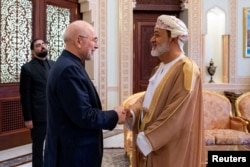
The announcement followed a visit by Iranian Parliament Speaker Mohammad Baqer Qalibaf and Foreign Minister Abbas Araqchi, who met Oman's Sultan Haitham bin Tariq and Foreign Minister Sayyid Badr Albusaidi.
Oman and Iran reaffirmed their commitment to ensuring safe passage through the strait in accordance with international law while respecting sovereignty over territorial waters.
They also pledged to keep the waterway a secure and open route for international navigation and to promote regional stability.
With reporting by Reuters
Despite Iranian Denials, Trump Says Tehran Has Agreed To 'Highest Level' Of Nuclear Inspections
US President Donald Trump has repeated his claim that Iran has agreed to the highest level of nuclear inspections of its facilities and that the inspections will continue indefinitely
In a post on the Truth Social platform on June 23, Trump wrote that despite Iranian "protestations and false statements to the contrary coupled with the drumbeat of the Fake News, which is doing everything possible to make the US Victory as small and insignificant as possible, Iran has fully and completely agreed to highest level Nuclear inspections long into the future (Infinity!!!)"
According to Trump, the arrangement will ensure “Nuclear Honesty.”
“If they did not agree to this, there would be no further negotiations!” he wrote.
The claim was first made on June 22 by US Vice President JD Vance, who said Iran had agreed to inspections of its nuclear facilities and that such inspections could take place this week.
However, officials from the Islamic republic have rejected any suggestion that international inspectors will be granted access to the country’s nuclear sites.
Earlier on June 23, Foreign Ministry spokesman Esmail Baghaei said that Iran has no plans to allow inspections by the International Atomic Energy Agency (IAEA) of nuclear facilities that were bombed.
Since the summer of 2025, when the United States and Israel bombed Iranian nuclear facilities at Fordow, Natanz, and Isfahan, Tehran has suspended cooperation with the IAEA and blocked inspectors’ access to those sites.
In another part of his Truth Social post, Trump said that in light of Iran’s agreement to IAEA inspections and “other important concessions,” he had agreed to keep the Strait of Hormuz open and not impose a naval blockade.
However, he added that US naval forces in the Middle East would remain in position and could reimpose a blockade if necessary, although he said such a scenario currently appeared “highly unlikely.”
Trump also said that Iran’s frozen assets would be placed in an escrow account under US control and could be used exclusively to purchase food and medical supplies from the United States, including corn, wheat and soybeans from American farmers.
“These are things that are desperately needed by Iran,” Trump wrote. “This is a humanitarian crisis, and I feel it is necessary to help, NOW, before it is too late.”
The US president also said that negotiations with Iran were “going well.”
Bread Prices Jump 100% In Tehran Despite Government Assurances

Bread prices in Tehran and the nearby city of Varamin have doubled, with some staple flatbreads rising by up to 100 percent, according to Iranian news agencies ILNA and Mehr.
The increase was confirmed by Mohammad Javad Karami, head of the Flour and Bread Working Group of Iran’s Chamber of Guilds.
New prices were introduced through bakery payment systems late on June 22, affecting widely consumed breads, such as lavash, barbari and sangak.
The move follows months of reports of unofficial bread price increases in several provinces.
The sharp rise comes despite Agriculture Minister Gholamreza Nuri Ghezeljeh saying just two days earlier that bread price hikes were not under consideration, with the government instead focusing on reforms to bread subsidies and food-voucher support.
With reporting by RFE/RL's Radio Farda
Commodity Carrier Traffic Through Hormuz Strait Hits Highest Level Since War Began.
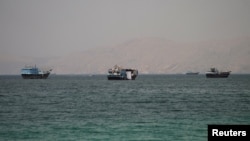
Commodity vessel traffic through the Strait of Hormuz reached its highest level since the start of the Middle East war, with at least 36 carriers transiting the waterway on June 22, according to maritime tracking firm Kpler.
The figure represents nearly a third of normal peacetime traffic through the strategic passage, which typically handles about a fifth of global oil and gas exports. The total is expected to rise further as additional ship movements are detected.
Traffic, including oil tankers, liquefied natural gas carriers, and dry bulk vessels carrying commodities such as fertilizers, has increased since Washington and Tehran signed a memorandum of understanding last week aimed at ending the conflict.
Before the June 14 agreement, fewer than 10 commodity vessels a day passed through the strait after Iran closed it on March 1 following US and Israeli strikes. Since June 15, average daily crossings have climbed to 21.
Amid ongoing negotiations, Iran's chief negotiator Mohammad Baqer Qalibaf said: "The Strait of Hormuz will never return to its pre-war conditions and will be administered by the Islamic Republic of Iran, in accordance with international law."
Whether Iran will ultimately administer the vital waterway remains one of the key questions in talks scheduled over the next two months.
Iran said on June 20 that it had again closed the strait in response to Israeli attacks on Lebanon, while the United States announced on June 22 a temporary easing of sanctions to allow Iran to produce, sell, and deliver crude oil and related products through August 21.
Iran Says No Plans to Allow Inspections Of Bombed Nuclear Sites
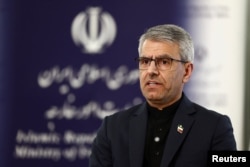
Iran says it has no plans to allow International Atomic Energy Agency (IAEA) inspectors to visit nuclear facilities damaged in US and Israeli strikes last year, contradicting claims by US Vice President JD Vance.
The denial came as diplomacy intensified following a memorandum of understanding between Tehran and Washington aimed at ending a war that destabilized the Middle East and triggered a 60-day process to address Iran's nuclear program and sanctions relief.
Speaking to reporters on June 23, Foreign ministry spokesman Esmaeil Baqaei said: "We have not had a meeting with the director general of the IAEA, nor do we have any plans for the agency to inspect Iran's nuclear facilities damaged by the US and Zionist military aggression."
Iran's UN ambassador, Ali Bahreini, also said "there hasn't been such a decision" to permit inspectors' return to the country.
Iranian Top Negotiator: Communication Line Set For Hormuz
Iran's top negotiator, Mohammad Baqer Qalibaf, has said that Tehran agreed to establish a communication hotline for ships transiting the Strait of Hormuz in order to reduce tensions and quickly address any incidents in the strategic waterway.

Speaking to reporters aboard a plane, Qalibaf said: "There may be problems in the Strait of Hormuz; therefore, we agreed to establish a center and a hotline so that, within a 30-day period, if any problems arise, we can resolve them more quickly."
"This hotline is not for granting permission; permission follows its own procedures. This hotline is solely for resolving problems involving ships or clarifying possible incidents," he said, adding that "the management of the Strait is with Iran, and we will address any problems."
Earlier, mediators Qatar and Pakistan announced that Iran and the United States had agreed to establish direct communication channels aimed at helping keep the Strait of Hormuz open and secure.
We are now closing the live blog for the day. We'll be back at 7:30 a.m. Central European time to cover the latest events across the Middle East.
Trump Warns Iran To Stick To Agreement Or Face Consequences
President Donald Trump warned Iran it will face consequences if it fails to live up to its agreement with the United States despite signs of progress in talks toward a peace deal between the two.
"If Iran doesn't live up to their agreement, or if they're not behaving, I will do what I have to do," Trump told reporters in Washington on June 22. He did not elaborate.
The statement came hours after Vice President JD Vance cited making "good progress" in talks over the weekend in Switzerland on a framework toward reaching a final peace deal within 60 days, including the guarantee of safe passage through the Strait of Hormuz, an end to fighting in Lebanon, and Tehran's acceptance of visits by international nuclear inspectors.
Iran also gave a positive assessment of the talks, with its top negotiator, parliamentary Speaker Mohammad Baqer Qalibaf told Iranian state television that Tehran has agreed to have a communication line regarding the passage of vessels through the Strait of Hormuz .
He added that the signing for the release of $12 billion in frozen Iranian assets has been finalized during the talks as well. He did not give any further details on the release of the funds.
Rubio Heads To Gulf As US Seeks To Cement Iran Framework, Allay Security Fears
WASHINGTON -- US Secretary of State Marco Rubio will travel to the United Arab Emirates, Kuwait, and Bahrain this week on his first official visit to the Gulf since the outbreak of the Iran war and just days after Washington and Tehran signed a framework agreement aimed at bring peace to the region.
The diplomatic mission to reassure regional allies of the Trump administration's strategic trajectory with Tehran will also look to reinforce security protocols around the volatile Strait of Hormuz.
The June 23–25 tour occurs at a critical juncture for US foreign policy: It follows intensive weekend negotiations in Switzerland that Vice President JD Vance described on June 22 as having established a "good foundation for a successful final deal" to conclude the Middle East conflict.
To read the full report, click here.
US Approves 60-Day Waiver For Iranian Oil Sales As Peace Talks Progress
The United States has allowed Iran to produce, deliver, and sell its oil on international markets as part of a framework agreement for peace talks reached between the two countries last week.
"In line with the ongoing productive talks in Switzerland, Iran has committed to free and open transit in the Strait of Hormuz and to permit International Atomic Energy Agency (IAEA) inspectors into their country," Treasury Secretary Scott Bessent said in a post on X on June 22.
"As part of the framework, Treasury has issued a temporary 60-day general license authorizing the production, delivery, and sale of Iranian oil."
As part of the memorandum of understanding signed last week, Washington said it would issue the sanctions waivers for Iranian crude.
Earlier on June 22, Vice President JD Vance said the United States and Iran had made "good progress" over the weekend on talks aimed at reaching a full peace agreement.